
In the dynamic world of consumerism, discounts are ubiquitous. From the seasonal sales that light up retail calendars to the everyday promotions we encounter online, the promise of “20 percent off” is a powerful magnet. Yet, beneath the allure of a good deal lies a fundamental mathematical concept that, when truly understood, transforms you from a passive shopper into a strategic financial decision-maker. Figuring out 20 percent off isn’t just a party trick for quick calculations; it’s a cornerstone of effective personal finance, empowering you to manage your budget, maximize your purchasing power, and ultimately, achieve your financial goals. This guide delves into the precise mechanics of calculating discounts, explores why this skill is invaluable, and equips you with the tools and insights to become a truly savvy saver.

The Core Mechanics: Deconstructing Percentage Discounts
At its heart, “20 percent off” is a simple arithmetic operation, but understanding the different ways to arrive at the correct answer can simplify the process and enhance your confidence when shopping. There are primarily two straightforward methods to calculate a percentage discount.
Method 1: The Subtraction Approach (Calculate the Discount First)
This method involves first determining the absolute monetary value of the discount, and then subtracting that amount from the original price. It’s often intuitive for those who prefer to see the “savings” explicitly before arriving at the final cost.
Steps:
- Convert the percentage to a decimal: Divide the percentage by 100. For 20%, this is 20 / 100 = 0.20.
- Calculate the discount amount: Multiply the original price by the decimal equivalent of the discount.
- Subtract the discount from the original price: This gives you the final price you will pay.
Example:
Imagine an item costs $150, and it’s 20% off.
- 20% as a decimal is 0.20.
- Discount amount = $150 * 0.20 = $30.
- Final price = $150 – $30 = $120.
This method clearly shows that you are saving $30 on the purchase.
Method 2: The Multiplier Approach (Calculate the Final Price Directly)
The multiplier approach, often considered more efficient for those who frequently deal with discounts, directly calculates the final price by determining what percentage of the original price you are still paying.
Steps:
- Determine the remaining percentage: Subtract the discount percentage from 100%. For 20% off, you are paying 100% – 20% = 80% of the original price.
- Convert the remaining percentage to a decimal: Divide this percentage by 100. For 80%, this is 80 / 100 = 0.80.
- Calculate the final price: Multiply the original price by this decimal.
Example:
Using the same item that costs $150 with 20% off.
- Remaining percentage = 100% – 20% = 80%.
- 80% as a decimal is 0.80.
- Final price = $150 * 0.80 = $120.
This method is particularly useful when you’re less interested in the exact amount saved and more focused on the bottom-line cost.
Which Method Should You Use?
Both methods yield the same correct answer, so the choice often comes down to personal preference or the context of the calculation. The subtraction method might feel more intuitive for quick mental math with round numbers, while the multiplier method can be faster, especially with a calculator, as it involves only one multiplication. Familiarity with both, however, provides a versatile toolkit for any discount scenario. Mastering these fundamental calculations is the first step toward making smarter financial choices and truly benefiting from sale prices.
Why Mastering Discount Calculations is Crucial for Personal Finance
Beyond the classroom, the ability to quickly and accurately calculate discounts translates directly into tangible financial benefits. It’s not just about getting a good deal; it’s about making deliberate, informed financial choices that align with your broader monetary goals.
Empowering Your Budget and Savings Goals
Understanding discounts allows you to budget more effectively. When you can instantly determine the actual cost of an item on sale, you prevent common pitfalls like overestimating savings or underestimating your spending. This clarity helps you allocate funds more precisely, ensuring that your shopping decisions don’t inadvertently derail your savings plan. For example, knowing that a $100 item at 20% off is $80 means you can confidently earmark that $80, rather than spending $100 and being surprised by a smaller-than-expected discount. Over time, these precise calculations contribute significantly to meeting larger financial objectives, whether it’s saving for a down payment, an emergency fund, or retirement.
Making Informed Purchasing Decisions
Sales are designed to entice, and sometimes the psychological effect of a “discount” can overshadow the actual value. When you can easily calculate the true cost, you gain a critical perspective. You can quickly assess whether a 20% discount on a specific item truly makes it a better value than a similar item elsewhere at its regular price, or even a different brand with a deeper discount. This skill helps you avoid impulse purchases driven solely by the perception of a deal and instead encourages a more analytical approach. You learn to ask: “Is this item truly worth this discounted price for me, and does it fit my needs?” rather than simply “How much am I saving?”
Unlocking Value and Maximizing Your Purchasing Power
Your money works harder when you understand and leverage discounts. By strategically timing purchases during sales and accurately calculating the final costs, you can acquire more goods or services for the same amount of money, or alternatively, free up capital for other investments or savings. This maximization of purchasing power is a core principle of sound personal finance. It allows you to stretch your budget further, perhaps affording a higher-quality item you might not have considered at full price, or simply reducing your overall expenditure on essentials, leaving more for discretionary spending or long-term wealth building. In essence, mastering discount calculations is about gaining control over your financial narrative, turning every purchase into an opportunity to reinforce your financial health.
Navigating the World of Sales: Beyond a Simple 20% Off
While 20% off is a common starting point, the world of retail offers a bewildering array of discount structures. To truly maximize savings, it’s essential to understand how to apply your calculation skills to more complex scenarios, ensuring you always know the real price you’re paying.
Stacking Discounts and Coupons
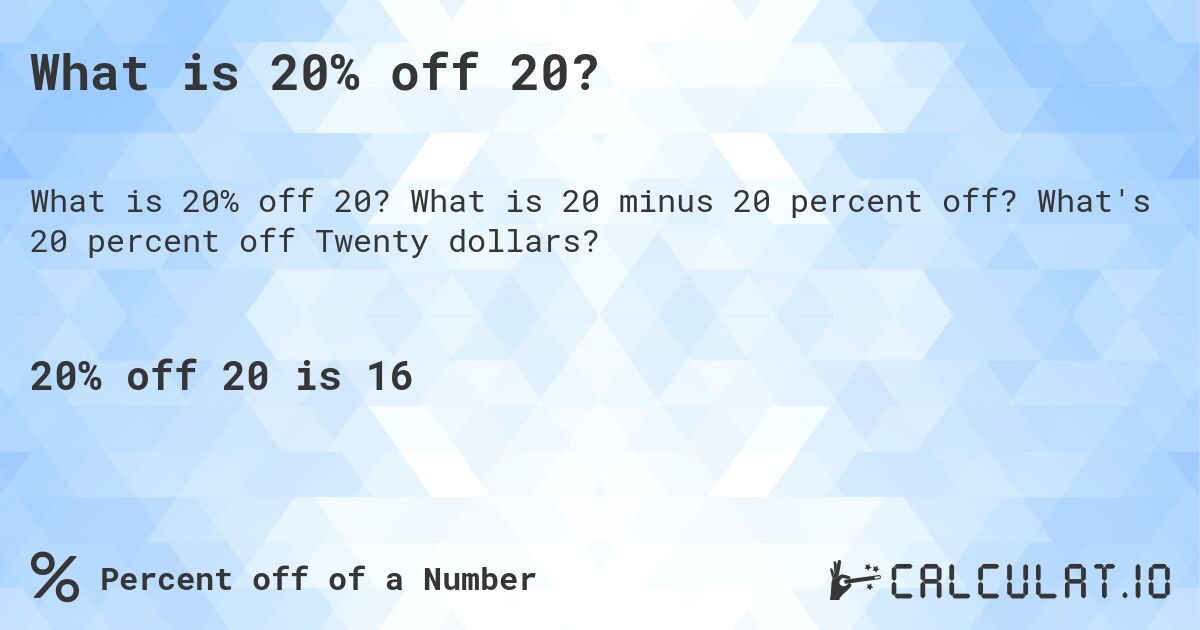
One of the most potent ways to save money is by combining multiple offers. Retailers often allow you to stack a general percentage off (like 20% off everything) with an additional coupon (e.g., an extra 10% off). The critical rule here is the order of operations: discounts are typically applied sequentially, not cumulatively.
Example: An item is $200. You have a “20% off” store-wide sale and an additional “10% off” coupon.
- Apply the first discount: $200 * (1 – 0.20) = $200 * 0.80 = $160.
- Apply the second discount to the new price: $160 * (1 – 0.10) = $160 * 0.90 = $144.
Your final price is $144, not $200 * (1 – 0.30) = $140. The difference might seem small, but it adds up, especially on larger purchases. Always apply discounts one after another to the current price.
Understanding Different Discount Formats (e.g., “Buy One Get One,” “Dollar Off”)
Not all discounts are expressed as a straightforward percentage. Many take other forms that require a bit of translation to understand their true percentage value for comparison.
- “Buy One Get One Free” (BOGO): On two items, this is effectively 50% off each item if they are the same price. If the second item is half price, it’s 25% off each. Calculating the per-item cost helps determine the actual savings.
- “Dollar Off” ($X off): While not a percentage, you can convert it to one for comparison. If an item is $50 and you get $10 off, that’s $10/$50 = 20% off. This conversion helps you compare it to other percentage-based offers.
- “Spend $X, Save $Y”: This is common for larger purchases. If you spend $100 and save $20, that’s 20% off your total purchase, but only if your total is exactly $100. If you spend $150 to get $20 off, your actual discount is only $20/$150 ≈ 13.3%.
The Impact of Sales Tax on Your Final Discounted Price
A frequent point of confusion is when sales tax is applied. In nearly all jurisdictions, sales tax is calculated after all discounts have been applied to the item’s price. This is good news for the consumer, as it means you’re paying tax on the lower, discounted amount.
Example: An item is $150, 20% off, and sales tax is 8%.
- Calculate discounted price: $150 * 0.80 = $120.
- Calculate sales tax: $120 * 0.08 = $9.60.
- Total final cost: $120 + $9.60 = $129.60.
Understanding these nuances of discount application ensures that you always have a clear picture of the true out-of-pocket expense, helping you budget accurately and avoid unexpected charges at the checkout.
Practical Tools and Strategies for the Savvy Shopper
In an era of endless options and rapid transactions, leveraging modern tools and refining mental arithmetic can significantly enhance your ability to seize genuine savings. It’s not just about knowing the formula, but about efficiently applying it in real-world scenarios.
Leveraging Digital Calculators and Apps
The simplest and most accessible tool is your smartphone’s built-in calculator. For any discount scenario, a few taps can confirm your mental estimates or tackle more complex calculations like stacked discounts. Beyond the basic calculator, numerous apps are designed specifically for discount calculations. These apps often allow you to input the original price, the percentage off, and even additional taxes, providing an instant final price. Browser extensions for online shopping can also automatically calculate and display the discounted price, sometimes even comparing it across different retailers. Utilizing these digital aids can save time and prevent costly errors, especially when making significant purchases.
The Power of Mental Math and Estimation
While digital tools are invaluable, developing a knack for mental math is a powerful skill for on-the-spot decisions. For 20% off, a quick trick is to:
- Calculate 10%: This is easy – just move the decimal point one place to the left (e.g., 10% of $150 is $15).
- Double it for 20%: So, $15 * 2 = $30.
- Subtract from the original price: $150 – $30 = $120.
This two-step process is quick and effective for many percentages that are multiples of 10% (e.g., 30% is triple 10%, 5% is half of 10%). For trickier numbers, an estimation can still be highly beneficial. Round the original price to the nearest whole number to get a rough idea of the discount, allowing you to quickly assess if a deal is worthwhile before committing to a full calculation.
Price Comparison and Tracking
A discount is only truly valuable if the starting price isn’t inflated. Savvy shoppers understand that a “50% off” sign on an artificially high price might be a worse deal than “20% off” on an ethically priced item.
- Price Comparison Websites/Apps: Before purchasing, especially online, use tools like Google Shopping, CamelCamelCamel (for Amazon), or dedicated comparison sites to see if the item is available cheaper elsewhere, even at its regular price.
- Historical Price Trackers: Some tools allow you to view an item’s price history. This helps you identify if the current “sale” price is genuinely low or if it’s simply returned to a common price point after a brief inflation.
- Set Price Alerts: Many platforms allow you to set alerts for when an item’s price drops to a certain level. This ensures you buy when the deal is genuinely good, rather than impulsively reacting to a time-limited offer.
By integrating these tools and mental strategies into your shopping routine, you transform from a reactive consumer into a proactive, financially intelligent buyer, consistently securing the best possible value for your money.
Avoiding Common Discount Traps and Maximizing Real Savings
The allure of a discount is powerful, but retailers are sophisticated in their marketing. To truly maximize your financial gains, it’s crucial to look beyond the enticing percentages and identify potential pitfalls that can lead to spending more than you intended or acquiring items you don’t truly need.
The “Original Price” Deception
One of the oldest tricks in retail is to inflate an item’s “original” or “list” price, only to then offer a seemingly generous discount. A “50% off” sticker might seem irresistible, but if the original price was artificially high, the actual savings might be minimal or nonexistent compared to what the item typically sells for.
Strategy: Always research the item’s historical pricing. Use price tracking tools or simply observe prices over time for products you’re interested in. If a product consistently sells for $50 and suddenly appears with an “original price” of $100 and a “50% off” tag, you’re not getting a genuine $50 saving; you’re just paying the standard price.
Impulse Buying Driven by “Limited Time Offers”
Marketers frequently employ urgency tactics, such as “flash sales,” “one-day only deals,” or “limited stock remaining.” While some of these offers are genuine, many are designed to trigger impulse buying by creating a fear of missing out (FOMO) and short-circuiting rational decision-making.
Strategy: Before clicking “add to cart” or rushing to the checkout, take a moment. Ask yourself:
- Do I genuinely need this item right now, or is this a want?
- Would I buy this item at its discounted price if it wasn’t on sale, or if the “limited time” aspect wasn’t present?
- Can I afford this comfortably within my budget without diverting funds from more important areas?
If possible, step away for a few minutes or hours. Often, the urge to buy dissipates, and you can make a more objective decision.
Focusing on Needs vs. Wants
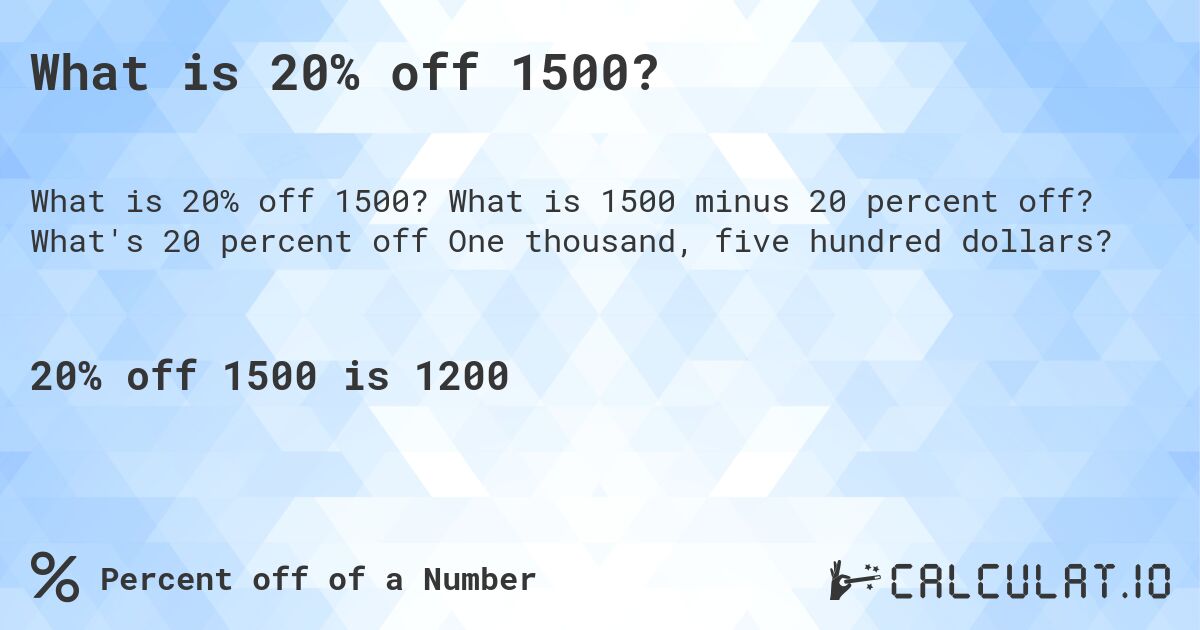
Perhaps the most critical financial trap to avoid is buying something you don’t need, regardless of the discount. A 20% discount on an item you don’t require still means you’ve spent 80% of its price unnecessarily. This is a 100% loss of the money spent from a utility perspective.
Strategy: Prioritize your purchases based on needs first, then wants. Maintain a shopping list of essential items or planned purchases. When you encounter a sale, refer to this list. If an item on sale is on your list, and the discount is genuinely good, it’s a smart purchase. If it’s something you hadn’t considered, carefully evaluate its long-term value and necessity before letting the discount sway you. Remember, true savings come from spending less on things you would have bought anyway, or from avoiding spending altogether on items that don’t serve your core needs or aspirations.
By developing a critical eye and understanding these common retail tactics, you can navigate the discount landscape with greater confidence, ensuring that every “20 percent off” truly contributes to your financial well-being rather than just another hole in your pocket.
aViewFromTheCave is a participant in the Amazon Services LLC Associates Program, an affiliate advertising program designed to provide a means for sites to earn advertising fees by advertising and linking to Amazon.com. Amazon, the Amazon logo, AmazonSupply, and the AmazonSupply logo are trademarks of Amazon.com, Inc. or its affiliates. As an Amazon Associate we earn affiliate commissions from qualifying purchases.