
Navigating the world of loans can feel like deciphering a complex financial puzzle, with interest often being the most bewildering piece. Understanding how interest is calculated on a loan isn’t just an academic exercise; it’s a fundamental skill for anyone looking to borrow money, whether for a mortgage, a car, a personal expense, or business expansion. The interest you pay directly impacts the total cost of your borrowing and, by extension, your long-term financial health. This article will demystify loan interest, breaking down its core components, calculation methods, and the factors that influence it, empowering you to make informed financial decisions.
The Fundamentals of Loan Interest
At its core, interest is the cost of borrowing money. Lenders provide you with capital today, and in return, they expect to be compensated for the risk they take and the opportunity cost of not using that money elsewhere. This compensation is paid back as interest, in addition to the original amount borrowed.
Defining Interest: The Cost of Borrowing
Imagine interest as a rental fee for money. Just as you pay rent for an apartment, you pay interest for the temporary use of someone else’s capital. For the borrower, it’s an expense; for the lender, it’s income. This seemingly simple concept underpins virtually every lending transaction, from the smallest personal loan to multi-million dollar corporate financing. The interest rate, usually expressed as a percentage, determines how much that “rental fee” will be relative to the principal amount.
Key Terminology: Principal, Rate, Term
To truly grasp interest calculations, you must first understand three critical terms that form the backbone of any loan agreement:
- Principal: This is the initial amount of money you borrow. If you take out a $20,000 car loan, your principal is $20,000. As you make payments, a portion of each payment goes towards reducing this principal balance.
- Interest Rate (Rate): This is the percentage charged by the lender for the use of the principal. It’s typically expressed as an annual percentage (e.g., 5% per annum), even if it’s applied daily or monthly. The rate is the primary driver of how much interest you will pay.
- Loan Term (Term): This refers to the duration over which you agree to repay the loan. It can range from a few weeks for a payday loan to 30 years for a mortgage. The term significantly impacts both your monthly payment amount and the total interest paid over the life of the loan. A longer term usually means lower monthly payments but more interest paid overall.
Why Understanding Interest Matters
A clear understanding of how interest is calculated is paramount for several reasons. Firstly, it allows you to accurately estimate the total cost of a loan, not just the principal. Many borrowers focus solely on the monthly payment without realizing how much of that payment is going towards interest versus principal, especially in the early stages of a loan. Secondly, it enables you to compare different loan offers effectively. A loan with a slightly higher interest rate but a shorter term might end up costing you less overall than a loan with a lower rate stretched over many more years. Finally, it empowers you to strategize on how to save money, perhaps by making extra payments or refinancing, armed with the knowledge of how those actions will impact your interest burden.
Unpacking Different Interest Calculation Methods
While the core concept of interest remains the same, the way it’s calculated can vary significantly, leading to vastly different total costs. The two primary methods are simple interest and compound interest.
Simple Interest: The Straightforward Approach
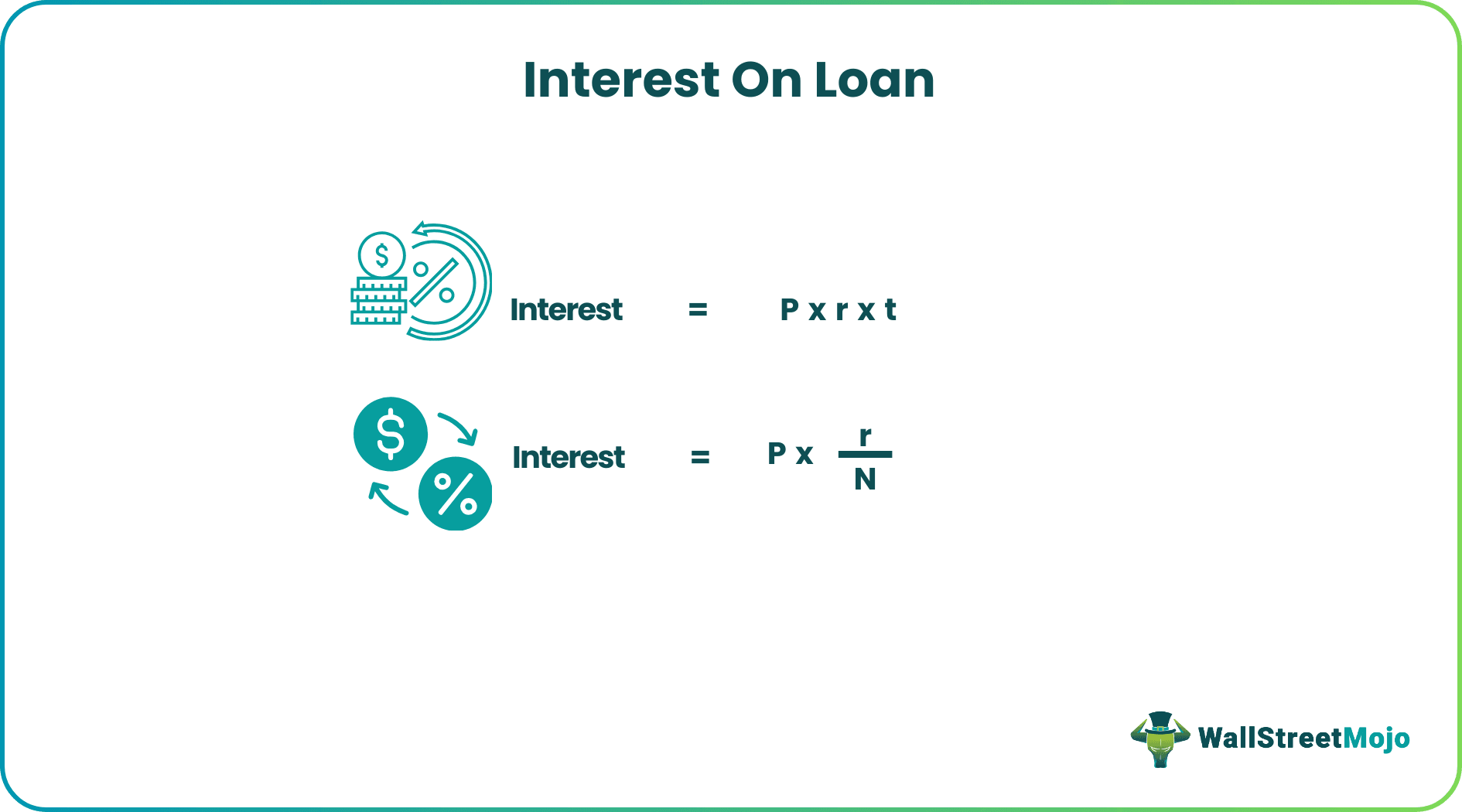
Simple interest is the easiest to understand and calculate. It is calculated only on the original principal amount of the loan. This means the interest charge remains constant throughout the loan’s term, assuming the principal balance doesn’t change due to partial payments.
The formula for simple interest is:
Interest = Principal × Rate × Time
- Principal (P): The original amount borrowed.
- Rate (R): The annual interest rate (expressed as a decimal, e.g., 5% becomes 0.05).
- Time (T): The loan term in years (or a fraction of a year).
Example: If you borrow $10,000 at 5% simple annual interest for 3 years:
Interest = $10,000 × 0.05 × 3 = $1,500
Your total repayment would be $10,000 (principal) + $1,500 (interest) = $11,500.
Simple interest is often used for short-term loans, some car loans, and certain types of student loans, especially those with fixed rates where interest accrues but isn’t added back to the principal.
Compound Interest: The Power of Reinvestment
Compound interest is where things get a bit more complex, but it’s also the most common form of interest for significant loans like mortgages, credit cards, and many business loans. Unlike simple interest, compound interest is calculated not only on the original principal but also on the accumulated interest from previous periods. This means your interest can earn interest, leading to faster growth in the total amount owed.
The frequency of compounding (daily, monthly, quarterly, annually) significantly impacts the total interest paid. The more frequently interest is compounded, the faster your debt can grow.
The formula for compound interest is:
A = P (1 + r/n)^(nt)
Where:
- A: The future value of the loan/investment, including interest.
- P: The principal loan amount.
- r: The annual interest rate (as a decimal).
- n: The number of times that interest is compounded per year.
- t: The number of years the money is borrowed for.
Example: If you borrow $10,000 at 5% annual interest, compounded annually for 3 years:
A = $10,000 (1 + 0.05/1)^(1*3)
A = $10,000 (1.05)^3
A = $10,000 × 1.157625 = $11,576.25
Total interest paid = $1,576.25. (Notice it’s slightly higher than simple interest due to compounding.)
For credit cards, interest is often compounded daily, which can lead to rapid debt accumulation if balances are carried over.
Amortization: The Repayment Schedule
Most large loans, like mortgages and auto loans, are “amortized.” Amortization is the process of gradually paying off a debt over time through a series of regular payments. Each payment consists of both principal and interest. In the early stages of an amortized loan, a larger portion of your payment goes towards interest, and a smaller portion towards the principal. As the loan matures, this ratio shifts, with more going towards principal and less towards interest.
An amortization schedule is a table that breaks down each payment, showing exactly how much goes to principal, how much to interest, and the remaining loan balance. This schedule provides transparency and allows you to see the long-term impact of your payments. Online calculators can easily generate these schedules, demonstrating the power of even small extra principal payments to reduce the overall interest paid and shorten the loan term.
Annual Percentage Rate (APR) vs. Interest Rate
It’s crucial to understand the distinction between the stated interest rate and the Annual Percentage Rate (APR).
- Interest Rate: This is the basic cost of borrowing the principal, usually expressed as a percentage.
- APR: This represents the total cost of borrowing, expressed as an annual percentage. It includes not only the interest rate but also other fees associated with the loan, such as origination fees, closing costs (for mortgages), and discount points. The APR is designed to give consumers a more comprehensive view of the true cost of a loan.
When comparing loans, always look at the APR, as it provides a more accurate picture of the total expense. A loan with a lower interest rate might have a higher APR due to hidden fees, making it less attractive overall.
Factors Influencing Your Loan Interest Rate

The interest rate you’re offered on a loan isn’t arbitrary. It’s a complex calculation based on several internal and external factors that assess your creditworthiness and the overall economic landscape.
Credit Score and History: Your Financial Report Card
Your credit score (e.g., FICO, VantageScore) and detailed credit history are arguably the most significant factors determining the interest rate you receive. Lenders use these as indicators of your likelihood to repay the loan on time.
- High Credit Score (e.g., 720+): Signals low risk to lenders. You’ve demonstrated a history of responsible borrowing and repayment. This typically translates to lower interest rates, as lenders are more confident in your ability to repay.
- Low Credit Score (e.g., below 600): Indicates higher risk. This could be due to late payments, defaults, high credit utilization, or limited credit history. Lenders compensate for this increased risk by charging higher interest rates or even denying the loan altogether.
Loan Type and Collateral: Secured vs. Unsecured
The type of loan you seek also plays a crucial role:
- Secured Loans: These loans are backed by collateral (an asset you own, like a house for a mortgage or a car for an auto loan). If you default, the lender can seize the collateral to recover their losses. Because of this reduced risk for the lender, secured loans typically carry lower interest rates.
- Unsecured Loans: These loans are not backed by collateral (e.g., personal loans, credit cards). The lender’s only recourse if you default is to pursue collection actions without the benefit of seizing an asset. Due to the higher risk, unsecured loans generally have higher interest rates.
Market Conditions and Economic Indicators
Broader economic factors heavily influence interest rates across the board:
- Federal Reserve (Fed) Rates: The U.S. central bank sets the federal funds rate, which influences the prime rate that commercial banks use for their best customers. When the Fed raises rates, borrowing costs generally increase for consumers and businesses.
- Inflation: If inflation is high, the purchasing power of money decreases over time. Lenders will charge higher interest rates to compensate for the erosion of their money’s value when it is repaid in the future.
- Economic Stability: In stable economic times, lenders may offer more competitive rates. During periods of uncertainty or recession, they may become more cautious and raise rates.
Lender Policies and Fees
Each financial institution has its own risk assessment models and internal policies. Some lenders may specialize in certain types of loans or borrowers, offering more favorable terms in those niches. Additionally, fees associated with the loan, such as origination fees, application fees, or prepayment penalties, can indirectly impact the effective cost of the loan and are factored into the APR. It’s always wise to shop around and compare offers from multiple lenders.
Practical Application: Calculating Interest for Common Loan Types
Understanding the theoretical aspects of interest is one thing; seeing how it applies to real-world loan products is another. Each loan type presents unique considerations for interest calculation and management.
Mortgages: Long-Term Amortization
Mortgages are typically large, long-term, amortized loans. Most residential mortgages use compound interest, often compounded monthly. Your monthly payment remains fixed (for fixed-rate mortgages), but the principal-to-interest ratio shifts dramatically over the life of the loan. In the first few years, the majority of your payment goes towards interest. Over a 30-year term, you might pay tens or even hundreds of thousands of dollars in interest, often more than the original principal itself. Understanding this dynamic highlights the financial benefits of making extra principal payments, even small ones, to significantly reduce the total interest paid and shorten the loan term. Adjustable-Rate Mortgages (ARMs) introduce variable interest rates after an initial fixed period, adding another layer of complexity and risk.
Auto Loans: Structured Repayment
Auto loans are usually simple interest loans, but they are also amortized. The interest is calculated on the remaining principal balance, and your payments are structured to pay off the loan over a set term (e.g., 36, 48, 60, or 72 months). Because interest is calculated on the declining principal, making extra payments can reduce the principal balance faster, thereby reducing the amount of interest accrued over the remaining term. Car dealerships often mark up interest rates, so securing pre-approval from a bank or credit union before visiting the dealership can help you secure a better rate.
Personal Loans: Flexible but Varied
Personal loans can be used for a wide range of purposes, from debt consolidation to home improvements. They are typically unsecured and can come with either fixed or variable interest rates. The interest calculation can be simple or compound, depending on the lender and loan terms, though most are amortized. Because they are unsecured, personal loan interest rates tend to be higher than secured loans like mortgages or auto loans, especially for borrowers with lower credit scores. Always scrutinize the APR and repayment schedule for personal loans, as terms can vary significantly between lenders.
Credit Cards: Revolving and Complex
Credit cards are perhaps the most common, yet often misunderstood, form of borrowing. They operate on a revolving credit line, meaning you can borrow up to your credit limit, repay it, and borrow again. Credit card interest is almost universally compounded daily, and if you carry a balance, the interest charges can accumulate very quickly. The interest is calculated on your average daily balance. High APRs (often 15-30% or more) combined with daily compounding make credit cards particularly costly if balances aren’t paid in full each month. This is why paying your credit card balance in full by the due date is critical to avoid interest charges entirely.
Strategies for Managing and Minimizing Loan Interest
Understanding how interest is figured is the first step; actively managing it to your advantage is the next. By employing smart financial strategies, you can significantly reduce the amount of interest you pay over the life of your loans.
Improving Your Credit Score
As discussed, your credit score is a major determinant of your interest rate. By improving it, you can qualify for lower rates on new loans or even refinance existing ones. Key actions include:
- Paying all bills on time, every time.
- Keeping credit utilization low (using less than 30% of your available credit).
- Avoiding opening too many new credit accounts at once.
- Regularly checking your credit report for errors.
Shopping Around for the Best Rates
Never accept the first loan offer you receive. Different lenders—banks, credit unions, online lenders—have varying criteria and pricing structures. Take the time to compare offers from several institutions, focusing on the APR rather than just the stated interest rate. Even a small difference in the interest rate can save you thousands of dollars over the life of a long-term loan. Utilize online comparison tools and get pre-approved to understand your options without committing.
Making Extra Payments and Refinancing
One of the most effective ways to reduce total interest paid is to accelerate your principal repayment.
- Extra Payments: Even small, consistent extra payments directly towards the principal can significantly shorten the loan term and reduce the total interest. For amortized loans, making just one extra monthly payment per year can shave years off your loan.
- Refinancing: If interest rates have dropped since you took out your loan, or if your credit score has significantly improved, consider refinancing. This involves taking out a new loan with a lower interest rate to pay off your old loan. While there may be closing costs, the long-term savings can be substantial, especially for mortgages.

Understanding Loan Agreements Fully
Before signing any loan document, read it meticulously. Pay close attention to:
- The actual interest rate and APR.
- The compounding frequency.
- Any fees (origination, late payment, prepayment penalties).
- The repayment schedule and terms.
- What happens in case of default.
Don’t hesitate to ask your lender questions about anything you don’t understand. A thorough understanding protects you from unexpected costs and ensures you’re comfortable with the terms of your financial commitment.
In conclusion, understanding how interest is figured on a loan is not just about crunching numbers; it’s about gaining control over your financial future. By knowing the difference between simple and compound interest, recognizing the impact of your credit score, and strategically managing your debts, you can minimize borrowing costs, accelerate debt repayment, and free up capital for other financial goals. Equip yourself with this knowledge, and transform from a borrower at the mercy of interest rates to a savvy financial manager.
aViewFromTheCave is a participant in the Amazon Services LLC Associates Program, an affiliate advertising program designed to provide a means for sites to earn advertising fees by advertising and linking to Amazon.com. Amazon, the Amazon logo, AmazonSupply, and the AmazonSupply logo are trademarks of Amazon.com, Inc. or its affiliates. As an Amazon Associate we earn affiliate commissions from qualifying purchases.