
Buying a car is one of the most significant financial decisions many individuals make, often second only to purchasing a home. For most, this means securing an auto loan, which translates into a recurring monthly car payment. Understanding how this payment is calculated is not just a matter of curiosity; it’s a critical step in responsible financial planning, ensuring you secure a deal that aligns with your budget and long-term financial goals. Without a clear grasp of the underlying components, you risk overpaying, encountering unexpected costs, or committing to terms you can’t comfortably sustain.

This guide will demystify the process of figuring out a car payment, breaking down the essential variables, exploring the various factors that influence the final figure, and equipping you with the knowledge to approach your next car purchase with confidence and financial acumen. From the principal amount to interest rates, loan terms, and hidden fees, we’ll cover every element you need to consider to make an informed decision.
The Core Components of a Car Payment Calculation
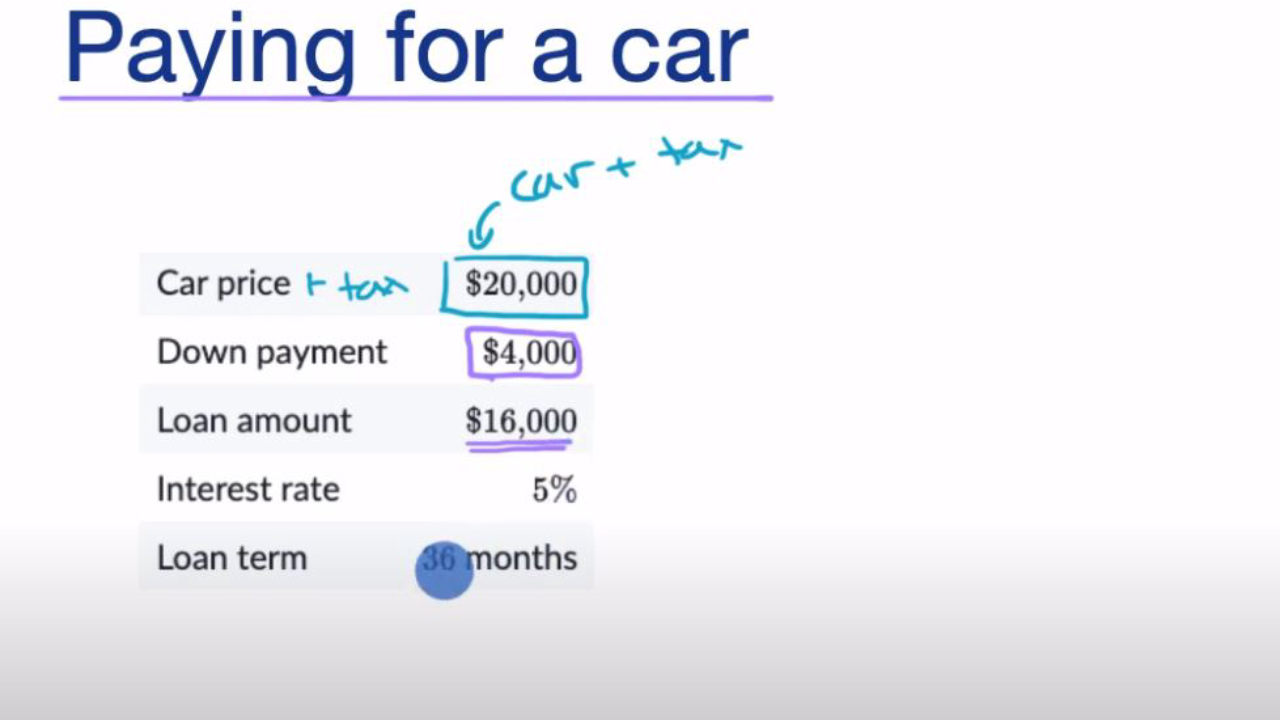
At its heart, a car payment calculation is an application of basic loan amortization principles. It involves three primary financial variables that interact to determine your monthly obligation.
Vehicle Price (The Principal Amount)
The vehicle price forms the foundation of your loan. This is the amount you are borrowing to purchase the car itself. It’s crucial to distinguish between the Manufacturer’s Suggested Retail Price (MSRP) and the actual negotiated price. Dealers often mark up vehicles, and savvy negotiation can significantly reduce this principal amount. Researching the car’s market value, understanding invoice prices, and being prepared to walk away are powerful negotiation tools. Additionally, be wary of dealer add-ons like extended warranties, paint protection, or VIN etching, which can inflate the principal if rolled into the loan. While some of these might offer value, it’s important to decide on them separately and understand their impact on your total loan amount.
Interest Rate (The Cost of Borrowing)
The interest rate is arguably the most critical factor influencing the total cost of your car loan. Expressed as an Annual Percentage Rate (APR), it represents the cost of borrowing money over a year. A higher interest rate means you’ll pay more for the privilege of borrowing, translating to higher monthly payments and a greater total amount paid over the life of the loan. Several factors influence the interest rate you’re offered:
- Credit Score: Your creditworthiness is paramount. Borrowers with excellent credit scores (typically 720+) receive the most favorable rates, as they are deemed lower risk. Conversely, lower credit scores result in higher interest rates.
- Loan Term: Shorter loan terms often come with slightly lower interest rates than longer terms, reflecting less risk for the lender.
- Market Conditions: Overall economic conditions and the Federal Reserve’s interest rate policies can influence prevailing auto loan rates.
- Lender: Different lenders (banks, credit unions, dealership financing) have varying rate structures, making it essential to shop around. Even a small difference in APR can save you hundreds, if not thousands, of dollars over the loan’s duration.
Loan Term (The Repayment Period)
The loan term dictates the duration over which you will repay the borrowed principal and interest, typically expressed in months (e.g., 36, 48, 60, 72, or even 84 months). The loan term has a direct, inverse relationship with your monthly payment and a direct relationship with the total interest paid:
- Shorter Terms (e.g., 36-48 months): Result in higher monthly payments but significantly lower total interest paid over the life of the loan. You pay off the car faster and build equity more quickly.
- Longer Terms (e.g., 72-84 months): Lead to lower monthly payments, making the car seem more affordable upfront. However, you will pay substantially more in total interest, and the car may depreciate faster than you pay it off, leading to a situation known as “negative equity” or “being upside down” on your loan. This means you owe more than the car is worth, which can be problematic if you need to sell or trade in the vehicle.
Beyond the Basics: Factors Influencing Your Final Payment
While vehicle price, interest rate, and loan term are the core mathematical inputs, several other financial factors play a significant role in determining your ultimate car payment and the overall cost of your auto loan.
Down Payment (Reducing Your Principal)
A down payment is an upfront sum of money you pay towards the car’s purchase price, directly reducing the amount you need to borrow. Making a substantial down payment offers numerous financial advantages:
- Lower Monthly Payments: A smaller loan amount naturally results in lower monthly installments.
- Reduced Total Interest Paid: By borrowing less, you accrue less interest over the loan term.
- Faster Equity Building: A larger down payment means you own more of the car from day one, helping you avoid negative equity.
- Potentially Better Interest Rates: Lenders view borrowers with significant down payments as less risky, potentially qualifying you for more favorable interest rates.
Traditional advice suggests a down payment of at least 10-20% for new cars and 20% or more for used cars.
Trade-In Value (Another Form of Down Payment)
If you have an existing vehicle, its trade-in value can serve as an effective down payment for your new purchase. The dealer will apply the agreed-upon trade-in value directly to the purchase price, reducing your borrowing amount. It’s crucial to research your current car’s value using resources like Kelley Blue Book (KBB) or Edmunds before visiting the dealership. This empowers you to negotiate effectively and ensure you’re getting a fair price for your trade-in. Be particularly cautious if you have negative equity on your trade-in, as this amount will typically be rolled into your new loan, further increasing your principal and overall cost.
Taxes, Fees, and Other Charges
The sticker price and the interest rate aren’t the only costs involved. Various taxes and fees can significantly inflate the total amount you finance. These often include:
- Sales Tax: Varies by state and locality, calculated on the car’s purchase price after any down payment or trade-in credit.
- Registration and Licensing Fees: Required by your state’s Department of Motor Vehicles (DMV) to legally operate the vehicle.
- Documentation Fees (Doc Fees): Administrative fees charged by the dealership for processing paperwork. These can vary significantly by state and dealer; some are non-negotiable, but it’s always worth asking for a reduction or clarification.
- Destination/Delivery Charges: For new cars, this covers the cost of transporting the vehicle from the factory to the dealership. This is usually non-negotiable and included in the MSRP.
Always request an itemized breakdown of all costs to avoid surprises and ensure transparency.
Tools and Methods for Calculating Your Payment
While the underlying math can be complex, practical tools are readily available to help you figure out your car payment with ease and accuracy.
Manual Calculation (The Amortization Formula)
For those mathematically inclined, the standard loan amortization formula calculates a fixed monthly payment for a loan with a fixed interest rate:
M = P [ i(1 + i)^n ] / [ (1 + i)^n – 1]
Where:
M= Monthly PaymentP= Principal Loan Amount (Vehicle Price – Down Payment – Trade-In + Taxes/Fees)i= Monthly Interest Rate (Annual Rate / 12)n= Total Number of Payments (Loan Term in Years * 12)

While understanding the formula’s components is valuable, performing this calculation manually for every scenario is impractical for most consumers. Its true value lies in illustrating how each variable impacts the final payment.
Online Car Payment Calculators (The Practical Solution)
For the vast majority, online car payment calculators are the most user-friendly and efficient tools. These calculators, widely available on bank websites, credit union sites, and automotive portals (like Edmunds or Kelley Blue Book), allow you to quickly input different scenarios:
- Vehicle Price: Enter your target purchase price.
- Down Payment/Trade-In: Input the amount you expect to put down.
- Interest Rate: Use a realistic APR based on your credit score or a pre-approved rate.
- Loan Term: Select various terms (e.g., 36, 60, 72 months).
The calculator instantly displays your estimated monthly payment, allowing you to play with different variables to see their impact. This is an invaluable step in the car-buying process, enabling you to identify a payment range that fits your budget before you even set foot in a dealership.
The Importance of a Budget Before You Buy
Before you even start calculating potential car payments, it’s imperative to establish a comprehensive personal budget. Your car payment is only one part of the total cost of car ownership, which also includes:
- Car Insurance: Premiums vary widely based on vehicle type, driver history, location, and coverage.
- Fuel Costs: Estimate based on your driving habits and the car’s fuel efficiency.
- Maintenance and Repairs: All cars require regular servicing; newer cars might be covered by warranty, but routine maintenance is still essential.
- Registration and Inspection Fees: Annual or biennial costs.
- Parking Fees/Tolls: If applicable.
A common rule of thumb is that all car-related expenses (payment, insurance, fuel, maintenance) should not exceed 10-15% of your take-home pay. Focusing solely on the monthly car payment without considering these other costs can lead to financial strain.
Strategic Considerations for a Lower Car Payment
Optimizing your car payment involves proactive steps taken before and during the purchase process. Strategic financial planning can lead to significant savings.
Improve Your Credit Score
As highlighted earlier, your credit score is the gatekeeper to the best interest rates. Take time to review your credit report, correct any errors, and make efforts to improve your score well in advance of a car purchase. Paying bills on time, reducing existing debt, and avoiding new credit applications can help boost your score, potentially saving you thousands over the life of an auto loan.
Shop Around for Financing
Never settle for the first financing offer, especially not just the one presented by the dealership. Get pre-approved for an auto loan from multiple lenders—banks, credit unions, and online lenders—before you go car shopping. This “pre-approval” process provides you with a concrete interest rate offer, which you can then use as leverage to negotiate with the dealership’s finance department. Often, credit unions offer some of the most competitive rates.
Negotiate the Car Price
Remember that the car price and the financing terms are two separate negotiations. Focus on negotiating the lowest possible out-the-door price for the vehicle first. Once you’ve agreed on a price, then discuss financing. If you confuse these two, a dealer might inflate the car price while offering an attractive monthly payment, making you think you’re getting a good deal when you’re not. Researching the market value of the car you want will give you strong footing in price negotiations.
Consider Used Vehicles
New cars depreciate rapidly, often losing 20-30% of their value in the first year alone. Opting for a certified pre-owned (CPO) or a well-maintained used vehicle can significantly lower the principal amount you need to borrow, resulting in a much lower monthly payment and often lower insurance costs and sales tax. While interest rates for used cars can sometimes be slightly higher, the savings on the principal often outweigh this difference.
Understanding Your Amortization Schedule and Prepayment
Once you’ve secured a car loan, understanding its amortization schedule and the benefits of early repayment can further optimize your financial outcome.
Decoding the Amortization Schedule
An amortization schedule is a table detailing each loan payment over the entire term, showing how much of each payment goes towards interest and how much goes towards reducing the principal balance. Key insights from an amortization schedule include:
- Front-Loaded Interest: In the early stages of a loan, a larger portion of your monthly payment goes towards interest. As the loan matures, the principal portion gradually increases, and the interest portion decreases.
- Total Interest Paid: The schedule clearly illustrates the total amount of interest you will pay over the full loan term.
Reviewing this schedule can be a sobering reminder of the true cost of borrowing and often motivates borrowers to consider strategies for early repayment.
The Benefits of Early Repayment
Making extra payments towards your principal balance can yield substantial savings and get you out of debt faster. Even small, consistent additional payments can have a significant impact due to how amortization works:
- Reduced Total Interest: Since interest is calculated on the outstanding principal balance, reducing that balance sooner means less interest accrues over time.
- Shorter Loan Term: Paying extra principal effectively shortens the life of your loan.
- Faster Equity Building: You build equity in your vehicle more rapidly, providing more financial flexibility.
Before making extra payments, always confirm with your lender that the additional funds will be applied directly to the principal and that there are no prepayment penalties (which are rare for auto loans but good to verify).
Conclusion
Figuring out a car payment is far more than just plugging numbers into a calculator; it’s a holistic financial exercise that demands careful consideration of multiple variables. By understanding the interplay of vehicle price, interest rate, loan term, down payment, and ancillary costs, you empower yourself to negotiate effectively, secure favorable financing, and ensure your car purchase aligns comfortably with your broader financial health.
Being an informed consumer means doing your homework, leveraging available tools, and never rushing into a deal. The goal isn’t just to find an “affordable” monthly payment, but a “comfortable” one that allows you to meet your other financial obligations, save for future goals, and enjoy your vehicle without undue financial stress. Approach your next car purchase with knowledge, strategy, and patience, and you’ll drive away with not just a new car, but also a sound financial decision.
aViewFromTheCave is a participant in the Amazon Services LLC Associates Program, an affiliate advertising program designed to provide a means for sites to earn advertising fees by advertising and linking to Amazon.com. Amazon, the Amazon logo, AmazonSupply, and the AmazonSupply logo are trademarks of Amazon.com, Inc. or its affiliates. As an Amazon Associate we earn affiliate commissions from qualifying purchases.