
Securing funding for higher education is a multi-step journey that requires diligence, patience, and a keen eye for detail. For millions of students, financial aid serves as the bridge between their academic aspirations and the rising costs of tuition and housing. However, the process does not end once you hit the “submit” button on your application. Understanding how to check your financial aid status is a critical skill in personal finance management, ensuring that you remain eligible for funds and that your tuition bills are covered on time.
The process of tracking your aid varies depending on whether you are monitoring federal assistance, institutional grants, or private scholarships. By mastering the various portals and terminology associated with student finance, you can avoid common pitfalls such as missed deadlines or incomplete verification requests that could jeopardize your enrollment.
Navigating the Federal Student Aid Dashboard
For the vast majority of students in the United States, the journey begins with the Free Application for Federal Student Aid (FAFSA). Because the federal government is the largest provider of student financial assistance, the StudentAid.gov portal is your primary hub for tracking the status of Pell Grants, Direct Loans, and Work-Study eligibility.
Accessing the StudentAid.gov Portal
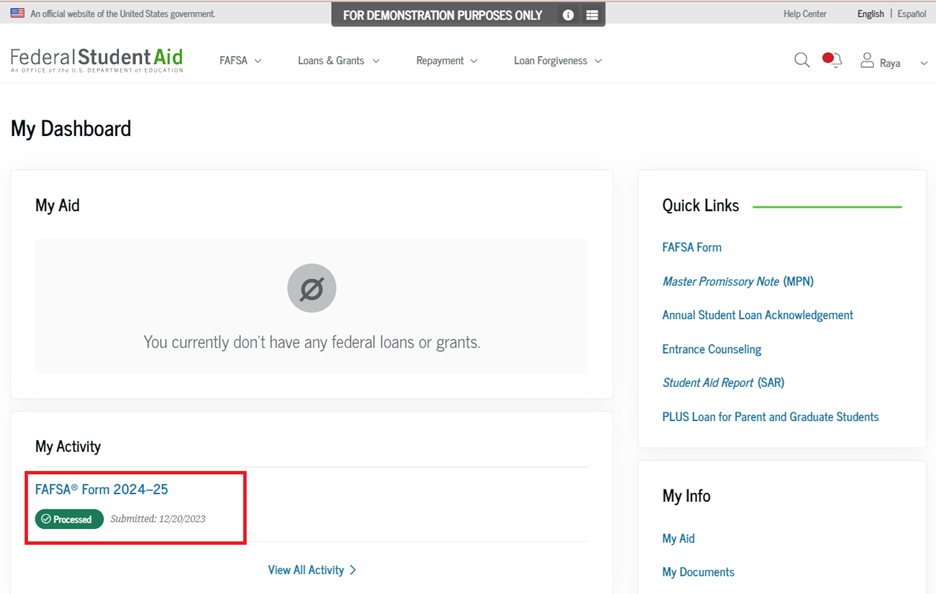
To check the status of your federal aid, you must first log in to the official Federal Student Aid website using your FSA ID. Once logged in, your “My Checklists” or “Dashboard” page provides a high-level overview of your current application status. If you have recently submitted a FAFSA, the system will indicate whether the application is “In Review,” “Processed,” or if “Action is Required.”
If your status is “Processed,” it means the Department of Education has successfully calculated your Student Aid Index (SAI)—formerly known as the Expected Family Contribution (EFC)—and shared this data with the colleges you listed on your application. If the status says “Action Required,” you must immediately click into the application to see what information is missing. Often, this involves a missing signature or a mismatch in Social Security information.
Interpreting the FAFSA Submission Summary
Once your FAFSA is processed, you will receive a FAFSA Submission Summary (FSS). This document is a summary of the data you provided and is not a financial aid offer itself. However, checking this summary is a vital part of monitoring your status. It will notify you if you have been selected for verification—a process where the federal government or your school requires additional documentation to confirm the accuracy of your application. Reviewing this summary early allows you to gather tax transcripts or citizenship documentation before the school’s internal deadlines.
Understanding Federal Loan Status
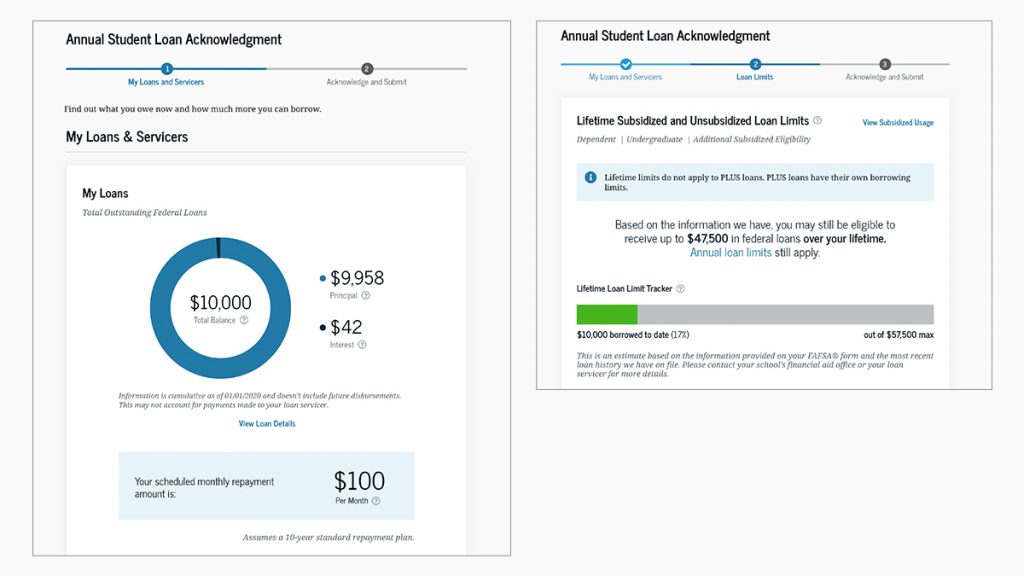
Beyond the initial application, the federal dashboard is where you track the status of your existing and pending student loans. If you are a first-time borrower, your aid status will remain “pending” until you complete specific requirements, such as Entrance Counseling and signing a Master Promissory Note (MPN). The portal tracks these requirements in real-time, allowing you to see if the federal government has cleared you to receive funds.
Monitoring Aid Through Institutional Portals
While the federal government determines your eligibility for certain types of aid, the actual administration and disbursement of those funds are handled by your college or university. Consequently, your school’s Student Information System (SIS) is the most accurate place to see the exact dollar amounts you are set to receive.
The Role of the Student Information System (SIS)
Every college uses a digital platform—such as Banner, PeopleSoft, Workday, or a proprietary portal—to manage student records. Once you have been admitted to a school, you are typically granted access to this portal. Navigating to the “Financial Aid” or “Financials” tab is the most direct way to check your status.
Within these portals, you will find a “Financial Aid Status” link for the specific academic year. This section provides a live look at where your application stands within the school’s financial aid office. It will show whether your FAFSA has been received by the school, whether they have begun crafting your award package, and if there are any outstanding “To-Do” items specific to the institution.
Reviewing Your Financial Aid Award Letter
The most significant milestone in checking your aid status is the receipt of the Financial Aid Award Letter (often called an Aid Offer). In the modern era, these are rarely sent via physical mail; instead, they appear as a notification within your student portal.
When you check this status, you are looking for an “Award Summary” that breaks down your aid into categories: Gift Aid (grants and scholarships) and Self-Help Aid (loans and work-study). You must manually “Accept” or “Decline” these awards within the portal. A common mistake students make is assuming that because the aid is listed, it is ready to be applied to their bill. In reality, your status will remain “Offered” rather than “Accepted” until you take action.

Managing Verification and To-Do Lists
Colleges often have their own internal verification processes. Even if the federal government did not flag your FAFSA for review, your school’s financial aid office might. Your student portal will have a “Task List” or “Action Items” section. Checking this weekly is essential. If the school requires a “Verification of Independent Status” form or a “Parent Income Clarification” document, your aid disbursement will be paused until those documents are uploaded and reviewed by a financial aid counselor.
Tracking Private Scholarships and State-Level Grants
Financial aid is rarely a monolithic block of funding. For many, it is a mosaic of federal, institutional, state, and private sources. Each of these components has a different tracking mechanism.
State Higher Education Agencies
Most states offer their own grant programs (such as the Cal Grant in California or the HOPE Scholarship in Georgia). These programs often have their own independent portals separate from both FAFSA and your college. To check your status for state aid, you must log in to your state’s higher education commission website. These portals will show if you have met the state’s residency and GPA requirements. Since state funds are often limited and distributed on a first-come, first-served basis, monitoring this status is vital for ensuring you don’t lose out on “free money” due to a clerical error.
Third-Party Scholarship Platforms
If you have secured private scholarships from community organizations, corporations, or foundations, tracking these requires proactive communication. Unlike federal aid, which is automated, private scholarships often require you to send your tuition bill or proof of enrollment to the donor.
To check the status of these funds, you should maintain a spreadsheet of every scholarship awarded, the contact information for the donor, and the date the funds were sent to your school. You can then cross-reference this with your school’s billing statement (often labeled as the “Bursar’s Account” or “Account Summary”). If a private scholarship does not appear as a credit on your account within two weeks of the semester starting, you must contact both the donor and the school’s financial aid office to trace the payment.
Decoding Financial Aid Terminology and Status Labels
As you move through these portals, you will encounter various status labels that can be confusing. Understanding these terms is essential for managing your personal finances and knowing when you need to intervene.
Disbursed vs. Anticipated Aid
One of the most important distinctions to look for is the difference between “Anticipated Aid” and “Disbursed Aid.”
-
Anticipated Aid: This means the school recognizes you are eligible for the money and expects it to arrive. It usually acts as a temporary credit on your bill, preventing you from being dropped from classes for non-payment.
-
Disbursed Aid: This means the money has actually been paid out. It has moved from the funding source to the school to cover your charges. If there is a surplus after your tuition is paid, the status change to “Disbursed” is the signal that a refund check or direct deposit is on its way to you for living expenses.
Satisfactory Academic Progress (SAP)
Your financial aid status is also tied to your academic performance. Each semester, the financial aid office runs a check on your “Satisfactory Academic Progress” (SAP). When checking your status, look for a “SAP Status” link. It will usually say “Meeting,” “Warning,” or “Ineligible.” If your GPA falls below a certain threshold or you do not complete enough credits, your aid status could change to “Suspended,” requiring an appeal process to reinstate your funding.
Best Practices for Maintaining Your Financial Aid Eligibility
Checking your status is not a one-time event; it is a recurring responsibility throughout your academic career. To ensure your financial health, you should adopt a proactive management strategy.
Communication with the Financial Aid Office
If your status has not changed in several weeks, or if you notice a discrepancy between what you were promised and what is appearing in your portal, do not wait for the school to contact you. Financial aid offices handle thousands of files; sometimes, a document upload might not trigger an automatic notification to a counselor. A polite email or an in-person visit to the financial aid office can often resolve “stuck” statuses. Always have your Student ID number ready and take notes on the names of the representatives you speak with.
Annual Renewal and Deadline Management
Financial aid status is year-specific. Every October (or December, depending on federal updates), the cycle begins anew for the following academic year. Part of checking your status is looking forward to the next cycle. Set calendar reminders for “Priority Deadlines.” Many institutional grants are only available to students who check their status and complete their renewal applications by a specific date, often as early as February or March.
By staying organized and frequently auditing your status across federal, state, and institutional platforms, you can navigate the complexities of student finance with confidence. This transparency allows you to focus on your education, knowing that your financial foundation is secure and your funding is on track.
aViewFromTheCave is a participant in the Amazon Services LLC Associates Program, an affiliate advertising program designed to provide a means for sites to earn advertising fees by advertising and linking to Amazon.com. Amazon, the Amazon logo, AmazonSupply, and the AmazonSupply logo are trademarks of Amazon.com, Inc. or its affiliates. As an Amazon Associate we earn affiliate commissions from qualifying purchases.