
Calculating your yearly income is a fundamental exercise in personal finance, offering a clear snapshot of your financial health and guiding crucial decisions from budgeting to tax planning. While it might seem straightforward for those with a single, consistent salary, the reality for many involves multiple income streams, deductions, and varying tax implications. A comprehensive understanding of this calculation empowers individuals to manage their money effectively, plan for the future, and meet their financial obligations with confidence.
Understanding Gross vs. Net Income
The first critical distinction in calculating yearly income lies between gross and net figures. These terms are often used interchangeably or confused, but they represent very different aspects of your earnings.
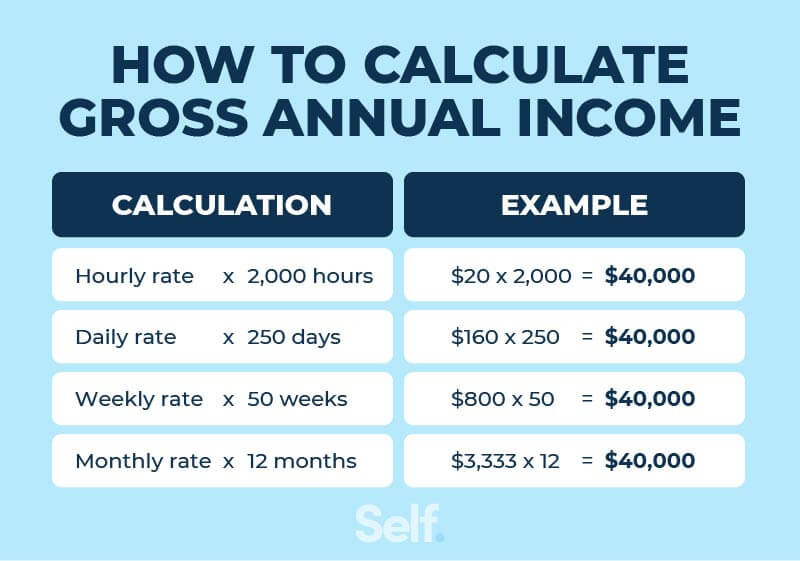
Gross Income: The Starting Point
Gross income refers to the total amount of money you earn before any deductions are taken out. This is the figure that often appears on employment contracts, initial job offers, or the total revenue generated by a business. For an employee, it’s your salary or wages earned before taxes, retirement contributions, or health insurance premiums. For a self-employed individual or business owner, it’s the total revenue generated from sales of goods or services before any business expenses are deducted.
Calculating gross income is the initial step in understanding your financial capacity. It includes:
- Wages and Salaries: The most common form of income for employed individuals.
- Commissions and Bonuses: Performance-based earnings that supplement base pay.
- Tips: Income earned in service industries.
- Self-Employment Earnings: Total revenue from your business activities before expenses.
- Rental Income: Gross receipts from property rentals.
- Investment Income: Dividends, interest, and capital gains.
- Pension and Retirement Distributions: Income received from retirement accounts.
- Alimony and Social Security Benefits: Other forms of personal income.
Summing up all these sources provides your total gross annual income.
Net Income: What You Actually Keep
Net income, often referred to as “take-home pay” for employees, is the amount of money you receive after all mandatory and voluntary deductions have been subtracted from your gross income. This figure is what you have available to spend, save, or invest. Understanding your net income is crucial for day-to-day budgeting and financial planning.
Common deductions that lead from gross to net income include:
- Federal, State, and Local Income Taxes: Based on your earnings and tax bracket.
- FICA Taxes: Social Security and Medicare contributions.
- Retirement Contributions: Such as 401(k) or 403(b) contributions.
- Health Insurance Premiums: Your share of health, dental, and vision insurance costs.
- Other Voluntary Deductions: Life insurance, disability insurance, union dues, or charitable contributions deducted directly from your paycheck.
For the self-employed, net income is generally calculated after business expenses have been paid and self-employment taxes (Social Security and Medicare) are accounted for, though these are typically paid separately rather than withheld.
Deconstructing Different Income Streams
Most individuals don’t rely on a single, monolithic income source. Understanding how to calculate and categorize each stream is vital for an accurate yearly income assessment.
Employment Income (Wages/Salary)
For most employed individuals, this is the primary component. You’ll find your total annual wages or salary on your W-2 form, provided by your employer. This form details your gross wages, tips, and other compensation, as well as the amounts withheld for federal, state, and local taxes, and FICA. If you have multiple employers throughout the year, you’ll receive a W-2 from each, and you’ll sum up the gross wages from all of them. Don’t forget to include any bonuses, commissions, or taxable benefits (like certain fringe benefits or non-cash compensation) that might not be explicitly labeled as “wages” but are reported on your W-2.
Self-Employment and Business Income
For freelancers, contractors, sole proprietors, or small business owners, calculating income is more nuanced. You report your earnings and expenses on Schedule C (Form 1040). Your gross income here is the total revenue generated from your business activities. From this, you subtract your allowable business expenses (e.g., supplies, office rent, advertising, travel, professional development). The resulting figure is your net profit or loss from self-employment, which then becomes part of your overall gross income for tax purposes and contributes to your personal yearly income. Keep meticulous records of all income and expenses.
Investment Income (Dividends, Interest, Capital Gains)
Money earned from investments contributes significantly to many individuals’ yearly income.
- Interest Income: Reported on Form 1099-INT, this includes interest from savings accounts, CDs, money market accounts, and bonds.
- Dividend Income: Reported on Form 1099-DIV, these are payments from stocks or mutual funds. Dividends can be “qualified” or “non-qualified,” affecting their tax treatment.
- Capital Gains/Losses: Result from selling an asset (like stocks, real estate, or collectibles) for more or less than its purchase price. These are reported on Form 8949 and Schedule D. Short-term capital gains (assets held for one year or less) are taxed at ordinary income rates, while long-term capital gains (assets held for more than one year) typically receive preferential tax treatment.
Rental Income
If you own rental properties, the gross rent you collect is part of your income. This is reported on Schedule E (Form 1040). Similar to self-employment, you can deduct eligible expenses related to the rental property, such as mortgage interest, property taxes, insurance, repairs, and depreciation. The net rental income (gross rent minus expenses) is added to your total yearly income.
Other Income Sources (Alimony, Pensions, Social Security)
Various other sources can contribute to your annual income:
- Alimony: For divorce decrees executed before 2019, alimony payments received are generally taxable income to the recipient.
- Pension and Annuity Income: Payments received from retirement plans, reported on Form 1099-R.
- Social Security Benefits: A portion of your Social Security benefits may be taxable depending on your “combined income” (adjusted gross income + non-taxable interest + half of your Social Security benefits).
- Gambling Winnings: Reportable and taxable income, often subject to withholding if over a certain threshold.
- Unemployment Benefits: Generally taxable at the federal level and often at the state level.
Accounting for Deductions and Adjustments
Once you’ve totaled your various gross income streams, the next step in arriving at a more accurate picture of your taxable income involves understanding deductions and adjustments. These reduce the amount of income on which you pay taxes, effectively lowering your tax liability.
Pre-Tax Deductions (401k, Health Savings Accounts)
Certain contributions reduce your taxable income before it’s even considered. These are often payroll deductions:
- 401(k), 403(b), Traditional IRA Contributions: Contributions to these retirement accounts are typically pre-tax, meaning they reduce your current year’s taxable income.
- Health Savings Account (HSA) Contributions: Contributions to an HSA are tax-deductible, even if made outside of payroll deduction, and grow tax-free.
- Flexible Spending Accounts (FSAs): Contributions to an FSA for healthcare or dependent care are also pre-tax.

These deductions reduce your Adjusted Gross Income (AGI), which is a crucial figure used in many tax calculations and for determining eligibility for various tax credits and deductions.
Itemized vs. Standard Deductions
After determining your AGI, you’ll further reduce your taxable income by either taking the standard deduction or itemizing your deductions.
- Standard Deduction: A fixed dollar amount set by the IRS based on your filing status (e.g., single, married filing jointly, head of household). Most taxpayers take the standard deduction as it’s simpler and often results in a larger deduction than itemizing.
- Itemized Deductions: If your eligible expenses are greater than the standard deduction, you can itemize. Common itemized deductions include:
- State and local taxes (SALT) up to a cap.
- Mortgage interest.
- Medical expenses exceeding a certain percentage of your AGI.
- Charitable contributions.
You choose whichever method yields the larger deduction to minimize your taxable income.
Tax Credits vs. Deductions
It’s important to differentiate between deductions and tax credits:
- Deductions reduce your taxable income, thereby reducing the amount of tax you owe based on your tax bracket. For example, a $1,000 deduction for someone in the 22% tax bracket saves them $220 in taxes.
- Tax Credits directly reduce the amount of tax you owe, dollar for dollar. A $1,000 tax credit saves you $1,000 in taxes. Some credits are even refundable, meaning you could receive money back even if you don’t owe any tax. Examples include the Child Tax Credit, Earned Income Tax Credit, and education credits.
While not part of the income calculation per se, understanding credits is essential for grasping your final tax liability and thus your true net financial position for the year.
Business Expenses for the Self-Employed
For those with self-employment income, business expenses are crucial for accurately calculating net business profit. These include:
- Home Office Deduction: If you use a part of your home exclusively and regularly for business.
- Vehicle Expenses: Mileage or actual expenses related to business travel.
- Supplies and Equipment: Items necessary for your business operations.
- Advertising and Marketing: Costs to promote your business.
- Professional Fees: Payments to accountants, lawyers, or consultants.
- Health Insurance Premiums: Often deductible for the self-employed, provided certain criteria are met.
Careful tracking of these expenses directly impacts your taxable income from self-employment.
Practical Steps for Calculation
Putting all these pieces together requires a systematic approach.
Gathering Your Financial Documents
The first and most crucial step is to gather all relevant financial documents. This includes:
- W-2s: From all employers.
- 1099 Forms: 1099-NEC (non-employee compensation), 1099-INT (interest), 1099-DIV (dividends), 1099-R (retirement distributions), 1099-G (government payments like unemployment), 1099-MISC (miscellaneous income).
- K-1s: From partnerships, S corporations, or trusts.
- Bank Statements: For self-employment income and expenses not covered by 1099s.
- Rental Property Records: Income and expense ledgers.
- Investment Statements: For capital gains/losses not fully covered by 1099-B.
- Receipts and Records: For itemized deductions and business expenses.
- IRA/HSA Contribution Records: To confirm pre-tax deductions.
Utilizing Spreadsheets and Software
Once you have your documents, inputting the data into a structured format is key.
- Spreadsheets (Excel, Google Sheets): Ideal for organizing different income streams, deducting expenses, and tracking month-to-month earnings. You can create custom templates to sum up gross income, apply deductions, and project yearly figures.
- Financial Software (Quicken, Mint, YNAB): These tools can automate much of the income tracking by linking to your bank accounts and investment platforms. They offer categorization features that help in identifying income and expense types, making yearly aggregation simpler.
- Tax Preparation Software (TurboTax, H&R Block Tax Software): While primarily for tax filing, these programs also guide you through the process of inputting all income sources and deductions, effectively calculating your yearly taxable income as a precursor to filing.
Estimating Future Income
For budgeting and financial planning, estimating future income is as important as calculating past income.
- Consistent Salary: Projecting a consistent salary is straightforward.
- Variable Income (Commissions, Self-Employment): Look at historical trends, current contracts, and market conditions. Be conservative in your estimates to avoid overspending. Average your monthly or quarterly income and extrapolate.
- Inflation and Raises: Factor in potential salary increases or cost-of-living adjustments.
- New Income Streams: Account for planned side hustles, new investments, or changes in employment.
Regularly reviewing and adjusting your income projections ensures your financial plans remain realistic and achievable.
Why Accurate Income Calculation Matters
Precisely calculating your yearly income is not just an academic exercise; it forms the bedrock of sound financial management.
Budgeting and Financial Planning
Your yearly income is the primary input for creating a realistic budget. Knowing exactly how much money you have coming in (net income) allows you to allocate funds for living expenses, savings, debt repayment, and discretionary spending. Without an accurate income figure, any budget you create will be flawed, leading to potential overspending or missed financial goals. It enables you to project your cash flow, identify periods of surplus or deficit, and make informed decisions about your spending habits.
Tax Compliance and Planning
An accurate calculation of your gross income, AGI, and taxable income is absolutely essential for fulfilling your tax obligations. Miscalculating can lead to errors on your tax return, resulting in underpayment (and potential penalties) or overpayment (missing out on money you’re owed). Beyond compliance, understanding your income streams and deductions allows for proactive tax planning. You can make strategic decisions about retirement contributions, investment timing, or business expenses to minimize your tax burden legally. This knowledge is particularly crucial for the self-employed who must estimate and pay quarterly taxes.
Loan and Credit Applications
When applying for a mortgage, car loan, personal loan, or even a credit card, lenders assess your ability to repay based on your income. They typically look at your gross annual income to determine your debt-to-income ratio and overall creditworthiness. Providing an accurate and verifiable income figure is critical for approval and for securing the most favorable interest rates and terms. Inconsistent or inflated income figures can lead to rejection or more expensive borrowing.

Wealth Accumulation and Goal Setting
Finally, understanding your yearly income is fundamental for long-term wealth accumulation and achieving significant financial goals. Whether you’re saving for a down payment, retirement, a child’s education, or starting a business, your income dictates your capacity to save and invest. It allows you to set realistic savings targets, evaluate the feasibility of major purchases, and track your progress toward financial independence. By understanding where your money comes from and how much you truly earn, you can make strategic decisions that align with your aspirations and build a secure financial future.
aViewFromTheCave is a participant in the Amazon Services LLC Associates Program, an affiliate advertising program designed to provide a means for sites to earn advertising fees by advertising and linking to Amazon.com. Amazon, the Amazon logo, AmazonSupply, and the AmazonSupply logo are trademarks of Amazon.com, Inc. or its affiliates. As an Amazon Associate we earn affiliate commissions from qualifying purchases.