
Understanding your annual salary is far more than just knowing a single number; it’s a critical foundation for effective personal finance management, budgeting, and career planning. Many people might glance at their pay stub, see a deposit hit their account, and not fully grasp the intricate journey their earnings take from a promised figure to the spendable cash in their pocket. This article will demystify the process, breaking down the components that constitute your annual salary, the essential deductions that reduce it, and why a clear understanding of these calculations is paramount for your financial health. By the end, you’ll have a comprehensive guide to accurately calculating and interpreting your annual earnings.
Understanding the Basics: Gross vs. Net Annual Salary
The journey to understanding your annual salary begins with a clear distinction between two fundamental concepts: gross annual salary and net annual salary. While often used interchangeably in casual conversation, these terms represent vastly different financial realities.
Defining Gross Annual Salary
Your gross annual salary is the total amount of money your employer agrees to pay you for your work over a year, before any deductions are taken out. This is the figure typically advertised in job descriptions, discussed during salary negotiations, and often quoted as your “base” salary.
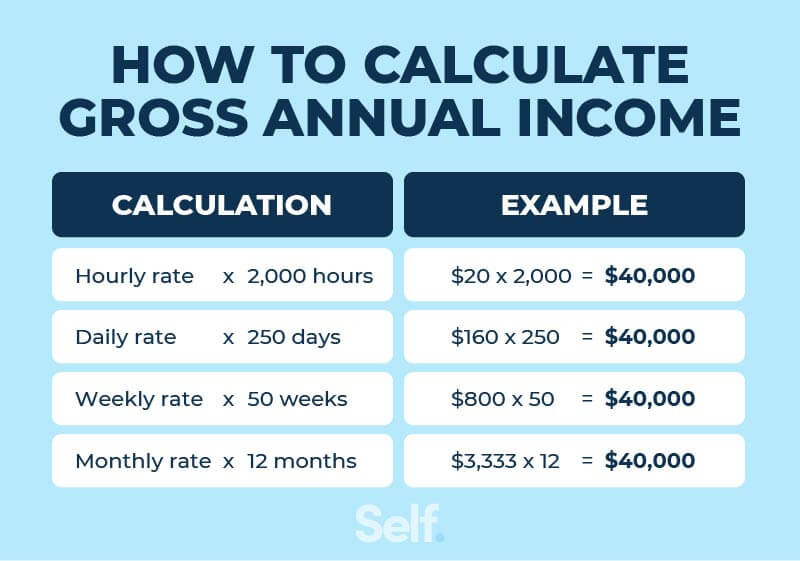
For salaried employees, this is usually a straightforward figure – for instance, $60,000 per year. For hourly employees, the gross annual salary is calculated by multiplying your hourly rate by the number of hours you typically work in a week, and then by the number of weeks in a year. For example, if you earn $20 per hour and work 40 hours a week for 52 weeks a year, your gross annual salary would be $20/hour * 40 hours/week * 52 weeks/year = $41,600.
Crucially, gross annual salary also includes other forms of compensation that are considered taxable income, such as commissions, bonuses, overtime pay, and certain allowances, before any deductions. It represents your total earnings from your primary employment source before any external or internal obligations are met. This figure is vital for understanding your total earning potential and for calculations related to loans, mortgages, and certain benefits, as lenders and agencies often look at gross income to assess your financial capacity.
Decoding Net Annual Salary (Take-Home Pay)
While your gross annual salary reflects your total earnings, your net annual salary, often referred to as “take-home pay,” is the actual amount of money you receive after all deductions have been subtracted. This is the figure that lands in your bank account, ready for you to budget, spend, and save.
The difference between gross and net can be substantial, and it’s why understanding the various deductions is so important. Without this understanding, you might overestimate your available funds, leading to budgeting challenges. Your net annual salary is the realistic foundation for all your personal financial planning – from paying bills and groceries to saving for a down payment or retirement. It’s the number that truly dictates your purchasing power and financial liquidity.
Key Components That Influence Your Gross Annual Salary
Your gross annual salary is rarely a monolithic figure; it’s often a composite of several different types of compensation. Understanding these components is essential for both negotiating your pay and accurately calculating your total earnings.
Base Salary
The base salary is the core, foundational amount of money an employer agrees to pay you for your work. It is the steady, guaranteed income before any additional earnings or deductions. For salaried employees, this is a fixed annual figure (e.g., $75,000). For hourly employees, the base salary is calculated by multiplying your hourly rate by the standard number of hours you’re expected to work annually (e.g., $25/hour x 2080 hours/year = $52,000, assuming 40 hours/week x 52 weeks/year). This component forms the bedrock of your annual earnings and is the starting point for almost all salary discussions.
Variable Compensation and Bonuses
Beyond the base, many roles offer variable compensation elements that can significantly boost your gross annual salary. These often depend on individual, team, or company performance.
- Performance Bonuses: Paid out for achieving specific targets or exceeding expectations, these can be quarterly, semi-annual, or annual.
- Sign-On Bonuses: A one-time payment offered to new hires as an incentive to join the company.
- Retention Bonuses: Offered to employees to encourage them to stay with the company for a specified period.
- Profit Sharing: A portion of the company’s profits distributed to employees, often tied to overall company success.
It’s crucial to understand how these bonuses are structured and if they are guaranteed, as they can fluctuate year-to-year and should be considered when estimating your potential gross annual salary, rather than a guaranteed component.
Commissions
Common in sales and certain service roles, commissions are earnings directly tied to the volume or value of sales generated. They are typically calculated as a percentage of sales, revenue, or profit. For example, a salesperson earning a 5% commission on $500,000 in annual sales would add $25,000 to their base salary. Commission structures can vary widely – some are flat percentages, others are tiered (e.g., higher percentage for sales above a certain threshold), and some might involve accelerators or decelerators. Understanding your commission plan is vital for accurately forecasting your gross annual income, as it can be a substantial portion of your total earnings.
Overtime Pay
For non-exempt employees (those eligible for overtime under labor laws), overtime pay is an additional income stream for hours worked beyond the standard workweek (typically 40 hours). Overtime is usually paid at “time and a half” (1.5 times the regular hourly rate) and sometimes “double time” (2 times the regular hourly rate) for holidays or specific extra hours, depending on state and federal laws. If you regularly work overtime, these additional earnings become a significant part of your gross annual salary calculation. For example, an hourly employee earning $20/hour who works 5 hours of overtime per week for 50 weeks would add $20 * 1.5 * 5 hours * 50 weeks = $7,500 to their annual earnings.
Other Income Streams
Certain other benefits or allowances, while sometimes seen as reimbursements, can also be considered part of your gross income for tax purposes and should be factored into a comprehensive view of your annual salary. These might include:
- Tips: Common in service industries, tips are direct payments from customers that form a significant portion of income.
- Stipends: Fixed sums of money paid periodically, often for specific purposes like education or internships, that can be taxable.
- Allowances: Such as car allowances, housing allowances, or relocation allowances, which, depending on their structure, might be considered taxable income rather than simply reimbursements.
While some allowances might be non-taxable, it’s prudent to confirm their taxability when calculating your total gross income.
Navigating Deductions: From Gross to Net Annual Salary
Once your gross annual salary is determined, the next crucial step is to understand the deductions that transform this gross figure into your net, take-home pay. These deductions fall into two main categories: mandatory and voluntary.
Mandatory Deductions
These are legally required withholdings that employers must deduct from your pay, dictated by federal, state, and local laws.

- Taxes: This is typically the largest category of deductions.
- Federal Income Tax: Withheld based on your W-4 form, reflecting your marital status and number of dependents. The U.S. operates on a progressive tax system, meaning higher income brackets are taxed at higher rates.
- State Income Tax: Applicable in most, but not all, states. Rates and structures vary significantly by state.
- Local Income Tax: Some cities or counties also levy their own income taxes.
- Social Security Tax (FICA – Federal Insurance Contributions Act): A flat rate (currently 6.2% for employees) on earnings up to an annual limit, funding retirement, disability, and survivor benefits.
- Medicare Tax (FICA): A flat rate (currently 1.45% for employees) on all earnings, funding hospital insurance. There’s also an additional Medicare tax for high earners.
- Statutory Contributions:
- Unemployment Insurance: Some states require employees to contribute to state unemployment insurance funds.
- State Disability Insurance (SDI): Required in a few states (e.g., California, New Jersey, New York) to provide benefits to workers who lose wages due to non-work-related illness or injury.
These mandatory deductions are non-negotiable and are crucial to factor in when estimating your net annual income.
Voluntary Deductions (Pre-Tax and Post-Tax)
Beyond mandatory withholdings, employees often opt for various voluntary deductions, some of which are pre-tax (reducing your taxable income) and others post-tax.
- Health Insurance Premiums: If you receive health coverage through your employer, your share of the monthly premium is typically deducted from your paycheck. Often, these are pre-tax deductions, which means they are subtracted from your gross pay before income taxes are calculated, thereby lowering your taxable income.
- Retirement Contributions:
- 401(k), 403(b), 457(b): Contributions to these employer-sponsored retirement plans are generally pre-tax (for traditional accounts), meaning they reduce your current taxable income. This is a powerful benefit for long-term savings and tax planning.
- Roth 401(k): Contributions are made post-tax, but qualified withdrawals in retirement are tax-free.
- Flexible Spending Accounts (FSAs) / Health Savings Accounts (HSAs): These accounts allow you to set aside pre-tax money for eligible healthcare or dependent care expenses, offering significant tax advantages.
- Life Insurance/Disability Insurance: If purchased through your employer, premiums are deducted. These can be pre-tax or post-tax depending on the plan.
- Union Dues: For employees who are members of a union, regular dues are typically withheld from pay.
- Loan Repayments / Garnishments: If you have taken a loan from your employer, or if there’s a court-ordered garnishment for child support, alimony, or unpaid debts, these amounts will also be deducted.
Understanding whether a voluntary deduction is pre-tax or post-tax is critical for tax planning, as pre-tax deductions can lower your overall tax liability, increasing your net pay compared to an equivalent post-tax deduction.
Practical Applications and Tools for Salary Calculation
While the components and deductions might seem complex, calculating your annual salary effectively is a skill that can be mastered with the right approach and tools.
Manual Calculation Steps
To manually estimate your net annual salary, follow these steps:
- Calculate Total Gross Income: Add your base salary, estimated bonuses, commissions, overtime, and any other taxable income sources for the year.
- Example: Base $60,000 + $5,000 bonus + $3,000 commission = $68,000
- Identify Pre-Tax Deductions: Sum up all contributions to 401(k), health insurance premiums (employee share), FSA/HSA contributions, etc., that are taken before taxes.
- Example: $6,000 (401k) + $2,400 (health insurance) = $8,400
- Calculate Taxable Income: Subtract your total pre-tax deductions from your total gross income.
- Example: $68,000 (Gross) – $8,400 (Pre-tax deductions) = $59,600 (Taxable Income)
- Estimate Taxes: Using your taxable income, estimate your federal, state, and local income taxes, as well as Social Security and Medicare (FICA) taxes. You’ll need to refer to current tax brackets and FICA rates. This is the most complex step for manual calculation, as it depends on your specific tax situation (filing status, credits, etc.).
- Example (simplified):
- Federal Income Tax (estimated): $5,000
- State Income Tax (estimated): $2,500
- FICA (7.65% of $68,000): $5,202
- Total Estimated Taxes: $5,000 + $2,500 + $5,202 = $12,702
- Example (simplified):
- Identify Post-Tax Deductions: Add any deductions taken after taxes, such as Roth 401(k) contributions, certain life insurance premiums, or union dues.
- Example: $1,200 (Roth 401k)
- Calculate Total Deductions: Sum all estimated taxes and all post-tax deductions.
- Example: $12,702 (Taxes) + $1,200 (Post-tax) = $13,902
- Determine Net Annual Salary: Subtract your total deductions (pre-tax, taxes, and post-tax) from your total gross income.
- Example: $68,000 (Gross) – ($8,400 (Pre-tax) + $12,702 (Taxes) + $1,200 (Post-tax)) = $45,698 (Net Annual Salary)
- Alternative (simpler): Gross Annual Salary – All Deductions (Pre-tax + Taxes + Post-tax) = Net Annual Salary
Utilizing Online Salary Calculators
For a quicker and often more accurate estimation, online salary calculators are invaluable. Websites like ADP, PaycheckCity, and various state government tax portals offer robust tools that can estimate your net pay based on your gross salary, location, filing status, and various deductions. These tools often have up-to-date tax tables and can account for nuances that are difficult to calculate manually. They are particularly useful for:
- Scenario Planning: See how a raise, increased 401(k) contribution, or changes in health insurance premiums would affect your take-home pay.
- Comparing Job Offers: Quickly assess the actual value of different compensation packages.
- Estimating Tax Withholding: Many tools can help you adjust your W-4 to ensure you’re withholding the correct amount of federal income tax.
Reviewing Pay Stubs and W-2 Forms
Your most accurate source of information on your annual salary calculation is your own employment documentation.
- Pay Stubs: Each pay stub provides a detailed breakdown of your gross pay for that pay period, all specific deductions taken, and your net pay. It also typically shows year-to-date (YTD) totals for both gross earnings and deductions, allowing you to track your annual progress. Regularly reviewing your pay stubs can help you catch errors and ensure your deductions are accurate.
- W-2 Form: At the end of each year, your employer issues a W-2 form, which reports your total annual gross wages, federal and state taxes withheld, and other taxable compensation. This document is essential for filing your income taxes and provides a definitive record of your earnings and mandatory deductions for the year.
The Strategic Importance of Understanding Your Annual Salary
Beyond simply knowing how much money you’ll receive, a deep understanding of your annual salary calculation holds significant strategic value for your financial and career trajectory.
Budgeting and Financial Planning
Your net annual salary is the bedrock of your personal budget. Without knowing precisely how much money you have available after all deductions, creating a realistic budget for housing, utilities, food, transportation, and discretionary spending becomes a guessing game. Accurate calculation enables you to:
- Set Realistic Saving Goals: Whether it’s for a down payment, retirement, or an emergency fund, you can allocate specific portions of your actual take-home pay.
- Manage Debt Effectively: Understand how much disposable income you genuinely have to put towards loan repayments.
- Avoid Overspending: Prevent the common trap of budgeting based on a higher gross salary, which often leads to financial strain.
Negotiating Salary and Benefits
A comprehensive understanding of all components of your annual salary empowers you during salary negotiations. When evaluating a job offer, don’t just focus on the base salary. Consider:
- Total Compensation: Factor in potential bonuses, commissions, and the value of benefits like health insurance, retirement matching, and other perks, as these contribute to your overall financial well-being.
- Net Pay Impact: Use online calculators to estimate the net pay of different offers. A slightly lower gross offer with better pre-tax benefits (like a higher 401(k) match) might result in a similar or even better net pay, alongside greater long-term financial security.
- Negotiating Deductions: While taxes are mandatory, you can negotiate some voluntary deductions, such as employer contributions to benefits or the cost-sharing structure of health insurance.
Tax Planning
Understanding how different income components and deductions impact your tax liability is crucial for effective tax planning.
- Maximizing Pre-Tax Savings: Utilizing pre-tax deductions like 401(k) contributions or FSA/HSA can significantly reduce your taxable income, lowering your overall tax bill.
- Adjusting Withholding: By understanding your estimated annual tax liability, you can adjust your W-4 form to ensure the correct amount of federal and state taxes are withheld. This helps avoid owing a large sum at tax time or, conversely, overpaying and giving the government an interest-free loan throughout the year.
- Understanding Taxable vs. Non-Taxable Income: Differentiating between what counts as taxable income and what doesn’t helps you plan and report accurately.

Career Advancement and Job Search
When considering career moves or comparing job offers, a sophisticated understanding of annual salary calculation allows for more informed decision-making. It helps you:
- Compare Apples to Apples: Evaluate total compensation packages rather than just base salaries across different industries or roles.
- Identify Growth Potential: Assess how different compensation structures (e.g., higher base vs. higher commission potential) align with your risk tolerance and career goals.
- Plan for Future Earnings: Project how raises, promotions, or changes in benefit structures will realistically impact your financial standing.
In conclusion, calculating your annual salary is much more than a simple arithmetic exercise; it’s a foundational skill for financial literacy and empowerment. By diligently tracking your gross earnings and understanding the myriad of deductions, both mandatory and voluntary, you gain clarity over your true financial resources. This knowledge is indispensable for effective budgeting, strategic financial planning, savvy salary negotiation, and informed tax management, ultimately paving the way for greater financial stability and success throughout your career and life.
aViewFromTheCave is a participant in the Amazon Services LLC Associates Program, an affiliate advertising program designed to provide a means for sites to earn advertising fees by advertising and linking to Amazon.com. Amazon, the Amazon logo, AmazonSupply, and the AmazonSupply logo are trademarks of Amazon.com, Inc. or its affiliates. As an Amazon Associate we earn affiliate commissions from qualifying purchases.