
In a world increasingly driven by data and numbers, understanding how to calculate percentages isn’t just a useful skill; it’s a financial superpower. From managing your personal budget and deciphering investment returns to understanding discounts and navigating complex financial reports, percentages are the universal language of proportionality and change. They provide a clear, standardized way to compare quantities, assess growth, measure decline, and allocate resources across virtually every facet of our financial lives.
Yet, despite their ubiquity, many people approach percentage calculations with a degree of apprehension. The good news is that the underlying principles are straightforward, and once mastered, they unlock a deeper, more confident engagement with your money. This article will demystify percentage calculations, grounding them firmly in practical financial contexts, empowering you to make more informed decisions and gain greater control over your financial destiny.
The Ubiquitous Role of Percentages in Finance
Percentages are more than just mathematical concepts; they are the bedrock upon which many financial decisions are made and understood. Their power lies in their ability to express a part of a whole in a standardized, easily comparable format, making complex financial scenarios digestible and actionable.
Everyday Financial Decisions
Consider your daily life: a store advertises a “20% off” sale, your bank offers a “0.5% annual interest rate” on savings, or you’re contemplating leaving a “15% tip” at a restaurant. Each of these scenarios requires an understanding of percentages to correctly interpret the information and determine its financial impact. Without this fundamental comprehension, you might overpay, miss out on potential savings, or miscalculate your expenses, leading to avoidable financial friction. From evaluating the true cost of a discounted item to assessing the affordability of a loan with a specific interest rate, percentages are the silent workhorses guiding our consumer choices and expenditure management.
Business and Investment Insights
Beyond personal spending, percentages are indispensable in the realms of business and investing. Businesses use them to calculate profit margins, track sales growth, assess market share, and determine tax liabilities. Investors rely on percentages to understand returns on investment (ROI), evaluate portfolio performance, and compare the efficiency of different assets or funds. A company’s “2% quarterly growth” might signal healthy expansion, while a “10% drop in revenue” could raise red flags. Similarly, an “8% annual return” on an investment provides a clear metric for wealth accumulation over time. The ability to interpret and calculate these percentages is critical for anyone looking to make sound business judgments or grow their wealth intelligently.
Mastering the Fundamentals: Core Percentage Calculations
At its heart, “percentage” means “per hundred” or “out of one hundred.” It’s a way of expressing a number as a fraction of 100. Understanding these core calculations is the key to unlocking all their diverse applications in finance.
Basic Percentage Calculation: Part of a Whole
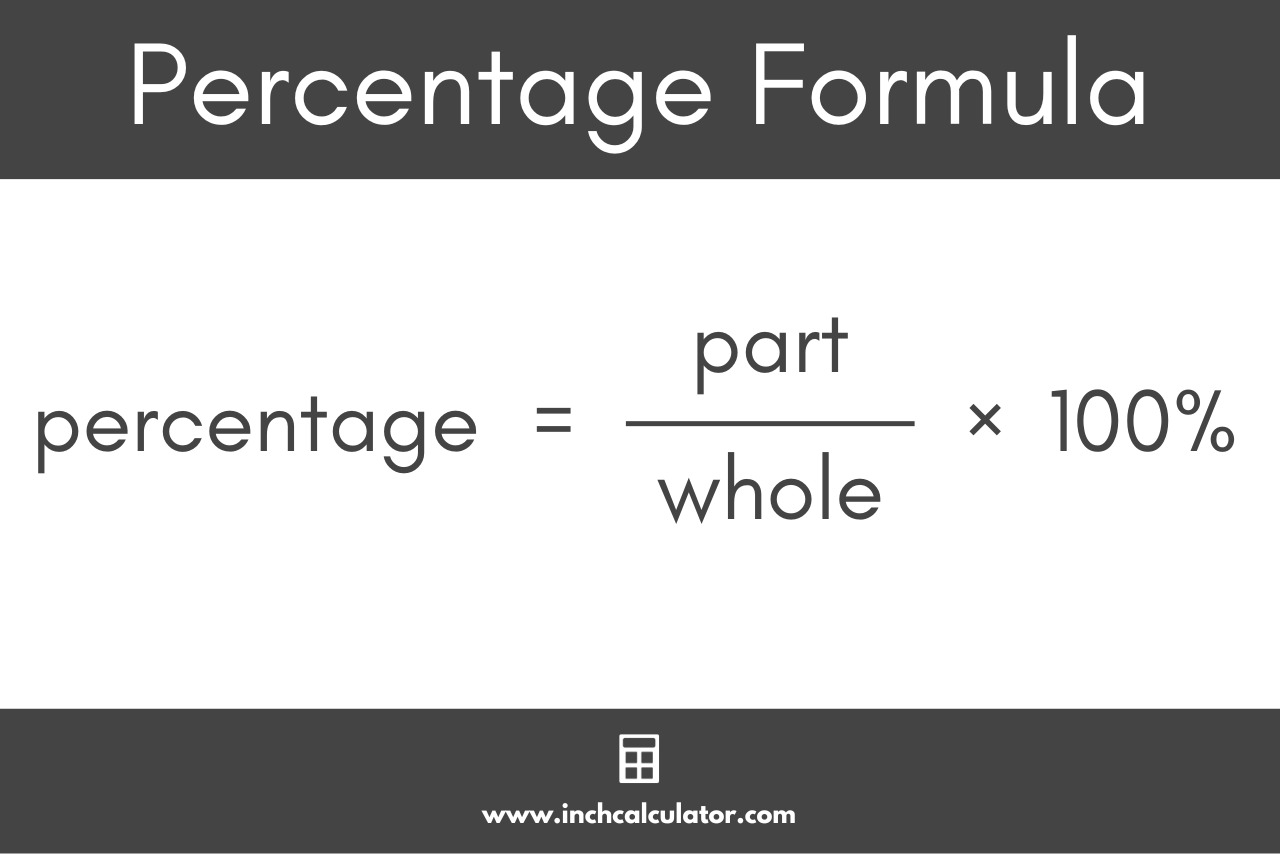
The most fundamental use of percentages is to express a portion of a total. To calculate what percentage one number (the part) is of another number (the whole), you use the formula:
Percentage = (Part / Whole) * 100
Example: If you spent $150 on groceries out of a $1000 monthly budget, what percentage of your budget went to groceries?
Percentage = (150 / 1000) * 100 = 0.15 * 100 = 15%
So, 15% of your budget was spent on groceries. This simple calculation allows for quick analysis of spending habits within a budget.
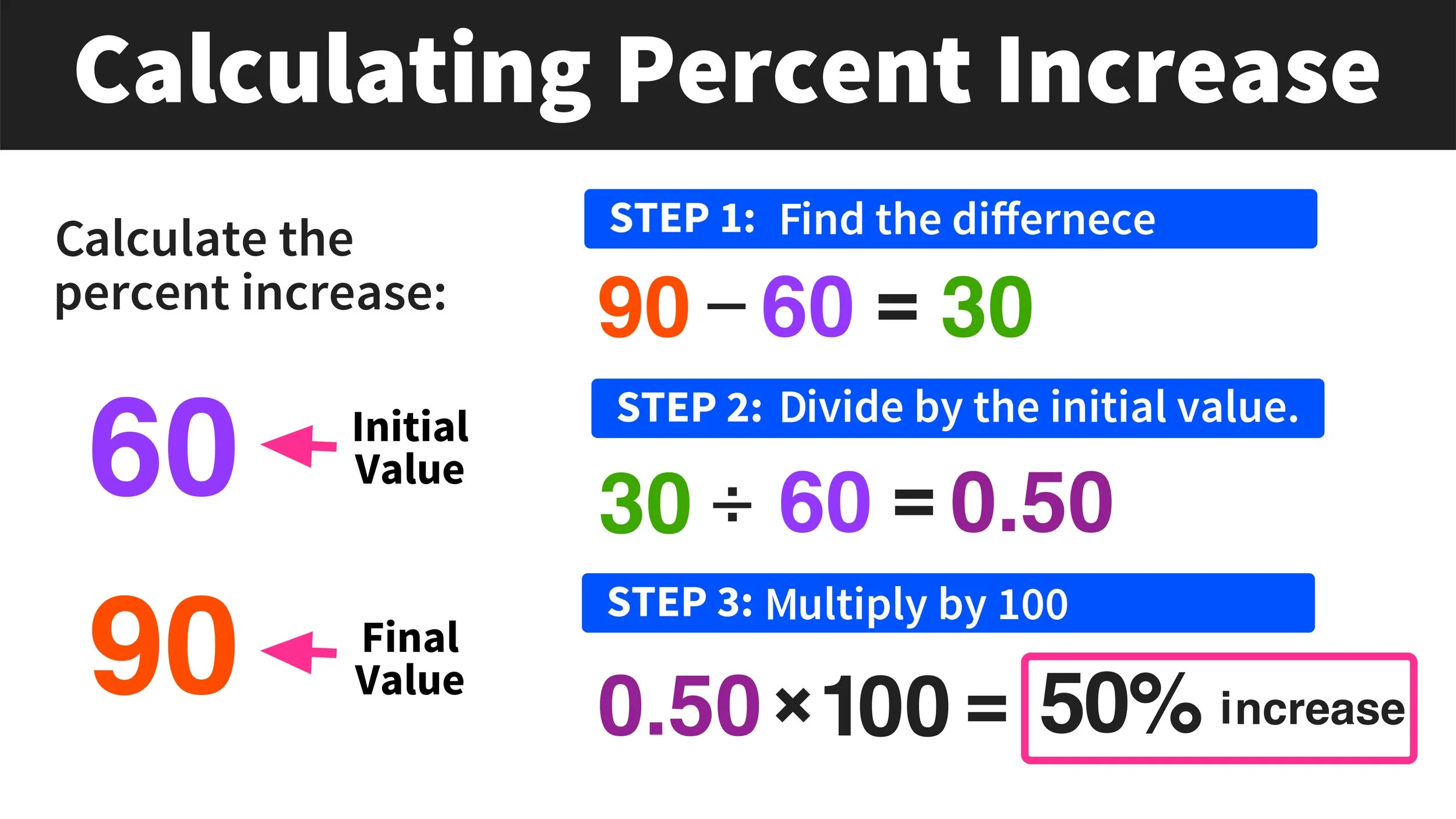
Percentage Change: Increases and Decreases
Percentages are incredibly useful for tracking financial growth or decline. Whether it’s your investment portfolio, a company’s sales, or the rate of inflation, understanding percentage change is crucial.
The formula for percentage change is:
Percentage Change = ((New Value - Original Value) / Original Value) * 100
- For an increase: If your stock investment grew from $5,000 to $5,750.
Percentage Change = ((5750 - 5000) / 5000) * 100 = (750 / 5000) * 100 = 0.15 * 100 = 15% increase - For a decrease: If the value of your car depreciated from $20,000 to $18,000.
Percentage Change = ((18000 - 20000) / 20000) * 100 = (-2000 / 20000) * 100 = -0.10 * 100 = -10% decrease
(Often, we express decreases as a positive percentage with the word “decrease” or “drop” explicitly stated, e.g., “a 10% decrease.”)
Finding a Percentage of a Number
This calculation is vital for discounts, taxes, interest, and commissions. You want to find what a certain percentage is of a given whole number.
The formula is:
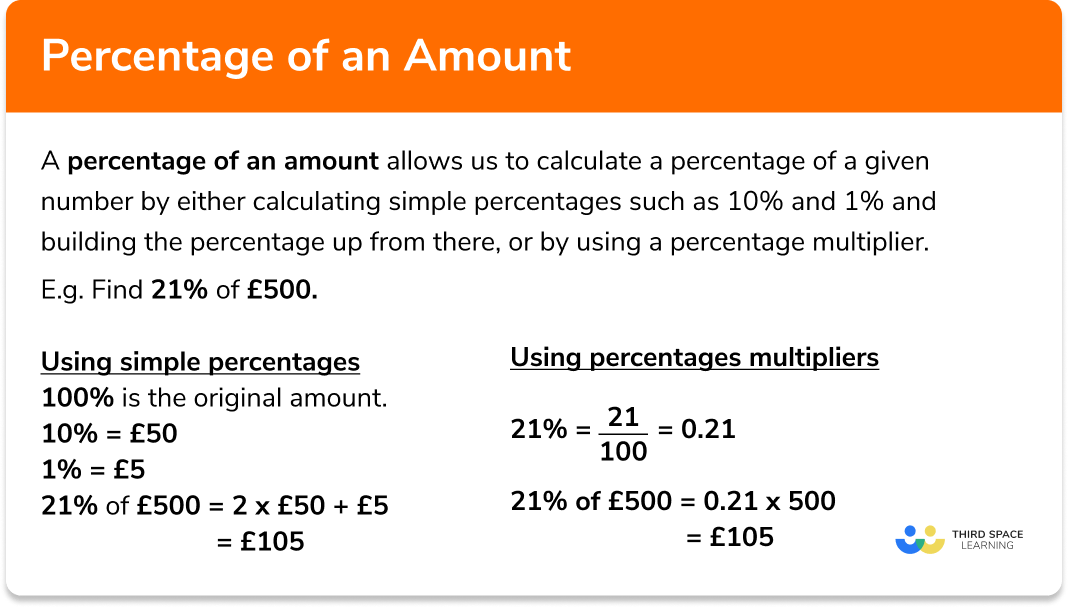
Amount = (Percentage / 100) * Whole Number
or, more simply, convert the percentage to a decimal by dividing by 100, then multiply:
Amount = Decimal Percentage * Whole Number
Example: You see an item priced at $80 with a “25% off” sale. How much is the discount?
Discount Amount = (25 / 100) * 80 = 0.25 * 80 = $20
So, the item is discounted by $20, making the final price $60.
Reverse Percentages: Finding the Original Value
Sometimes you know the final value after a percentage increase or decrease, and you need to find the original value. This is particularly useful for working backward from discounted prices or post-tax amounts.
- After an increase: If a product now costs $120 after a 20% price increase, what was its original price?
Original Price = New Value / (1 + Percentage Increase as a decimal)
Original Price = 120 / (1 + 0.20) = 120 / 1.20 = $100 - After a decrease: You bought a shirt for $45, which was on sale for 25% off. What was the original price?
Original Price = New Value / (1 - Percentage Decrease as a decimal)
Original Price = 45 / (1 - 0.25) = 45 / 0.75 = $60
Practical Applications in Personal Finance
A firm grasp of percentage calculations directly translates into smarter personal financial management, allowing you to optimize your spending, saving, and borrowing.
Understanding Interest Rates (Loans, Savings)
Interest is perhaps the most pervasive percentage in personal finance. Whether it’s the interest you earn on savings or the interest you pay on loans (mortgages, car loans, credit cards), percentages dictate how much your money grows or costs you.
- Savings: A savings account offering a “1.5% APY” (Annual Percentage Yield) means you’ll earn 1.5% of your principal balance over a year. If you have $10,000, you’d earn $150 in interest.
- Loans: A credit card with an “18% APR” (Annual Percentage Rate) means that if you carry a balance, you’ll be charged 18% of that balance over a year, typically compounded monthly. Understanding this helps you see the true cost of borrowing and motivates paying off high-interest debt.
Navigating Discounts and Sales
Sales are a cornerstone of consumer culture, and percentages are their language. “30% off,” “Buy one, get the second 50% off,” or “Save 15% on your first purchase.” Being able to quickly calculate the actual saving and the final price allows you to distinguish a genuine deal from a clever marketing ploy and ensure you’re getting the best value for your money. It also helps in comparing deals across different stores or brands.
Budgeting and Tracking Expenses
Effective budgeting relies heavily on percentages. You might allocate a certain percentage of your income to housing (e.g., 30%), another to food (e.g., 15%), savings (e.g., 10%), and so on.
Example: If your net monthly income is $4,000 and you aim to save 10%, you’d calculate:
Savings Goal = 0.10 * 4000 = $400
After tracking your actual spending, you can calculate the percentage of your income spent in each category to see if you’re adhering to your budget and identify areas for adjustment.
Gratuities and Commissions
Tipping is a common social custom, and commissions are a significant component of income for many sales professionals. Both are calculated as percentages.
- Tips: If your restaurant bill is $65 and you want to leave a 18% tip, you’d calculate:
Tip Amount = 0.18 * 65 = $11.70
This ensures you adequately reward service staff. - Commissions: A real estate agent earning a 3% commission on a $300,000 home sale would earn:
Commission = 0.03 * 300,000 = $9,000
Understanding this helps evaluate income potential and cost structures.
Percentages in Business and Investing
For entrepreneurs, business owners, and investors, percentages are the fundamental metrics for assessing performance, profitability, and potential.
Profit Margins and Markups
Businesses live and die by their margins.
- Gross Profit Margin: Measures the percentage of revenue left after deducting the cost of goods sold. Formula:
((Revenue - Cost of Goods Sold) / Revenue) * 100. A higher margin indicates greater efficiency in production. - Net Profit Margin: Indicates the percentage of revenue remaining after all expenses (including taxes) have been deducted. Formula:
((Net Income) / Revenue) * 100. This is a critical indicator of a company’s overall profitability. - Markup: The percentage added to the cost of a product to determine its selling price. Formula:
((Selling Price - Cost) / Cost) * 100. Businesses use markups to ensure they cover costs and achieve desired profit levels.
Investment Returns (ROI)
Return on Investment (ROI) is a performance measure used to evaluate the efficiency of an investment or compare the efficiency of several different investments. It’s almost always expressed as a percentage.
ROI = ((Current Value of Investment - Cost of Investment) / Cost of Investment) * 100
A 10% ROI means your investment grew by 10% of its initial value, allowing you to benchmark against other opportunities and your financial goals.
Financial Ratios and Performance Metrics
Financial analysts and investors use dozens of ratios, all expressed as percentages, to dissect a company’s health.
- Debt-to-Equity Ratio: Measures the percentage of a company’s financing that comes from debt versus equity.
- Current Ratio: While often expressed as a decimal, it can be seen as a percentage comparison of current assets to current liabilities, indicating liquidity.
- Dividend Yield: The percentage of a company’s share price that it pays out in dividends annually.
(Annual Dividends Per Share / Share Price) * 100. This is crucial for income-focused investors.
These percentage-based ratios provide quick, standardized insights into liquidity, solvency, efficiency, and profitability, making comparisons between different companies or industries far more meaningful.
Taxes and Deductions
Tax systems globally are heavily percentage-based. Income tax brackets, sales tax, property tax, capital gains tax – all are calculated as percentages of specific values. Understanding these allows individuals and businesses to accurately forecast liabilities, plan for tax season, and identify potential deductions or credits that can reduce their taxable income. For instance, knowing your marginal tax rate (the percentage of tax paid on your last dollar of income) is vital for understanding the true financial impact of an increase in earnings.
Tools and Tips for Accurate Calculation
While the foundational math is simple, efficiency and accuracy in percentage calculations are paramount in finance. Fortunately, a range of tools and mental shortcuts can help.
Leveraging Calculators and Spreadsheets
For complex or frequent calculations, technology is your friend.
- Basic Calculators: Most smartphones and dedicated calculators have a ‘%’ button that simplifies common operations. For example, to find 25% of 80, you can often just type
80 * 25 % =. - Spreadsheets (Excel, Google Sheets): These are invaluable for financial modeling, budgeting, and investment tracking. You can set up formulas that automatically calculate percentages for large datasets. For instance, to calculate a percentage of a total in Excel, if your part is in cell A1 and your whole is in B1, you’d type
=(A1/B1)*100in a third cell, then format it as a percentage. Spreadsheets also make it easy to perform “what-if” analyses by changing a single percentage input.
Mental Math Shortcuts
For quick estimations or simple scenarios, mental math can be very effective.
- Finding 10%: To find 10% of any number, simply move the decimal point one place to the left. (e.g., 10% of $450 is $45).
- Finding 5%: Find 10%, then halve it. (e.g., 5% of $450 is $45 / 2 = $22.50).
- Finding 1%: Move the decimal two places to the left. (e.g., 1% of $450 is $4.50).
- Using 10% for other percentages: To calculate 20%, find 10% and double it. For 15%, find 10% and add 5%.
- Rounding: For quick estimates, round numbers to make them easier to work with mentally. For example, 19% of $78 might be estimated as 20% of $80, which is $16.
Avoiding Common Errors
- Decimal vs. Percentage: Remember to convert percentages to decimals when multiplying or dividing (e.g., 25% becomes 0.25). A common mistake is using ’25’ instead of ‘0.25’ in calculations.
- Original Value vs. New Value in Percentage Change: Always divide by the original value when calculating percentage change.
- Compounding: Be mindful of how percentages compound over time (e.g., interest on interest). A simple annual percentage might not reflect the true cost or gain if compounding is frequent.
By integrating these tools and tips, you can enhance both the speed and reliability of your percentage calculations, allowing you to focus on the financial insights they provide rather than struggling with the arithmetic.
Conclusion
Percentages are far more than mere mathematical symbols; they are the analytical gears that drive our financial world. From the micro-decisions of everyday budgeting and shopping to the macro-strategies of investing and business management, a solid understanding of how to calculate and interpret percentages empowers you with clarity, confidence, and control.
They enable you to accurately assess the impact of interest rates on your debt or savings, decode the true value of discounts, project investment growth, understand financial reports, and make informed choices that align with your financial goals. By embracing these calculations, you’re not just solving equations; you’re unlocking a deeper comprehension of your financial landscape, equipping yourself with an essential skill set for navigating the complexities of modern money management. Mastering percentages is, without doubt, a cornerstone of financial literacy and a catalyst for sound financial decision-making.
aViewFromTheCave is a participant in the Amazon Services LLC Associates Program, an affiliate advertising program designed to provide a means for sites to earn advertising fees by advertising and linking to Amazon.com. Amazon, the Amazon logo, AmazonSupply, and the AmazonSupply logo are trademarks of Amazon.com, Inc. or its affiliates. As an Amazon Associate we earn affiliate commissions from qualifying purchases.