
In the intricate landscape of personal finance, understanding how to calculate percentage off is more than just a mathematical exercise; it’s a fundamental skill that empowers consumers to make informed, strategic decisions. From bustling retail stores to online marketplaces, and even in service industries, discounts expressed as percentages are ubiquitous. Mastering this calculation transforms you from a passive shopper into an active financial manager, capable of identifying true value, maximizing savings, and aligning your spending with your broader financial goals. This deep dive will not only equip you with the precise methods for calculating percentages off but also illustrate their profound impact across various facets of your financial life, strictly within the realm of money management.

The Foundational Math: Understanding Percentage Off
At its core, calculating “percentage off” is about determining the fractional reduction of an original price and expressing that fraction as a part of one hundred. It’s a simple concept with far-reaching implications for your personal budget and financial well-being.
Why Percentage Off Matters for Your Wallet
Every dollar saved is a dollar earned, or more accurately, a dollar that doesn’t need to be earned again. For individuals navigating personal finance, the ability to quickly and accurately calculate percentage off is a cornerstone of smart spending. It enables you to:
- Identify Genuine Savings: Not all “deals” are created equal. Understanding the actual percentage off helps you distinguish between marginal reductions and significant savings.
- Optimize Your Budget: By consistently taking advantage of meaningful discounts, you can stretch your budget further, freeing up funds for savings, investments, or other essential expenditures.
- Compare Offers Effectively: When confronted with multiple promotions, knowing how to calculate the percentage off allows for an objective comparison, ensuring you always select the best value for your money.
- Negotiate Better Deals: Whether buying a car or a major appliance, understanding pricing and potential discounts empowers you with better negotiation leverage.
In essence, mastering this skill is about taking control of your purchasing power and ensuring your hard-earned money works as hard as possible for you.
Deconstructing the Formula: Step-by-Step Calculation
Calculating percentage off involves a straightforward formula that can be approached in two primary ways, depending on what information you initially have.
Method 1: When you know the original price and the sale price.
This is the most common scenario you’ll encounter in retail.
- Find the discount amount: Subtract the sale price from the original price.
- Discount Amount = Original Price – Sale Price
- Divide the discount amount by the original price: This gives you the discount as a decimal.
- Discount in Decimal = Discount Amount / Original Price
- Multiply by 100: Convert the decimal to a percentage.
- *Percentage Off = (Discount Amount / Original Price) * 100*
Example: A shirt originally costs $50, and it’s on sale for $35.
- Discount Amount = $50 – $35 = $15
- Discount in Decimal = $15 / $50 = 0.30
- Percentage Off = 0.30 * 100 = 30%
Method 2: When you know the original price and the percentage off.
This method helps you find the final sale price when a discount percentage is advertised.
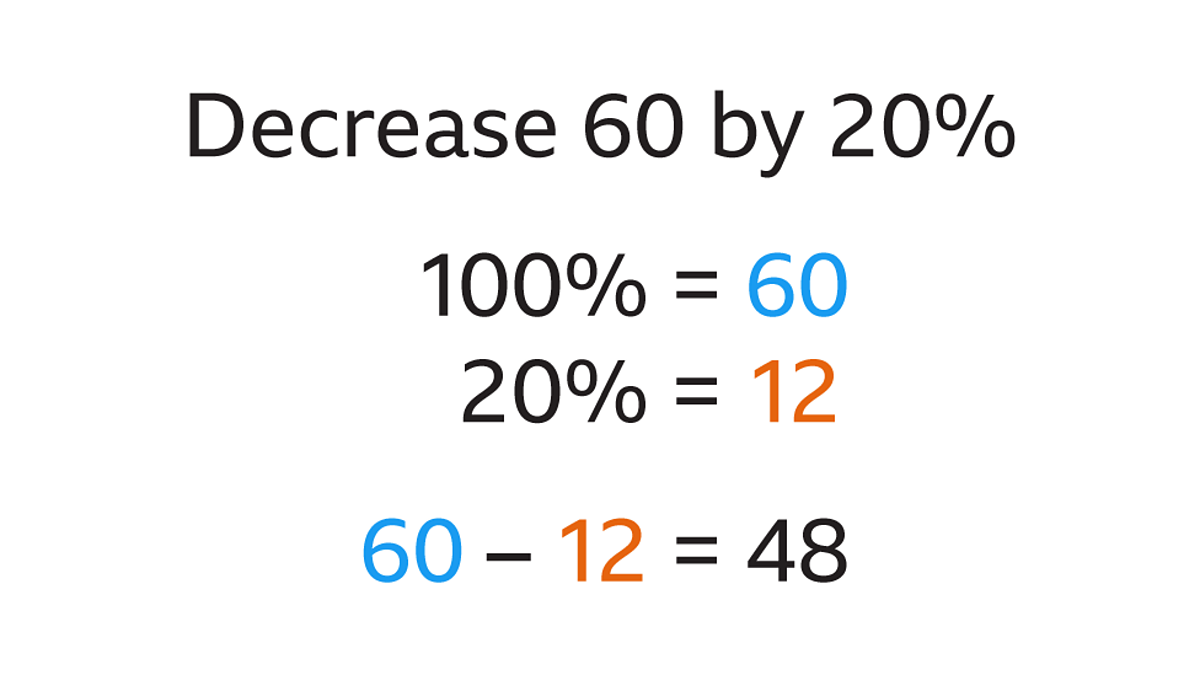
- Convert the percentage off to a decimal: Divide the percentage by 100.
- Discount in Decimal = Percentage Off / 100
- Calculate the discount amount: Multiply the original price by the discount in decimal.
- *Discount Amount = Original Price * Discount in Decimal*
- Subtract the discount amount from the original price: This gives you the final sale price.
- Sale Price = Original Price – Discount Amount
Example: A pair of shoes costs $80, and there’s a 25% discount.
- Discount in Decimal = 25 / 100 = 0.25
- Discount Amount = $80 * 0.25 = $20
- Sale Price = $80 – $20 = $60
Understanding these fundamental calculations is the first step towards becoming a more financially astute consumer.
Everyday Applications in Personal Finance
The utility of calculating percentage off extends far beyond a simple retail transaction. It’s a critical tool for managing various aspects of your personal finances, from daily spending to long-term financial planning.
Savvy Shopping: Maximizing Retail Discounts
Retail environments are saturated with promotions, from “20% off all electronics” to “buy one, get one 50% off.” Your ability to quickly interpret these offers is key to maximizing your savings.
- Sales Events: During major sales like Black Friday or seasonal clearances, items often carry significant percentage reductions. Knowing how to calculate these rapidly helps you prioritize purchases and compare deals across different stores or brands.
- Coupon Stacking: Some retailers allow combining store coupons with manufacturer coupons. Each coupon often represents a percentage off or a fixed dollar amount. Understanding the cumulative effect, especially when one is a percentage, allows you to determine the best sequence for applying discounts.
- Unit Pricing: For grocery shopping, comparing the percentage off on different sizes or brands can help you identify the best value per unit, which is crucial for maximizing your food budget.
Beyond Retail: Discounts in Services and Subscriptions
The concept of percentage off isn’t confined to physical goods. It frequently appears in service industries and subscription models, offering significant opportunities for savings.
- Insurance Premiums: Many insurance providers offer discounts for various factors: bundling policies (home and auto), safe driving, installing security systems, or paying annually instead of monthly. These are typically expressed as percentages (e.g., “save 10% by bundling”). Calculating the actual dollar savings helps you assess the financial benefit of these options.
- Annual Subscriptions: Software, streaming services, and gym memberships often provide a percentage discount for paying annually versus monthly. Calculating this percentage off on the total annual cost can reveal substantial savings over time. For example, a service at $10/month ($120/year) might offer an annual plan for $100. This is a ($120-$100)/$120 * 100 = 16.67% discount – a noteworthy saving.
- Utility Bills: Some utility companies offer discounts for automatic payments or paperless billing, often a small percentage that adds up over a year.
Budgeting and Savings: How Discounts Impact Your Financial Goals
Every dollar saved through smart discount utilization is a dollar that can be redirected towards your financial goals.
- Achieving Savings Targets: If your goal is to save X amount by the end of the year, consistently making purchases at a discount helps you reach that goal faster by reducing your outflow on necessary items.
- Emergency Fund Growth: Savings from discounts can be directly channeled into your emergency fund, strengthening your financial safety net.
- Debt Reduction: For those managing debt, especially high-interest credit card debt, freeing up funds through savvy purchasing can accelerate debt repayment.
- Investment Capital: Over time, the cumulative savings from being a smart shopper can be invested, allowing your money to grow through compounding. This highlights how small, consistent financial discipline (like leveraging discounts) can have a significant long-term impact.

Navigating Complex Discount Scenarios
While basic percentage off calculations are straightforward, real-world scenarios often present layers of complexity. Understanding these nuances is crucial to ensure you’re truly getting the best deal and not falling for marketing tricks.
The Double Discount Dilemma: Sequential Reductions
One common challenge arises when multiple percentage discounts are applied to the same item, such as “20% off, then an additional 10% off.” A frequent mistake is to simply add the percentages (e.g., 20% + 10% = 30% off). This is incorrect and will lead to an overestimation of your savings. Discounts are applied sequentially.
Correct Calculation for Multiple Discounts:
Example: An item costs $100. It’s 20% off, and you have an extra 10% coupon.
- Apply the first discount:
- $100 * (1 – 0.20) = $100 * 0.80 = $80
- Apply the second discount to the new discounted price:
- $80 * (1 – 0.10) = $80 * 0.90 = $72
The final price is $72, which means the total discount is $100 – $72 = $28, or 28% off, not 30%. This distinction is vital for accurate budgeting and deal comparison.
The Hidden Costs: Taxes, Shipping, and Rebates
A percentage off sticker price doesn’t always reflect the final amount you’ll pay or the total savings. Several other factors come into play:
- Sales Tax: In most jurisdictions, sales tax is calculated after all discounts have been applied to the item’s price. Failing to account for this can lead to a slight underestimation of the final cost.
- Shipping Costs: For online purchases, shipping fees can significantly erode the benefit of a percentage off discount. Always calculate the total cost (discounted price + shipping) before determining the true value. Sometimes, a smaller percentage off with free shipping might be better than a larger percentage off with high shipping fees.
- Rebates: Mail-in or instant rebates offer money back after purchase. While not a percentage off at the point of sale, they function as a deferred discount. Factor them into your overall cost analysis, but remember the money isn’t immediate.
- Minimum Spend Requirements: Many percentage-off coupons require a minimum purchase amount. Ensure your cart meets this threshold to qualify for the discount.
Evaluating True Value: When a Discount Isn’t a Deal
Beyond the numbers, a critical aspect of financial intelligence is understanding when a discount represents genuine value for you.
- Need vs. Want: A heavily discounted item is only a good deal if you genuinely need or truly value it. Buying something unnecessary just because it’s “on sale” is still spending money you didn’t have to spend, ultimately costing you more.
- Quality and Longevity: Sometimes, a cheaper, heavily discounted item might be of lower quality, requiring replacement sooner. Investing in a higher-quality item at a smaller discount might offer better long-term value.
- Opportunity Cost: Consider what else you could do with the money. Is a 30% discount on a gadget more beneficial than investing that same amount in a high-yield savings account or paying down high-interest debt?
Tools and Strategies for Effortless Calculation
While the formulas are simple, being able to quickly calculate percentage off in various situations is a valuable skill for financial agility.
Mental Math Shortcuts for On-the-Go Savings
- Estimating 10%: To find 10% off, simply move the decimal one place to the left. For $80, 10% is $8. For 20% off, double that ($16). For 5%, halve the 10% ($4). This is a quick way to get a rough idea.
- Working with Multiples: If an item is 30% off, think of it as paying 70% of the original price (100% – 30%). Multiply the original price by 0.70. This can sometimes be faster for direct calculations.
- Rounding: For quick estimates, round the original price to a convenient number. An item at $47.99 at 25% off can be estimated as $50 at 25% off ($12.50 savings, so roughly $37.50).
Leveraging Digital Aids: Calculators, Apps, and Spreadsheets
For precision and more complex scenarios, technology is your ally.
- Smartphone Calculators: Every smartphone has a built-in calculator. Use it without hesitation for exact calculations, especially when dealing with multiple discounts or taxes.
- Discount Calculator Apps: Numerous free apps are designed specifically for calculating discounts, often allowing you to input the original price, percentage off, and even sales tax to get a final price instantly.
- Online Calculators: Websites abound with simple percentage calculators that can perform these operations quickly.
- Spreadsheets (e.g., Excel, Google Sheets): For tracking larger purchases, planning budgets, or analyzing potential investments, spreadsheets are invaluable. You can create templates to automatically calculate discounts, total costs, and projected savings, providing a comprehensive view of your financial decisions.
Empowering Your Financial Future Through Discount Savvy
Ultimately, the ability to calculate percentage off is a crucial tool in your financial literacy toolkit. It’s not just about saving a few dollars here and there; it’s about cultivating a mindset of financial prudence and strategic decision-making.
From Consumer to Financial Strategist
Understanding percentages off transforms you from a passive recipient of advertised deals into an active financial strategist. You move beyond impulse purchases driven by attractive percentage signs to making deliberate choices based on real value and personal financial alignment. This shift in perspective means:
- Conscious Spending: Every purchase becomes an opportunity to assess value and optimize expenditure.
- Enhanced Negotiation Skills: Knowing how to calculate value empowers you to negotiate effectively, whether for a retail item, a service contract, or even larger assets like vehicles.
- Proactive Financial Planning: You can better anticipate spending on essentials and discretionary items, leading to more accurate budgeting and forecasting.
Long-Term Benefits of Smart Discount Utilization
The compounding effect of consistently saving money through savvy discount utilization can significantly impact your long-term financial health.
- Accelerated Debt Repayment: Extra funds saved can be channeled into high-interest debt, reducing the principal faster and saving you significant interest payments over time.
- Robust Savings and Investment Growth: By regularly diverting savings from discounted purchases into investment vehicles, you allow your money to grow exponentially through the power of compounding interest, contributing to retirement funds, down payments, or other major financial milestones.
- Increased Financial Security: A strong financial foundation built on smart spending and saving provides peace of mind, reducing stress and offering greater flexibility in navigating life’s unexpected turns.
- Achieving Financial Independence: Over time, these cumulative savings and smart financial habits contribute to building wealth and achieving true financial independence, where your assets can generate income sufficient to cover your living expenses.
In conclusion, “how do you calculate percentage off” is a question with a simple mathematical answer but profound financial implications. By mastering this skill and applying it consistently across all areas of your spending, you not only save money in the short term but also lay a stronger foundation for a secure and prosperous financial future. It’s an indispensable aspect of responsible money management in today’s economy.
aViewFromTheCave is a participant in the Amazon Services LLC Associates Program, an affiliate advertising program designed to provide a means for sites to earn advertising fees by advertising and linking to Amazon.com. Amazon, the Amazon logo, AmazonSupply, and the AmazonSupply logo are trademarks of Amazon.com, Inc. or its affiliates. As an Amazon Associate we earn affiliate commissions from qualifying purchases.