
Navigating the world of car loans can often feel like deciphering a complex financial code. For many prospective car buyers, the sticker price is just the beginning; the real cost is often significantly inflated by the interest rate. Understanding how interest rates are calculated and, more importantly, how they impact your total repayment is a critical skill for any financially savvy consumer. This guide will demystify the process, breaking down the calculation methods, the factors that influence your rate, and strategies to minimize the amount of interest you pay over the life of your car loan.
A car loan is essentially an agreement where a lender provides you with a lump sum to purchase a vehicle, and you agree to repay that sum (the principal) plus an additional fee (the interest) over a set period. The interest rate is the percentage of the principal charged by the lender for the use of their money. A seemingly small difference in this percentage can translate into thousands of dollars over several years, making a solid grasp of its mechanics indispensable.
The Fundamentals of Car Loan Interest
Before diving into calculations, it’s essential to understand the basic concepts that underpin car loan interest. These foundational elements will provide context for the numbers you’ll encounter and help you make more informed decisions.
Distinguishing Interest Rate from APR
Often used interchangeably, the interest rate and Annual Percentage Rate (APR) are distinct figures crucial for understanding the true cost of your car loan.
The interest rate is simply the percentage charged by the lender on the principal loan amount. It directly determines the monetary cost of borrowing the principal.
The APR, on the other hand, is a broader measure of the total cost of borrowing, expressed as a yearly percentage. It includes not only the interest rate but also any additional fees associated with the loan, such as origination fees, processing fees, or closing costs. For car loans, the APR often provides a more accurate picture of your annual borrowing cost because it incorporates these extra charges. When comparing loan offers, always use the APR for an apples-to-apples comparison, as it encompasses all mandatory costs.
Simple Interest vs. Compound Interest in Car Loans
Most consumer loans, including car loans, typically use simple interest. Simple interest is calculated only on the principal amount that you owe. With car loans, the interest due each month is calculated based on the remaining principal balance after your last payment. This means that as you pay down your loan, the amount of interest accrued each month decreases because the principal balance decreases.
Compound interest, conversely, is interest calculated on the initial principal and also on the accumulated interest from previous periods. While common in investments and some credit card scenarios, compound interest is generally not a factor in standard car loan structures. Understanding that car loans primarily operate on a simple interest basis on the remaining principal is key to grasping how your payments are applied over time.
Understanding the Principal Amount
The principal amount is the original sum of money you borrow from the lender to purchase the car. If you take out a $25,000 loan for a car, your initial principal is $25,000. Each monthly payment you make is split between covering the interest accrued since your last payment and reducing this principal amount. In the early stages of a loan, a larger portion of your payment goes towards interest. As the loan matures, and the principal balance decreases, a greater percentage of your payment is allocated to reducing the principal itself, accelerating your equity build-up in the vehicle.
Key Factors Influencing Your Car Loan Interest Rate
Your interest rate isn’t arbitrarily assigned; it’s a direct reflection of various factors that lenders use to assess their risk. By understanding these determinants, you can better position yourself to secure a favorable rate.
Your Credit Score: The Primary Determinant
Your credit score is arguably the most significant factor influencing the interest rate you’ll be offered. A credit score is a numerical representation of your creditworthiness, reflecting your history of borrowing and repaying debt. Borrowers with excellent credit scores (typically 720+) are considered low-risk by lenders and therefore qualify for the lowest interest rates. Conversely, individuals with lower credit scores (sub-600) pose a higher risk of default, prompting lenders to charge higher interest rates to compensate for that increased risk. Building and maintaining a strong credit score through timely payments and responsible credit management is paramount to securing attractive car loan rates.
Loan Term Length and Its Impact
The loan term, or the duration over which you agree to repay the loan, also plays a crucial role. Shorter loan terms (e.g., 36 or 48 months) generally come with lower interest rates because the lender’s money is tied up for a shorter period, reducing their risk. However, shorter terms result in higher monthly payments. Longer loan terms (e.g., 60 or 72 months) typically have higher interest rates, as the extended repayment period increases the lender’s exposure to risk. While longer terms offer lower monthly payments, they lead to paying significantly more interest over the life of the loan.
Down Payment and Debt-to-Income Ratio
Making a substantial down payment can positively impact your interest rate. A larger down payment reduces the amount you need to borrow, thus decreasing the lender’s risk. It also signals to lenders that you are financially stable and committed to the purchase. Your debt-to-income (DTI) ratio—the percentage of your gross monthly income that goes towards debt payments—is another vital metric. Lenders prefer a lower DTI ratio, as it indicates you have sufficient income to manage additional debt. A high DTI ratio can lead to higher interest rates or even loan denial, as it suggests you might be overextended.
Vehicle Type and Market Conditions
The type of vehicle you’re purchasing can influence your interest rate. New cars typically qualify for lower interest rates than used cars because new cars are less likely to break down and hold their value better, making them less of a risk for lenders. Used cars, especially older models, carry a higher perceived risk due to potential mechanical issues and depreciation.
Furthermore, prevailing market conditions and the broader economic environment affect interest rates. When the Federal Reserve raises its benchmark interest rate, it generally leads to higher interest rates across all types of loans, including car loans. Conversely, in a low-interest-rate environment, car loan rates tend to be more favorable.
Practical Methods for Calculating Car Loan Interest
While lenders handle the complex calculations, understanding the principles allows you to verify figures and anticipate costs. Here are practical approaches to calculating car loan interest.
Using Online Car Loan Calculators
For most consumers, online car loan calculators are the easiest and most practical tool for estimating interest and monthly payments. Websites of banks, credit unions, and financial publications typically offer these free tools. You simply input the loan amount, interest rate, and loan term, and the calculator instantly provides an estimated monthly payment and the total interest you’ll pay over the life of the loan. While these are estimates, they are invaluable for comparing different loan scenarios (e.g., how a higher down payment or a shorter term affects your costs).

The Basic Simple Interest Formula (for total interest)
While this won’t give you monthly payment breakdowns, the basic simple interest formula can estimate the total interest paid over a loan’s term if the interest rate remains constant (which it typically does for fixed-rate car loans).
The formula is:
I = P * R * T
Where:
- I = Total Interest Paid
- P = Principal Loan Amount (the initial amount borrowed)
- R = Annual Interest Rate (as a decimal, e.g., 5% becomes 0.05)
- T = Loan Term in Years
Example: If you borrow $20,000 at an annual interest rate of 6% (0.06) for 5 years:
I = $20,000 * 0.06 * 5 = $6,000
This means you would pay $6,000 in interest over the five-year term, in addition to the $20,000 principal. Note that this is a simplified calculation and doesn’t account for the amortizing nature of most car loans where interest is calculated on the remaining principal each month.
Deciphering Your Amortization Schedule
An amortization schedule is a detailed table showing each payment made on a loan, how much of that payment goes towards interest, how much goes towards the principal, and the remaining principal balance after each payment. Your lender should provide this schedule upon loan approval.
Reviewing an amortization schedule is the most accurate way to understand the interest calculation month by month. You’ll observe that in the initial payments, a larger portion is allocated to interest, and a smaller portion to principal. As the loan progresses, this allocation shifts, with more going towards the principal and less to interest. This schedule clearly illustrates how simple interest is applied to the declining principal balance.
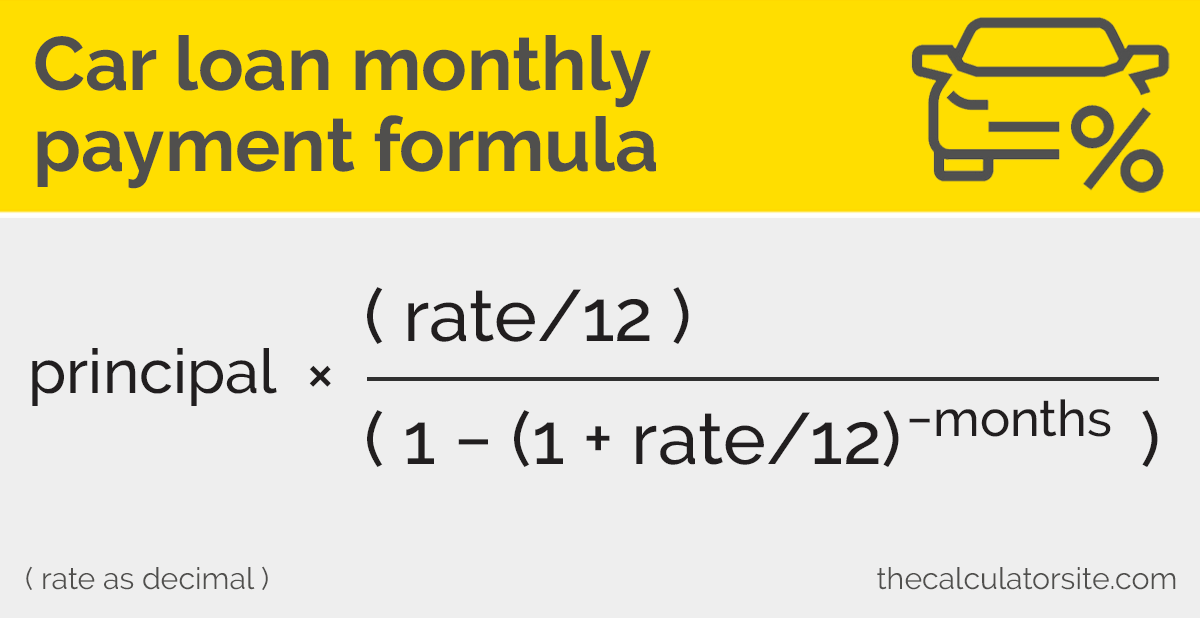
Manual Calculation for Monthly Interest (on remaining principal)
If you want to manually calculate the interest portion of a specific monthly payment, you can do so using the following steps:
- Find your current principal balance. This is the remaining amount you owe on the loan.
- Calculate the monthly interest rate. Divide your annual interest rate (as a decimal) by 12.
- Example: If your annual rate is 6% (0.06), your monthly rate is 0.06 / 12 = 0.005.
- Multiply your current principal balance by the monthly interest rate. This gives you the interest portion of your next payment.
- Example: If your current principal is $15,000, and your monthly rate is 0.005, then $15,000 * 0.005 = $75. This means $75 of your next payment will go towards interest.
The remainder of your monthly payment (after deducting the interest portion) will then be applied to reduce your principal balance.
- Example: If your current principal is $15,000, and your monthly rate is 0.005, then $15,000 * 0.005 = $75. This means $75 of your next payment will go towards interest.
Strategies to Minimize Interest Paid on Your Car Loan
Knowing how interest is calculated is one thing; actively working to reduce the amount you pay is another. Here are effective strategies to save money on your car loan.
Boosting Your Credit Score Before Applying
Given that your credit score is the most significant factor, taking steps to improve your credit score before applying for a car loan can lead to substantial savings. This includes paying all bills on time, reducing existing debt, correcting any errors on your credit report, and avoiding opening new credit accounts right before applying for the car loan. Even a few points increase can push you into a better rate tier.
Making a Substantial Down Payment
A larger down payment directly reduces the amount you need to borrow, which in turn reduces the total interest you’ll pay. It also makes you a more attractive borrower to lenders, potentially qualifying you for a lower interest rate on the remaining financed amount. Aim for at least 20% if possible, especially for new cars, to avoid being “upside down” (owing more than the car is worth) early in the loan term.
Opting for a Shorter Loan Term
While a shorter loan term means higher monthly payments, it invariably leads to paying less overall interest. The money is paid back faster, reducing the time interest has to accrue. Compare the total interest paid on a 60-month loan versus a 36-month loan with the same principal and rate to see the significant difference. If your budget allows, a shorter term is almost always the more cost-effective choice in the long run.
Exploring Refinancing Opportunities
If your credit score has significantly improved since you first took out your car loan, or if market interest rates have dropped, refinancing your car loan could be a smart move. Refinancing involves taking out a new loan, often with a lower interest rate, to pay off your existing car loan. This can reduce your monthly payments, lower the total interest paid, or shorten your loan term.
Shopping Around for the Best Rates
Never settle for the first loan offer you receive, especially from the dealership. Shop around and get quotes from multiple lenders—banks, credit unions, and online lenders. Credit unions, in particular, are often known for offering competitive interest rates. Having multiple pre-approvals in hand gives you leverage when negotiating with dealerships and ensures you secure the most favorable terms available to you.
Beyond Calculation: Empowering Your Car Buying Decision
Understanding interest rate calculation is a powerful tool, but it’s just one piece of the puzzle. An informed car buying decision extends beyond the numbers to include a comprehensive understanding of your loan agreement.
The Importance of Reading the Fine Print
Once you’ve found a car and secured a loan offer, it’s absolutely crucial to read the fine print of your loan agreement thoroughly before signing. Verify that the interest rate and APR match what you were quoted. Look for any hidden fees, prepayment penalties (though rare for car loans, they can exist), or other clauses that could impact your total cost or flexibility. If anything is unclear, ask for clarification.
Asking the Right Questions to Your Lender
Don’t hesitate to ask your lender questions until you fully understand every aspect of your loan. Inquire about:
- The exact APR and interest rate.
- The full amortization schedule.
- Any additional fees included in the APR or added separately.
- Whether there are penalties for early repayment.
- Options for making extra payments directly to the principal.
An informed borrower is an empowered borrower, capable of making financially sound decisions and avoiding costly surprises down the road.
Calculating the interest rate on a car loan isn’t just an academic exercise; it’s a fundamental step toward intelligent financial management. By grasping the basics of interest, understanding the factors that shape your rate, and employing smart strategies, you can significantly reduce the overall cost of your vehicle. Equip yourself with this knowledge, and you’ll not only save money but also gain confidence in one of the most significant financial transactions many individuals undertake.
aViewFromTheCave is a participant in the Amazon Services LLC Associates Program, an affiliate advertising program designed to provide a means for sites to earn advertising fees by advertising and linking to Amazon.com. Amazon, the Amazon logo, AmazonSupply, and the AmazonSupply logo are trademarks of Amazon.com, Inc. or its affiliates. As an Amazon Associate we earn affiliate commissions from qualifying purchases.