
In the dynamic world of finance, where numbers tell the story of growth, decline, and opportunity, understanding how to calculate a percentage increase is not merely an academic exercise—it’s an indispensable skill. From tracking the performance of your investments and assessing the impact of inflation on your purchasing power to evaluating business revenue growth and understanding salary adjustments, the concept of percentage increase serves as a fundamental analytical tool. It allows us to quantify change relative to an initial state, providing a standardized metric for comparison that absolute figures often cannot. For anyone navigating personal finance, investing, or business financial management, mastering this calculation is a gateway to more informed decisions, deeper insights, and ultimately, greater financial acumen.
The Fundamental Formula for Financial Growth
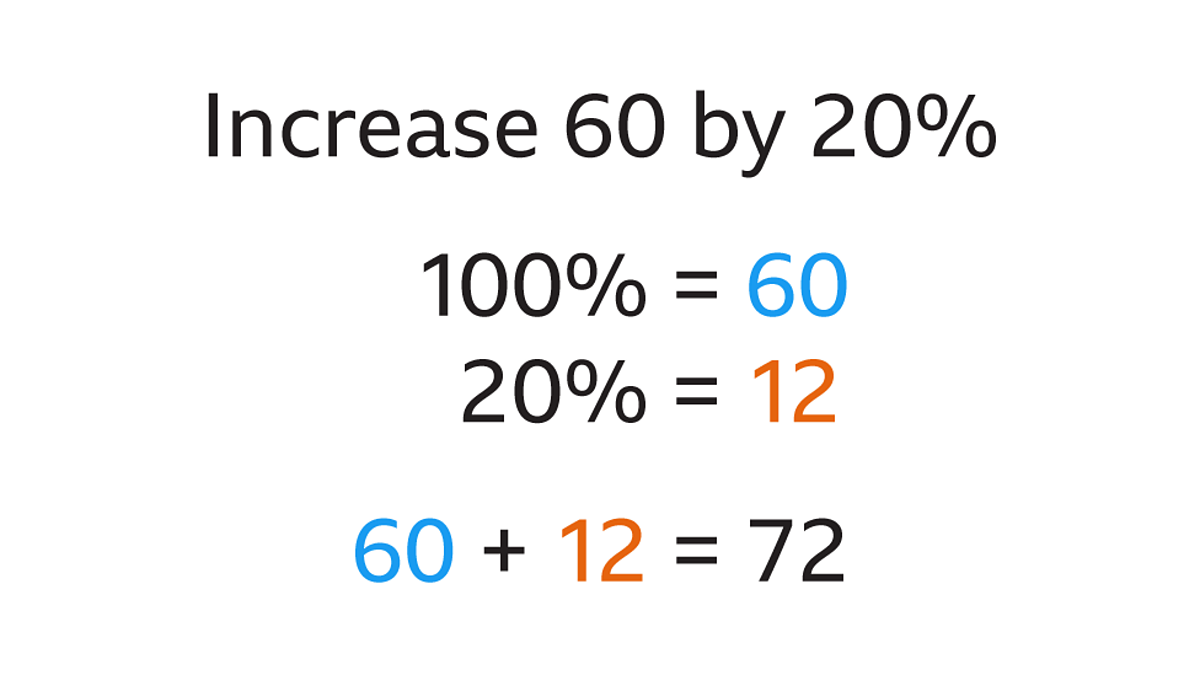
At its core, calculating a percentage increase is a straightforward mathematical operation designed to express the magnitude of change as a proportion of the original amount. When applied to financial contexts, this calculation illuminates growth in a universally understandable way, regardless of the scale of the original numbers. It transforms raw data into actionable insights, helping us to see not just how much something has changed, but by what proportion it has grown.
Deconstructing the Percentage Increase Formula
The formula for calculating a percentage increase is universally applicable, whether you’re looking at a stock’s appreciation or an increase in your monthly utility bill. It is expressed as:
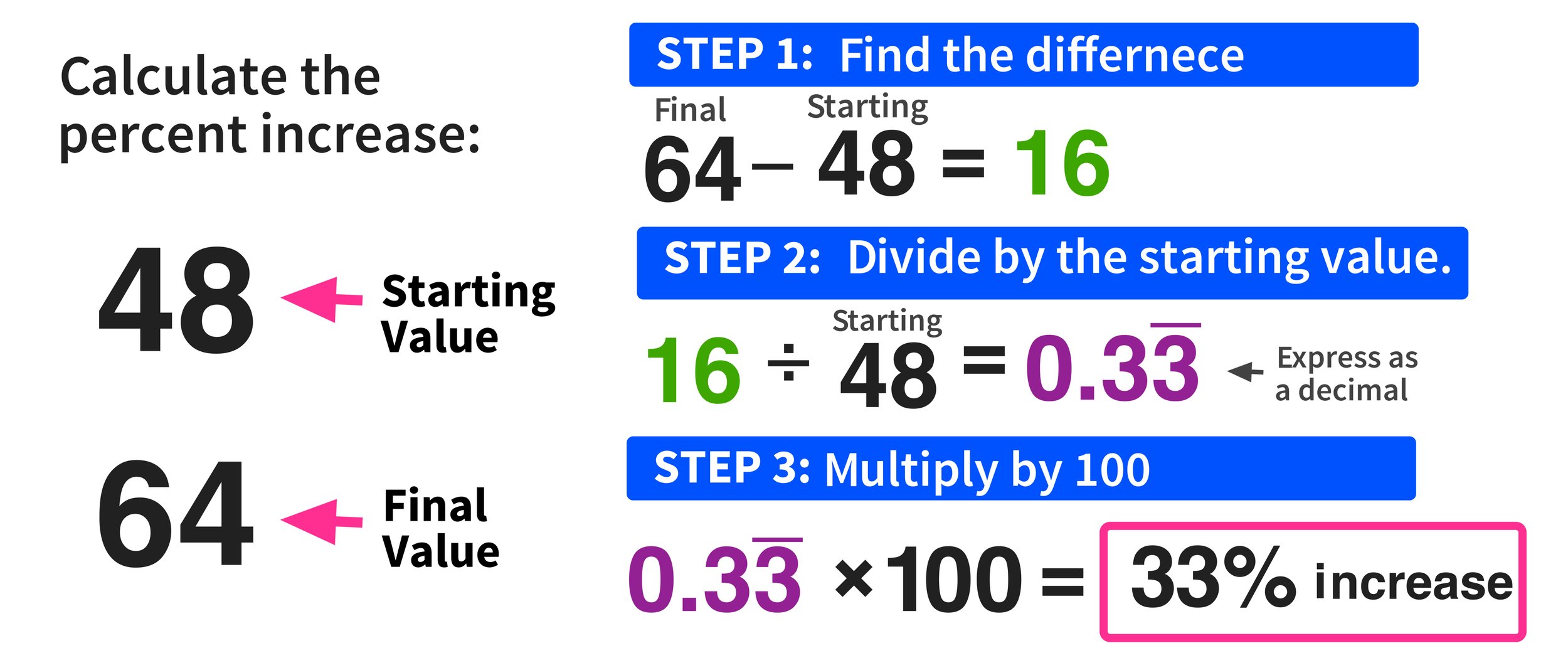
(New Value – Original Value) / Original Value × 100%
Let’s break down each component of this formula:
- New Value: This is the larger, final amount after the increase has occurred. In finance, this could be your current investment portfolio value, your latest salary, or a company’s most recent quarter’s revenue.
- Original Value: This is the smaller, starting amount before the increase took place. Financially, this might be your initial investment, your previous salary, or a company’s revenue from a prior period.
- (New Value – Original Value): This part of the formula calculates the absolute difference, or the raw amount of the increase. It tells you how much the value has gone up in absolute terms.
- ** / Original Value:** Dividing the absolute increase by the Original Value is crucial. This step normalizes the increase, expressing it as a fraction or decimal of the initial amount. This allows for a fair comparison between different scenarios, regardless of their starting points. For example, a $100 increase on a $1,000 investment is proportionally much larger than a $100 increase on a $100,000 investment.
- × 100%: Finally, multiplying the result by 100 converts the decimal or fractional value into a percentage, making it easy to read and understand. A 0.25 increase becomes a 25% increase, which is far more intuitive.
Step-by-Step Calculation Guide with Financial Examples
Let’s walk through a practical example relevant to personal finance: an investment’s growth.
Scenario: You invested $5,000 in a mutual fund, and after one year, its value grew to $5,750. You want to calculate the percentage increase in your investment.
Step 1: Identify the Original Value and the New Value.
- Original Value (OV) = $5,000
- New Value (NV) = $5,750
Step 2: Calculate the absolute increase.
- Absolute Increase = New Value – Original Value
- Absolute Increase = $5,750 – $5,000 = $750
Step 3: Divide the absolute increase by the Original Value.
- Fractional Increase = Absolute Increase / Original Value
- Fractional Increase = $750 / $5,000 = 0.15
Step 4: Multiply by 100 to express as a percentage.
- Percentage Increase = Fractional Increase × 100%
- Percentage Increase = 0.15 × 100% = 15%
Therefore, your investment experienced a 15% increase over the year. This simple calculation provides a clear, comparable metric of your investment’s performance.
Practical Applications in Personal Finance and Investing
The utility of percentage increase extends across numerous facets of personal finance and investment management. It’s not just about one-off calculations but about consistently applying this tool to monitor, evaluate, and forecast your financial journey.
Tracking Investment Returns
For investors, understanding percentage increase is paramount. It’s the primary language of investment performance.
- Stocks, Bonds, and Mutual Funds: When a financial advisor tells you a stock yielded a “12% return,” they’re referring to a percentage increase. This allows you to compare the performance of different asset classes or investment vehicles, regardless of the principal amount invested. A 10% return on a $10,000 portfolio ($1,000 gain) is proportionally the same as a 10% return on a $100,000 portfolio ($10,000 gain), making comparison straightforward.
- Compound Annual Growth Rate (CAGR): For investments held over multiple periods, the concept of percentage increase evolves into CAGR. While the basic formula calculates a single period’s increase, CAGR provides a smoothed, annualized percentage increase over a specified investment period longer than one year, assuming profits are reinvested. It helps investors understand the average growth rate of an investment over time, factoring in the power of compounding. For example, if your investment grows from $10,000 to $15,000 over three years, calculating the average annual percentage increase requires using the CAGR formula, which builds on the basic percentage increase concept.
Analyzing Salary Raises and Income Growth
Your personal income is a critical financial component, and percentage increase helps you evaluate its growth.
- Salary Raises: When you receive a raise, knowing the percentage increase allows you to compare it against inflation or previous raises. If your salary increases from $60,000 to $63,000, that’s a 5% increase. You can then assess if this raise truly enhances your purchasing power, especially when factoring in the cost of living.
- Real vs. Nominal Increases: It’s vital to consider inflation. A “nominal” salary increase is the raw percentage increase. However, if inflation is 3% and your salary increases by 3%, your “real” income (purchasing power) hasn’t increased at all. This highlights the importance of comparing your income’s percentage increase against the percentage increase in the Consumer Price Index (CPI).

Understanding Loan and Interest Rate Changes
Percentage increase is also critical for managing debt and understanding the cost of borrowing.
- Mortgage Rate Hikes: If your variable-rate mortgage interest rate goes from 3.0% to 3.75%, this represents a 25% percentage increase in the interest rate itself, not a 0.75 percentage point increase in your monthly payment. (0.75 / 3.0 = 0.25 or 25%). This nuance is critical for homeowners to grasp the impact on their payments.
- Credit Card APR Adjustments: Similarly, understanding how an increase in your credit card’s Annual Percentage Rate (APR) impacts your finance charges involves percentage increase calculations.
Budgeting and Expense Management
Effective budgeting relies on understanding how your expenses are changing.
- Tracking Rising Costs of Living: Utilities, groceries, transportation—all these costs can increase. Calculating the percentage increase in these categories helps you identify areas where your spending is growing faster than your income, necessitating budget adjustments. For example, if your grocery bill goes from $500 to $550, that’s a 10% increase, which might prompt you to re-evaluate your shopping habits.
- Expense Category Analysis: Businesses and individuals alike use percentage increase to analyze changes in spending patterns over time, helping to identify trends and potential cost-saving opportunities.
Business Finance Perspectives on Percentage Increase
In the corporate world, percentage increase is a ubiquitous metric, driving strategic decisions, investor relations, and performance evaluations. Financial analysts, executives, and investors rely on these calculations to gauge health, growth, and efficiency.
Measuring Revenue and Profit Growth
The backbone of a company’s financial performance lies in its ability to grow revenue and profit.
- Quarter-over-Quarter, Year-over-Year Analysis: Companies routinely report percentage increases in revenue, gross profit, operating income, and net profit. An increase in revenue from $1 million to $1.2 million represents a 20% increase, a key indicator of market acceptance and sales effectiveness. Similarly, if net profit increases from $100,000 to $130,000, that’s a 30% increase, which signals improved profitability and operational efficiency. These comparisons allow stakeholders to assess growth trajectories and benchmark performance against competitors or industry averages.
- EBITDA Growth and Net Profit Margin Increase: Beyond top-line revenue, percentage increases in metrics like Earnings Before Interest, Taxes, Depreciation, and Amortization (EBITDA) or net profit margin (profit as a percentage of revenue) are crucial. A 2% increase in net profit margin, for example, can have a substantial impact on overall profitability.
Assessing Market Share and Sales Performance
Percentage increase is also vital for understanding a company’s competitive standing and sales effectiveness.
- Market Share Growth: If a company’s market share in a particular industry segment grows from 10% to 12%, this isn’t a 2% increase in market share; it’s a 20% percentage increase in the market share itself (2 percentage points / 10% original market share = 0.20 or 20%). This distinction is critical for understanding the actual growth trajectory relative to competitors.
- Sales Conversion Rates: If a company improves its sales conversion rate from 5% to 7%, that’s a 40% percentage increase in conversion efficiency (2 percentage points / 5% original conversion rate = 0.40 or 40%).
Inflation and Cost of Goods Sold (COGS) Increases
Businesses must constantly monitor increases in their operational costs.
- Impact on Profitability: Increases in the cost of raw materials, labor, or energy (COGS) directly impact profit margins. Calculating the percentage increase in these costs allows businesses to adjust pricing strategies, negotiate with suppliers, or seek efficiencies to mitigate the impact. If a key raw material’s price increases by 15%, the company needs to evaluate how that impacts its production cost and whether it can absorb the increase or needs to pass it on to customers.
- Pricing Strategies: Understanding cost increases helps businesses justify price hikes to customers, explaining that the percentage increase in their product price reflects a proportional increase in their input costs.
Common Pitfalls and Nuances in Financial Percentage Calculations
While the percentage increase formula is simple, its application in finance can harbor subtleties and potential misinterpretations that savvy financial professionals and individuals must be aware of.
The Difference Between Percentage Point and Percentage Increase
This is one of the most common sources of confusion, particularly when dealing with rates or proportions.
- Example: If an interest rate increases from 4% to 5%, this is a 1 percentage point increase. However, it is a 25% percentage increase ( (5-4)/4 * 100% = 25% ) in the interest rate itself.
- Relevance: This distinction is vital in finance. An increase of 1 percentage point in a mortgage rate might seem small, but a 25% increase in your cost of borrowing is significant. Similarly, a mutual fund’s expense ratio increasing from 0.50% to 0.75% is a 0.25 percentage point increase but a 50% percentage increase in the fees you pay. Misunderstanding this can lead to underestimating or overestimating financial impacts.
The Impact of Compounding Over Time
For long-term financial planning, the power of compounding percentage increases cannot be overstated.
- Reinvested Earnings: When investment returns are reinvested, subsequent percentage increases are applied to a larger principal, leading to exponential growth. A consistent 7% annual percentage increase on an investment for 30 years yields far more than 7% compounded 30 times on the original principal.
- Compound Interest: The magic of compound interest relies entirely on this principle. Understanding how repeated percentage increases accumulate over time is fundamental to retirement planning, wealth accumulation, and even debt management (where compound interest works against you).
Handling Negative Original Values or Zero Values
The standard percentage increase formula explicitly assumes a positive original value.
- Zero Original Value: If the Original Value is zero, the formula results in division by zero, which is undefined. In such cases (e.g., growing from zero revenue to $100,000), it’s more appropriate to state the absolute gain or use qualitative descriptions of “infinite growth” from zero.
- Negative Original Value: If the Original Value is negative (e.g., a company going from a loss of $100,000 to a profit of $50,000), the standard formula doesn’t provide a meaningful percentage increase. For instance, an increase from -$100,000 to -$50,000 would technically be a 50% increase, which sounds positive, but the company is still losing money. In these scenarios, it’s often better to analyze the absolute change, calculate percentage change relative to the magnitude of the loss, or use other financial metrics that are more appropriate for measuring improvement from a negative baseline.
The Importance of Context and Timeframes
A percentage increase is only as informative as the context in which it’s presented.
- Annualized Returns vs. Monthly Increases: A 1% monthly increase sounds modest, but compounded annually, it’s over 12.68% (1.01^12 – 1). Conversely, a high percentage increase over a very short period might not be sustainable or indicative of long-term trends.
- Comparing Apples to Oranges: A 10% increase in a volatile small-cap stock is fundamentally different from a 10% increase in a stable, large-cap blue-chip company. The risk profiles and underlying drivers are different, requiring a deeper analysis than just the percentage number. Always consider the duration, the base value, and the nature of the financial instrument or metric being analyzed.
In conclusion, the ability to accurately calculate and interpret percentage increases is a cornerstone of financial literacy. Whether you are managing your personal investments, evaluating your career progression, or driving business growth, this simple yet powerful tool provides clarity and depth to financial data. By mastering its application and understanding its nuances, you equip yourself with an essential skill for making astute financial decisions and achieving your economic objectives.
aViewFromTheCave is a participant in the Amazon Services LLC Associates Program, an affiliate advertising program designed to provide a means for sites to earn advertising fees by advertising and linking to Amazon.com. Amazon, the Amazon logo, AmazonSupply, and the AmazonSupply logo are trademarks of Amazon.com, Inc. or its affiliates. As an Amazon Associate we earn affiliate commissions from qualifying purchases.