
The financial landscape has undergone a seismic shift since the inception of Bitcoin in 2009. What began as an experimental digital currency has evolved into a trillion-dollar asset class, often referred to as “digital gold.” For the modern investor, Bitcoin represents not just a technological innovation, but a distinct pillar of a diversified investment portfolio. However, because Bitcoin operates outside the traditional banking system, the process of acquiring it can seem daunting to the uninitiated. This guide provides a strategic roadmap for navigating the world of digital finance, ensuring that your entry into the cryptocurrency market is secure, compliant, and aligned with your long-term financial goals.
Selecting the Right Investment Platform
The first and most critical decision an investor must make is choosing where to purchase their Bitcoin. The market offers several gateways, each with different fee structures, security protocols, and levels of control. In the “Money” niche, your choice of platform is akin to choosing a brokerage; it dictates your costs and the safety of your capital.
Centralized Exchanges (CEXs)
Centralized exchanges are the most popular entry point for both retail and institutional investors. Platforms such as Coinbase, Kraken, and Binance function similarly to traditional stock exchanges. They offer high liquidity, meaning you can buy or sell large amounts of Bitcoin without significantly moving the market price. The primary advantage of a CEX is user experience; they provide intuitive interfaces, integrated charts, and customer support. However, users must be aware that when you hold Bitcoin on an exchange, the exchange technically controls the private keys to your funds.
Traditional Brokerages and Fintech Apps
For those who prefer to keep their digital assets alongside their stocks and bonds, many traditional financial institutions now offer Bitcoin. Apps like Robinhood, Revolut, and Cash App have democratized access, allowing users to buy fractional shares of Bitcoin with a few taps. More recently, the approval of Bitcoin Spot ETFs (Exchange-Traded Funds) has allowed investors to gain exposure to Bitcoin’s price movements through a standard brokerage account (like Fidelity or Charles Schwab) without having to manage the actual digital coins. This is a highly efficient route for those focused on tax-advantaged accounts like IRAs.
Decentralized Exchanges (DEXs) and P2P Platforms
For the privacy-conscious investor, Peer-to-Peer (P2P) platforms and Decentralized Exchanges offer a way to buy Bitcoin without a central intermediary. While these platforms provide greater autonomy and often require less personal information, they demand a higher level of technical proficiency. P2P platforms connect individual buyers and sellers, which can sometimes result in higher premiums or more complex payment methods compared to a standard exchange.
Security and the Architecture of Digital Custody
In the world of personal finance, “not your keys, not your coins” is a foundational mantra. Unlike a bank account, where the institution is responsible for protecting your balance, Bitcoin allows for total self-sovereignty. This brings unparalleled freedom but also significant responsibility regarding custody and security.
Understanding Hot Wallets
A “hot wallet” is a digital tool connected to the internet, usually in the form of a mobile app or browser extension. Hot wallets are highly convenient for frequent traders or those who intend to use Bitcoin for transactions. Because they are online, they are more susceptible to hacking attempts than offline methods. For an investor focused on wealth preservation, hot wallets should generally only store small amounts of “spending money” rather than a primary investment.
The Gold Standard: Cold Storage
For long-term investors (often called “HODLers”), cold storage is the recommended strategy. Cold wallets are physical devices, such as those made by Ledger or Trezor, that store your private keys offline. By keeping the keys away from internet-connected devices, you virtually eliminate the risk of remote hacking. Within a sophisticated financial plan, cold storage functions like a high-security vault for your most valuable digital assets.
Managing Private Keys and Seed Phrases
When you set up a non-custodial wallet, you are provided with a “seed phrase”—a series of 12 to 24 random words. This phrase is the master key to your Bitcoin. If you lose your wallet device, the seed phrase allows you to recover your funds on a new device. Conversely, if someone else gains access to this phrase, they can steal your assets instantly. Professional investors treat these phrases with the same level of security as a physical deed or a birth certificate, often storing them in fireproof safes or engraved on stainless steel plates.
The Step-by-Step Process of Execution
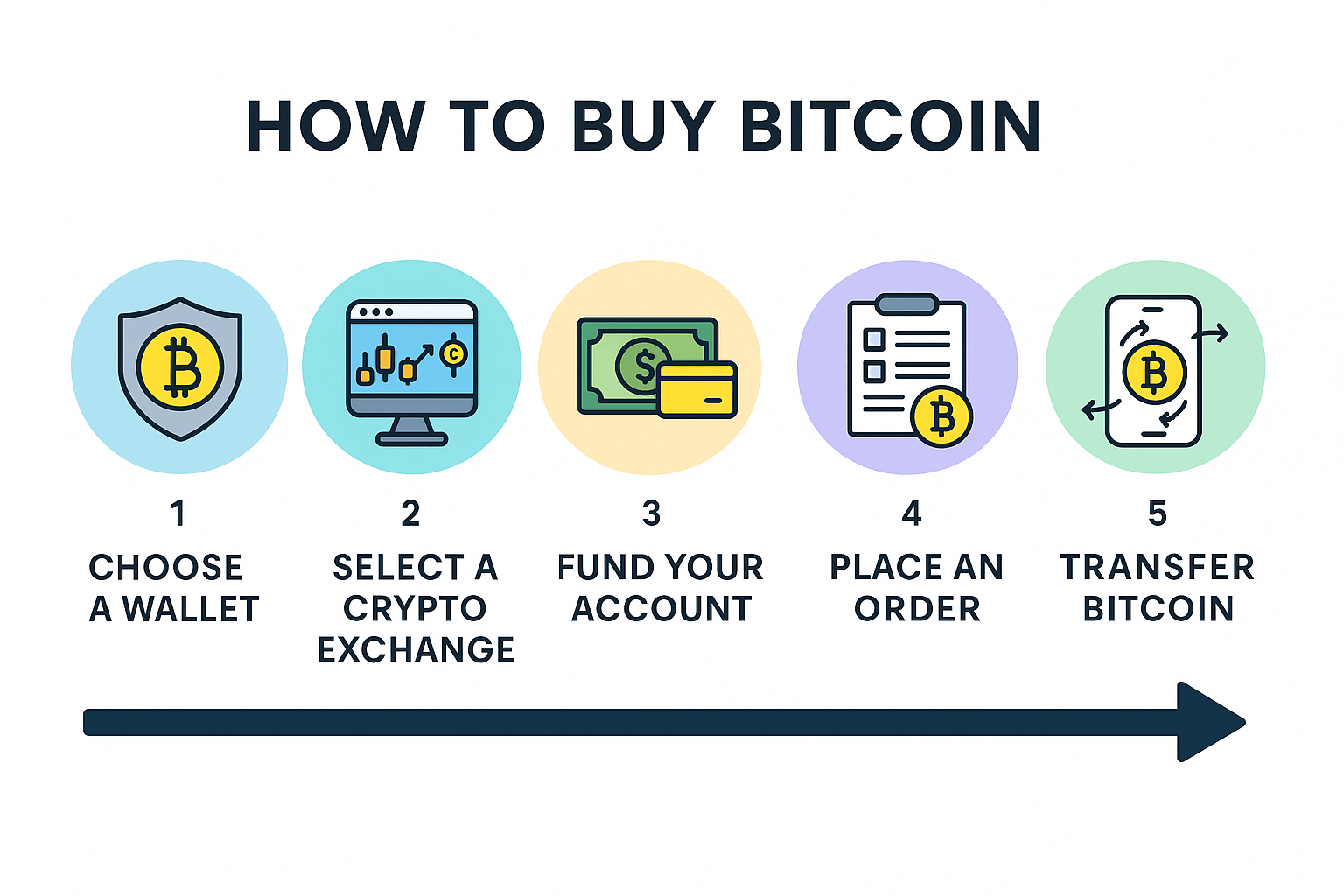
Once you have selected a platform and decided on a custody strategy, the actual process of buying Bitcoin involves a series of standardized financial steps. This process ensures that the transaction is legal, recorded, and secure.
Registration and KYC Compliance
To comply with global financial regulations, any reputable exchange will require you to complete a Know Your Customer (KYC) process. This involves providing a government-issued ID, proof of address, and sometimes a facial recognition scan. While this may feel intrusive to some, it is a hallmark of a legitimate financial institution and protects the ecosystem against money laundering and fraud.
Funding Your Account
After your identity is verified, you must move “fiat” currency (USD, EUR, etc.) into your exchange account. The most common methods include:
- ACH Transfers: Usually free but may take a few days to clear.
- Wire Transfers: Faster for large sums but often incur a bank fee.
- Debit/Credit Cards: Instant but usually carry high convenience fees (often 3% or more), which can eat into your investment returns.
From a wealth-management perspective, ACH or wire transfers are generally preferred to minimize overhead costs.
Executing the Trade
When the funds land in your account, you are ready to buy. Most platforms offer two primary order types. A Market Order buys Bitcoin immediately at the current market price. A Limit Order allows you to set a specific price at which you are willing to buy. If the market dips to that price, your order is filled. Limit orders provide more control and often lower fees, making them the tool of choice for disciplined investors.
Strategic Financial Considerations
Buying Bitcoin is only the beginning. To be a successful investor, one must integrate this volatile asset into a broader financial strategy, accounting for risk, taxes, and market cycles.
Dollar-Cost Averaging (DCA)
Bitcoin is famous for its price volatility. For many, trying to “time the bottom” is a losing game that leads to emotional stress and poor financial decisions. Dollar-Cost Averaging is a strategy where an investor buys a fixed dollar amount of Bitcoin at regular intervals (e.g., $100 every Monday), regardless of the price. Over time, this averages out the purchase price and reduces the impact of a single poorly-timed trade. In the realm of personal finance, DCA is regarded as one of the most effective ways to build a position in a volatile market.
Understanding Fees and Spreads
Investors must remain vigilant about the “hidden” costs of buying Bitcoin. Beyond the visible trading fee, there is often a “spread”—the difference between the buy and sell price. Some platforms claim “zero fees” but make their money by offering you a slightly higher price than the actual market rate. Always calculate the total cost of your transaction to ensure you are getting the best value for your capital.
Tax Obligations and Regulatory Compliance
In most jurisdictions, Bitcoin is treated as property for tax purposes. This means that every time you sell Bitcoin, or even use it to buy a coffee, you trigger a capital gains event. It is essential to keep meticulous records of your “cost basis” (the price at which you bought the Bitcoin). Using specialized crypto tax software can help automate this process, ensuring that when tax season arrives, you are fully compliant with your local revenue service.

Portfolio Allocation and Risk Management
Given its high growth potential and high volatility, most financial advisors suggest that Bitcoin should occupy a specific, calculated percentage of a portfolio—often ranging from 1% to 10% depending on the individual’s risk tolerance. It is important to view Bitcoin not as a “get rich quick” scheme, but as a long-term hedge against currency devaluation and a bet on the continued digitization of the global economy. By balancing Bitcoin with more stable assets like index funds or real estate, you can capture the upside of the digital frontier without jeopardizing your overall financial stability.
aViewFromTheCave is a participant in the Amazon Services LLC Associates Program, an affiliate advertising program designed to provide a means for sites to earn advertising fees by advertising and linking to Amazon.com. Amazon, the Amazon logo, AmazonSupply, and the AmazonSupply logo are trademarks of Amazon.com, Inc. or its affiliates. As an Amazon Associate we earn affiliate commissions from qualifying purchases.