
Social Security stands as a cornerstone of financial security for millions of Americans, providing retirement, disability, and survivor benefits. For many, it represents a significant portion of their post-career income, making a clear understanding of its benefit determination process not just helpful, but essential for robust financial planning. While the system might appear complex at first glance, it’s built upon a structured set of rules designed to ensure a progressive distribution of benefits based on an individual’s lifetime earnings. Understanding these mechanics empowers individuals to make informed decisions about their retirement timeline, savings strategies, and overall financial future. This article will demystify the process, breaking down the key components that the Social Security Administration (SSA) uses to calculate your benefit amount, from earning credits to the impact of claiming age and beyond.

The Foundation: Earning Credits and Your Indexed Earnings
The journey to qualifying for and calculating Social Security benefits begins with an individual’s work history. The system is predicated on contributions made through payroll taxes, and these contributions, in turn, generate credits that ultimately determine eligibility and benefit levels.
Earning Social Security Credits
To qualify for Social Security benefits, you must accumulate a certain number of “credits” over your working life. The SSA uses these credits to determine eligibility for retirement, disability, and survivor benefits. In 2024, you earn one credit for every $1,730 in earnings, up to a maximum of four credits per year. This means you need to earn at least $6,920 in a given year to max out your credits for that year. Most people need 40 credits, or 10 years of work, to qualify for retirement benefits. Once you’ve earned 40 credits, you are considered “fully insured” for retirement benefits, regardless of how much more you work beyond that point. This credit system ensures that only those who have contributed sufficiently to the system are eligible to receive benefits. It’s a fundamental hurdle that must be cleared before any benefit calculation can even begin. While the amount of earnings required for a credit changes annually due to inflation, the maximum of four credits per year has remained constant, providing a clear pathway to eligibility.
The Concept of Average Indexed Monthly Earnings (AIME)
Once eligibility is established, the SSA turns its attention to your lifetime earnings to calculate your benefit amount. This isn’t a simple average of all your earnings. Instead, the SSA uses a crucial metric called your Average Indexed Monthly Earnings (AIME). The AIME is derived from your highest 35 years of indexed earnings. Why “indexed”? Because a dollar earned in 1980, for example, had significantly more purchasing power than a dollar earned today. To account for this, the SSA “indexes” your past earnings to reflect the general wage level in the economy during the year you turn age 60. Earnings after age 60 are generally included at their nominal value.
The process involves:
- Identifying your highest 35 years of earnings: The SSA reviews your entire earnings history.
- Indexing those earnings: Earnings from prior years (up to age 60) are adjusted upwards using national average wage indices to bring them to a comparable level with more recent earnings.
- Summing and averaging: These 35 highest indexed annual earnings are summed, and then divided by 420 (the number of months in 35 years) to arrive at your Average Indexed Monthly Earnings (AIME).
This indexing process is critical because it ensures that your past contributions are fairly represented in today’s economic context, preventing inflation from eroding the value of your earlier work. A higher AIME directly translates to a higher potential benefit.
The Primary Insurance Amount (PIA) Formula
With your AIME established, the next step in the calculation process is to determine your Primary Insurance Amount (PIA). The PIA is the monthly benefit you would receive if you start receiving benefits at your full retirement age (FRA). It is the base figure from which all other benefit calculations are derived.
Bend Points and Progressive Calculation
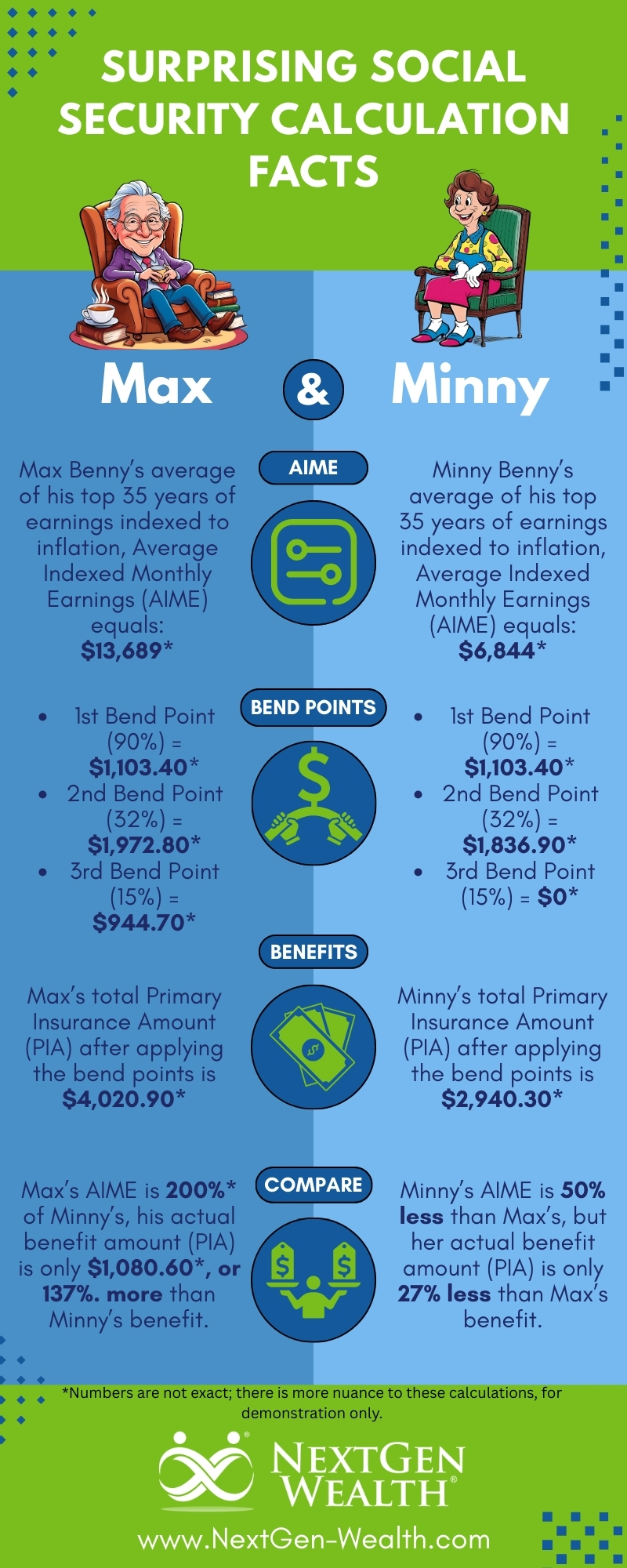
The SSA uses a progressive formula to calculate your PIA from your AIME. This means that lower earners receive a higher percentage of their average indexed earnings back in benefits compared to higher earners. This progressive nature is a core tenet of Social Security, designed to provide a safety net for those with lower lifetime incomes. The formula incorporates “bend points,” which are specific dollar amounts in the AIME that mark the transition to different benefit calculation percentages.
For individuals who become eligible for retirement benefits in 2024, the PIA formula works as follows:
- 90% of the first $1,174 of your AIME, plus
- 32% of your AIME over $1,174 and up to $7,078, plus
- 15% of your AIME over $7,078.
These “bend points” ($1,174 and $7,078 for 2024) are adjusted annually to keep pace with changes in the national average wage index. The progressive structure means that while higher earners will receive a larger absolute dollar amount in benefits, lower earners will receive a higher percentage of their lifetime indexed earnings. This ensures that Social Security serves as a vital safety net, preventing poverty among its most vulnerable beneficiaries.
Understanding the PIA
The resulting figure from this formula is your Primary Insurance Amount (PIA). As mentioned, this is the amount you are entitled to receive each month if you claim benefits precisely at your full retirement age (FRA). Your FRA depends on your birth year, generally ranging from 66 to 67. For those born in 1960 or later, the FRA is 67. The PIA is the bedrock of your Social Security benefits; it is the starting point for calculating all other potential benefit amounts, including those for spouses, children, and survivors, as well as adjustments for claiming early or delaying retirement. Knowing your PIA is crucial because it gives you a baseline for understanding your potential income stream from Social Security.
Factors Influencing Your Actual Benefit Amount
While the PIA is the base, your actual monthly benefit check can vary significantly based on several factors, most notably when you choose to begin receiving benefits.
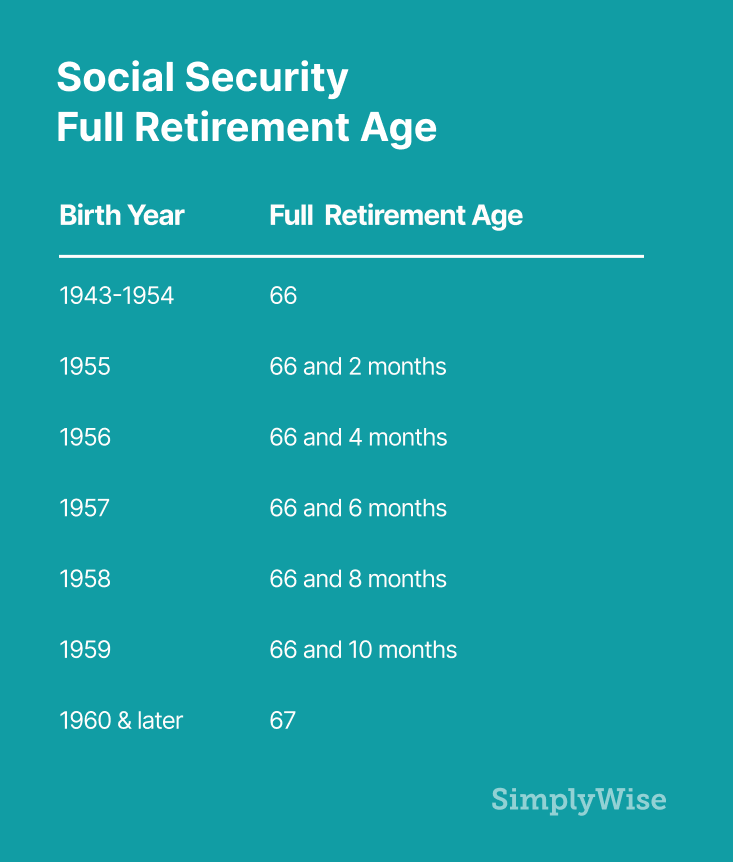
Claiming Age: Early vs. Full vs. Delayed Retirement
This is perhaps the most significant personal decision influencing your Social Security benefit. You can begin receiving retirement benefits as early as age 62, but doing so comes with a permanent reduction in your monthly payment.
- Early Retirement (Age 62-FRA): Claiming benefits before your full retirement age (FRA) results in a permanent reduction. The reduction is approximately 5/9 of 1% for each month up to 36 months early, and 5/12 of 1% for each additional month. For someone with an FRA of 67, claiming at 62 means a reduction of about 30%. This is a significant decrease that persists for the rest of your life.
- Full Retirement Age (FRA): If you claim benefits at your FRA, you receive 100% of your Primary Insurance Amount (PIA). This is the standard against which all other claiming ages are measured.
- Delayed Retirement (FRA-Age 70): For every month you delay claiming benefits past your FRA, up to age 70, you earn delayed retirement credits. These credits increase your monthly benefit by approximately 2/3 of 1% per month, or 8% per year. This means delaying until age 70 can result in a permanent increase of 24-32% (depending on your FRA) over your PIA. There is no further increase in benefits after age 70.
The decision of when to claim benefits is a complex one, involving considerations of health, other income sources, longevity expectations, and family needs.
Cost-of-Living Adjustments (COLAs)
Once you start receiving Social Security benefits, your payments are not static. The SSA implements annual Cost-of-Living Adjustments (COLAs) to help beneficiaries maintain their purchasing power in the face of inflation. These adjustments are typically announced in October and apply to benefits starting in December (received in January of the following year). The COLA is based on the Consumer Price Index for Urban Wage Earners and Clerical Workers (CPI-W). If the CPI-W increases from the third quarter of the prior year to the third quarter of the current year, a COLA is applied. If there is no increase, there is no COLA for that year. These adjustments are vital for ensuring that benefits keep pace with rising costs over time.
Taxation of Benefits
It’s important to note that Social Security benefits can be subject to federal income tax, and in some states, state income tax as well. The amount of your benefits subject to federal tax depends on your “provisional income,” which is calculated as your adjusted gross income (AGI) plus non-taxable interest plus one-half of your Social Security benefits.
- If your provisional income is between $25,000 and $34,000 (single filers) or $32,000 and $44,000 (married filing jointly), up to 50% of your benefits may be taxable.
- If your provisional income exceeds $34,000 (single) or $44,000 (married filing jointly), up to 85% of your benefits may be taxable.
This taxation can significantly impact the net amount you receive from Social Security, and it’s a critical factor to consider in overall retirement income planning.
Spousal and Survivor Benefits
Social Security also provides benefits to spouses and survivors, which are derived from the primary earner’s work record. A spouse can receive up to 50% of the worker’s PIA, generally at their own full retirement age, provided the worker has filed for benefits. Survivor benefits, available to widows, widowers, and eligible children, can be up to 100% of the deceased worker’s PIA, depending on their age and relationship. These auxiliary benefits provide crucial financial support to families following retirement, disability, or death, underscoring the system’s role as a comprehensive social insurance program.
Special Considerations and Planning
Navigating Social Security requires more than just understanding the calculation; it involves strategic planning to optimize benefits and integrate them into your broader financial picture.
Working While Receiving Benefits
If you claim Social Security benefits before your full retirement age and continue to work, your benefits may be temporarily reduced if your earnings exceed a certain annual limit. In 2024, if you are under your FRA for the entire year, the SSA deducts $1 from your benefits for every $2 you earn above $22,320. In the year you reach your FRA, a different rule applies: the SSA deducts $1 for every $3 you earn above a higher limit ($59,520 in 2024) until the month you reach your FRA. Once you reach your FRA, there are no limits on your earnings, and your benefits are no longer reduced due to work. Importantly, any benefits withheld due to these earnings limits are not lost; they contribute to a recalculation of your benefits at your FRA, potentially leading to a higher monthly payment for the rest of your life. This adjustment helps to gradually make up for the benefits that were withheld earlier.
The Importance of Your Social Security Statement
The Social Security Administration provides a valuable tool for financial planning: your Social Security Statement. This statement, accessible online via a My Social Security account, provides an estimate of your future benefits at different claiming ages (early, full, and delayed retirement), your earnings history, and estimates for disability and survivor benefits. Regularly reviewing your statement is crucial for several reasons:
- Verify earnings history: Ensure that all your earnings are accurately recorded, as this directly impacts your AIME. Any discrepancies should be reported to the SSA promptly.
- Estimate future benefits: Use the estimates to build your retirement income projections and adjust your savings goals as needed.
- Understand eligibility: Confirm your credit count and eligibility for various benefit types.
Your Social Security Statement is a personalized roadmap to your benefits and should be a regular part of your financial health check-up.
Strategies for Maximizing Benefits
Given the flexibility in claiming age and the complexity of the rules, several strategies can help maximize your lifetime Social Security benefits:
- Work for at least 35 years: Since your AIME is based on your highest 35 years of indexed earnings, working fewer than 35 years will result in “zeroes” being factored into your average, significantly lowering your AIME and thus your PIA.
- Maximize your earnings during peak earning years: Higher earnings, especially in your later working years, directly contribute to a higher AIME.
- Consider delaying claiming benefits: If you are healthy, have other income sources, and can afford to delay, waiting until age 70 can provide a substantially larger monthly benefit for the rest of your life, offering valuable longevity insurance.
- Coordinate with your spouse: Married couples have additional strategies to consider, such as one spouse claiming early while the other delays, or claiming spousal benefits based on the higher earner’s record. Strategic coordination can often lead to a higher combined lifetime benefit.
- Understand taxation: Factor in the potential taxation of benefits when planning your overall retirement income and withdrawal strategies from other accounts.
Conclusion
The determination of Social Security benefits is a meticulous process, anchored in an individual’s lifetime earnings history and designed with a progressive slant to support all income levels. From accumulating credits and calculating your Average Indexed Monthly Earnings (AIME) to applying the bend points that formulate your Primary Insurance Amount (PIA), each step plays a vital role. However, the final benefit you receive is far from a static number, profoundly influenced by your personal claiming age decision, adjusted annually by Cost-of-Living Adjustments (COLAs), and potentially impacted by taxation and continued employment.
Understanding these intricate details is not merely an academic exercise; it’s a fundamental aspect of sound personal finance. Armed with this knowledge, individuals can proactively engage with their Social Security planning, review their earnings statements, explore optimal claiming strategies, and integrate their expected benefits into a comprehensive retirement income plan. Social Security is a powerful component of financial security, and by demystifying its determination, we empower ourselves to leverage its full potential for a more secure and prosperous future.
aViewFromTheCave is a participant in the Amazon Services LLC Associates Program, an affiliate advertising program designed to provide a means for sites to earn advertising fees by advertising and linking to Amazon.com. Amazon, the Amazon logo, AmazonSupply, and the AmazonSupply logo are trademarks of Amazon.com, Inc. or its affiliates. As an Amazon Associate we earn affiliate commissions from qualifying purchases.