
Embarking on the journey of investing can feel daunting, especially when confronted with the intricate world of the stock market. For many beginners, the concept of “stocks” remains an abstract financial instrument, shrouded in jargon and complex market dynamics. Yet, understanding how stocks work is a fundamental step towards building personal wealth and securing financial independence. At its core, a stock represents a share of ownership in a company, and buying one means you become a fractional owner, entitled to a slice of that company’s future profits and growth. This guide aims to demystify stocks, breaking down their mechanics, how their value is determined, and what beginners need to know to navigate this exciting, yet sometimes volatile, financial landscape. By grasping these foundational principles, you can transform uncertainty into informed decision-making and begin to harness the power of the market for your financial future.

The Foundation: What Exactly Is a Stock?
Before diving into the complexities of market fluctuations and trading strategies, it’s crucial to grasp the very essence of what a stock is. Far from being just a piece of paper or a digital entry, a stock embodies a powerful concept of ownership and partnership in a business entity.
Ownership in a Company
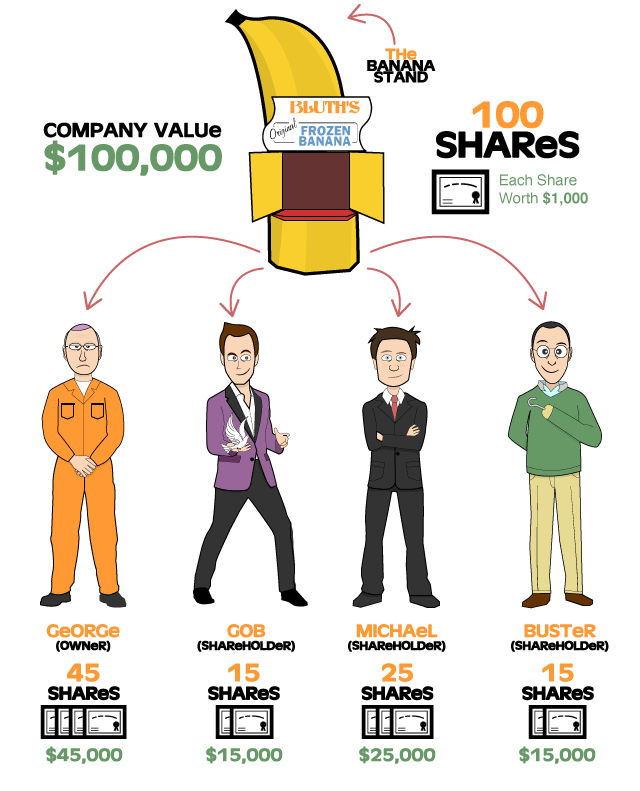
When you purchase a share of stock, you are effectively buying a small percentage of a company. Imagine a large corporation like Apple or Microsoft. These companies are not solely owned by their founders or a small group of executives; they are owned by millions of shareholders around the world. Each share of stock represents a claim on a tiny portion of the company’s assets and earnings. This fractional ownership grants you certain rights, most notably the right to vote on certain company matters (like electing the board of directors) and the potential to receive a portion of the company’s profits in the form of dividends. This direct link to the company’s performance is what makes stocks such an appealing investment for those looking to grow their capital over time.
Public vs. Private Companies
Companies come in two main forms: private and public. A private company is owned by a small group of individuals or founders, and its shares are not traded on a stock exchange. If you wanted to invest in a private company, you’d typically need a direct arrangement with the owners. In contrast, a public company has offered its shares to the general public through an Initial Public Offering (IPO) and is listed on a stock exchange. This transition from private to public is usually driven by a company’s need to raise significant capital for expansion, research and development, or to pay down debt. By selling shares to the public, companies gain access to a vast pool of investors, allowing them to fund their growth ambitions while providing an opportunity for ordinary individuals to invest in established businesses. It’s these publicly traded companies that we typically refer to when we talk about investing in stocks.
Common vs. Preferred Stock
While the term “stock” is often used generically, there are primarily two types of stock: common stock and preferred stock. Understanding the distinction is important for beginners.
- Common Stock: This is the most prevalent type of stock and what most people refer to when they talk about investing in the market. As a common shareholder, you have voting rights, which means you can influence corporate policy and elect the board of directors. Your potential for capital appreciation (the stock increasing in value) is generally higher with common stock, but so is your risk. In the event of bankruptcy, common shareholders are paid only after bondholders and preferred shareholders.
- Preferred Stock: Preferred stock typically does not carry voting rights. However, preferred shareholders have a higher claim on the company’s assets and earnings than common shareholders. This means they receive dividends before common shareholders and, in the event of liquidation, are paid out before common shareholders. Preferred stock dividends are often fixed and paid out regularly, making them more akin to bonds in terms of income stability, but with less potential for significant capital appreciation compared to common stock. For beginners, common stock is usually the starting point, offering direct participation in a company’s growth story.
Understanding How Stock Prices Move
One of the most captivating, and at times perplexing, aspects of the stock market is the constant fluctuation of stock prices. A company’s stock value is not static; it’s a dynamic reflection of numerous interconnected factors, constantly reacting to new information and changing investor sentiment.
Supply and Demand Dynamics
At its most fundamental level, stock prices are governed by the economic principle of supply and demand. When more investors want to buy a particular stock than sell it (high demand, low supply), the price tends to rise. Conversely, when more investors want to sell a stock than buy it (low demand, high supply), the price typically falls. This ongoing tug-of-war between buyers and sellers, facilitated by global stock exchanges, is what creates the constant movement we observe in the market. News, company performance, economic data, and even rumors can all tip this balance, leading to price changes in real-time.
Company Performance and Earnings
The health and profitability of the underlying company are arguably the most significant long-term drivers of its stock price. Investors buy stocks with the expectation that the company will grow, increase its earnings, and ultimately become more valuable. Key indicators of company performance include:
- Earnings Reports: Quarterly and annual reports detailing revenue, profits, and future guidance are closely scrutinized by analysts and investors. Positive earnings surprises can send a stock soaring, while disappointing results can trigger a sell-off.
- Profit Margins: The percentage of revenue that translates into profit.
- Revenue Growth: The rate at which the company’s sales are increasing.
- Innovation and Product Development: Companies that continuously innovate and bring successful new products or services to market often see their stock prices reflect that future potential.
- Management Quality: The competence and vision of a company’s leadership can inspire confidence (or concern) among investors.
Strong, consistent financial performance provides a solid foundation for a stock’s value, signaling to the market that the company is well-managed and has a promising future.
Economic Factors and Market Sentiment
Beyond individual company performance, broader economic conditions and prevailing market sentiment play a crucial role in stock price movements.
- Interest Rates: Set by central banks, interest rates influence borrowing costs for companies and consumers, impacting economic activity and corporate profits. Lower rates can stimulate growth and make stocks more attractive relative to bonds, while higher rates can have the opposite effect.
- Inflation: A sustained increase in prices can erode purchasing power and corporate profits, often leading to market volatility.
- Economic Growth: A robust economy generally means healthier companies and higher consumer spending, which tends to support rising stock prices. Recessions, on the other hand, usually lead to market downturns.
- Geopolitical Events: Wars, trade disputes, or political instability can create uncertainty, causing investors to become risk-averse and leading to market declines.
- Investor Sentiment: This refers to the overall attitude of investors towards the market. If sentiment is optimistic (bullish), investors are more willing to buy, driving prices up. If it’s pessimistic (bearish), they tend to sell, pushing prices down. Sentiment can be influenced by news, social media, and herd mentality, sometimes even overriding fundamental company value in the short term.
Industry Trends and Disruptions
Specific industry trends can also significantly impact stock prices. A company operating in a rapidly growing sector, such as artificial intelligence or renewable energy, might see its stock benefit from the overall tailwinds of its industry. Conversely, companies in declining industries, or those facing disruptive technologies, might experience downward pressure on their stock values. For example, the rise of streaming services has significantly impacted traditional cable television companies, reflecting broader industry shifts. Understanding the competitive landscape and technological advancements within a company’s sector is therefore crucial.
The Stock Market: Where Trading Happens
The stock market is not a single physical location but rather a vast, interconnected network where shares of public companies are bought and sold. It serves as the primary mechanism through which companies raise capital and investors buy and sell ownership stakes.
Stock Exchanges (e.g., NYSE, NASDAQ)
At the heart of the stock market are stock exchanges. These are highly regulated marketplaces that provide the infrastructure for trading securities. The two most prominent exchanges in the United States are:
- New York Stock Exchange (NYSE): Often referred to as “the Big Board,” the NYSE is known for its traditional auction market, though much of its trading is now electronic. It lists many of the world’s largest and oldest companies.
- NASDAQ: Originally an acronym for “National Association of Securities Dealers Automated Quotations,” NASDAQ is a fully electronic exchange, popular for listing technology and growth-oriented companies.
These exchanges provide transparency by publicly displaying prices and ensuring orderly trading. They match buyers with sellers and facilitate the transfer of ownership, making it possible for millions of transactions to occur daily. Other major exchanges exist worldwide, such as the London Stock Exchange (LSE) and the Tokyo Stock Exchange (TSE), each serving their respective regional markets.
Brokers and Trading Platforms
For individual investors, direct access to the stock exchanges is not possible. Instead, you need an intermediary: a broker. A broker is a licensed financial professional or firm that executes buy and sell orders on behalf of clients. In today’s digital age, most individual investors use online trading platforms provided by brokerage firms.
These platforms have revolutionized access to the stock market for beginners:
- Traditional Brokers: Offer personalized advice, research, and hands-on management, often at a higher fee.
- Discount Brokers: Provide a platform for self-directed investing with lower fees, often charging per trade or offering commission-free trading on certain assets. Examples include Charles Schwab, Fidelity, Vanguard, and E*TRADE.
- Robo-Advisors: Automated platforms that use algorithms to manage your investments based on your financial goals and risk tolerance, providing diversified portfolios at low costs.
Opening a brokerage account is the first practical step for any beginner looking to invest in stocks. These platforms allow you to research companies, place orders, and manage your portfolio from your computer or smartphone.
Market Orders vs. Limit Orders
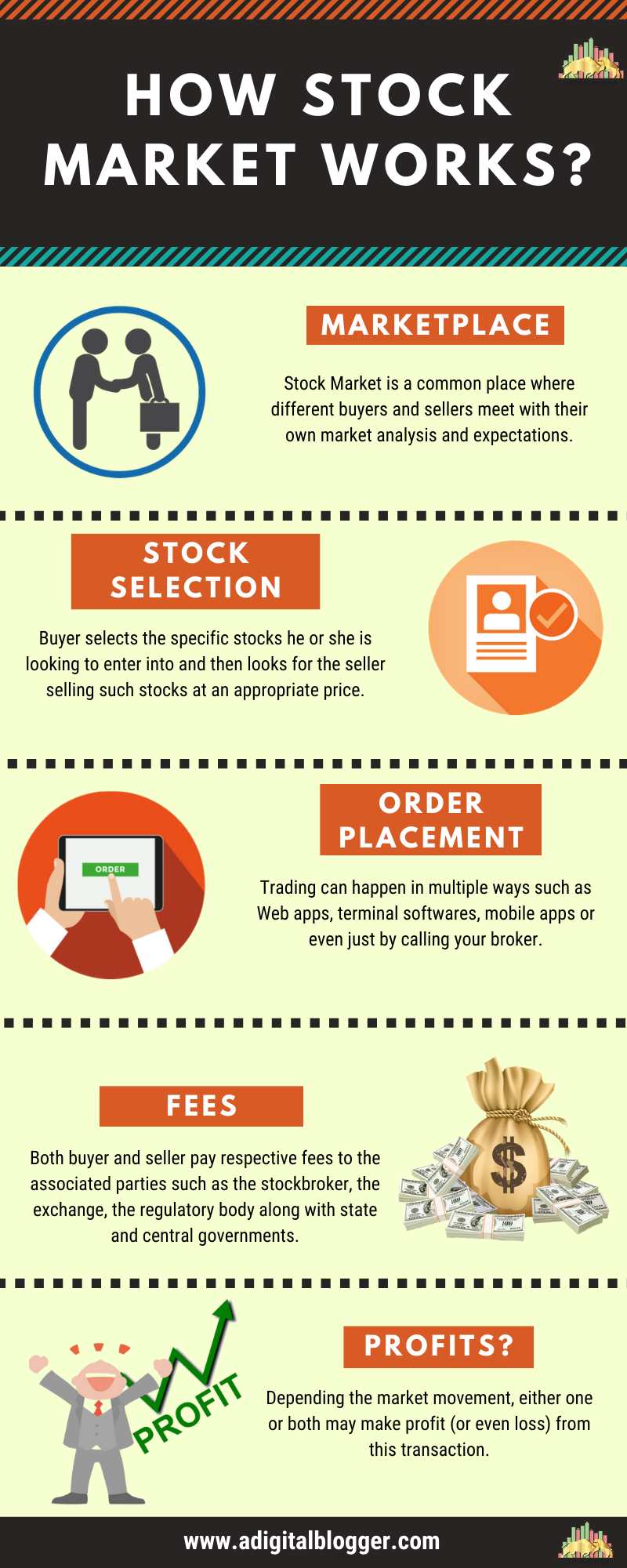
When you decide to buy or sell a stock, you’ll typically use one of two main types of orders:
- Market Order: This is an instruction to buy or sell a stock immediately at the best available current price. Market orders are ideal when you prioritize speed of execution over a specific price, though the exact price you get might differ slightly from what you see on your screen due to rapid price changes (known as “slippage”).
- Limit Order: This is an instruction to buy or sell a stock at a specific price or better. For a buy limit order, you’d specify the maximum price you’re willing to pay. For a sell limit order, you’d specify the minimum price you’re willing to accept. Limit orders provide more control over the price of your trade but carry the risk that your order may not be executed if the stock never reaches your specified price. For beginners, understanding these basic order types is crucial for executing trades effectively.
The Role of Regulators (e.g., SEC)
To ensure fairness, transparency, and protect investors, the stock market is heavily regulated. In the United States, the primary regulatory body is the Securities and Exchange Commission (SEC). The SEC’s mission is to protect investors, maintain fair, orderly, and efficient markets, and facilitate capital formation. It achieves this by:
- Enforcing Securities Laws: Investigating and prosecuting fraud and manipulation.
- Requiring Disclosure: Mandating that public companies provide regular, truthful financial information to investors (e.g., annual 10-K reports, quarterly 10-Q reports).
- Overseeing Exchanges and Brokers: Ensuring that marketplaces and financial intermediaries operate ethically and according to rules.
These regulations are critical for maintaining investor confidence and the integrity of the financial system. For beginners, knowing that there are safeguards in place can provide a degree of reassurance, though it doesn’t eliminate investment risk.
Different Ways to Make Money from Stocks
While the primary goal of investing in stocks is generally to increase wealth, there are distinct avenues through which investors can realize financial gains. Understanding these mechanisms is key to formulating an investment strategy.
Capital Appreciation
The most common way investors make money from stocks is through capital appreciation. This occurs when you buy a stock at one price and later sell it at a higher price. The difference between your purchase price and your selling price, minus any transaction costs, is your profit. For example, if you buy 10 shares of Company X at $100 per share and later sell them at $120 per share, you’ve made a capital gain of $20 per share, totaling $200 (minus commissions). Capital appreciation is driven by the growth and success of the underlying company, favorable market conditions, positive investor sentiment, and various other factors discussed earlier. It is particularly appealing to investors with a long-term horizon, who aim to benefit from the compounding growth of strong companies over many years.
Dividends: Sharing Company Profits
Another significant way to earn income from stocks is through dividends. A dividend is a distribution of a portion of a company’s earnings to its shareholders. Companies that are mature and consistently profitable, often with less need for reinvesting all their earnings back into the business, may choose to pay out regular dividends. These payments are typically made quarterly and can be a stable source of passive income for investors.
Dividends can be paid in cash or, in some cases, as additional shares of stock. Many investors, particularly those focused on income generation (like retirees), favor dividend-paying stocks for their predictable cash flow. The decision to pay dividends, and the amount, is made by the company’s board of directors. While dividends provide direct income, it’s important to remember that they are not guaranteed; a company can reduce or suspend its dividend payments if its financial situation changes.
Stock Splits and Buybacks (Briefly)
While not direct ways of making money in the same sense as capital appreciation or dividends, stock splits and share buybacks can indirectly benefit shareholders by influencing a stock’s per-share price and market dynamics.
- Stock Split: A stock split increases the number of outstanding shares by dividing each existing share into multiple new shares. For example, a 2-for-1 stock split means each shareholder receives two shares for every one they previously owned, with the price of each share halved. While the total value of your investment remains the same immediately after the split, a lower per-share price can make the stock more accessible to smaller investors, potentially increasing demand and liquidity over time.
- Share Buyback (or Stock Repurchase): This occurs when a company buys back its own shares from the open market. This reduces the number of outstanding shares, which in turn increases earnings per share (EPS) and often boosts the stock’s price, as each remaining share represents a larger slice of the company’s ownership. Buybacks can also signal management’s confidence in the company’s future and its belief that the stock is undervalued.
Both splits and buybacks are strategic financial decisions by companies that can indirectly enhance shareholder value and are worth being aware of as a beginner investor.
Essential Considerations for Beginner Investors
Entering the stock market as a beginner requires more than just understanding the mechanics of how stocks work; it demands a strategic mindset, a commitment to continuous learning, and a clear understanding of the inherent risks involved.
Risk vs. Reward
Investing in stocks inherently involves a trade-off between risk and reward. Stocks offer the potential for significant returns, often outperforming other asset classes like bonds or savings accounts over the long term. However, this potential comes with volatility and the risk of losing money. Stock prices can fluctuate dramatically due to company performance, economic downturns, industry shifts, or unexpected global events. For beginners, it’s crucial to acknowledge that investing in individual stocks is not without risk, and there are no guarantees of profit. A balanced approach involves assessing your personal risk tolerance and investing only what you can afford to lose without jeopardizing your financial stability. High reward usually comes with higher risk, and vice-versa.
Diversification: Don’t Put All Your Eggs in One Basket
One of the most fundamental principles of investing, especially for beginners, is diversification. This strategy involves spreading your investments across various assets, industries, and geographies to reduce overall risk. If you invest all your money in a single stock and that company performs poorly, your entire portfolio suffers. However, if you spread your investments across several different stocks, industries (e.g., tech, healthcare, consumer goods), and even different types of assets (e.g., stocks, bonds, real estate), the poor performance of one investment is less likely to devastate your entire portfolio. Diversification doesn’t eliminate risk entirely, but it significantly mitigates company-specific and industry-specific risks, providing a smoother ride through market fluctuations.
Long-Term vs. Short-Term Investing
For beginners, a long-term investment horizon is almost always recommended. This strategy involves holding investments for several years or even decades, aiming to benefit from compounding returns and to ride out short-term market volatility. Historically, the stock market has shown an upward trend over long periods, making long-term investing a powerful strategy for wealth creation.
In contrast, short-term trading involves frequently buying and selling stocks to profit from small price movements. This is a highly speculative and risky endeavor, often requiring extensive knowledge, rapid decision-making, and significant capital, making it unsuitable for most beginners. Attempting to “time the market” or predict short-term price movements is extremely difficult, even for seasoned professionals. Focus on long-term growth and allow your investments time to mature.
Research and Due Diligence
Never invest in a company you don’t understand. Before committing your capital, conduct thorough research and due diligence. This involves:
- Understanding the Business: What does the company do? How does it make money? Who are its competitors?
- Analyzing Financials: Look at key financial statements (income statement, balance sheet, cash flow statement) to assess its profitability, debt levels, and cash generation.
- Evaluating Management: Research the leadership team and their track record.
- Reading News and Analyst Reports: Stay informed about the company and its industry.
Many brokerage platforms offer extensive research tools, analyst ratings, and company reports that can assist beginners in this process. Informed decisions are powerful decisions.
Start Small and Learn Continuously
The best way to begin your investing journey is often to start small. You don’t need a large sum of money to begin investing. Many platforms allow you to buy fractional shares, meaning you can invest a specific dollar amount (e.g., $50) into a stock, even if its per-share price is much higher. This allows you to gain practical experience without committing significant capital.
Furthermore, learning should be a continuous process. The financial markets are constantly evolving, and new information emerges daily. Read books, follow reputable financial news sources, take online courses, and learn from experienced investors. The more you educate yourself, the more confident and successful you will become as an investor. Embrace the journey of learning and adapting, and you’ll be well-equipped to navigate the complexities of the stock market.
The world of stocks, while initially appearing complex, is fundamentally built on logical principles of ownership, value, and market dynamics. For beginners, understanding these core concepts—from what a stock represents to how its price fluctuates and the various ways to profit—is paramount. By prioritizing diversification, adopting a long-term perspective, diligently researching potential investments, and committing to continuous learning, you can transform the intimidating prospect of stock market investing into a manageable and potentially highly rewarding endeavor. Remember, successful investing is not about getting rich quickly; it’s about disciplined, informed, and patient participation in the growth of the global economy. Begin your journey wisely, and the stock market can be a powerful ally in achieving your financial goals.
aViewFromTheCave is a participant in the Amazon Services LLC Associates Program, an affiliate advertising program designed to provide a means for sites to earn advertising fees by advertising and linking to Amazon.com. Amazon, the Amazon logo, AmazonSupply, and the AmazonSupply logo are trademarks of Amazon.com, Inc. or its affiliates. As an Amazon Associate we earn affiliate commissions from qualifying purchases.