
In the intricate world of finance, where every decision can impact your present and future, a clear understanding of fundamental concepts is paramount. Among these, percentages stand out as an indispensable tool, a universal language spoken across personal finance, investing, business strategy, and economic analysis. From calculating interest on a loan to understanding investment returns, from dissecting a company’s profit margin to budgeting your monthly expenses, percentages are the numerical bedrock upon which financial literacy is built.
Yet, despite their ubiquity, the mechanics of percentages can sometimes feel abstract or lead to misinterpretations. This article aims to demystify percentages, breaking down their core principles, demonstrating their practical application in various financial contexts, and equipping you with the confidence to wield them effectively in your monetary decisions. By the end, you’ll not only know how percentages work but also why they are the indispensable language of financial success.
The Core Concept: What is a Percentage?
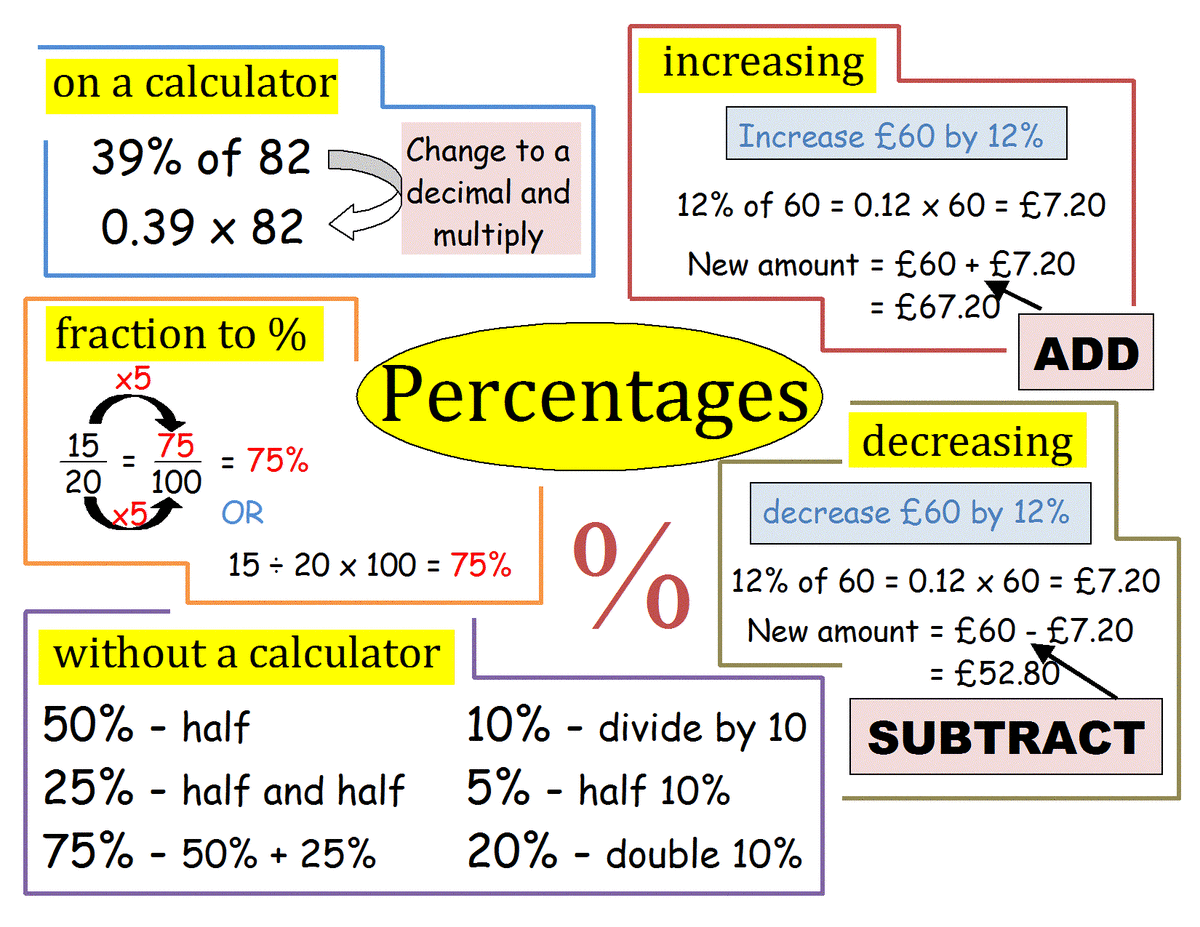
At its heart, a percentage is simply a way of expressing a part of a whole as a fraction of 100. The word “percent” itself is derived from the Latin phrase “per centum,” meaning “by the hundred.” It’s a standardized way to compare parts of different wholes by putting them on a common scale.
Defining the “Per Cent”
When you see the symbol “%” or hear “percent,” think “out of 100.” So, 50% means 50 out of 100, 25% means 25 out of 100, and 100% represents the entire whole. This common denominator of 100 makes percentages incredibly useful for comparisons. Imagine trying to compare 3 out of 12 apples with 7 out of 28 oranges without converting them to a common base—it would be cumbersome. But stating 25% of the apples and 25% of the oranges immediately clarifies the proportion.
The Fractional and Decimal Connection
Percentages are intimately linked with fractions and decimals, and being able to convert between them is a critical skill for financial calculations.
- Percentage to Fraction: To convert a percentage to a fraction, simply place the percentage value over 100 and simplify. For example, 75% becomes 75/100, which simplifies to 3/4.
- Percentage to Decimal: To convert a percentage to a decimal, divide the percentage value by 100 (or simply move the decimal point two places to the left). For example, 75% becomes 0.75. This is the most common form used in calculations.
- Decimal to Percentage: To convert a decimal to a percentage, multiply the decimal by 100 (or move the decimal point two places to the right and add the ‘%’ symbol). For instance, 0.25 becomes 25%.
- Fraction to Percentage: Convert the fraction to a decimal first (divide the numerator by the denominator), then convert the decimal to a percentage. For example, 1/4 is 0.25, which is 25%.
Mastering these conversions is foundational. When your bank states an interest rate of 5%, you immediately translate that to 0.05 for calculation purposes.
Why Percentages Matter in Everyday Money
Percentages provide a clear, relatable way to understand proportions in financial contexts. They allow us to:
- Compare relative values: Is a 10% raise on a $50,000 salary better than a 5% raise on a $100,000 salary? (Yes, $5,000 vs. $5,000, but the relative increase is higher for the $50k salary if it were only a 5% raise, and 10% is clearly better in absolute terms too.)
- Quantify change: How much did your investment portfolio grow or shrink?
- Allocate resources: What portion of your income goes to housing, savings, or debt?
- Understand costs: How much tax will be added to your purchase, or what is the interest rate on your credit card?
Without percentages, navigating these common financial scenarios would be far more complex and opaque.
Essential Percentage Calculations for Personal Finance
Beyond understanding what percentages are, knowing how to perform key calculations is crucial for managing your money effectively.
Calculating a Percentage of a Number (Discounts, Taxes, Tips)
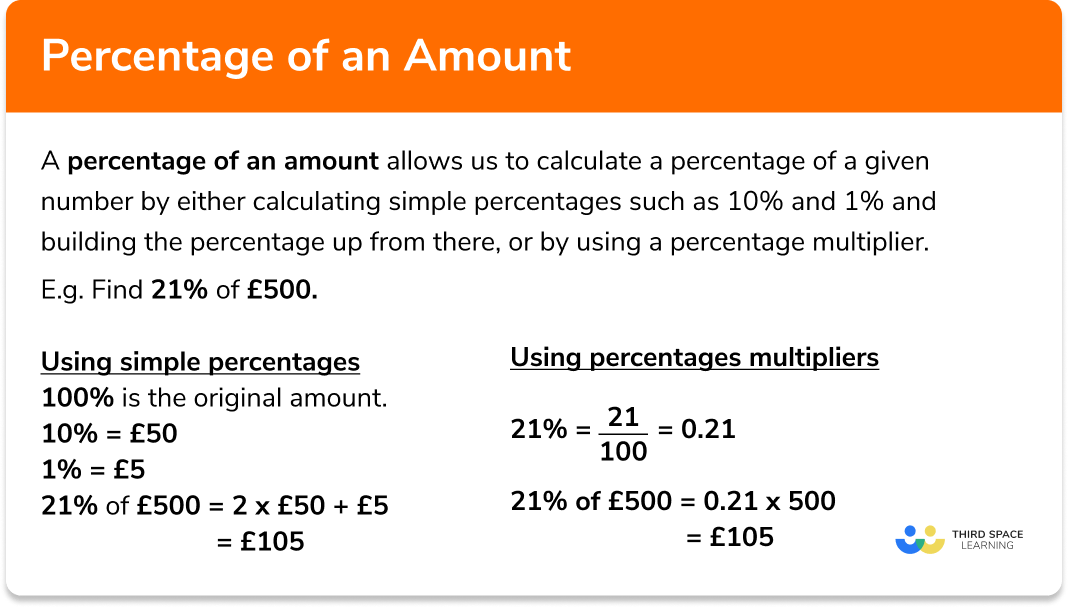
This is perhaps the most frequent percentage calculation you’ll encounter. To find a percentage of a number, convert the percentage to a decimal and multiply it by the number.
Formula: Part = Percentage (as decimal) × Whole
Examples:
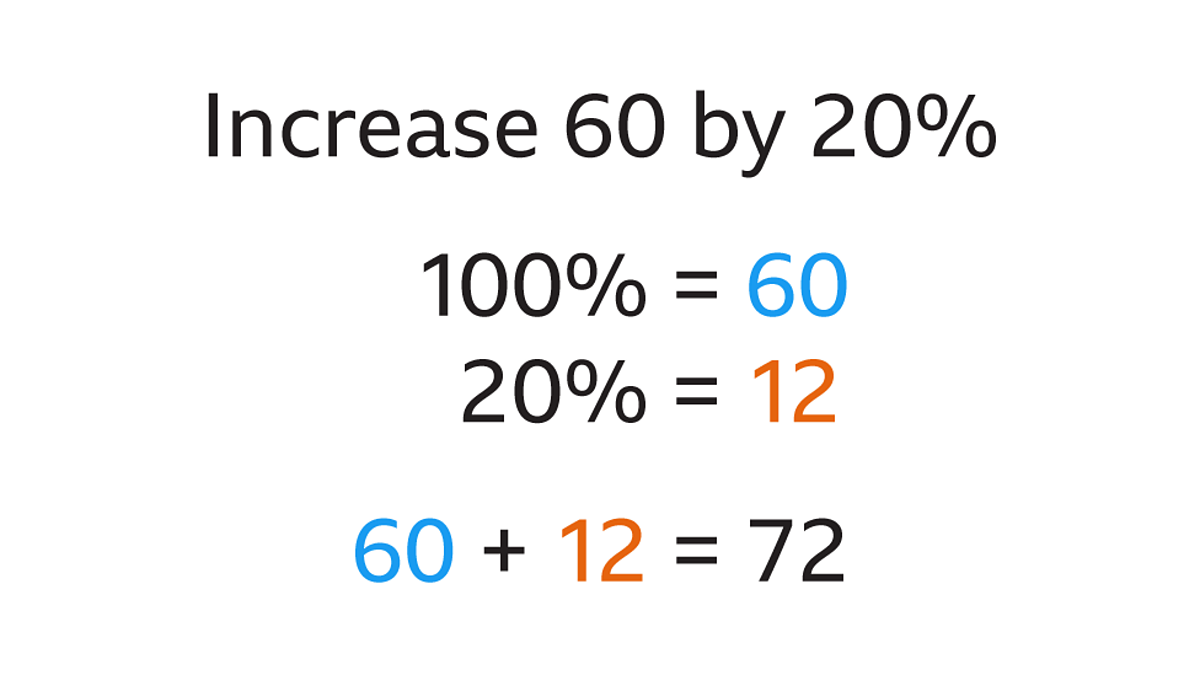
- Discount: You see a shirt for $60 marked 25% off. Discount = 0.25 × $60 = $15. The final price is $60 – $15 = $45.
- Sales Tax: Your new gadget costs $500, and the sales tax is 7%. Tax amount = 0.07 × $500 = $35. Total cost = $500 + $35 = $535.
- Tip: You want to leave an 18% tip on a $45 meal. Tip amount = 0.18 × $45 = $8.10.
Finding the Percentage Increase or Decrease (Investments, Inflation)
This calculation helps you understand relative growth or decline, which is vital for tracking investments or the impact of inflation.
Formula: Percentage Change = [(New Value - Old Value) / Old Value] × 100
Examples:
- Investment Growth: Your investment portfolio grew from $10,000 to $11,500. Percentage Increase = [($11,500 – $10,000) / $10,000] × 100 = ($1,500 / $10,000) × 100 = 0.15 × 100 = 15%.
- Inflation: The price of a gallon of milk increased from $3.00 to $3.15. Percentage Increase = [($3.15 – $3.00) / $3.00] × 100 = ($0.15 / $3.00) × 100 = 0.05 × 100 = 5%.
- Value Depreciation: Your car’s value dropped from $20,000 to $18,000. Percentage Decrease = [($18,000 – $20,000) / $20,000] × 100 = (-$2,000 / $20,000) × 100 = -0.10 × 100 = -10% (a 10% decrease).
Determining What Percentage One Number is of Another (Budgeting, Allocation)
This calculation helps you understand proportions within a whole, essential for budgeting and financial analysis.
Formula: Percentage = (Part / Whole) × 100
Examples:
- Budget Allocation: You earn $4,000 per month and spend $1,200 on rent. Percentage of income on rent = ($1,200 / $4,000) × 100 = 0.30 × 100 = 30%.
- Investment Portfolio Breakdown: If you have $25,000 in stocks and a total portfolio of $100,000, what percentage is in stocks? Percentage in stocks = ($25,000 / $100,000) × 100 = 0.25 × 100 = 25%.
Understanding Basis Points (BPS) in Finance
While not strictly a percentage calculation, basis points are a common way to express very small percentage changes or differences in interest rates, especially in fixed-income markets. One basis point (1 BPS) is equal to 0.01% or 1/100th of a percentage point.
Conversion:
- 1% = 100 BPS
- 0.5% = 50 BPS
- 0.1% = 10 BPS
So, if an interest rate increases by 25 basis points, it means it has increased by 0.25%. This precision is crucial when dealing with large sums of money where even small percentage changes can mean substantial financial shifts.
Percentages in Action: Key Financial Applications
Understanding the mechanics is only half the battle; the real power of percentages lies in their practical application across diverse financial scenarios.
Interest Rates: Loans, Savings, and Credit Cards
Interest rates are arguably the most ubiquitous financial application of percentages. They determine the cost of borrowing money and the earnings from saving or lending it.
- Loans (Mortgages, Car Loans, Personal Loans): When you borrow money, the lender charges a percentage of the principal (original amount) as interest. A 5% interest rate on a $10,000 loan means you’ll pay $500 in interest per year, initially.
- Savings Accounts & Certificates of Deposit (CDs): Banks pay you interest, a percentage of your deposit, for keeping your money with them. A 2% Annual Percentage Yield (APY) on a $5,000 savings account means you’d earn $100 in interest over a year, assuming compounding.
- Credit Cards: These often carry high Annual Percentage Rates (APRs), frequently in the double digits (e.g., 20% or more). This percentage determines how much extra you pay if you don’t pay off your balance in full each month, making it a powerful force for accumulating debt.
Investment Returns: Growth, Loss, and Compounding
Measuring the performance of investments relies almost entirely on percentages.
- Return on Investment (ROI): Investors use percentage growth to gauge how well an asset or portfolio has performed. A stock that increased from $100 to $120 gave a 20% return.
- Compound Interest/Returns: This is the “eighth wonder of the world,” as Einstein purportedly said. It’s interest earning interest. If your investment earns 7% annually, that 7% return itself will earn 7% in subsequent years, leading to exponential growth over time. Percentages allow us to quantify and project this powerful effect.
- Portfolio Allocation: Deciding what percentage of your portfolio should be in stocks, bonds, or other assets is a cornerstone of diversified investing, managing risk, and aligning with your financial goals.
Budgeting and Expense Tracking: Allocating Your Income
Percentages are invaluable for creating and adhering to a budget, helping you understand where your money goes and how to optimize your spending.
- The 50/30/20 Rule: A popular budgeting guideline suggests allocating 50% of your after-tax income to needs (housing, utilities, food), 30% to wants (entertainment, dining out), and 20% to savings and debt repayment. These percentages provide a clear framework for financial planning.
- Tracking Spending: By categorizing expenses and calculating what percentage each category represents of your total income or spending, you can identify areas for potential cuts or adjustments. If 40% of your income goes to discretionary spending, you might recognize a need to reallocate to savings.
Taxes and Deductions: Understanding Your Obligations
From income tax to property tax, percentages dictate how much of your earnings or assets you owe to the government.
- Income Tax Brackets: Tax systems often use progressive percentages, where different portions of your income are taxed at varying rates. Understanding these percentages is crucial for accurate tax planning.
- Deductions and Credits: These reduce your taxable income or your actual tax bill, often expressed as a percentage or impacting calculations by a certain percentage. Maxing out a 401(k) retirement contribution, for example, reduces your taxable income, effectively lowering your tax rate on a portion of your earnings.
Common Pitfalls and Advanced Nuances
While percentages are powerful, they can also be misleading if not understood completely.
The Trap of Percentage Points vs. Percentage Change
This is a common source of confusion, especially in financial news.
- Percentage Points: Refers to the absolute difference between two percentages. If an interest rate goes from 5% to 7%, it has increased by 2 percentage points.
- Percentage Change: Refers to the relative change. An increase from 5% to 7% is a 40% increase in the interest rate itself [(7-5)/5 * 100 = 40%].
Mixing these up can lead to drastically different interpretations of financial data.
Cumulative Percentages and Sequential Discounts
When multiple percentage changes occur sequentially, you cannot simply add or subtract them.
- Sequential Discounts: A 20% discount followed by an additional 10% discount is not a 30% discount. If an item is $100:
- 20% off: $100 – (0.20 * $100) = $80
- Then 10% off the new price: $80 – (0.10 * $80) = $80 – $8 = $72
The total discount is $28, or 28%, not 30%. Always apply discounts sequentially to the current price.
- Cumulative Growth: Similarly, if an investment grows 10% one year and 5% the next, its total growth isn’t 15%. You apply the growth sequentially: (1.10 * 1.05) – 1 = 0.155 or 15.5% cumulative growth.
Understanding APR vs. APY
These terms are frequently used interchangeably but have a critical distinction rooted in compounding.
- Annual Percentage Rate (APR): Represents the simple annual interest rate without taking into account the effects of compounding within that year. It’s often used for loans, credit cards.
- Annual Percentage Yield (APY): Accounts for compounding. If interest is compounded monthly, quarterly, or daily, the APY will be higher than the APR because you’re earning interest on your previously earned interest. This is typically used for savings accounts and CDs, as it gives a more accurate picture of your actual earnings.
Leveraging Percentages for Financial Empowerment
Mastering percentages isn’t just about calculation; it’s about gaining a deeper understanding of your financial landscape and making more informed, strategic decisions.
Making Informed Decisions
- Comparing Financial Products: With a solid grasp of percentages, you can accurately compare different loan offers (lower APR is better), savings accounts (higher APY is better), or investment options, seeing beyond superficial marketing to the true costs and benefits.
- Evaluating Deals: You can quickly calculate if a “percentage off” sale is truly a good deal or if a specific investment return aligns with your expectations.
Setting Realistic Goals
- Savings Goals: If you want to save a certain amount by a particular date, percentages help you determine what percentage of your income you need to save each month or year to reach that goal.
- Retirement Planning: Understanding compound interest and projected percentage returns on investments is fundamental to calculating how much you need to save to enjoy a comfortable retirement.
The Power of Compound Interest Visualized
The most profound impact of percentages in finance is seen through compound interest. By consistently investing even small percentages of your income and allowing the returns to compound, you can build substantial wealth over time. Visualizing this growth, understanding how a seemingly small annual percentage return can snowball into a significant sum, is incredibly motivating and empowers individuals to take control of their financial future.
In essence, percentages are the numerical vernacular of personal finance and the broader economic world. By understanding how they work, how to calculate them, and their practical implications, you unlock a powerful tool for informed decision-making, strategic planning, and ultimately, greater financial security and success. They are not just mathematical constructs; they are the benchmarks, the indicators, and the drivers of your financial journey.
aViewFromTheCave is a participant in the Amazon Services LLC Associates Program, an affiliate advertising program designed to provide a means for sites to earn advertising fees by advertising and linking to Amazon.com. Amazon, the Amazon logo, AmazonSupply, and the AmazonSupply logo are trademarks of Amazon.com, Inc. or its affiliates. As an Amazon Associate we earn affiliate commissions from qualifying purchases.