
In the world of finance, numbers are the language of progress. Whether you are tracking the growth of a nascent stock portfolio, evaluating the success of a side hustle, or measuring the impact of inflation on your household budget, the ability to calculate a percentage increase is perhaps the most fundamental skill in your analytical toolkit.
Understanding how to work out the percentage increase allows you to move beyond raw data and see the “velocity” of your money. A $500 profit sounds excellent in isolation, but its significance changes drastically if it represents a 5% increase on a $10,000 investment versus a 50% increase on a $1,000 investment. This article explores the mechanics of percentage increase within the context of personal and business finance, providing you with the tools to measure, analyze, and accelerate your financial growth.
1. The Core Formula: Deconstructing the Mechanics of Growth
To manage money effectively, you must first understand how to measure its movement. The percentage increase is a mathematical tool used to describe how much a value has grown relative to its starting point. In financial terms, this is often the “Return on Investment” (ROI) or “Year-over-Year” (YoY) growth.
The Step-by-Step Calculation
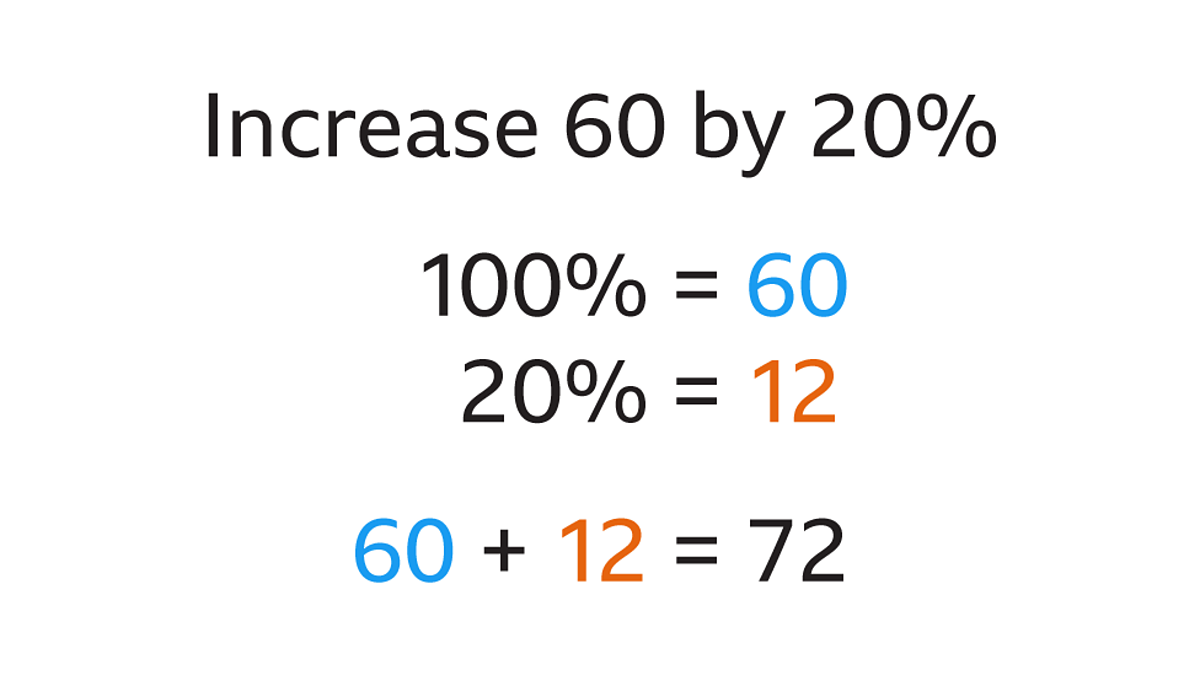
Calculating a percentage increase involves three simple steps. Let’s use the standard formula:
((New Value – Original Value) / Original Value) x 100 = Percentage Increase
- Find the Difference: Subtract the original value (the starting amount) from the new value (the current amount). This gives you the absolute increase.
- Divide by the Original: Divide that absolute increase by the original value. This creates a decimal representing the “portion” of growth.
- Convert to Percentage: Multiply the result by 100 to turn that decimal into a percentage.
Why the “Original Value” Matters Most
A common mistake in financial analysis is dividing by the new value instead of the original one. In finance, we always measure growth against our initial outlay. If you bought a share of a tech company for $100 and it is now worth $150, your “base” is $100. The $50 gain is 50% of your starting point. Using the wrong denominator can lead to a fundamental misunderstanding of your portfolio’s performance, potentially causing you to overstate or understate your actual gains.
Real-World Example: The High-Yield Savings Account
Imagine you deposited $5,000 into a high-yield savings account at the start of the year. By December 31st, through interest and contributions, the balance sits at $5,450.
- Step 1: $5,450 – $5,000 = $450 (The absolute increase).
- Step 2: $450 / $5,000 = 0.09.
- Step 3: 0.09 x 100 = 9%.
Your money grew by 9% over the year. Knowing this number allows you to compare this account’s performance against other financial vehicles, such as index funds or treasury bonds.
2. Percentage Increase in Investing: Measuring Portfolio Velocity
In the realm of investing, the percentage increase is more than just a calculation; it is a metric of efficiency. Professional investors rarely look at “dollar gains” in isolation. Instead, they focus on percentage returns to determine where capital is being utilized most effectively.
Evaluating Stock Performance and ROI
When you look at a stock market ticker, the green numbers followed by a percentage sign represent the daily fluctuation. However, for long-term wealth building, you should focus on the cumulative percentage increase over months or years.
If you invested $10,000 in an S&P 500 index fund and five years later it is worth $16,000, your total percentage increase is 60%. However, to truly understand your money’s performance, you might want to calculate the “Annualized Growth Rate.” This helps you understand if your 60% gain was a result of one lucky year or steady, sustainable growth.
The Impact of Compounding
The “percentage increase” becomes a powerful engine when you factor in compounding. Compounding occurs when the percentage increase of one period is applied to the new total of the previous period. For example, a 10% increase on $1,000 brings you to $1,100. In the next period, a 10% increase isn’t just $100; it’s $110 (10% of $1,100). Over decades, these incremental percentage increases build exponential wealth. This is why financial advisors emphasize the “time in the market”—the longer you allow these percentage increases to stack, the more dramatic the final result.
Dividend Reinvestment and Total Return
When calculating the percentage increase of an investment, many beginners only look at the price of the asset. In finance, we call this “price appreciation.” However, to get the “Total Return,” you must include dividends. If a stock’s price increases by 5% and it pays a 3% dividend which you reinvest, your total percentage increase is actually 8%. Understanding this distinction is vital for income-focused investors who rely on cash flow rather than just capital gains.
3. Scaling Business Finance and Side Hustles
For entrepreneurs and side-hustlers, the percentage increase is the primary indicator of “scalability.” It tells you whether your business is merely surviving or if it is gaining momentum.

Tracking Revenue vs. Profit Growth
In business finance, it is crucial to track the percentage increase of two different metrics: Revenue (top line) and Profit (bottom line).
- Revenue Growth: If your side hustle made $2,000 last month and $3,000 this month, that is a 50% revenue increase. This suggests your marketing or sales efforts are working.
- Profit Growth: If your expenses also rose significantly, your profit might not have increased by 50%. If your profit went from $1,000 to $1,200, your profit increase is only 20%.
By comparing these two percentages, you can identify “operational drag.” If revenue is increasing by 50% but profit is only increasing by 10%, your costs are scaling too fast, and you need to optimize your business model.
Customer Acquisition and Lifetime Value
Modern digital businesses use percentage increases to measure the efficiency of their marketing spend. If you spend $100 on ads to get 10 customers, and the next month you spend $100 to get 15 customers, you have achieved a 50% increase in acquisition efficiency. Likewise, if the “Average Order Value” (AOV) increases from $50 to $60, that 20% increase directly impacts your margin without requiring more traffic.
Benchmarking Against Industry Standards
No business exists in a vacuum. Working out your percentage increase allows you to benchmark your performance against your industry. If the average e-commerce store in your niche is growing at 15% annually, but your store is growing at 30%, you have a competitive advantage. Conversely, if the market is growing by 20% and you are only growing by 5%, you are effectively losing market share, even though your raw numbers are “up.”
4. The Defensive Side: Inflation, Interest, and Expense Management
Percentage increases aren’t always positive. In personal finance, we must also use this calculation to defend our purchasing power against rising costs and debt.
Calculating the Impact of Inflation
Inflation is essentially a “percentage increase” in the cost of living. If the Consumer Price Index (CPI) shows a 5% inflation rate, it means that, on average, goods and services cost 5% more than they did last year. To maintain your standard of living, your income must see a percentage increase that at least matches the inflation rate. If you receive a 3% raise during a year with 5% inflation, your “real” income has actually decreased by 2%.
Debt and Interest Rate Hikes
For those with variable-rate debt, such as certain credit cards or mortgages, a percentage increase in interest rates can be devastating. A move from a 4% interest rate to a 5% interest rate sounds like a “1% increase,” but mathematically, it is a 25% increase in the cost of borrowing ((5-4)/4 = 0.25). This distinction is vital for debt management. Understanding the percentage increase of your interest obligations helps you prioritize which debts to pay off first to minimize financial leakage.
Analyzing Expense Creep
“Lifestyle creep” is the tendency for expenses to rise as income increases. By calculating the percentage increase of your monthly spending, you can keep your finances in check. If your income increases by 20% after a promotion, but your discretionary spending (dining out, travel, gadgets) increases by 40%, you are moving backward in terms of wealth accumulation. Using the percentage increase formula helps you set “thresholds” for your spending to ensure your savings rate remains stable.
5. Tools and Strategies for Advanced Financial Analysis
While the manual formula is essential for understanding the logic, modern financial management relies on automation to track these percentages at scale.
Leveraging Spreadsheets (Excel and Google Sheets)
Excel is the gold standard for financial tracking. To work out a percentage increase in a spreadsheet, you can use a simple cell formula. If your original value is in cell A1 and your new value is in cell B1, the formula is:
=(B1-A1)/A1
Then, you simply click the “Percentage” format button in the toolbar. This allows you to track hundreds of data points—such as monthly utility bills or individual stock tickers—simultaneously.
Financial Dashboards and Apps
Many personal finance apps now do the heavy lifting for you. Apps like Mint, YNAB, or investment platforms like Vanguard and Fidelity provide “Performance Tabs.” These dashboards automatically calculate your “Time-Weighted Return” or your “Monthly Spending Variance.” However, even when using these tools, a savvy investor knows how to verify these numbers manually to ensure the software is categorizing data correctly.
The “Rule of 72”
A quick mental shortcut used by financiers to visualize percentage increases is the “Rule of 72.” If you want to know how long it will take for your money to double at a certain percentage increase, divide 72 by the annual growth rate. For example, if your investments have a 6% annual percentage increase, your money will double in 12 years (72 / 6 = 12). This simple trick turns a percentage into a tangible timeline for your financial goals.

Conclusion: Turning Math into Money
Learning how to work out the percentage increase is more than a mathematical exercise; it is an act of financial empowerment. By mastering this simple calculation, you gain the ability to strip away the noise of raw numbers and see the true health of your finances. You can identify which investments are truly performing, which business strategies are actually scaling, and where inflation and interest are quietly eroding your wealth.
In the pursuit of financial independence, the “how” is just as important as the “how much.” When you start viewing your financial life through the lens of percentage growth, you stop working for your money and start making your money work—efficiently, measurably, and predictably—for you.
aViewFromTheCave is a participant in the Amazon Services LLC Associates Program, an affiliate advertising program designed to provide a means for sites to earn advertising fees by advertising and linking to Amazon.com. Amazon, the Amazon logo, AmazonSupply, and the AmazonSupply logo are trademarks of Amazon.com, Inc. or its affiliates. As an Amazon Associate we earn affiliate commissions from qualifying purchases.