
In the early days of commercial aviation, the only way to know the status of a flight was to call an airline agent or stare at a flickering split-flap display at an airport terminal. Today, we live in an era where the precise location, altitude, and velocity of thousands of aircraft are available at our fingertips. Whether you are a frequent traveler, a logistics professional, or an aviation enthusiast, flight tracking has evolved from a niche hobby into a sophisticated technological ecosystem.
Understanding how to track a flight is no longer just about typing a flight number into a search engine. It is about leveraging a global network of sensors, satellite telemetry, and artificial intelligence to gain real-time insights into the global airspace. This article explores the underlying technology of flight tracking, the best software tools available, and how data science is shaping the future of aviation.
The Core Technology Behind Flight Tracking: How It Works
To track a flight effectively, one must understand the invisible infrastructure that makes it possible. Modern flight tracking does not rely on a single source of data; rather, it aggregates information from several sophisticated systems to provide a cohesive digital picture.
ADS-B: The Backbone of Modern Tracking
The primary technology used today is Automatic Dependent Surveillance-Broadcast (ADS-B). Unlike traditional radar, which “pings” an aircraft to determine its position, ADS-B allows the aircraft to determine its own position via GPS and periodically broadcast it. This broadcast includes the aircraft’s identification, current position, altitude, and velocity.
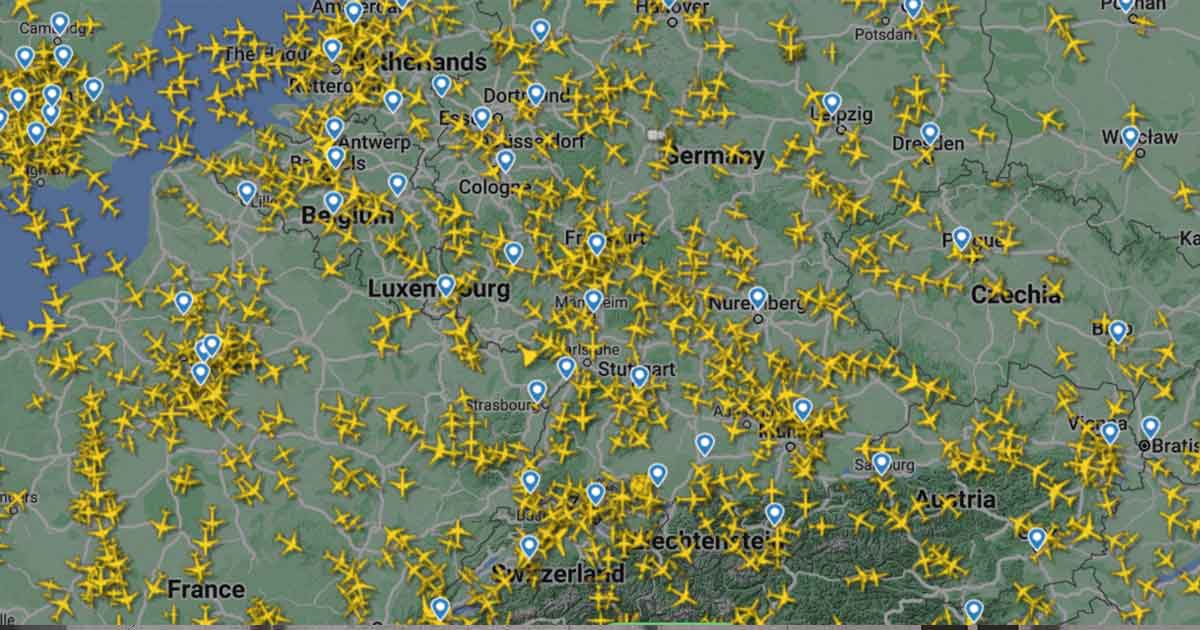
These signals are picked up by a global network of ground-based receivers. Because the signal is unencrypted and sent on a specific frequency (1090 MHz), hobbyists and tech companies can set up small Raspberry Pi-based receivers to capture this data and feed it into centralized servers. This “crowdsourced” hardware network is what allows apps like Flightradar24 to show you a plane’s movement in real-time.
Multilateration (MLAT) and Radar Data
Not all aircraft are equipped with ADS-B transponders, particularly older models or smaller private planes. In these cases, tech platforms use Multilateration (MLAT). By measuring the time it takes for a signal to reach four or more separate receivers, the system can calculate the aircraft’s position through a process known as Time Difference of Arrival (TDOA).
Additionally, many tracking platforms integrate official “feeds” from government agencies, such as the FAA’s System Wide Information Management (SWIM) in the United States. This provides a fail-safe layer of data, ensuring that even when ground receivers are out of range, the flight’s progress is still recorded via official air traffic control channels.
Leading Software and Apps for Live Monitoring
The “how” of tracking a flight is ultimately determined by the software interface you choose. Depending on whether you need a quick status update or deep telemetry, different tools offer varying levels of technical sophistication.
Flightradar24: The Gold Standard for Consumer Tech
Flightradar24 is perhaps the most recognized name in the industry. Its success lies in its massive network of over 30,000 ground-based ADS-B receivers. For the average user, the app offers an augmented reality (AR) feature: you can point your smartphone at a plane in the sky, and the app will overlay the flight number, origin, and destination on your screen.
From a technical standpoint, Flightradar24 provides detailed “squawk codes” (transponder codes used by pilots to communicate with ATC) and vertical speed data, making it a favorite for those who want to understand the mechanics of a flight’s descent or emergency status.
FlightAware: Precision and Enterprise Data
While Flightradar24 dominates the enthusiast market, FlightAware is often the tool of choice for professional logistics and corporate environments. FlightAware’s “HyperFeed” engine processes over 10,000 messages per second from over 45 countries.
One of its standout features is the integration of “Predictive Arrival Times.” Using historical data and real-time weather overlays, FlightAware’s algorithms can often predict a delay before the airline officially updates the gate information. This is a prime example of how big data is being used to improve the traveler experience.
Native OS Integration: iOS and Android Shortcuts
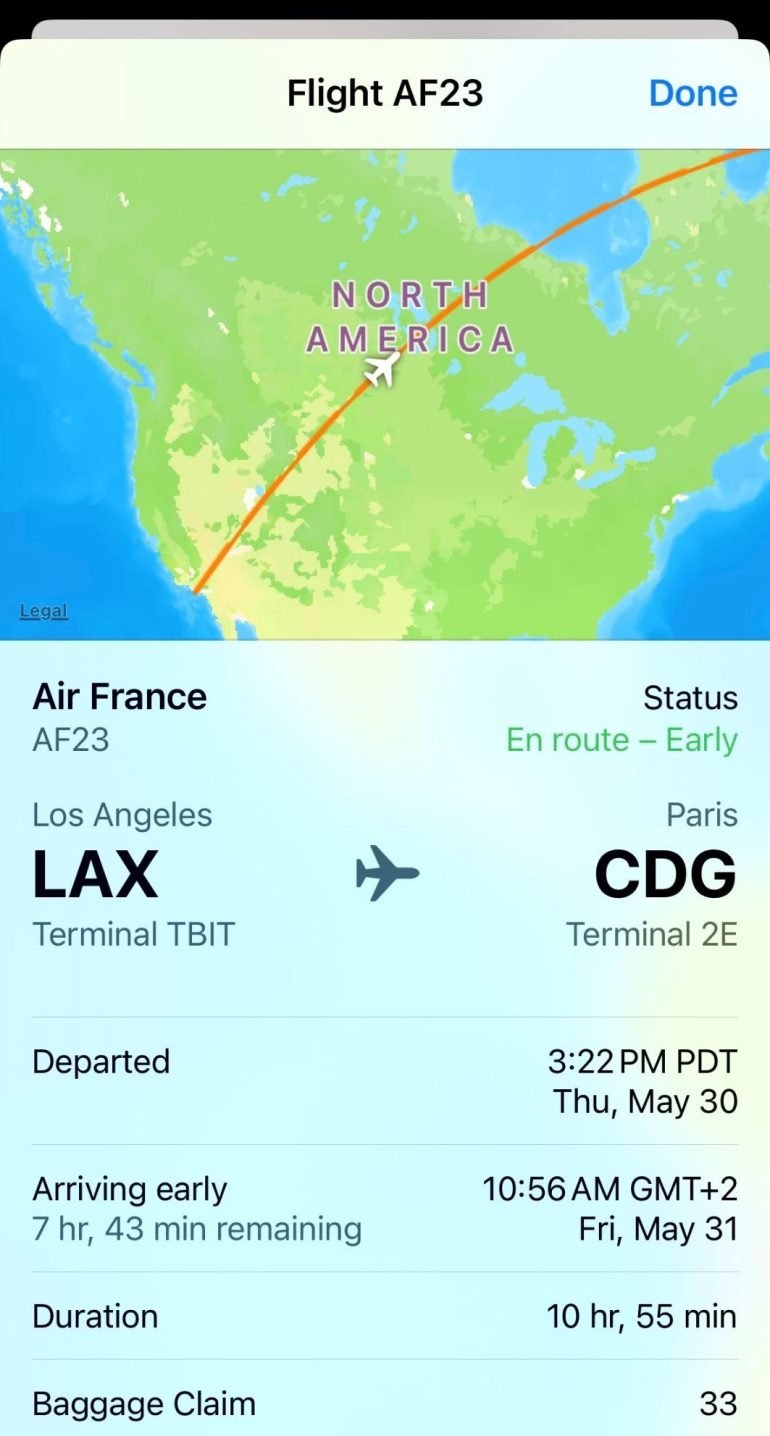
For users who don’t want to download a third-party app, modern mobile operating systems have built-in flight tracking capabilities. On an iPhone, for instance, you can simply type a flight number (e.g., “AA123”) into the Spotlight search bar or an iMessage. Apple’s Data Detectors will automatically recognize the string as a flight and generate a real-time map. This leverages a simplified API that pulls core data without the overhead of a full-scale aviation app.
Leveraging AI and Big Data for Delay Predictions
In the current tech landscape, tracking a flight is moving beyond “where is the plane now?” to “where will the plane be in three hours?” This shift is driven by Machine Learning (ML) and Artificial Intelligence.
Machine Learning in Aviation Logistics
Aviation is a chaotic system influenced by runway congestion, ground crew availability, and air traffic control (ATC) holds. AI models are now being trained on billions of data points to identify patterns that lead to delays. For example, if an AI observes that a specific “inbound” flight is delayed at its origin, it can automatically calculate the “turnaround time” at the hub and notify passengers of a “downstream” delay hours before it occurs.
These predictive tools analyze the tail number (the aircraft’s unique ID) rather than just the flight number. By tracking the physical aircraft’s journey through multiple flight legs, the software provides a much more accurate picture of potential disruptions than the airline’s own schedule.
Hyper-Local Weather Integration
Weather remains the leading cause of flight disruptions. Advanced tracking software now overlays Doppler radar and “SIGMETs” (Significant Meteorological Information) onto flight paths. High-end tracking tools use AI to simulate how a thunderstorm cell’s movement will intersect with a specific flight corridor, allowing users to see why a pilot might be deviating hundreds of miles off-course.
Privacy, Security, and Ethical Considerations in Tracking
As flight tracking technology becomes more accessible, it has raised significant questions regarding digital security and the privacy of high-profile individuals.
Data Encryption and User Privacy
Most consumer flight tracking data is public, but the apps themselves must maintain high standards of digital security. When you track a flight, these apps collect your location data to provide local airport information. Leading platforms employ standard TLS/SSL encryption to ensure that the communication between your device and their servers remains private, preventing bad actors from intercepting your travel plans.
The Role of PIA and Blocking Programs
Privacy has become a major talking point in the tech world, especially concerning private jets. In the United States, the FAA offers the Privacy ICAO Address (PIA) program. This allows aircraft owners to use a temporary, unidentifiable transponder code that isn’t linked to their actual registration in public databases.
Furthermore, many tracking sites honor “Limit Select Information” (LSI) requests, where a tail number is removed from the public map. However, because ADS-B signals are broadcast openly, decentralized networks like ADSB-Exchange continue to show all aircraft, arguing that public airspace data should remain public. This tension between transparency and personal security remains a significant debate in the tech community.
Future Trends: Satellite-Based Tracking and Beyond
The next frontier of flight tracking is moving from the ground to the stars. The “dead zones” of the world—the vast oceans and remote polar regions—are finally being closed.
Space-Based ADS-B (Aireon)
In the past, when a plane flew over the middle of the Atlantic, it disappeared from real-time tracking apps, relying instead on periodic satellite pings every 10 to 15 minutes. Companies like Aireon have now deployed ADS-B receivers on Iridium NEXT satellites. This “Space-Based ADS-B” allows for 100% global coverage with update rates of less than a second. This technology is crucial for preventing tragedies like the disappearance of MH370 and allows ATC to reduce the separation between aircraft, leading to more efficient flight paths and lower fuel consumption.
The Role of 5G and IoT in Cabin Connectivity
As 5G networks expand, we are seeing a convergence between flight tracking and the Internet of Things (IoT). Future aircraft will be equipped with thousands of sensors tracking everything from engine health to cabin temperature in real-time. For the passenger, this means “tracking a flight” will soon include tracking your checked luggage via an embedded IoT tag that syncs directly with the flight tracking app on your phone.

Conclusion
Tracking a flight has transformed from a simple search query into a masterclass in modern technology. By combining the crowdsourced power of ADS-B, the analytical capabilities of AI, and the global reach of satellite networks, we have achieved an unprecedented level of transparency in our skies. Whether you are using a simple iOS shortcut or a professional-grade telemetry suite, the tech behind that tiny moving icon on your screen is a testament to the incredible progress of digital navigation and data science.
aViewFromTheCave is a participant in the Amazon Services LLC Associates Program, an affiliate advertising program designed to provide a means for sites to earn advertising fees by advertising and linking to Amazon.com. Amazon, the Amazon logo, AmazonSupply, and the AmazonSupply logo are trademarks of Amazon.com, Inc. or its affiliates. As an Amazon Associate we earn affiliate commissions from qualifying purchases.