
Understanding how to calculate a percentage of a number is a foundational skill, not just for academics but as a cornerstone of financial literacy. From calculating discounts on purchases to understanding interest rates on loans and investments, mastering percentages is indispensable for managing your money effectively, growing wealth, and making informed financial decisions in personal and business contexts. This guide will demystify the process, demonstrating its practical applications across the financial landscape.
The Foundation of Financial Literacy: Grasping Percentages
A percentage is quite simply a way of expressing a number as a fraction of 100. The word “percent” originates from the Latin “per centum,” meaning “by the hundred.” When you see a percentage, think of it as a part out of a whole, where the whole is always considered to be 100 parts.

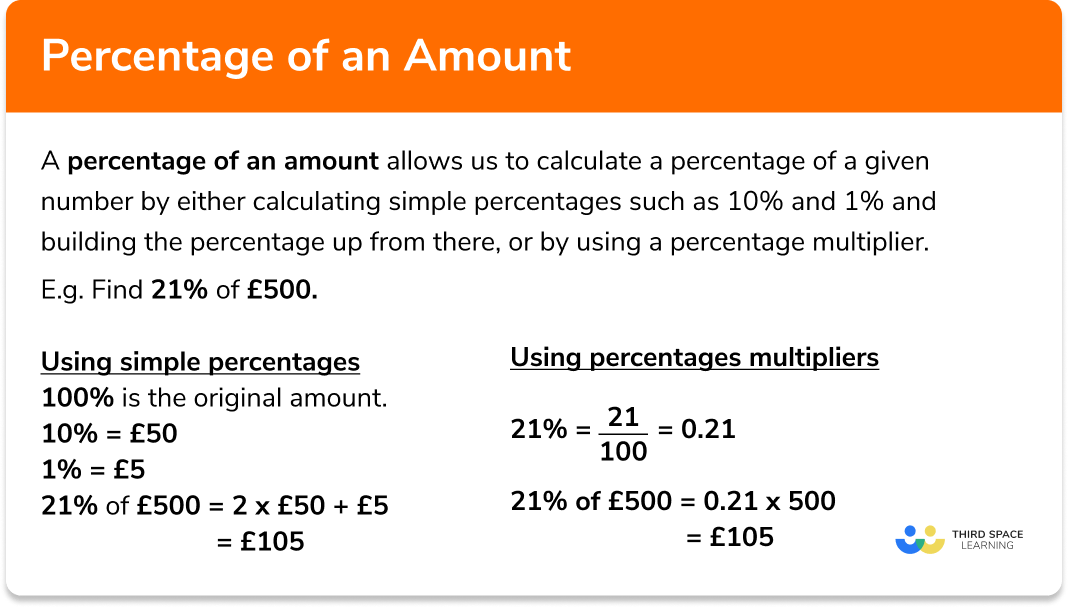
The core method for taking a percentage of a number involves a straightforward two-step process:
- Convert the percentage to a decimal: To do this, divide the percentage by 100. For example, 25% becomes 25 / 100 = 0.25. 5% becomes 5 / 100 = 0.05.
- Multiply the decimal by the number: Once you have the decimal equivalent of your percentage, multiply it by the number you want to find the percentage of.
Let’s illustrate with an example: To find 20% of 300:
- Convert 20% to a decimal: 20 / 100 = 0.20
- Multiply by the number: 0.20 * 300 = 60
So, 20% of 300 is 60.
This fundamental calculation is the gateway to understanding a vast array of financial concepts. Without it, navigating sales, interest, investments, and budgeting becomes significantly more challenging.
Practical Applications in Personal Finance
In personal finance, percentages are the language of your money. They help you save, spend wisely, and plan for the future.
Discounts and Sales: Saving Money Intelligently
One of the most common applications of percentages in daily life is calculating discounts. Whether it’s a “30% off” sale or a “15% discount code,” understanding how to apply percentages directly impacts your purchasing power.
To calculate a discount:
- Find the percentage of the original price.
- Subtract that amount from the original price.
Example: You want to buy an item priced at $80, and there’s a 25% discount.
- Calculate 25% of $80: 0.25 * $80 = $20
- Subtract the discount from the original price: $80 – $20 = $60
The discounted price is $60.
This skill allows you to quickly assess actual savings and make informed decisions, ensuring you’re getting the best deal and not overspending.
Budgeting and Expense Tracking
Percentages are powerful tools for managing your income and expenses. Many budgeting strategies, like the 50/30/20 rule, rely entirely on percentages to allocate funds effectively.
The 50/30/20 Rule:
- 50% of your after-tax income for needs (housing, groceries, utilities).
- 30% for wants (dining out, entertainment, hobbies).
- 20% for savings and debt repayment (emergency fund, investments, extra loan payments).
If your after-tax monthly income is $4,000:
- Needs: 50% of $4,000 = 0.50 * $4,000 = $2,000
- Wants: 30% of $4,000 = 0.30 * $4,000 = $1,200
- Savings/Debt: 20% of $4,000 = 0.20 * $4,000 = $800
Tracking your spending as a percentage of your total budget or income also provides valuable insights into where your money is going and areas where you might need to adjust.
Interest Rates: Loans, Savings, and Credit Cards
Interest is essentially the cost of borrowing money or the reward for lending it. It’s almost always expressed as a percentage. Understanding how to calculate interest is crucial for making smart decisions about loans, credit cards, and savings accounts.
Example: Simple Interest: If you put $1,000 into a savings account with a 2% annual simple interest rate:
- Convert 2% to a decimal: 0.02
- Calculate 2% of $1,000: 0.02 * $1,000 = $20
At the end of the year, you would earn $20 in interest.
For more complex scenarios like compound interest, the principle remains the same, but the calculation is applied to the new, accumulated balance, demonstrating the power of percentages over time. Credit card Annual Percentage Rates (APRs) and savings account Annual Percentage Yields (APYs) are all expressed as percentages, making this skill fundamental to your financial health.
Essential for Investing and Wealth Building
For anyone looking to grow their wealth, percentages are the metrics that define success and risk in the investment world.
Investment Returns and Portfolio Performance
When evaluating investments, returns are almost universally expressed as percentages. This allows for a standardized comparison across different investment types and amounts.
Example: Stock Gain: You invest $5,000 in a stock, and it grows to $5,750.
- Calculate the gain: $5,750 – $5,000 = $750
- To find the percentage gain, divide the gain by the original investment and multiply by 100: ($750 / $5,000) * 100 = 15%
Your investment saw a 15% return.
This helps you understand the efficiency of your investments and compare them against benchmarks or other opportunities. Concepts like Compound Annual Growth Rate (CAGR) also heavily rely on percentages to smooth out irregular returns over multiple years, providing a clearer picture of an investment’s long-term performance.
Diversification and Asset Allocation
Diversification is key to managing risk in an investment portfolio. This strategy involves spreading your investments across various asset classes (e.g., stocks, bonds, real estate) to mitigate potential losses. Percentages are used to define the allocation targets for each asset class.
Example: Asset Allocation Strategy:
- 60% Stocks
- 30% Bonds
- 10% Real Estate
If your total portfolio is worth $100,000:
- Stocks: 60% of $100,000 = $60,000
- Bonds: 30% of $100,000 = $30,000
- Real Estate: 10% of $100,000 = $10,000
Regularly rebalancing your portfolio to maintain these target percentages is a critical task, ensuring your risk exposure aligns with your financial goals.
Business Finance and Entrepreneurship
For business owners and aspiring entrepreneurs, percentages are vital for understanding profitability, managing costs, and meeting tax obligations.
Profit Margins and Revenue Analysis
Businesses use percentages to measure profitability and track financial health. Key metrics like gross profit margin and net profit margin are expressed as percentages.
*Gross Profit Margin = (Gross Profit / Revenue) * 100*
*Net Profit Margin = (Net Profit / Revenue) * 100*
If a business has $500,000 in revenue and a gross profit of $200,000:
- Gross Profit Margin = ($200,000 / $500,000) * 100 = 40%
This tells a business how much profit it makes from each dollar of sales before operating expenses are considered. Tracking these percentages over time allows businesses to identify trends, improve pricing strategies, and control costs.
Tax Calculations and Deductions
Taxes are an unavoidable part of both personal and business finance, and they are almost always calculated using percentages. Sales tax, income tax brackets, payroll taxes, and various deductions are all percentage-based.
Example: Sales Tax: If a product costs $100 and the sales tax rate is 7%:
- Calculate 7% of $100: 0.07 * $100 = $7
- Add the sales tax to the original price: $100 + $7 = $107
The total cost to the customer is $107.
Understanding how tax percentages apply to different income levels, products, or services is crucial for accurate financial planning, compliance, and maximizing deductions for businesses.
Avoiding Common Percentage Pitfalls
While the core calculation is simple, misunderstandings can lead to significant financial errors.
Percentage Point vs. Percentage Change
It’s vital to distinguish between a “percentage point” change and a “percentage change.”
- Percentage point change refers to the absolute difference between two percentages. If an interest rate goes from 5% to 7%, that’s a 2 percentage point increase.
- Percentage change is the relative change. If a stock price goes from $100 to $102, that’s a 2% percentage change. If a tax rate increases from 5% to 7%, the percentage point increase is 2, but the percentage change is (7-5)/5 * 100 = 40%. The tax rate itself increased by 40%. This distinction is critical in financial reporting and analysis.

The Impact of Sequential Percentages
When multiple percentage changes are applied sequentially, they do not simply add or subtract. For instance, a 10% increase followed by a 10% decrease does not result in the original number.
Example: Start with $100.
- Increase by 10%: $100 * (1 + 0.10) = $110
- Decrease by 10% (of the new amount): $110 * (1 – 0.10) = $99
The final amount is $99, not $100. Always apply percentages to the current value, not the original, unless specified.
Mastering the calculation of a percentage of a number is more than just a math skill; it’s an essential component of financial intelligence. From navigating everyday purchases and budgeting to making sophisticated investment decisions and managing business finances, percentages empower you to understand your money better and make smarter, more informed choices that contribute to your financial well-being and success.
aViewFromTheCave is a participant in the Amazon Services LLC Associates Program, an affiliate advertising program designed to provide a means for sites to earn advertising fees by advertising and linking to Amazon.com. Amazon, the Amazon logo, AmazonSupply, and the AmazonSupply logo are trademarks of Amazon.com, Inc. or its affiliates. As an Amazon Associate we earn affiliate commissions from qualifying purchases.