
The S&P 500 is often viewed as the definitive barometer of the American economy. Comprising 500 of the largest publicly traded companies in the United States, it represents approximately 80% of the available market capitalization. For the vast majority of investors, the strategy is simple: buy and hold. Over long horizons, the index has historically trended upward, rewarding patience with compounding returns. However, markets do not move in a straight line. Economic cycles, geopolitical instability, and shifting monetary policies can lead to prolonged periods of decline or “bear markets.”
For the sophisticated investor or the tactical trader, these downturns represent not just a risk to be managed, but an opportunity to be seized. “Shorting” the S&P 500 allows an individual to profit when the index falls. Whether you are looking to hedge an existing portfolio against a recession or speculate on a specific market correction, understanding the mechanics, instruments, and risks of shorting is essential.
Understanding the Fundamentals of Shorting the Market
Before diving into the specific financial instruments used to bet against the S&P 500, it is vital to understand the conceptual framework of short selling. In a traditional “long” position, you buy an asset expecting its price to rise. In a “short” position, you are essentially flipping that script.
What Does it Mean to “Short”?
In the strictest sense, shorting involves borrowing a security you do not own, selling it at the current market price, and then hoping to buy it back later at a lower price to return it to the lender. The difference between the high selling price and the lower purchase price constitutes your profit. When shorting an entire index like the S&P 500, however, you aren’t usually borrowing 500 individual stocks. Instead, you utilize derivative products or specialized funds designed to move in the opposite direction of the index.
Why Target the S&P 500?
The S&P 500 is the preferred target for bearish bets because of its immense liquidity. Because trillions of dollars are pegged to this index, the bid-ask spreads are incredibly tight, meaning you can enter and exit positions with minimal “slippage” or lost value. Furthermore, because it is a cap-weighted index, it is heavily influenced by mega-cap tech giants. If an investor believes the technology sector is overvalued, shorting the S&P 500 is one of the most efficient ways to express that macro view.
Primary Methods for Shorting the S&P 500
There is no single way to short the market. The method you choose should depend on your risk tolerance, your time horizon, and the complexity of your brokerage account.
Inverse Exchange-Traded Funds (ETFs)
The most accessible way for the average retail investor to short the S&P 500 is through Inverse ETFs. These are funds managed by institutions like ProShares or Direxion that use derivatives to deliver the inverse of the daily performance of the S&P 500.
-
Standard Inverse ETFs: An instrument like the ProShares Short S&P 500 (Ticker: SH) aims for a 1:1 inverse relationship. If the S&P 500 drops by 1% in a day, SH should, in theory, rise by 1%.
-
Leveraged Inverse ETFs: For those seeking higher volatility, there are leveraged versions such as the ProShares UltraPro Short S&P 500 (Ticker: SPXS), which seeks to return three times (3x) the inverse of the daily performance. While tempting, these are extremely dangerous; if the S&P 500 rises by 2%, a 3x leveraged short fund could lose 6% of its value in a single session.
It is important to note that inverse ETFs are designed for daily rebalancing. Due to “mathematical decay” or compounding effects, holding these funds for weeks or months during a volatile market can result in losses even if the index eventually ends up lower than where you started.
Buying Put Options
Options offer a way to short the S&P 500 with a defined “downside.” When you buy a put option on an S&P 500 tracking ETF (like SPY), you are purchasing the right to sell the shares at a specific price (the strike price) before a certain date (expiration).
If the market crashes well below your strike price, the value of your put option increases significantly. The primary advantage of options is that your maximum loss is limited to the “premium” you paid for the contract. Unlike shorting a stock directly, where losses can be theoretically infinite if the stock keeps rising, an option holder can only lose what they put in. However, options are subject to “theta” or time decay; if the market stays flat, your option will lose value every day until it expires worthless.
Trading Futures and E-minis
For professional traders and those with high-margin accounts, the futures market is the gold standard for shorting the S&P 500. The E-mini S&P 500 futures (/ES) and the Micro E-mini (/MES) allow traders to take massive bearish positions with relatively small amounts of capital.

Futures are highly leveraged instruments that trade nearly 24 hours a day, five days a week. This allows you to react to news that breaks while the standard stock exchange is closed. However, because the leverage is so high, a small move against your position can result in a margin call, requiring you to deposit more cash or see your position liquidated instantly.
Advanced Strategies: Hedging vs. Speculation
Shorting is not always about “making a killing” on a market crash. It is often used as a sophisticated form of insurance.
Hedging Your Long Portfolio
Imagine you have a $100,000 portfolio of high-quality dividend stocks that you intend to hold for twenty years. You believe a recession is coming in the next six months, but you don’t want to sell your stocks and trigger capital gains taxes.
In this scenario, you can “hedge” by taking a short position on the S&P 500. If the market drops 10%, your long-term stock portfolio will likely lose value, but your short position will gain value, offsetting the losses. This allows you to navigate the storm without dismantling your core investment strategy.
Tactical Speculation and Market Timing
Speculators use shorting to profit from overextended technical indicators. They might look for “double tops,” “head and shoulders” patterns, or instances where the index is trading far above its 200-day moving average. Tactical shorting requires a disciplined exit strategy. Unlike long positions, where “time in the market” is the goal, short positions are typically “trades” that require precise timing and strict stop-loss orders.
Navigating the Risks of a Bearish Position
Shorting is inherently riskier than traditional investing for several structural and psychological reasons.
Unlimited Upside Risk
When you buy a stock at $100, the most you can lose is $100 (if the company goes to zero). However, when you short an asset at $100, there is no limit to how high the price can go. The S&P 500 could, in theory, go to $500, $1,000, or $10,000. Because there is no “ceiling” on the market, the potential for loss is theoretically infinite. This is why professional short-sellers almost always use stop-loss orders to automatically close their positions if the market rises to a certain level.
The Impact of Contango and Decay
In the world of inverse ETFs and futures, you are fighting against the mechanics of the instruments themselves. Many short products use rolling monthly contracts. If the “future” price is higher than the current price (a state known as contango), the fund loses a small amount of money every time it rolls its position into the next month. Over time, this creates a “drag” on performance that makes shorting a poor long-term strategy.
Margin Requirements and Liquidity
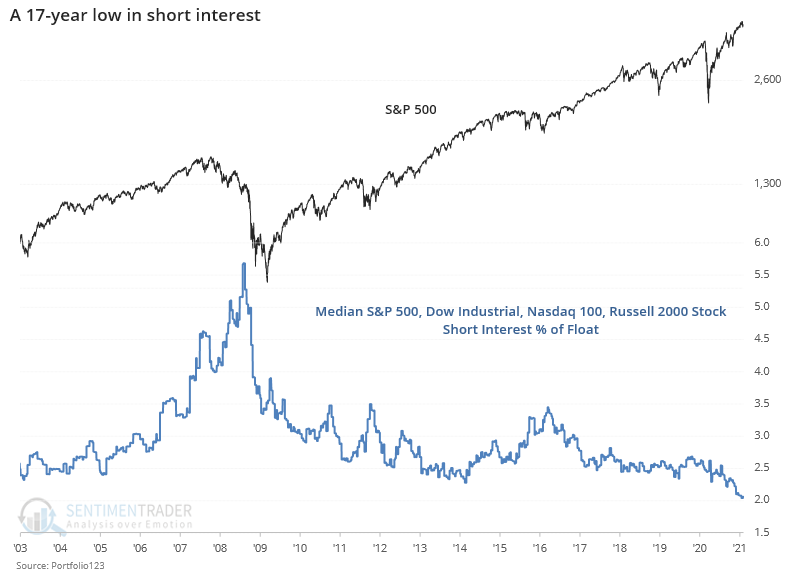
Shorting usually requires a margin account, which means you are borrowing money or assets from your broker. Brokers charge interest on this margin. Furthermore, if the market rallies sharply, you may be subject to a “short squeeze.” This occurs when short-sellers are forced to buy back their positions to cover losses, which in turn drives the price even higher, creating a feedback loop of rising prices.
Determining the Right Time to Short
The old adage on Wall Street is that “the market can remain irrational longer than you can remain solvent.” Success in shorting the S&P 500 requires more than just a “feeling” that the market is too high.
Investors typically look for a combination of macroeconomic and technical signals. Macro indicators might include rising interest rates from the Federal Reserve, which increases the cost of borrowing for companies and makes stocks less attractive compared to bonds. They might also watch the “Yield Curve,” specifically the spread between 2-year and 10-year Treasury notes; an inversion of this curve has historically been a reliable predictor of recessions.
Technically, a break below a major moving average, such as the 50-day or 200-day simple moving average, often signals that the momentum has shifted from the bulls to the bears. When the S&P 500 fails to make “higher highs” and begins making “lower lows,” the structural trend has changed, providing a more favorable environment for short positions.
Shorting the S&P 500 is a powerful tool in the investor’s arsenal, but it must be handled with extreme care. It requires a shift in mindset: you are no longer an owner of American industry, but a critic of its current valuation. By using inverse ETFs for simplicity, options for capped risk, or futures for maximum efficiency, you can protect your wealth or profit during the inevitable cycles of the financial markets. However, always remember that the market’s primary gravity is upward; shorting is a journey against the wind, requiring constant vigilance and a rigorous commitment to risk management.
aViewFromTheCave is a participant in the Amazon Services LLC Associates Program, an affiliate advertising program designed to provide a means for sites to earn advertising fees by advertising and linking to Amazon.com. Amazon, the Amazon logo, AmazonSupply, and the AmazonSupply logo are trademarks of Amazon.com, Inc. or its affiliates. As an Amazon Associate we earn affiliate commissions from qualifying purchases.