
Shipping a puppy to another state is far more than just booking a ticket; it’s a significant financial undertaking wrapped in complex logistical decisions. For prospective pet owners, breeders, or individuals needing to relocate with their furry companions, understanding the monetary implications is crucial for a smooth, safe, and stress-free transition. This guide delves into the financial considerations, cost-benefit analyses, and strategic budgeting required to successfully navigate the process of interstate puppy transport, ensuring both the welfare of the animal and the prudence of your investment.
The decision to ship a puppy involves a myriad of expenses that extend beyond the basic transport fee. From veterinary certifications and specialized crates to potential insurance and emergency funds, each step presents a financial decision point. Approaching this process with a clear understanding of the costs involved, alongside a robust financial plan, will not only safeguard your budget but also significantly enhance the safety and comfort of your puppy during transit. We’ll explore how to budget effectively, compare services for value, mitigate financial risks, and make informed choices that prioritize both economic sensibility and ethical animal welfare.
Understanding the Investment: Initial Costs and Pre-Shipment Financial Planning
Before a paw even touches a travel crate, a significant portion of your budget will be allocated to pre-shipment preparations. These aren’t merely expenses; they are investments in your puppy’s health, safety, and legal compliance, essential for avoiding costly delays or, worse, health complications during travel.
Veterinary Expenses: A Non-Negotiable Investment
The cornerstone of any safe puppy shipment is comprehensive veterinary care, and this comes with an associated price tag. Every state and airline will require a health certificate issued by a licensed veterinarian, typically within 10 days of travel. This certificate verifies the puppy is healthy enough for travel and free from contagious diseases. The cost for this examination can range from $50 to $150, depending on your vet’s fees and the specific tests required.
Beyond the certificate, a puppy must be up-to-date on all necessary vaccinations – particularly rabies for puppies over a certain age (often 3 months) – and deworming treatments. While these might be part of routine puppy care, ensuring they align with shipping requirements could incur additional booster shots or veterinary visits, each adding to your financial outlay. Furthermore, some airlines or states might mandate specific parasite prevention or microchipping, incurring an additional $30-$70 for the chip and its registration, and varying costs for preventative treatments. Overlooking these vital veterinary investments can lead to shipment refusal, forcing you to incur costs for rebooking, additional vet visits, and potentially boarding fees, making proactive planning a financially sound strategy.
Crate Procurement: Balancing Safety and Budget
The travel crate is more than just a box; it’s your puppy’s secure haven during transit, and selecting the right one is a critical financial decision. The International Air Transport Association (IATA) sets strict guidelines for airline-approved crates, dictating size, ventilation, construction materials, and labeling. Investing in a high-quality, IATA-compliant crate (typically hard-sided plastic with metal screws) is non-negotiable for air travel.
Prices for airline-approved crates vary significantly based on size and brand, ranging from $50 for small carriers to upwards of $200 for larger breeds. While it might be tempting to opt for a cheaper, non-compliant crate, this is a false economy. Airlines will refuse puppies transported in inadequate crates, leading to last-minute purchases at inflated airport prices or missed flights, incurring rebooking fees. Beyond compliance, consider the comfort and durability – a sturdy crate that can withstand travel conditions is an investment in your puppy’s safety and your peace of mind. Add-ons like absorbent bedding, food/water dishes, and “Live Animal” labels are smaller expenses but contribute to the overall budget.
Regulatory Compliance: Avoiding Costly Delays
Understanding and adhering to the specific regulations of both the origin and destination states, as well as the chosen airline or transport service, is paramount to avoiding expensive setbacks. Each state may have unique import requirements concerning age, vaccinations, and health certificate endorsements. Airlines, in turn, have their own specific rules regarding breed restrictions, temperature embargoes, and documentation.
Failure to meet any of these regulations can result in your puppy being denied boarding, impounded upon arrival, or quarantined, leading to exorbitant fees. These can include rebooking costs (potentially hundreds of dollars), expedited veterinary services to meet overlooked requirements, extended boarding fees (often $30-$50 per day), and even legal penalties. Proactive research and diligent adherence to all stipulations — a time investment that translates into financial savings — are vital. Utilizing resources from the USDA Animal and Plant Health Inspection Service (APHIS) and directly contacting your chosen carrier are free steps that can prevent costly missteps.
Evaluating Shipping Methods: Cost vs. Value vs. Risk
The choice of shipping method profoundly impacts the overall cost, the level of perceived risk, and the convenience factor for both you and your puppy. Each option presents a different financial proposition and a unique balance of advantages and disadvantages.
Air Cargo: A High-Volume, Potentially High-Risk Financial Calculation
Shipping a puppy via airline cargo is often the most common method for long distances, but it requires a careful cost-benefit analysis. The base cost for air cargo typically ranges from $200 to $600, depending on the airline, distance, and the puppy’s size/weight with its crate. This price generally includes the airfare and basic handling. However, several factors inflate this figure.
Airline surcharges for “Live Animal” handling, specialized climate-controlled holding areas, or peak travel times can add $50-$150. Temperature restrictions are also a major financial risk; if temperatures at either origin, layover, or destination airports fall outside safe limits (e.g., below 20°F or above 85°F), the shipment will be delayed or canceled, costing you rebooking fees and potential last-minute boarding expenses. Furthermore, while air cargo is efficient, it involves separating the puppy from human supervision, which some owners perceive as a higher risk. While rarely required, consider the emotional “cost” of this separation and weigh it against the financial savings compared to other options. It’s a high-volume solution that requires meticulous timing and weather monitoring to mitigate financial and welfare risks.
In-Cabin Transport: The Premium for Personal Supervision
For smaller puppies (typically those fitting under the seat in a carrier), in-cabin transport offers the highest level of supervision but often comes with a financial premium and logistical constraints. Most airlines charge a pet fee ranging from $100 to $175 each way for in-cabin travel. This fee is in addition to your own airfare.
While this option provides direct human oversight, greatly reducing stress for both the puppy and owner, it’s restricted by the puppy’s size and weight. If the puppy exceeds the airline’s dimensions for an under-seat carrier, this option is financially unviable. Moreover, airlines usually limit the number of pets allowed in the cabin per flight, requiring early booking, which might not always align with your desired travel dates or flexibility, potentially leading to higher human airfare costs. For those prioritizing constant supervision and peace of mind, the in-cabin pet fee is a worthwhile investment, but its applicability is limited by the puppy’s size and the airline’s capacity.
Ground Transport Services: Weighing Affordability and Specialized Care
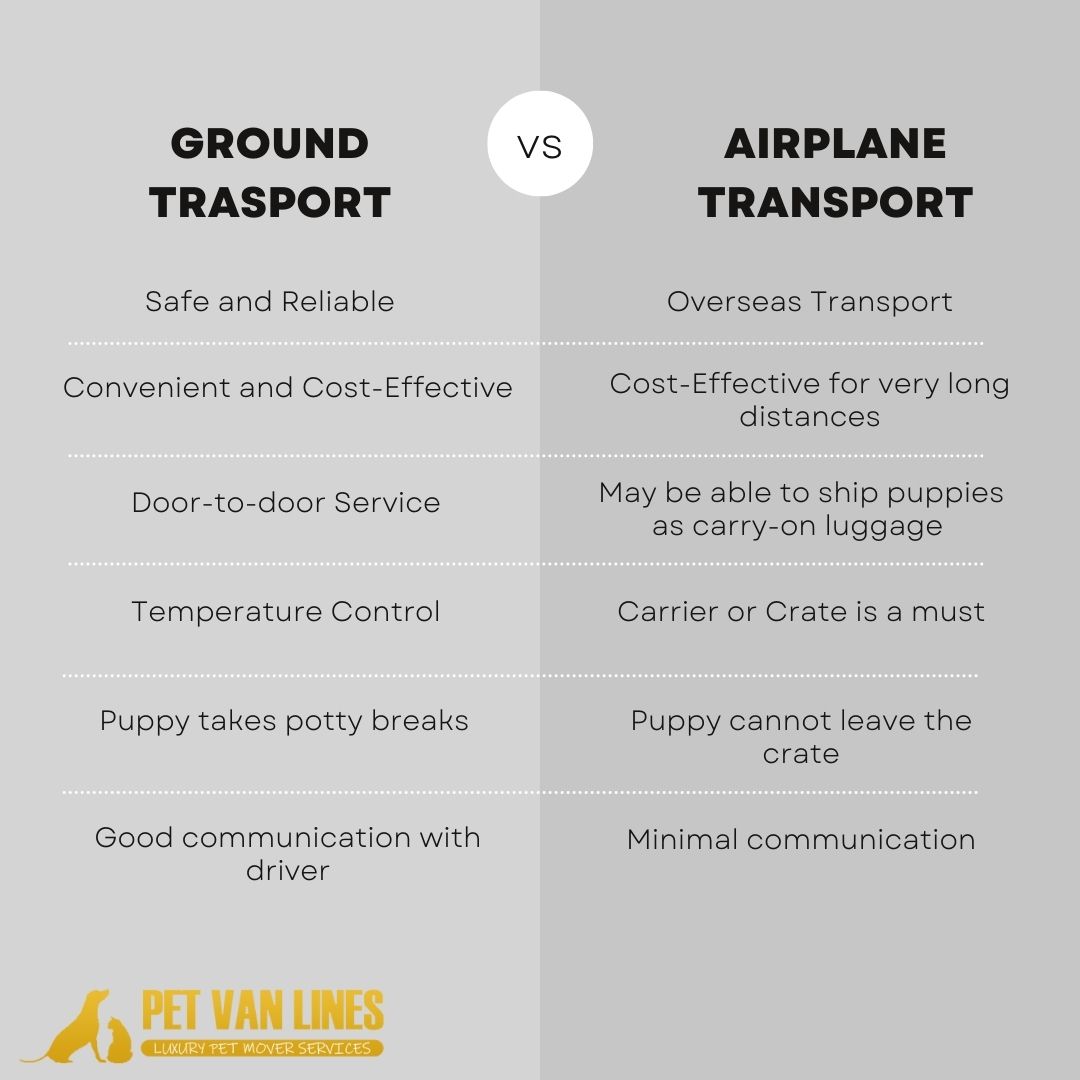
Professional ground transport services offer a viable alternative, particularly for medium distances or when air travel is not feasible due to breed restrictions or weather embargoes. These services often involve a dedicated pet transporter driving the puppy in a climate-controlled vehicle. The cost for ground transport is typically calculated per mile, ranging from $0.75 to $1.50 per mile, plus potential flat fees for stops or specialized care. A cross-country trip could easily cost $500 to $1,500.

While potentially more expensive than basic air cargo for very long distances, ground transport often includes amenities like regular potty breaks, feeding, and direct human interaction, reducing stress. Many reputable ground transporters also offer GPS tracking, providing real-time updates—a valuable feature for peace of mind. The financial trade-off here is often a higher base cost for enhanced care and continuous supervision, similar to in-cabin but without the size restrictions. Due diligence in selecting a reputable, insured transporter is key to ensuring this financial investment yields the expected level of service and safety.
Private Transport/Driving Yourself: The Hidden Costs of DIY
For many, the idea of personally driving a puppy to another state seems like the most economical and caring option. While it offers unparalleled control and supervision, it’s crucial to acknowledge the hidden costs. Your direct expenses will include fuel (which can be substantial for long distances), vehicle wear and tear, accommodation costs if the journey requires overnight stays (pet-friendly hotels often come with surcharges of $25-$75 per night), and food expenses for both you and the puppy.
Beyond the direct cash outlay, consider the significant time investment. A multi-day drive requires taking time off work, which for many translates to lost income or valuable vacation days. The indirect costs of fatigue, potential emergency vet visits along the way, and the opportunity cost of your time can quickly make this option comparable to, or even more expensive than, professional services. While offering maximum control and comfort for the puppy, “DIY” transport requires a thorough financial assessment that accounts for all direct and indirect expenditures.
Selecting a Shipper: A Financial Due Diligence Checklist
Choosing the right shipping partner is a pivotal financial decision, directly impacting the safety of your investment (the puppy) and the security of your funds. It’s not just about finding the cheapest quote, but identifying a reliable service that offers transparent pricing, comprehensive services, and robust protection.
Comparing Quotes and Services: Beyond the Price Tag
When soliciting quotes from various pet transporters or airlines, resist the temptation to solely focus on the lowest number. A rock-bottom price often signals hidden fees, a lack of essential services, or inadequate care standards. Instead, conduct a thorough comparison that scrutinizes what each quote includes. Ask for a detailed breakdown: Does it cover all necessary fees (e.g., fuel surcharges, live animal handling, customs brokerage for international)? Are there extra costs for specific health checks or documentation handling?
A financially savvy approach involves comparing the value proposition of each service. A slightly higher quote might include premium services like GPS tracking, frequent updates, specific feeding schedules, or a more direct route, all of which contribute to a safer and less stressful journey for your puppy. Conversely, an incomplete quote leaves you vulnerable to unexpected charges down the line. Look for transparency in pricing and comprehensive service packages that align with your budget and your puppy’s specific needs.
Insurance Options: Mitigating Financial Loss
While no one wants to contemplate the worst, insuring your puppy during transport is a crucial financial safeguard, much like insuring any valuable asset. Most reputable pet transporters and some airlines offer or require transit insurance. This typically covers loss, injury, or death of the animal during shipment. The cost of insurance is usually a percentage of the declared value of the puppy, often ranging from 0.5% to 2%. For instance, insuring a puppy valued at $1,000 might cost $5 to $20.
While a small percentage, this investment provides invaluable financial protection against unforeseen circumstances. Before purchasing, carefully review the policy details: What exactly is covered? Are there exclusions (e.g., pre-existing conditions, specific breeds prone to respiratory issues during air travel)? What is the claims process? Understanding these nuances ensures that your investment in insurance genuinely mitigates financial loss rather than offering false security. For puppies with significant monetary or emotional value, this is a non-negotiable step in responsible financial planning for their transport.
Contract Review: Protecting Your Investment
Before committing to any shipping service, a meticulous review of the contract is paramount. This legal document outlines the responsibilities of the transporter, your obligations, payment terms, and procedures for dispute resolution. Pay close attention to clauses regarding liability limits, cancellation policies, and refund procedures.
A common pitfall is overlooking liability clauses, which often cap the transporter’s financial responsibility in case of loss or injury to a relatively low figure, perhaps $500 or $1,000, unless additional insurance is purchased. Understanding these limits helps you decide if additional insurance is necessary. Scrutinize cancellation policies; many companies charge substantial fees for cancellations within a certain timeframe, impacting your flexibility if plans change. Ensure all agreed-upon services and costs are explicitly detailed in writing. A thorough contract review is your primary defense against unexpected financial obligations and ensures that the service delivered aligns with your expectations and initial investment.
Beyond the Shipment: Post-Arrival Financial Considerations
The financial journey doesn’t end when your puppy safely arrives at its destination. Prudent planning extends to post-arrival care, recognizing that new environments and travel stress can sometimes lead to unexpected expenses.
Emergency Funds: Preparing for the Unexpected
Even with the most meticulous planning and the safest transport, unforeseen health issues can arise. A puppy might experience stress-related gastrointestinal upset, dehydration, or an exacerbation of a minor pre-existing condition upon arrival. Having an emergency fund specifically earmarked for potential post-travel veterinary care is a financially responsible safeguard.
Setting aside $100 to $300 for an immediate post-arrival vet check or an urgent care visit can prevent minor issues from escalating into major health crises that are far more expensive to treat. This fund acts as a financial buffer, allowing you to prioritize your puppy’s health without the added stress of an unexpected financial burden. It’s an investment in prompt care, which ultimately contributes to the puppy’s long-term well-being and prevents more significant financial outlays down the line.

Settling-In Costs: Ongoing Investment in Your New Companion
Beyond immediate health concerns, remember that integrating a new puppy into a household incurs ongoing financial commitments. These “settling-in” costs are an extension of your initial investment in shipping. They include essentials like new food, bowls, bedding, toys, identification tags, leashes, and potentially enrollment in puppy training classes.
While not directly part of the shipping budget, recognizing these subsequent expenses allows for a holistic financial plan. Food costs alone can range from $30-$80 per month, depending on breed and diet. Initial supplies might tally $100-$300. Budgeting for these items ensures a seamless transition for your puppy and avoids financial strain during an already busy period. Ultimately, shipping a puppy to another state is the first major financial step in a long-term commitment to responsible pet ownership, requiring continuous financial foresight and planning.
In conclusion, shipping a puppy is a multifaceted process where every decision has a financial implication. From the initial veterinary clearances and crate selection to choosing the right transport method and preparing for post-arrival care, a proactive and detailed financial strategy is the key to a successful, safe, and economically sound experience. By viewing each expense as an investment in your puppy’s well-being and conducting thorough due diligence, you can navigate this journey with confidence, ensuring both your budget and your new companion are well-protected.
aViewFromTheCave is a participant in the Amazon Services LLC Associates Program, an affiliate advertising program designed to provide a means for sites to earn advertising fees by advertising and linking to Amazon.com. Amazon, the Amazon logo, AmazonSupply, and the AmazonSupply logo are trademarks of Amazon.com, Inc. or its affiliates. As an Amazon Associate we earn affiliate commissions from qualifying purchases.