
Saving money is more than just setting aside a few dollars; it’s a fundamental pillar of financial security and freedom. Whether you’re aiming for a down payment on a house, funding your retirement, building an emergency cushion, or simply gaining better control over your finances, a strategic approach is essential. This guide will walk you through the core principles, practical strategies, and essential tools to effectively save your money and build a more secure financial future.
The Foundation: Understanding Your Current Financial Picture
Before you can effectively save, you must first understand where your money is coming from and, more importantly, where it’s going. This foundational step provides the clarity needed to identify opportunities for saving and informed decision-making.
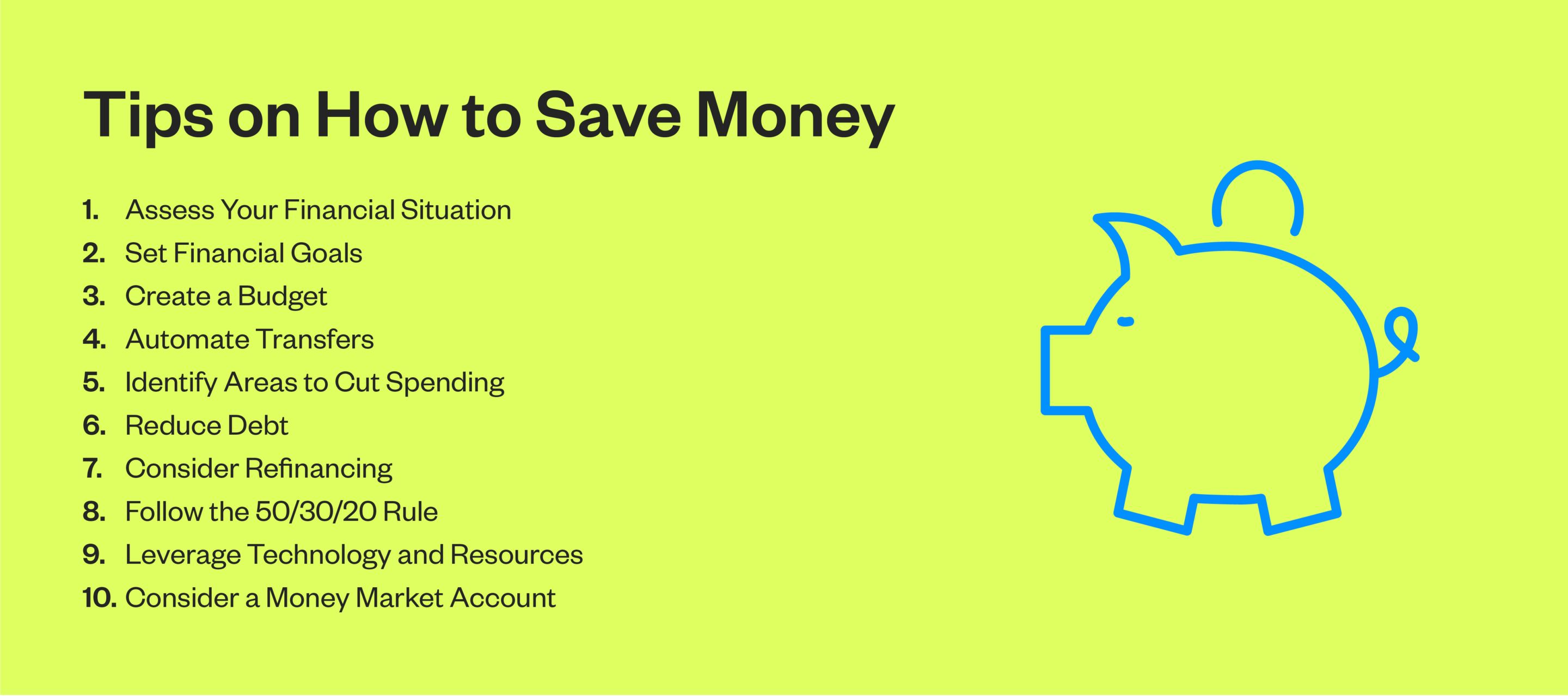
Creating a Comprehensive Budget
A budget is not about restriction; it’s a roadmap for your money, giving every dollar a purpose. It’s the most powerful tool for gaining control over your finances.
Income vs. Expenses: The Core Equation
Start by listing all your sources of income. This includes your salary, any freelance earnings, benefits, or passive income streams. Be thorough and realistic.
Next, itemize all your expenses. These typically fall into two categories:
- Fixed Expenses: Costs that are generally the same each month, such as rent/mortgage, loan payments (car, student), insurance premiums, and subscriptions.
- Variable Expenses: Costs that fluctuate, like groceries, dining out, entertainment, utilities (which can vary seasonally), and transportation.
The goal is to ensure your income exceeds your expenses. If expenses are higher than income, you’re operating at a deficit, making saving impossible without immediate changes.
Categorizing Spending: Where Does Your Money Go?
Once you’ve listed your expenses, categorize them. Common categories include housing, transportation, food, utilities, entertainment, personal care, debt payments, and savings. Categorization helps you visualize spending patterns and pinpoint areas where adjustments can be made. For example, you might realize that a significant portion of your income goes towards dining out, an area ripe for reduction.
Tracking Your Cash Flow Accurately
Budgeting is static without active tracking. Monitoring your actual spending against your budget is crucial for accountability and identifying deviations.
Manual Methods vs. Digital Tools
You can track your spending using simple spreadsheets, notebooks, or dedicated budgeting apps.
- Manual Methods: Spreadsheets offer flexibility and a hands-on approach. You manually enter transactions and calculate totals.
- Digital Tools: Numerous personal finance apps (e.g., Mint, YNAB, Personal Capital) can link directly to your bank accounts and credit cards, automatically categorizing transactions and providing real-time insights into your spending. These tools simplify the tracking process and offer powerful visualizations.
Identifying Financial Leaks
Through consistent tracking, you’ll start to notice “financial leaks” – small, regular expenses that add up over time without providing significant value. This could be unused subscriptions, daily coffees, or impulse purchases. Plugging these leaks can free up surprisingly substantial amounts of money for savings.
Setting Purposeful Savings Goals
Saving without a goal is like driving without a destination. Clear, well-defined goals provide motivation and a benchmark for success.
Defining Short-Term and Long-Term Objectives
Your savings goals should span different time horizons, reflecting various life stages and aspirations.
- Short-Term Goals (1-3 years): These might include building an emergency fund (3-6 months of living expenses), saving for a vacation, a new gadget, or a down payment on a car.
- Long-Term Goals (5+ years): These typically involve significant life milestones such as a down payment on a home, funding a child’s education, starting a business, or, most critically, retirement planning.
Applying the SMART Framework to Savings
The SMART goal framework is an excellent way to ensure your savings objectives are actionable and achievable. Each goal should be:
- S – Specific: Clearly define what you’re saving for. “Save for a house” is better than “save money.” Even better: “Save $50,000 for a down payment on a house.”
- M – Measurable: Quantify the amount you need to save. How much money do you need, and by when?
- A – Achievable: Is the goal realistic given your current income and expenses? If not, adjust the timeline or the amount.
- R – Relevant: Does this goal align with your broader financial aspirations and values? Is it important to you?
- T – Time-bound: Set a specific deadline for reaching your goal. “Save $10,000 for a car by December 2025.”
Breaking down large goals into smaller, manageable milestones can make them feel less daunting and keep you motivated.
Practical Strategies for Maximizing Your Savings
Once you know where you stand and what you’re saving for, it’s time to implement strategies that actively build your savings.
Automating Your Savings Habit
One of the most effective ways to save is to remove the decision-making process. Automate your savings.
Direct Deposits and Scheduled Transfers
Set up a portion of your paycheck to be directly deposited into a separate savings account before it even hits your checking account. Alternatively, schedule automatic transfers from your checking to your savings account on a regular basis (e.g., weekly, bi-weekly, or monthly). This “set it and forget it” approach ensures you “pay yourself first,” making saving a consistent habit rather than an afterthought.
“Pay Yourself First” Principle
This philosophy prioritizes saving before spending. Instead of waiting to see what’s left at the end of the month, you commit to saving a predetermined amount at the beginning. This shifts your mindset from reactive saving to proactive wealth building.
Reducing Discretionary Spending
Even with automation, examining your spending habits can yield significant results.
Identifying Wants vs. Needs
Distinguish between essential needs (housing, food, utilities, transportation to work) and discretionary wants (dining out, entertainment, new gadgets, expensive clothes). While wants contribute to quality of life, they are often the first place to cut back when aiming to increase savings.
Negotiating Bills and Subscriptions
Periodically review your recurring bills. Can you negotiate a lower rate for your internet, cable, or cell phone plan? Are there subscriptions you’re paying for but rarely use? Canceling unused services can free up surprising amounts of cash. Explore switching providers for better rates on insurance or other utilities.
Smart Shopping Strategies
Adopt habits like meal planning, buying generic brands, using coupons, waiting for sales, and comparing prices before purchasing. For larger purchases, consider buying used or refurbished items. Little savings accumulate quickly.

Boosting Income through Side Hustles or Online Ventures
Saving isn’t just about cutting expenses; it’s also about increasing income. More income means more money available to save.
Leveraging Skills for Additional Earning
Consider monetizing existing skills or developing new ones through a side hustle. This could involve freelancing in your field, offering consulting services, tutoring, dog walking, or crafting handmade goods to sell online. Platforms exist for virtually any skill.
Exploring Passive Income Opportunities
While often requiring an initial investment of time or money, passive income streams can significantly augment your savings capacity in the long run. Examples include investing in dividend stocks, creating digital products, or renting out a spare room. Even a small increase in monthly income can dramatically accelerate your savings goals.
Leveraging the Right Financial Vehicles and Tools
Where you put your savings matters. Different accounts and investments serve different purposes and offer varying levels of growth and accessibility.
Choosing the Right Savings Accounts
Not all savings accounts are created equal.
High-Yield Savings Accounts (HYSA)
For short-term goals and emergency funds, HYSAs are ideal. They offer significantly higher interest rates than traditional savings accounts, meaning your money grows faster while remaining easily accessible and FDIC-insured. Shop around for the best rates and minimal fees.
Certificate of Deposits (CDs)
If you have a lump sum you won’t need for a specific period (e.g., 6 months to 5 years), CDs can offer even higher fixed interest rates than HYSAs in exchange for locking up your money for that term. They are generally suitable for goals with definite timelines where you can commit funds.
Exploring Investment Opportunities for Growth
For long-term goals like retirement or a future down payment, simply saving in a basic savings account won’t outpace inflation. Investing is crucial for wealth growth.
Brokerage Accounts: Stocks, Bonds, ETFs
Through a brokerage account, you can invest in a diversified portfolio of stocks, bonds, mutual funds, and Exchange-Traded Funds (ETFs). These offer the potential for higher returns over the long term, though they come with market risk. Diversification is key to mitigating risk.
Retirement Accounts: 401(k)s, IRAs
These tax-advantaged accounts are specifically designed for retirement savings and offer significant benefits.
- 401(k)s: Often offered through employers, contributions are typically pre-tax, reducing your taxable income now. Many employers offer matching contributions, which is essentially free money – always contribute enough to get the full match.
- IRAs (Individual Retirement Accounts): Available to individuals, both Traditional and Roth IRAs offer tax benefits, differing primarily in when you receive the tax break (now vs. in retirement).
The Power of Compound Interest in Investing
Compound interest is the “eighth wonder of the world,” according to Albert Einstein. It’s the process where the interest you earn on your savings also earns interest. The earlier you start investing, the more time your money has to compound, leading to exponential growth over decades.
Utilizing Budgeting and Financial Planning Apps
Technology can be a powerful ally in your saving journey.
Digital Envelopes and Expense Trackers
Many apps allow you to create “digital envelopes” or categories for different spending areas, visually showing you how much you have left for specific expenses. They also track every transaction, helping you stay within your budget.
Goal-Setting and Net Worth Calculators
Advanced financial planning apps can help you set and monitor savings goals, project your net worth over time, and even offer investment guidance based on your risk tolerance and objectives. These tools provide a holistic view of your financial health.
Maintaining Momentum and Adapting to Change
Saving money is not a one-time event; it’s an ongoing process that requires continuous attention and flexibility.
Regular Financial Reviews and Adjustments
Your financial situation and goals will evolve.
Monitoring Progress and Re-evaluating Goals
Schedule regular financial check-ins (e.g., monthly or quarterly) to review your budget, track your progress toward savings goals, and assess your investments. Celebrate small victories to stay motivated.
Adapting to Life Changes
Life happens. A new job, a raise, a new family member, unexpected expenses, or even changes in the economy may necessitate adjusting your budget and savings plan. Flexibility is crucial; rather than abandoning your plan, adapt it to your new circumstances.
Building a Resilient Financial Buffer
True financial security extends beyond just having money saved; it involves protection against unforeseen events.
Emergency Funds and Debt Management
An emergency fund is paramount. It acts as a safety net, preventing you from going into debt or derailing your savings plans when unexpected costs arise (e.g., job loss, medical emergency, car repair). Simultaneously, aggressively paying down high-interest debt (like credit card debt) should be a priority, as the interest payments can severely hinder your ability to save.

Insurance as a Financial Safety Net
Adequate insurance coverage (health, auto, home, life, disability) is a form of financial saving, as it protects your assets and income from potentially catastrophic financial losses. Without it, a single unforeseen event could wipe out years of diligent saving.
By systematically applying these principles—understanding your finances, setting clear goals, implementing smart strategies, leveraging the right tools, and staying adaptable—you can transform your financial habits and build a substantial savings foundation, paving the way for a more secure and prosperous future.
aViewFromTheCave is a participant in the Amazon Services LLC Associates Program, an affiliate advertising program designed to provide a means for sites to earn advertising fees by advertising and linking to Amazon.com. Amazon, the Amazon logo, AmazonSupply, and the AmazonSupply logo are trademarks of Amazon.com, Inc. or its affiliates. As an Amazon Associate we earn affiliate commissions from qualifying purchases.