
For many individuals and businesses in the modern economy, the traditional rhythm of W-2 employment and annual tax filing no longer tells the whole story. The rise of the gig economy, self-employment, robust investment portfolios, and diverse income streams means that a significant portion of taxpayers are responsible for paying estimated federal taxes throughout the year. Ignoring this obligation can lead to unwelcome penalties. Fortunately, the process of fulfilling this duty has become remarkably streamlined, with multiple secure and convenient online options available. This guide will walk you through everything you need to know about paying your estimated federal taxes online, ensuring compliance and peace of mind.

Understanding Estimated Taxes: Who Needs to Pay?
Before diving into the “how-to,” it’s crucial to understand the “why” and “who” behind estimated taxes. This foundational knowledge ensures you correctly identify your obligations and avoid potential pitfalls.
What Are Estimated Taxes?
Estimated taxes are a method used to pay taxes on income that is not subject to withholding. This can include income from self-employment, investments, rental property, pensions, and even winnings. The U.S. tax system operates on a “pay-as-you-go” principle, meaning taxes should be paid as income is earned throughout the year, rather than as a lump sum at the annual tax deadline. For most employees, this is handled automatically through payroll withholding. However, if you don’t have an employer withholding taxes or if your withholding is insufficient, you are generally required to pay estimated taxes quarterly.
Who Is Required to Pay?
You are generally required to pay estimated tax if you expect to owe at least $1,000 in tax for the current year, and your withholding and refundable credits are expected to be less than the smaller of:
- 90% of the tax to be shown on your current year’s tax return, or
- 100% of the tax shown on your previous year’s tax return (110% if your adjusted gross income was over $150,000).
This often applies to:
- Self-Employed Individuals: Freelancers, independent contractors, small business owners, and gig workers.
- Those with Significant Investment Income: Capital gains, dividends, interest.
- Individuals with Rental Income: Landlords.
- Certain Retirees: Those receiving pensions or other retirement income without sufficient withholding.
- Individuals with Other Un-withheld Income: Alimony, awards, gambling winnings, etc.
It’s a common misconception that if you’re self-employed, you only pay taxes once a year. The IRS expects you to pay your share incrementally, just like an employee.
Penalties for Underpayment
Failing to pay enough tax throughout the year, either through withholding or estimated tax payments, can result in a penalty for underpayment of estimated tax. This penalty can also apply if you pay your estimated taxes late. The penalty is calculated based on the amount of underpayment and the length of time it remains unpaid. This makes understanding and adhering to estimated tax requirements not just a matter of compliance, but also a prudent financial decision to avoid unnecessary costs.
Navigating Your Online Payment Options
The IRS provides several secure and convenient methods for paying your estimated federal taxes online. Choosing the right method depends on your preferences, the frequency of your payments, and whether you require additional features.
IRS Direct Pay: The Official Portal
IRS Direct Pay is the official, free online payment tool provided by the IRS. It allows individuals to pay their tax bills directly from their checking or savings account. It’s a straightforward and widely used option for those making one-time or occasional payments.
How it works:
- Visit IRS.gov/DirectPay: Access the secure portal.
- Select Payment Reason: Choose “Estimated Tax” from the dropdown menu.
- Verify Identity: For security, you’ll need to verify your identity using information from a prior tax return or a confirmation email.
- Enter Payment Details: Input your bank routing and account numbers, the payment amount, and the tax year.
- Confirm and Receive Confirmation: Review all details carefully before submitting. You’ll receive a confirmation number via email (if provided) once the payment is successfully scheduled. This number is crucial for your records.
Benefits: Free, easy to use, and directly managed by the IRS, reducing intermediaries.
EFTPS: For Recurring and Scheduled Payments
The Electronic Federal Tax Payment System (EFTPS) is another official IRS service that offers greater flexibility, especially for businesses or individuals who make frequent or scheduled payments. While it requires an enrollment process, it provides a robust platform for managing your federal tax payments.
Enrollment Process:
- Visit EFTPS.gov: Go to the official website.
- Enroll: You’ll need to provide your taxpayer identification number (SSN or EIN), bank account information, and other personal details.
- Receive PIN: The IRS will mail you a Personal Identification Number (PIN) to your address of record, typically within 5-7 business days. This security measure prevents unauthorized access.
- Activate: Once you receive your PIN, you can activate your enrollment online.
Making a Payment:
After enrollment and activation, you can log in, select “Make a Payment,” choose the tax type (e.g., Form 1040ES for estimated taxes), enter the payment amount and date, and confirm. EFTPS allows you to schedule payments up to 365 days in advance, providing excellent control over your cash flow.
Benefits: Free, highly secure, allows scheduling payments, and provides a comprehensive payment history. It’s often preferred by small businesses and self-employed individuals who make regular estimated payments.
Third-Party Payment Processors
Several authorized third-party payment processors offer online services for paying federal taxes. These services act as intermediaries, processing your payment to the IRS.
How they work: Websites like Pay1040.com, PayUSAtax.com, and ACI Payments, Inc. (formerly OfficialPayments.com) allow you to pay your estimated taxes using a debit card, credit card, or digital wallet (e.g., PayPal).
Pros:
- Convenience: Many people prefer using credit cards for rewards points or to manage cash flow.
- Variety of Payment Methods: Offers options beyond direct bank transfers.
Cons:
- Fees: These services typically charge a convenience fee, which can be a percentage of your payment or a flat fee, depending on the payment method and processor. While often small, these fees can add up over time.
- No Direct Link to IRS: While authorized, you are dealing with a third party.
Carefully consider the fees versus the benefits (like earning credit card rewards) before choosing a third-party processor.
Payment via Tax Software
Many popular tax preparation software programs, such as TurboTax, H&R Block, and TaxAct, offer integrated estimated tax payment options. If you use these programs to calculate your estimated tax, they can often facilitate the payment directly from within the software.
How it works: After calculating your quarterly estimated tax liability, the software will guide you through the process of making the payment, often leveraging one of the IRS-authorized payment methods (like IRS Direct Pay or EFTPS) or a third-party processor.
Benefits: Seamless integration with your tax planning, often pre-populates details, simplifying the process.
Essential Steps Before You Pay Online
Making an online payment is the final step in your estimated tax journey. Before you click “submit,” there are several critical preparatory steps to ensure accuracy and compliance.
Calculating Your Estimated Tax Liability
The cornerstone of successful estimated tax payments is an accurate calculation of what you owe. The IRS Form 1040-ES, Estimated Tax for Individuals, provides worksheets to help you figure out your estimated tax. This involves estimating your total income for the year, potential deductions, credits, and ultimately your tax liability.
Key considerations for calculation:
- Income Fluctuations: If your income varies, you may need to adjust estimates throughout the year.
- Business Expenses: Accurately track and deduct eligible business expenses if you’re self-employed.
- Tax Credits: Account for any tax credits you anticipate qualifying for.
- Prior Year’s Return: Your previous year’s tax return is often a good starting point, but adjust for current year changes.
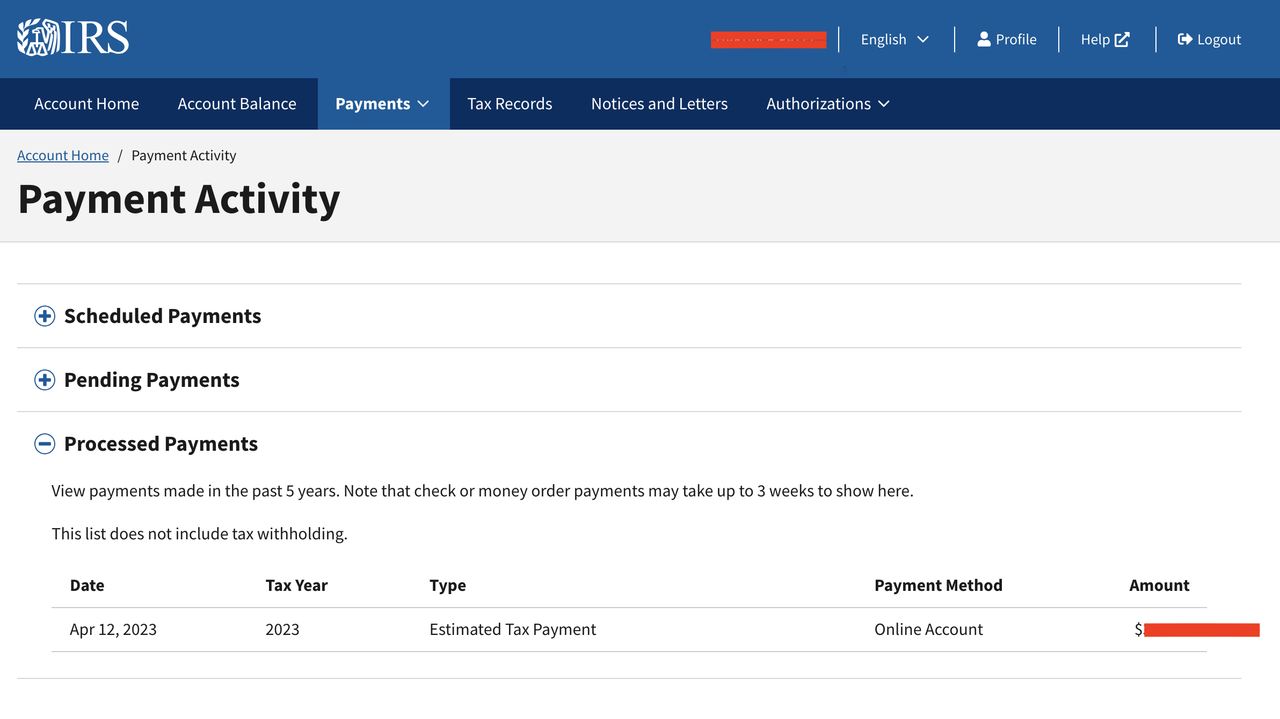
Using tax software or consulting a tax professional can greatly simplify this complex calculation.
Gathering Necessary Information
Once you know how much to pay, ensure you have all the required details at hand to complete the online transaction efficiently and accurately.
- Taxpayer Identification Number: Your Social Security Number (SSN) or Employer Identification Number (EIN) if you’re a business.
- Bank Account Details: For IRS Direct Pay or EFTPS, you’ll need your bank’s routing number and your checking or savings account number.
- Payment Amount: The precise amount you intend to pay for the quarter.
- Tax Year: Ensure you select the correct tax year for which you are making the estimated payment.
- Prior Year AGI: For identity verification on some IRS platforms, you may need your Adjusted Gross Income (AGI) from a previous tax year.
Having this information ready prevents delays and potential errors during the payment process.
Understanding Payment Deadlines
Estimated taxes are generally paid in four equal installments throughout the year. The deadlines are statutory and crucial to observe to avoid penalties.
- April 15: For income earned January 1 to March 31.
- June 15: For income earned April 1 to May 31.
- September 15: For income earned June 1 to August 31.
- January 15 of next year: For income earned September 1 to December 31.
Note: If any of these dates fall on a weekend or holiday, the deadline shifts to the next business day.
Mark these dates on your calendar and set reminders. Timely payments are essential for compliance.
Record Keeping Best Practices
After making an online payment, good record-keeping is paramount.
- Confirmation Numbers: Always save the confirmation number provided by the IRS Direct Pay, EFTPS, or third-party processor.
- Email Confirmations: Print or save any email confirmations you receive.
- Bank Statements: Regularly check your bank statements to verify that the payment has been debited correctly.
- Payment Log: Maintain a simple log of your estimated tax payments, including the date paid, amount, and confirmation number.
These records serve as proof of payment and are invaluable if any discrepancies arise with the IRS.
Tips for a Smooth Online Payment Experience
While online payments are generally straightforward, a few best practices can help ensure a frictionless experience and safeguard your financial information.
Verify Information Carefully
Before you hit “submit,” double-check every piece of information:
- Amount: Is the payment amount correct?
- Bank Account: Are your routing and account numbers accurate? A single digit error can lead to a rejected payment and potential penalties.
- Tax Year: Have you selected the correct tax year for which this estimated payment applies?
- Payment Date: Is the payment scheduled for the desired date?
A quick review can save you significant headaches later.
Use Secure Internet Connections
Always make federal tax payments from a secure, private internet connection. Avoid using public Wi-Fi networks (e.g., at coffee shops, airports) when handling sensitive financial transactions. Public networks are often less secure and can make you vulnerable to data breaches or identity theft. Use your home Wi-Fi or a cellular data connection.
Allow Processing Time
While online payments are fast, they are not always instantaneous. It’s advisable to make your payment a few days before the deadline, especially if you’re using a method that involves bank transfers, which can take 1-2 business days to process. This buffer prevents last-minute stress and ensures your payment is recorded as on-time. Waiting until the very last minute risks technical glitches or bank processing delays that could result in late payment penalties.
What to Do If You Make an Error
Mistakes can happen. If you realize you’ve made an error in your online estimated tax payment:
- Contact Your Bank: If you entered incorrect bank details, contact your bank immediately to see if the payment can be stopped or reversed.
- IRS Direct Pay: If you paid via IRS Direct Pay, you might be able to modify or cancel a payment within a certain timeframe (usually up to 7 days before the scheduled payment date) directly through the portal.
- EFTPS: Payments scheduled through EFTPS can generally be modified or canceled up to two business days before the payment date.
- Overpayment: If you overpaid, you can either apply the excess to a future estimated tax payment or claim it as a refund when you file your annual tax return.
- Underpayment: If you underpaid, you should make an additional payment as soon as possible to minimize any potential penalties.
Always keep detailed records of any errors and corrective actions taken.
Beyond the Payment: Strategic Tax Planning
Paying your estimated taxes online is a crucial operational task, but it should be viewed as part of a broader, more strategic approach to your financial well-being and tax compliance.
Adjusting Estimates Throughout the Year
Life and financial circumstances are rarely static. Income from a side hustle might spike, investment returns could exceed expectations, or you might incur significant unexpected deductible expenses. It’s important to treat your estimated tax calculations as living documents. The IRS allows you to adjust your estimated payments for future quarters if your income or deductions change. For example, if you have a particularly good first quarter, you might need to increase your payment for the second quarter to avoid underpayment. Conversely, if your income decreases, you can lower subsequent payments. Regularly reviewing your financial situation and updating your estimates can prevent both overpaying (tying up cash unnecessarily) and underpaying (incurring penalties).
Working with a Tax Professional
While online tools and guides empower many to manage their taxes independently, there are situations where the expertise of a tax professional (like a CPA or Enrolled Agent) is invaluable. Complex income streams, significant capital gains, starting a new business, or major life changes (marriage, divorce, buying a home) can introduce complexities that make accurate self-calculation challenging. A tax professional can help:
- Accurately calculate your estimated tax liability.
- Advise on tax-saving strategies.
- Navigate intricate tax laws.
- Represent you in case of an audit.
- Ensure full compliance while minimizing your tax burden.
Their fees can often be justified by the peace of mind and potential savings they provide.
Leveraging Technology for Tax Management
Beyond payment portals, modern technology offers a suite of tools to help you manage your financial health and tax obligations proactively.
- Accounting Software: Programs like QuickBooks, FreshBooks, or Xero can track income and expenses, making estimated tax calculations much simpler.
- Budgeting Apps: Apps like Mint or Personal Capital can help you monitor your overall financial picture, allowing for better tax planning.
- Calendar Reminders: Utilize digital calendars to set reminders for estimated tax payment deadlines.
- Cloud Storage: Keep digital copies of all tax-related documents (income statements, receipts, confirmation numbers) in a secure cloud storage solution for easy access and robust record-keeping.
Embracing these tools can transform tax management from a reactive chore into a proactive, integrated part of your financial strategy.

Conclusion
Paying estimated federal taxes online is no longer a cumbersome task. With a range of secure, efficient, and user-friendly options, from the IRS’s own Direct Pay and EFTPS systems to third-party processors and integrated tax software, taxpayers have unprecedented control over fulfilling their obligations. By understanding who needs to pay, accurately calculating your liability, adhering to deadlines, and maintaining diligent records, you can navigate the estimated tax landscape with confidence. Remember, proactive financial planning, including regular review of your income and expenses, and leveraging available technology or professional advice, can transform tax compliance from a source of anxiety into a manageable and even strategic component of your overall financial success.
aViewFromTheCave is a participant in the Amazon Services LLC Associates Program, an affiliate advertising program designed to provide a means for sites to earn advertising fees by advertising and linking to Amazon.com. Amazon, the Amazon logo, AmazonSupply, and the AmazonSupply logo are trademarks of Amazon.com, Inc. or its affiliates. As an Amazon Associate we earn affiliate commissions from qualifying purchases.