
The allure of the stock market is undeniable, often painted as a path to wealth and financial independence. Yet, for many, the prospect of diving in feels daunting, shrouded in complex terminology and perceived high risks. “How do I invest in the stock market?” is a fundamental question that signifies the first step on a potentially transformative financial journey. This guide aims to demystify the process, providing a professional, insightful, and engaging roadmap for aspiring investors, grounded exclusively in the principles of personal finance and investing.
Laying the Groundwork: Understanding Stock Market Basics
Before placing your first trade, it’s crucial to grasp the foundational concepts of the stock market. A solid understanding will empower you to make informed decisions and navigate the investment landscape with greater confidence.
What is the Stock Market and How Does It Work?
At its core, the stock market is a marketplace where shares of publicly traded companies are bought and sold. When you buy a stock, you’re purchasing a small ownership stake in that company. Companies issue stocks to raise capital for their operations, expansion, or debt repayment. Investors, in turn, buy stocks hoping their value will appreciate over time, allowing them to sell for a profit, or to earn income through dividends (a portion of the company’s earnings paid to shareholders).
The “market” itself isn’t a single physical location anymore but a vast, interconnected network of exchanges (like the NYSE or NASDAQ) and brokers facilitating transactions. Stock prices fluctuate based on a multitude of factors, including company performance, industry trends, economic indicators, geopolitical events, and investor sentiment. Understanding that these fluctuations are normal and part of the market cycle is key to maintaining a long-term perspective.
Why Consider Investing in Stocks?
Investing in the stock market offers several compelling benefits that make it a cornerstone of long-term wealth building:
- Potential for High Returns: Historically, the stock market has outperformed other asset classes like bonds or savings accounts over the long term. While past performance is no guarantee of future results, the potential for significant capital appreciation is a primary draw.
- Combating Inflation: Inflation erodes the purchasing power of your money over time. Investing in assets that have the potential to grow faster than the inflation rate helps preserve and enhance your wealth. Stocks have historically served as a good hedge against inflation.
- Accessibility: Modern brokerage platforms have made investing in stocks more accessible than ever before, with low minimums, fractional shares, and intuitive user interfaces, allowing virtually anyone to participate.
- Ownership and Dividends: Owning stocks means owning a piece of a company. Successful companies may share their profits with shareholders through dividends, providing a steady stream of passive income that can be reinvested or used for other financial goals.
Demystifying Risk and Return
Investing in the stock market inherently involves risk, but it’s important to understand what kind of risk and how to manage it. The primary risk is that the value of your investments could decline, leading to a loss of capital. However, risk is often directly correlated with potential return; higher potential returns typically come with higher risks.
Key risks include:
- Market Risk: The risk that the entire market or a broad sector declines.
- Company-Specific Risk (Idiosyncratic Risk): The risk that a particular company performs poorly due to internal factors.
- Interest Rate Risk: Changes in interest rates can impact stock valuations.
- Inflation Risk: The risk that inflation erodes the value of your returns.
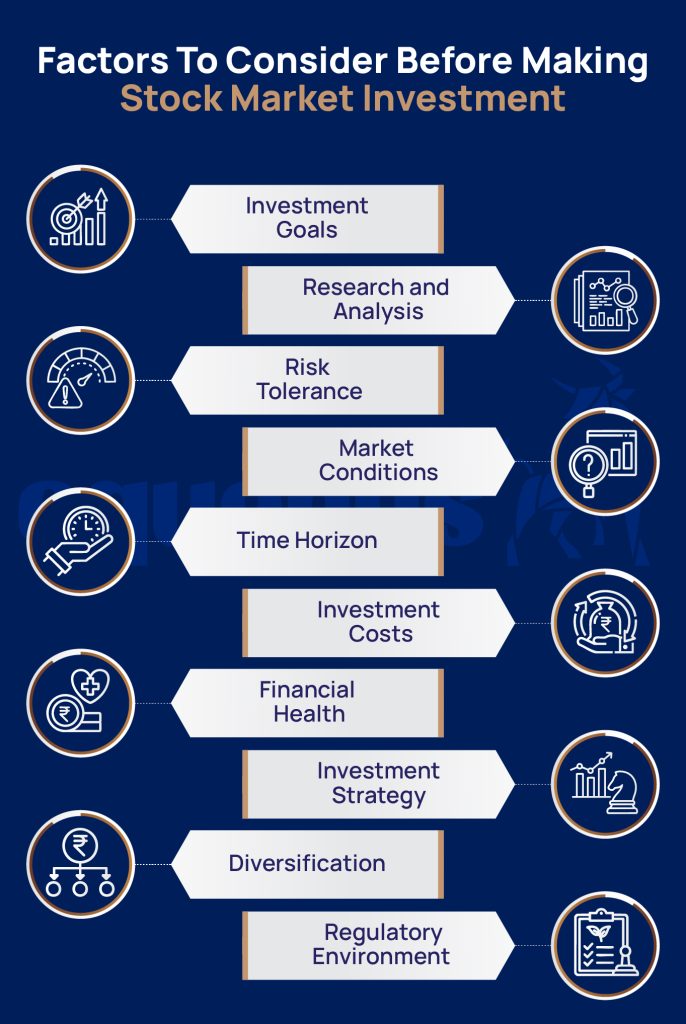
Understanding and quantifying your personal risk tolerance – how much potential loss you are comfortable with – is crucial. This will heavily influence your investment choices and portfolio construction. The goal isn’t to eliminate risk entirely, but to manage it intelligently through diversification and a long-term perspective.
Your First Steps: Setting Up for Success
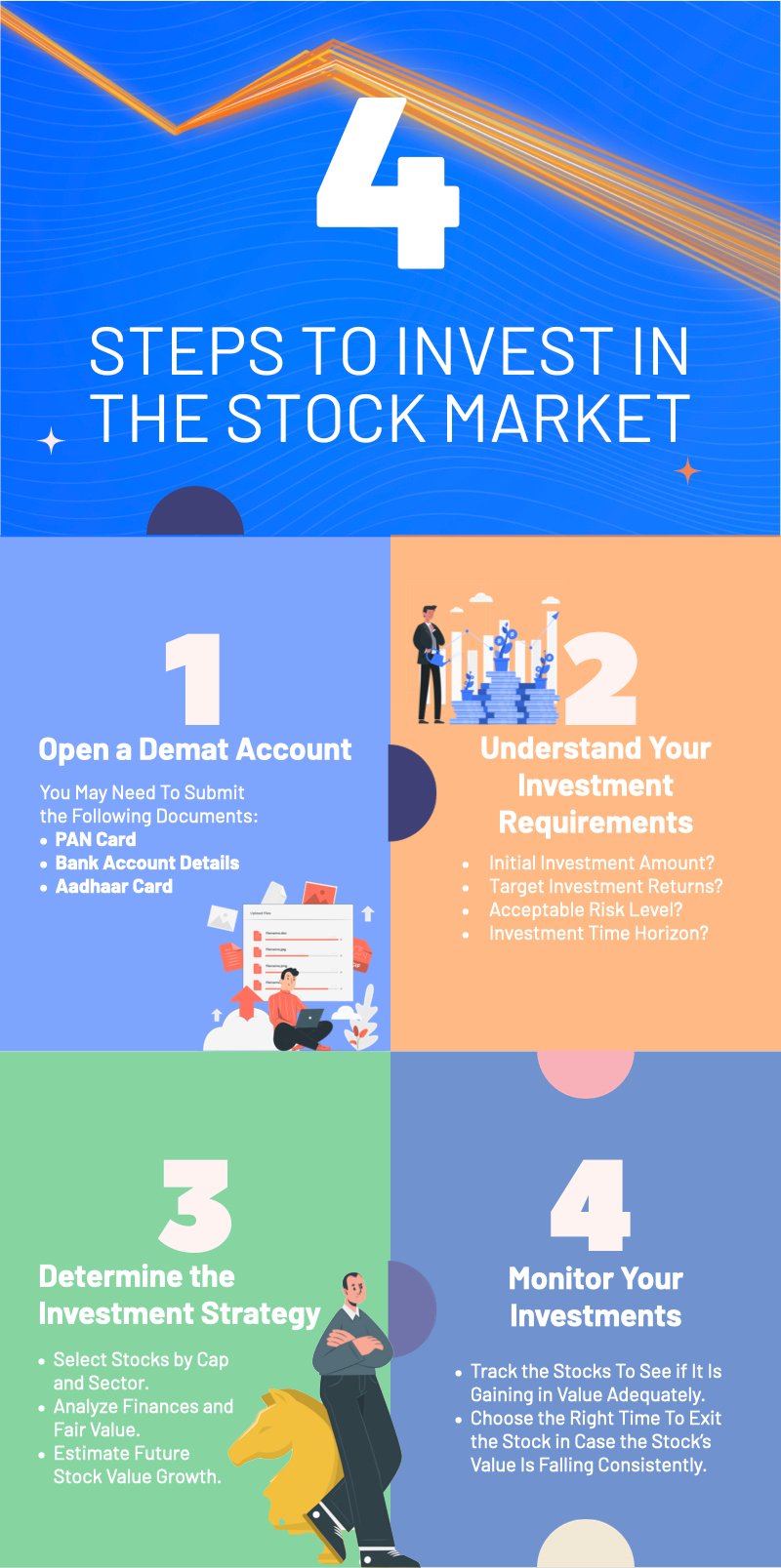
Once you have a grasp of the fundamentals, the next phase involves practical steps to initiate your investment journey. This preparation ensures you’re building a foundation that aligns with your financial aspirations.
Defining Your Financial Goals and Risk Profile
Before you even think about which stock to buy, clarify why you’re investing and what you hope to achieve. Are you saving for retirement in 30 years, a down payment on a house in five years, or a child’s education? Your financial goals will dictate your investment horizon (how long you plan to invest) and, consequently, your appropriate risk level.
- Short-term goals (under 5 years): Generally best suited for lower-risk investments due to limited time to recover from market downturns.
- Long-term goals (5+ years): Allows for higher-risk investments, as market fluctuations tend to smooth out over extended periods.
Simultaneously, assess your risk tolerance. Are you someone who would panic and sell at the first sign of a market dip, or can you weather volatility with equanimity, understanding it’s part of the process? Be honest with yourself. Most brokerage accounts offer questionnaires to help gauge your risk profile, which can guide you towards suitable investment options.
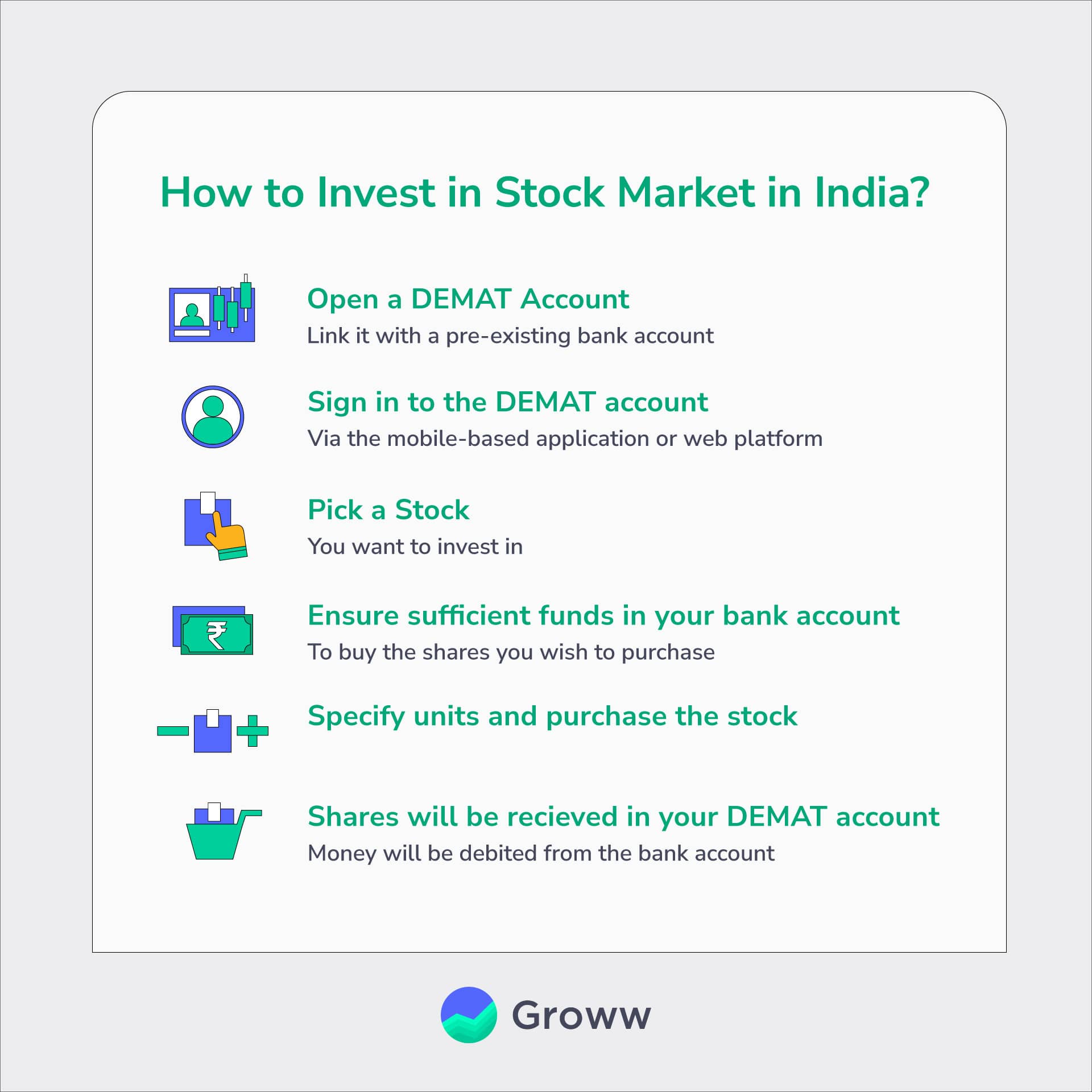
Choosing and Opening a Brokerage Account
To buy and sell stocks, you need a brokerage account. Think of it as your bank account for investments. There are various types of brokerages, but for most individual investors, an online discount brokerage is the most suitable and cost-effective option.
When choosing a brokerage, consider:
- Fees and Commissions: Look for brokerages with low or zero commissions on stock and ETF trades.
- Investment Options: Ensure they offer the types of investments you’re interested in (individual stocks, ETFs, mutual funds, etc.).
- Platform Usability and Tools: A user-friendly interface, robust research tools, and educational resources are invaluable for beginners.
- Customer Service: Good customer support can be a lifesaver when you encounter issues or have questions.
- Account Types: Decide between a taxable brokerage account or a tax-advantaged retirement account like an IRA (Individual Retirement Account) or Roth IRA, depending on your goals.
Opening an account is typically straightforward, involving an online application, identity verification, and linking a bank account for funding.
Funding Your Investment Journey
Once your brokerage account is open, you need to fund it. This usually involves linking your bank account and initiating an electronic transfer (ACH transfer), wire transfer, or sometimes even depositing a check.
It’s crucial to invest money you can afford to lose – that is, money you don’t need for immediate expenses, an emergency fund, or critical short-term goals. Start small if necessary. Many brokerages allow you to begin with minimal amounts, and some even offer fractional shares, allowing you to buy a fraction of an expensive stock rather than having to purchase an entire share. This significantly lowers the barrier to entry and encourages consistent investing.
Exploring Investment Avenues: What to Invest In
With your account set up, the next step is to decide what specific assets to add to your portfolio. This involves understanding different investment vehicles and strategies.
Individual Stocks vs. Diversified Funds (ETFs and Mutual Funds)
This is one of the most fundamental decisions for new investors:
- Individual Stocks: Buying individual stocks means you are picking specific companies. This approach offers the potential for high returns if you choose well-performing companies, but it also carries higher risk. If that one company performs poorly, your portfolio takes a significant hit. It requires substantial research and a deep understanding of financial analysis.
- Exchange-Traded Funds (ETFs) and Mutual Funds: These are professionally managed collections of many different stocks (or other assets).
- ETFs trade like individual stocks on exchanges throughout the day. They often track an index (like the S&P 500), giving you instant diversification across hundreds or thousands of companies with a single purchase. They typically have lower fees than actively managed mutual funds.
- Mutual Funds are similar but are bought and sold based on their net asset value (NAV) calculated at the end of each trading day. Some are actively managed (with higher fees), while others are passively managed index funds (with lower fees).
For most beginners, ETFs or index mutual funds are highly recommended. They offer instant diversification, lower risk than individual stocks, and require less ongoing management and research.
Understanding Asset Allocation and Diversification
Asset allocation is the strategy of dividing your investment portfolio among different asset categories, such as stocks, bonds, and cash equivalents. The optimal allocation depends on your age, financial goals, and risk tolerance. Younger investors with a long time horizon might have a higher percentage in stocks, while those closer to retirement might shift more towards bonds for stability.
Diversification is the practice of spreading your investments across various assets within an asset class to reduce risk. Instead of putting all your money into one stock, you spread it across different companies, industries, and geographical regions. If one investment performs poorly, others might perform well, cushioning the impact on your overall portfolio. ETFs and mutual funds are excellent tools for achieving diversification easily.
Active Investing vs. Passive Investing Strategies
- Active Investing: This involves an investor or fund manager actively buying and selling securities with the goal of outperforming the market. It requires continuous research, market timing, and can incur higher transaction costs and fees. While some experienced investors succeed, consistently beating the market is extremely challenging.
- Passive Investing: This strategy involves investing in funds that track a specific market index (e.g., an S&P 500 index fund) and holding them for the long term. The goal is not to beat the market, but to match its performance. Passive investing is generally favored by beginners due to its simplicity, lower fees, and historical effectiveness. It aligns well with the philosophy of “time in the market beats timing the market.”
Strategies for Sustainable Growth and Long-Term Success
Investing is not a sprint; it’s a marathon. Building wealth sustainably requires adopting strategies focused on long-term growth and consistency.
The Power of Dollar-Cost Averaging
Dollar-cost averaging (DCA) is a simple yet powerful strategy where you invest a fixed amount of money at regular intervals (e.g., $100 every month), regardless of the stock market’s performance.
- When prices are high, your fixed amount buys fewer shares.
- When prices are low, your fixed amount buys more shares.
Over time, this strategy averages out your purchase price, reducing the risk of making a large, ill-timed investment at a market peak. It removes emotional decision-making and fosters discipline, making it ideal for consistent, long-term wealth accumulation.
Compounding Returns: Your Money’s Best Friend
Compounding is often referred to as the “eighth wonder of the world.” It’s the process where the returns you earn on your investments also start earning returns themselves. For example, if you earn 10% on $1,000, you have $1,100. The next year, you earn 10% on $1,100, which is $110, bringing your total to $1,210.
The key to maximizing compounding is time and reinvestment of earnings. The longer your money stays invested and its returns are reinvested, the more dramatically your wealth grows, snowballing over decades. This underscores the importance of starting to invest early, even with small amounts.
Monitoring and Rebalancing Your Portfolio
While passive investing encourages a hands-off approach, “set it and forget it” isn’t entirely accurate. Your portfolio needs occasional monitoring and rebalancing.
- Monitoring: Periodically check in on your investments (perhaps quarterly or semi-annually) to ensure they are still aligned with your financial goals and risk tolerance. Don’t obsess over daily fluctuations.
- Rebalancing: Over time, different assets in your portfolio will grow at different rates, potentially shifting your original asset allocation. For example, if stocks have a strong bull run, they might grow to represent a larger percentage of your portfolio than you initially intended. Rebalancing involves selling some of the assets that have grown (and are now overweight) and buying more of the assets that have lagged (and are now underweight) to bring your portfolio back to its target allocation. This helps manage risk and ensures you’re not overly exposed to any single asset class.
Navigating the Market Wisely: Best Practices and Pitfalls to Avoid
Even with a solid plan, the stock market can be unpredictable. Adopting best practices and being aware of common pitfalls will enhance your chances of long-term success.
The Importance of Continuous Learning and Due Diligence
The financial world is dynamic. New investment products emerge, regulations change, and economic conditions evolve. As an investor, commit to continuous learning. Read reputable financial news, books, and articles. Understand the companies or funds you invest in. Due diligence, even for diversified funds, means understanding their underlying holdings, expense ratios, and management philosophy. The more knowledgeable you are, the better equipped you’ll be to make sound decisions and adapt to market changes.
Managing Emotions and Avoiding Impulsive Decisions
One of the biggest threats to an investor’s success is their own emotions. The market often evokes fear during downturns and greed during upturns.
- Fear: Can lead to panic selling at market lows, locking in losses and missing out on subsequent recoveries.
- Greed: Can lead to chasing “hot” stocks, over-concentrating your portfolio, or taking excessive risks based on hype rather than fundamentals.
Successful investing requires a disciplined, rational, and long-term perspective. Stick to your investment plan, use dollar-cost averaging to remove timing decisions, and remember that market volatility is normal. Avoid checking your portfolio daily, as frequent monitoring can exacerbate emotional responses.
When to Seek Professional Financial Advice
While this guide empowers you to begin investing independently, there are times when professional guidance is invaluable. Consider consulting a fee-only financial advisor if:
- You have complex financial situations (e.g., significant assets, multiple income streams, business ownership).
- You’re nearing retirement and need help with income planning and withdrawal strategies.
- You feel overwhelmed or uncertain about making significant investment decisions.
- You need help creating a comprehensive financial plan that integrates investments with other financial goals like estate planning, insurance, and tax optimization.
A good financial advisor can provide personalized strategies, help you stay disciplined, and offer objective advice tailored to your unique circumstances.
Investing in the stock market can be a powerful engine for building wealth and achieving your financial aspirations. While it requires education, discipline, and patience, the journey is incredibly rewarding. By understanding the basics, setting clear goals, diversifying your investments, and maintaining a long-term perspective, you can confidently answer the question “How do I invest in the stock market?” and embark on a path toward a more secure financial future. Start small, stay consistent, and let the power of compounding work its magic.
aViewFromTheCave is a participant in the Amazon Services LLC Associates Program, an affiliate advertising program designed to provide a means for sites to earn advertising fees by advertising and linking to Amazon.com. Amazon, the Amazon logo, AmazonSupply, and the AmazonSupply logo are trademarks of Amazon.com, Inc. or its affiliates. As an Amazon Associate we earn affiliate commissions from qualifying purchases.