
Embarking on the journey of stock market investing can feel daunting, riddled with jargon and complex strategies. Yet, for many, it represents a powerful pathway to building wealth, achieving financial freedom, and securing a comfortable future. This guide is designed to demystify the process, providing you with a clear, step-by-step roadmap to confidently make your first stock investment. Forget the get-rich-quick schemes; successful investing is about informed decisions, patience, and a long-term perspective.
Understanding the Fundamentals: What Exactly Are Stocks?
Before you can invest in a stock, it’s crucial to understand what you’re actually buying. At its core, a stock represents a share of ownership in a public company. When you buy a stock, you become a shareholder, meaning you own a tiny fraction of that company’s assets and earnings. This ownership entitles you to certain rights, such as voting on corporate matters (for common stock) and potentially receiving dividends, which are portions of the company’s profits distributed to shareholders.
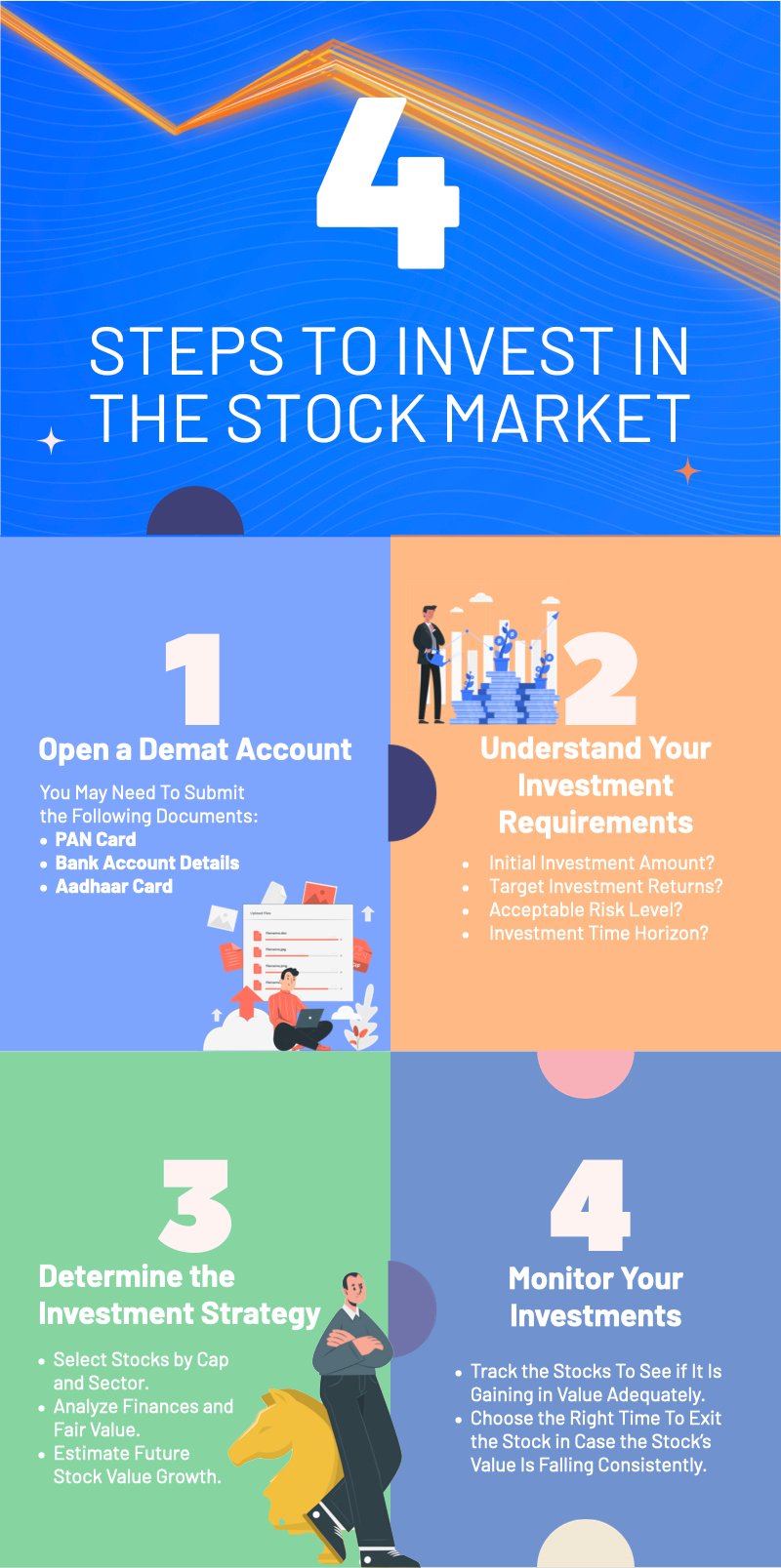
The Basics of Stock Ownership
Companies issue stocks to raise capital, typically to fund expansion, research, or operational needs. Once issued, these stocks are traded on stock exchanges, like the New York Stock Exchange (NYSE) or NASDAQ. The price of a stock fluctuates based on supply and demand, company performance, economic conditions, industry trends, and even investor sentiment. If the company performs well and investors believe it has strong future prospects, demand for its stock might increase, driving up its price. Conversely, poor performance or negative outlooks can lead to a decrease in price.
Why Invest in Stocks? Potential Rewards and Inherent Risks
The primary reason individuals invest in stocks is the potential for capital appreciation—your shares increasing in value over time—and, for some stocks, the receipt of dividends. Historically, stocks have outperformed other asset classes like bonds and cash over the long term, making them a cornerstone of many successful retirement portfolios. The power of compounding, where your earnings themselves begin to earn returns, can lead to substantial wealth growth over decades.
However, it’s vital to acknowledge the inherent risks. Stock prices can be volatile, experiencing significant ups and downs, sometimes dramatically. You could lose some or even all of your invested capital if the company performs poorly or goes bankrupt. This is why a well-informed approach, including diversification and a long-term mindset, is paramount. Understanding these risks isn’t meant to deter you but to equip you with a realistic perspective.
Preparing for Your Investment Journey: Setting the Stage
Investing isn’t a standalone activity; it’s an integral part of your overall financial strategy. Before you even think about picking a stock, there are foundational steps that will ensure your investment journey is sustainable and responsible.
Defining Your Financial Goals and Risk Tolerance
Every investment decision should align with your personal financial goals. Are you saving for retirement, a down payment on a house, your child’s education, or simply aiming for long-term wealth growth? Your goals will dictate your time horizon (how long you plan to invest) and, consequently, the level of risk you might be comfortable taking.
Equally important is understanding your risk tolerance. This refers to your psychological comfort level with potential losses. A conservative investor might prefer stable, lower-growth companies, while an aggressive investor might seek higher-growth, more volatile opportunities. Be honest with yourself; don’t take on more risk than you can comfortably stomach, as emotional decisions often lead to poor outcomes during market downturns.
Building a Foundation: Emergency Funds and Debt Management
Before committing funds to the stock market, ensure you have a robust financial safety net. This means having an emergency fund with 3-6 months’ worth of living expenses readily accessible in a savings account. This fund acts as a buffer against unforeseen events like job loss or medical emergencies, preventing you from being forced to sell your investments at an inopportune time.
Additionally, tackle high-interest debt, such as credit card balances. The guaranteed return from paying off a 20% interest rate credit card far outweighs the uncertain returns of the stock market. Prioritize financial stability before diving into investments.
Choosing the Right Investment Vehicle: Brokerage Accounts Explained
To buy and sell stocks, you’ll need an investment account with a brokerage firm. These firms act as intermediaries, executing your trades on the stock exchange. There are various types of brokerage accounts, but the most common for individual investors are:
- Taxable Brokerage Accounts: These are standard investment accounts where you pay taxes on capital gains (profits from selling stocks) and dividends in the year they occur. They offer maximum flexibility with no contribution limits.
- Retirement Accounts (IRAs, 401(k)s): These offer significant tax advantages, such as tax-deferred growth or tax-free withdrawals in retirement, depending on the account type (Traditional vs. Roth). They come with contribution limits and rules regarding withdrawals. While primarily for retirement, you’re still investing in stocks (or other assets) within these tax-advantaged wrappers.
When choosing a brokerage, consider factors like:
- Fees and Commissions: Many online brokers now offer commission-free trading for stocks and ETFs.
- Investment Options: Does it offer access to the markets and types of investments you’re interested in?
- Research Tools and Educational Resources: Especially important for beginners.
- Customer Service: How accessible and helpful are they?
- User Experience: Is the platform intuitive and easy to navigate?
Popular online brokers include Fidelity, Charles Schwab, Vanguard, E*TRADE, and Interactive Brokers.
The Mechanics of Buying Your First Stock
With your financial foundation set and brokerage account open, you’re ready to make your first investment. This process involves a few key steps from funding your account to executing your trade.
Funding Your Brokerage Account
Once your brokerage account is open, you’ll need to deposit money into it. Common methods include:
- Electronic Funds Transfer (EFT): Linking your bank account for direct transfers, typically free.
- Wire Transfer: Faster but often involves fees.
- Check Deposit: Slower and less common nowadays.
- Rollover from another retirement account: If applicable.
Ensure you transfer an amount you’re comfortable investing, keeping your emergency fund separate.

Researching and Selecting Individual Stocks
This is arguably the most critical step. Don’t just pick a company because you like its products or heard a “hot tip.” Thorough research is essential. Consider:
- Company Fundamentals: Look at financial statements (revenue, earnings, debt), management quality, competitive advantages (moats), and industry position.
- Valuation: Is the stock trading at a reasonable price relative to its earnings and growth prospects? Metrics like Price-to-Earnings (P/E) ratio can be helpful, though should not be used in isolation.
- Growth Prospects: Does the company operate in a growing industry? Does it have plans for future expansion or innovation?
- Dividends (if applicable): If you’re looking for income, research the company’s dividend history and payout ratio.
Many brokerage platforms offer extensive research tools, analyst reports, and news feeds to help you. Begin by investing in companies you understand and can explain to someone else. For beginners, investing in broad market Exchange Traded Funds (ETFs) or mutual funds that hold a basket of many stocks can be a simpler way to get diversified exposure without needing to pick individual stocks.
Diversification: The Cornerstone of Risk Management
Putting all your eggs in one basket is a risky strategy. Diversification means spreading your investments across various companies, industries, and even asset classes (like stocks and bonds) to reduce risk. If one company or sector performs poorly, its impact on your overall portfolio is mitigated by the performance of others.
For instance, instead of buying shares in just one tech company, you might buy shares in several tech companies, a healthcare company, and a consumer goods company. As mentioned, index funds or ETFs are excellent tools for instant diversification, as they track an entire market index (like the S&P 500) by holding shares in all the constituent companies.
Placing Your First Order: Market vs. Limit Orders
Once you’ve decided which stock to buy and how many shares, you’ll place an order through your brokerage account. The two most common order types are:
- Market Order: This tells your broker to buy or sell the stock immediately at the best available current market price. While quick, the execution price might be slightly different from what you saw just moments before, especially in fast-moving markets.
- Limit Order: This allows you to set a maximum price you’re willing to pay for a stock (to buy) or a minimum price you’re willing to accept (to sell). Your order will only be executed if the stock reaches that price or better. This gives you more control over the price but doesn’t guarantee your order will be filled.
For most beginners buying a well-known, liquid stock for a long-term hold, a market order is often sufficient. However, for less liquid stocks or when precise pricing is crucial, a limit order can be beneficial.
Long-Term Strategies and Mindset for Stock Investors
Successful stock investing is rarely about short-term gains; it’s a marathon, not a sprint. Cultivating a long-term mindset is perhaps the most crucial “strategy” you can employ.
The Power of Compounding and Dollar-Cost Averaging
- Compounding: Albert Einstein reportedly called compounding the “eighth wonder of the world.” It’s the process where your investment earnings generate their own earnings. Reinvesting dividends and letting your profits grow over time can lead to exponential wealth accumulation. The earlier you start, the more time compounding has to work its magic.
- Dollar-Cost Averaging (DCA): This strategy involves investing a fixed amount of money at regular intervals (e.g., $100 every month), regardless of the stock’s price. When the price is high, your fixed amount buys fewer shares; when the price is low, it buys more shares. Over time, this averages out your purchase price and reduces the risk associated with trying to “time the market” (buying at the absolute lowest point, which is nearly impossible). DCA is an excellent strategy for beginners and disciplined investors.
Navigating Market Volatility with a Long-Term Perspective
The stock market will have its ups and downs. Corrections (10% declines) and bear markets (20% or more declines) are a normal, albeit uncomfortable, part of investing. A long-term perspective means understanding that these downturns are temporary and that historically, markets have always recovered and reached new highs over extended periods.
During market declines, resist the urge to panic sell. For long-term investors, downturns can even be opportunities to buy quality stocks at lower prices. Focus on the underlying companies you’ve invested in. Are their fundamentals still strong? If so, holding through the storm or even buying more can be a rewarding strategy.
Continuous Learning and Adapting Your Strategy
The world of finance is constantly evolving. Commit to continuous learning. Read financial news, books, and reputable articles. Follow market trends and understand how economic factors might impact your investments. As your financial situation changes (e.g., nearing retirement), you might need to adjust your asset allocation and risk level. Regularly review your portfolio (e.g., annually) to ensure it still aligns with your goals and risk tolerance.
Common Pitfalls and How to Avoid Them
Even with the best intentions, new investors can fall prey to common mistakes. Awareness is your first line of defense.
Avoiding Emotional Decisions
Fear and greed are powerful emotions that can derail investment success. During market rallies, greed might push you to chase “hot” stocks or take on excessive risk. During downturns, fear can lead you to sell good investments at a loss. Stick to your investment plan, which should be based on rational analysis, not fleeting emotions. Automating your investments through dollar-cost averaging can help remove emotion from the equation.
The Dangers of Chasing Hot Tips
Be extremely wary of “surefire” investment tips from friends, online forums, or unsolicited sources. True investment opportunities usually require thorough research and don’t come in the form of guaranteed returns. Rely on your own research or guidance from trusted, certified financial advisors. Remember, if it sounds too good to be true, it almost certainly is.

Understanding Fees and Their Impact
While many stock trades are now commission-free, be mindful of other potential fees:
- Expense Ratios: For ETFs and mutual funds, this is an annual fee charged as a percentage of your assets. Even a small difference in expense ratios can significantly impact your long-term returns.
- Account Maintenance Fees: Some brokers charge these, though they are becoming less common.
- Inactivity Fees: If you don’t trade often.
- Advisory Fees: If you use a financial advisor.
Always read the fee schedule of your brokerage or investment product. Over time, even seemingly small fees can erode a substantial portion of your returns, underscoring the importance of being cost-conscious.
Investing in stocks is a journey that requires education, discipline, and patience. By understanding the basics, preparing financially, researching diligently, diversifying wisely, and maintaining a long-term perspective, you can confidently take the first steps towards building a robust investment portfolio and securing your financial future. Start small, learn continuously, and watch your wealth grow over time.
aViewFromTheCave is a participant in the Amazon Services LLC Associates Program, an affiliate advertising program designed to provide a means for sites to earn advertising fees by advertising and linking to Amazon.com. Amazon, the Amazon logo, AmazonSupply, and the AmazonSupply logo are trademarks of Amazon.com, Inc. or its affiliates. As an Amazon Associate we earn affiliate commissions from qualifying purchases.