
Obtaining an insurance quote is one of the most critical steps in building a robust personal financial plan. Whether you are seeking coverage for a new vehicle, protecting your home, or establishing a life insurance policy to secure your family’s future, the process of gathering quotes is essentially an exercise in risk management and market research. An insurance quote is a preliminary estimate provided by an insurance company that outlines the cost of a policy based on the information you provide. In the modern financial landscape, this process has evolved from manual paperwork and lengthy phone calls to streamlined digital experiences and data-driven assessments.

To navigate this process effectively, one must understand that an insurance quote is not just a price tag; it is a reflection of how an actuary views your risk profile. Understanding how to navigate this process allows you to optimize your premiums, ensure comprehensive coverage, and maintain a healthy cash flow within your broader financial strategy.
The Strategic Preparation: Gathering Essential Information
Before you approach an insurer or an aggregator, you must treat the quoting process like a formal financial application. The accuracy of the quote you receive is directly proportional to the accuracy of the data you provide. If you provide vague or incorrect information, the final underwritten premium may end up significantly higher than the initial quote, leading to budget disruptions.
Personal and Financial Documentation
For most types of insurance, you will need to provide standard identifying information, such as your full name, date of birth, and Social Security number. From a financial perspective, your Social Security number is used by many insurers (in states where permitted) to pull a “credit-based insurance score.” This is not the same as a traditional credit score used for loans, but it utilizes similar data points to predict the likelihood of a claim. High credit stability often translates to lower premiums, as statistical models suggest a correlation between financial responsibility and lower risk.
Asset-Specific Details
The details of the asset you are insuring are the primary drivers of the quote. If you are seeking an auto insurance quote, you will need the Vehicle Identification Number (VIN), annual mileage estimates, and information regarding any safety features or anti-theft devices. For homeowners insurance, you must know the age of the roof, the type of electrical and plumbing systems, and the estimated replacement cost of the structure—which is often different from the market value. Providing precise details about upgrades or safety systems can unlock specific discounts that lower the overall cost of the policy.
Claims History and Risk Profile
Insurers will look at your “CLUE” (Comprehensive Loss Underwriting Exchange) report. This report tracks your history of insurance claims over the past five to seven years. Before getting a quote, it is wise to be aware of your history. If you have had several small claims in the recent past, you may be categorized into a higher risk tier, which will increase your quoted rates. Understanding your history allows you to explain discrepancies or seek out non-standard insurers who specialize in high-risk profiles if necessary.
Navigating the Quoting Channels: Direct, Independent, and Aggregators
Once your information is organized, the next step is deciding where to source your quotes. The modern financial market offers three primary paths, each with distinct advantages depending on your level of financial literacy and the complexity of your needs.
The Direct-to-Consumer Model
Direct insurers allow you to obtain a quote directly from their website or through a captive agent who works exclusively for that company. This is often the fastest way to get a quote and is ideal for individuals with straightforward insurance needs. From a cost perspective, direct insurers often have lower overhead, which can sometimes result in more competitive pricing. However, the limitation is that you are only seeing one company’s products. You lack the comparative context necessary to know if that price is truly the best the market has to offer.
Independent Brokers and Financial Advisors
For individuals with complex financial portfolios—such as those with high net worth, multiple properties, or unique business interests—working with an independent broker is often the most prudent financial move. Unlike captive agents, independent brokers represent multiple insurance carriers. They can run your information through various systems simultaneously to find the best fit for your specific risk profile. While this may take slightly longer than a direct online quote, a broker can provide professional insight into which policy language offers the best value, ensuring you aren’t just buying the cheapest policy, but the one that protects your solvency in a catastrophe.
Online Comparison Tools and Aggregators
In the age of digital finance, comparison engines have become a powerful tool for the savvy consumer. These platforms allow you to enter your data once and receive quotes from a dozen or more carriers in real-time. This is a highly efficient way to “shop the market.” However, users should be cautious: some aggregators sell your lead information to third parties, which can result in an influx of marketing calls. When using these tools, look for reputable platforms that provide “real-time” quotes based on a soft credit pull rather than just “estimated” ranges.
Analyzing the Variables That Influence Your Premium

A quote is a dynamic figure influenced by several “levers” that you can adjust to fit your financial goals. Understanding these variables allows you to tailor the quote to your specific budget.
Deductibles and Out-of-Pocket Maxima
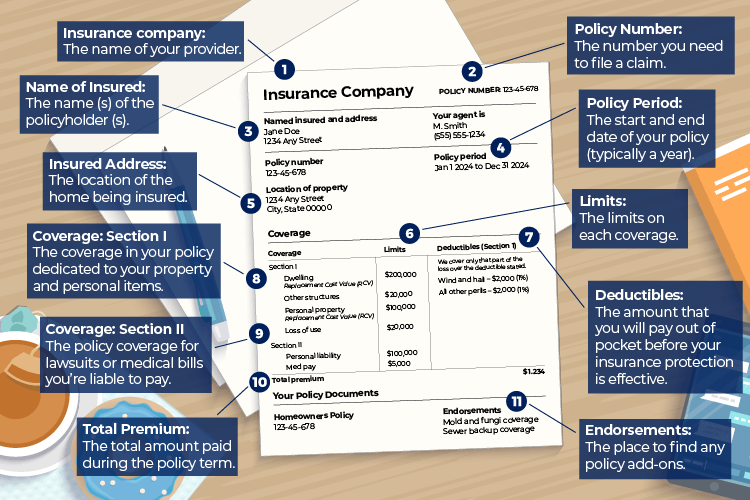
The deductible is the amount you agree to pay out of pocket before the insurance coverage kicks in. In the world of personal finance, the deductible is a tool for managing “self-insurance.” By choosing a higher deductible—moving it from $500 to $1,000 or $2,500—you assume more of the initial risk, which significantly lowers your monthly or annual premium. This is a viable strategy if you have an adequate emergency fund. If your liquidity is low, a lower deductible might be safer, even if it results in a higher quoted premium.
Coverage Limits and Endorsements
The “limit” is the maximum amount the insurer will pay for a covered loss. While it is tempting to choose the minimum limits required by law to get the lowest quote, this is often a financial mistake. For instance, in auto insurance, state minimums for liability are often insufficient to cover the costs of a multi-car accident or high medical bills. Increasing your limits often costs incrementally less as the coverage increases. A quote for $100,000/$300,000 in liability is rarely double the cost of a $50,000/$100,000 policy, providing significantly better asset protection for a marginal increase in cost.
Underwriting Factors and Financial Health
Insurers use sophisticated algorithms to determine your rate. Factors such as your geographic location (zip code), your occupation, and even your educational background can influence the quote in some jurisdictions. From a financial management perspective, it is important to recognize that your lifestyle choices—such as where you live in relation to a fire station or how far you commute—are active components of your insurance costs. When reviewing a quote, ask the agent which factors are driving the price higher so you can address them in future financial planning.
Optimizing the Quote: Discounts and Financial Bundling
Getting a quote is not a passive process; it should be an active negotiation and search for value. Most insurance companies offer a variety of discounts that may not be automatically applied to an initial online estimate.
The Power of Bundling
One of the most effective ways to lower an insurance quote is through “multi-policy” discounts. If you place your auto, home, and umbrella policies with the same carrier, you can often see a reduction of 10% to 25% across all policies. This simplifies your financial life by consolidating bills and maximizes the “lifetime value” you represent to the insurer, which they reward with lower rates.
Telematics and Usage-Based Insurance
For those looking to leverage technology to improve their financial standing, many insurers now offer quotes based on telematics. By allowing an insurer to track your driving habits via a smartphone app or a plug-in device, you can receive a quote that is personalized to your actual behavior rather than just your demographic data. For safe drivers, this can lead to substantial discounts that are unavailable through traditional quoting methods.
Professional and Affinity Discounts
Many insurers offer lower quotes to members of certain professional organizations, alumni associations, or specific employers. When requesting a quote, always provide a full picture of your professional affiliations. These “affinity discounts” are based on the statistical data that certain professional groups tend to file fewer claims, and these savings are passed directly to you.
Finalizing the Quote and Integrating It into Your Financial Plan
The final step in getting an insurance quote is the transition from “quoted” to “bound.” A quote is an offer, but it is not a contract until you accept it and make the initial payment.
Reviewing the “Declaration Page”
Before signing, review the “Dec Page.” This document summarizes the coverage, limits, deductibles, and the total premium. Ensure that the information matches the quote you were originally provided. If the price has changed, ask for a detailed explanation of the “underwriting adjustments.” Sometimes, a final check of your driving record or credit report can cause the price to fluctuate from the initial estimate.
Assessing the Insurer’s Financial Stability
A low quote is worthless if the insurance company does not have the capital to pay out a claim. Before finalizing your decision, check the insurer’s financial strength rating through agencies like A.M. Best or Standard & Poor’s. A company with an “A” rating or higher is financially stable and capable of meeting its obligations, which provides the ultimate peace of mind for your investment.
Annual Re-evaluation
The insurance market is not static. Rates fluctuate based on inflation, climate events, and shifting actuarial data. As a rule of financial hygiene, you should seek new quotes every 12 to 24 months. This ensures that you are not paying a “loyalty penalty”—a phenomenon where long-term customers are gradually charged more while new customers are offered lower introductory rates. By staying active in the quoting process, you ensure that your insurance costs remain a optimized component of your overall financial success.
aViewFromTheCave is a participant in the Amazon Services LLC Associates Program, an affiliate advertising program designed to provide a means for sites to earn advertising fees by advertising and linking to Amazon.com. Amazon, the Amazon logo, AmazonSupply, and the AmazonSupply logo are trademarks of Amazon.com, Inc. or its affiliates. As an Amazon Associate we earn affiliate commissions from qualifying purchases.