
Understanding how to calculate the percentage increase between two numbers is not merely a mathematical exercise; it’s a fundamental skill, particularly indispensable in the realm of money. From personal finance to large-scale investing and business strategy, the ability to quantify growth, assess returns, and analyze change is paramount. This article will demystify the process, providing a clear, step-by-step guide tailored specifically to its myriad applications in the financial world. By the end, you’ll be equipped not just with the formula, but with a deeper appreciation for why this calculation is a cornerstone of sound financial decision-making.
In an increasingly data-driven financial landscape, mere absolute figures often fail to convey the true magnitude or significance of a change. A $100 increase in your daily coffee budget is far more impactful than a $100 increase in a $100,000 investment portfolio. Percentage increase provides the context, allowing for meaningful comparisons and informed judgments across different scales and scenarios. Whether you’re tracking the growth of your investments, analyzing a business’s revenue trajectory, or simply trying to understand the impact of inflation on your purchasing power, mastering this calculation is a gateway to greater financial literacy and control.
The Core Formula: Unlocking Financial Growth Metrics
At its heart, calculating percentage increase is about determining the relative change between an initial value and a final value, expressed as a proportion of the initial value. This standardized approach allows for objective comparisons and evaluations across diverse financial contexts.
Deconstructing the Percentage Increase Formula
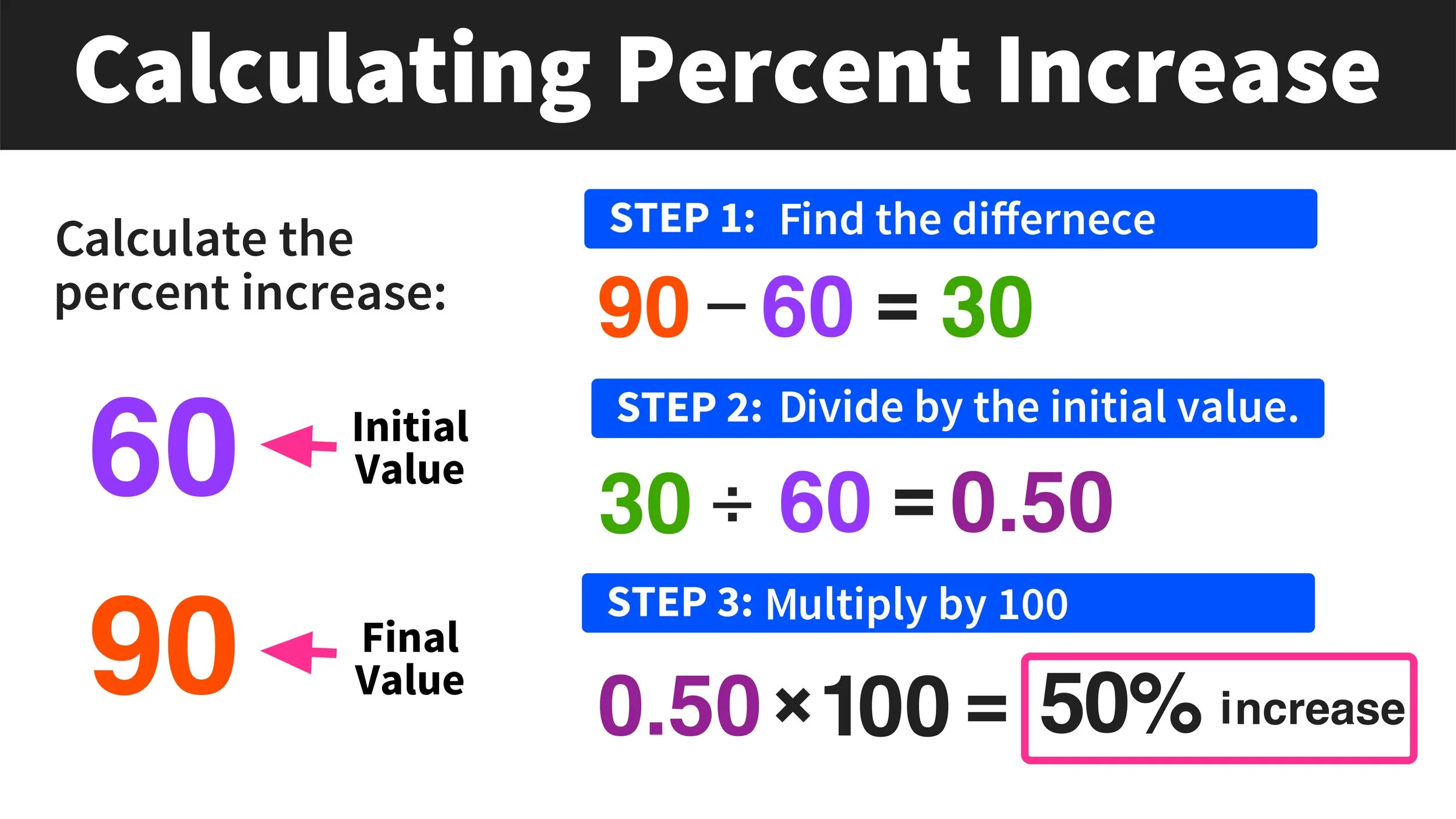
The formula for percentage increase is straightforward and highly adaptable:
Percentage Increase = ((New Value – Old Value) / Old Value) * 100
Let’s break down each component:
- New Value: This is the larger number, representing the amount after the increase has occurred. In financial terms, it could be your current portfolio value, this year’s revenue, or your latest salary.
- Old Value: This is the smaller number, representing the starting point or the amount before the increase. Financially, this might be your initial investment, last year’s revenue, or your previous salary.
- Difference (New Value – Old Value): This first step calculates the absolute amount of the increase. It tells you how much the value has grown in real terms.
- Division by Old Value: This is the crucial step that contextualizes the increase. By dividing the absolute increase by the original value, you determine the increase as a fraction or decimal of the starting point. This ratio is what makes the percentage increase so powerful for comparison.
- Multiplication by 100: Finally, multiplying the result by 100 converts that decimal or fraction into a percentage, making it easily understandable and comparable.
A Practical Example in Personal Finance
Imagine your monthly income increased. Last year, your average monthly take-home pay was $3,500 (Old Value). This year, after a promotion, it’s $4,000 (New Value). How much did your income increase in percentage terms?
- Calculate the difference: $4,000 – $3,500 = $500
- Divide by the Old Value: $500 / $3,500 = 0.142857…
- Multiply by 100: 0.142857 * 100 = 14.29% (rounded to two decimal places)
So, your monthly income increased by approximately 14.29%. This single percentage figure provides a clear, concise measure of your financial advancement, far more impactful than just stating “I got a $500 raise.” It allows you to compare this raise to inflation, to raises received by peers, or to historical income growth, offering deeper insights into your financial trajectory.
Diverse Applications Across the Money Landscape
The utility of percentage increase extends far beyond simple income adjustments. It’s a versatile tool that underpins analysis in virtually every corner of the financial world, offering critical insights into performance, growth, and change.
Personal Finance Management
For individuals, understanding percentage increase is key to effective personal finance management.
- Tracking Income Growth: As shown above, it quantifies salary raises, bonus increases, or growth in passive income streams, helping you assess your financial progress over time.
- Budget Analysis: If your expenses for a particular category (e.g., groceries, utilities) rise, calculating the percentage increase helps you identify areas where costs are growing disproportionately and might need attention.
- Savings and Debt: You can track the percentage increase in your savings account balance or, conversely, the percentage increase in a loan principal due to interest, providing a clearer picture of your financial health.
- Impact of Inflation: When evaluating the cost of living, percentage increase helps you understand how much prices have risen over a period, allowing you to gauge the erosion of your purchasing power and advocate for commensurate wage increases.
Investing and Wealth Building
In the world of investments, percentage increase is the language of returns and performance.
- Return on Investment (ROI): This is perhaps the most common application. Whether you’re assessing a stock, real estate, cryptocurrency, or a mutual fund, calculating the percentage increase in value (or ROI) tells you how effectively your capital has grown relative to your initial outlay.
- Example: You bought shares for $10,000, and they are now worth $12,500. The percentage increase (ROI) is (($12,500 – $10,000) / $10,000) * 100 = 25%.
- Portfolio Growth: Investors regularly track the percentage increase of their entire portfolio over various time horizons (month-to-month, year-to-date, annually) to benchmark performance against market averages or personal goals.
- Capital Gains: When selling an asset, the percentage increase helps quantify the capital gain, which is crucial for tax planning and future investment decisions.
- Analyzing Market Trends: Financial analysts constantly report percentage increases (or decreases) in stock indices (e.g., S&P 500), commodity prices, or bond yields to describe market movements and predict future trends.
Business Finance and Strategy
For businesses, percentage increase is vital for operational analysis, strategic planning, and performance evaluation.
- Revenue Growth: A core metric for any business is how much its revenue has grown year-over-year or quarter-over-quarter. Percentage increase provides a standardized measure for this.
- Example: A company’s revenue grew from $1 million last year to $1.3 million this year. That’s a 30% increase, a clear indicator of market success or operational efficiency.
- Profit Margin Expansion: Businesses track percentage increases in gross and net profit margins to understand if their profitability is improving relative to sales.
- Cost Management: Monitoring percentage increases in operational costs (e.g., raw materials, labor, overheads) helps identify cost pressures and informs cost-cutting strategies.
- Sales Performance: Sales teams often measure their performance by the percentage increase in units sold or total sales value compared to previous periods or targets.
- Market Share Growth: By comparing their sales increase to the overall market’s growth, businesses can determine if they are gaining market share, expressed as a percentage.
Nuances and Considerations in Financial Analysis
While the formula for percentage increase is straightforward, its application in complex financial scenarios often requires careful consideration to avoid misinterpretations.
When Percentage Increase Can Mislead
Context is king, especially when dealing with financial data. A high percentage increase might look impressive but could be misleading if the initial base number was very small.
- Small Base Effect: An investment growing from $10 to $20 is a 100% increase, which sounds fantastic. However, an investment growing from $10,000 to $11,000 is only a 10% increase, yet represents a much larger absolute gain ($1,000 vs. $10). Always consider the absolute numbers alongside percentages, especially for smaller values.
- Volatility: In highly volatile markets (like cryptocurrency), large percentage increases or decreases can occur rapidly. While these figures indicate significant movement, they don’t necessarily guarantee sustained growth or stability.
- Timeframe: A 5% increase over one month is very different from a 5% increase over five years. Always specify the period over which the increase occurred to provide meaningful context. Annualized returns are often preferred for long-term investment comparisons.
Differentiating Increase from Decrease
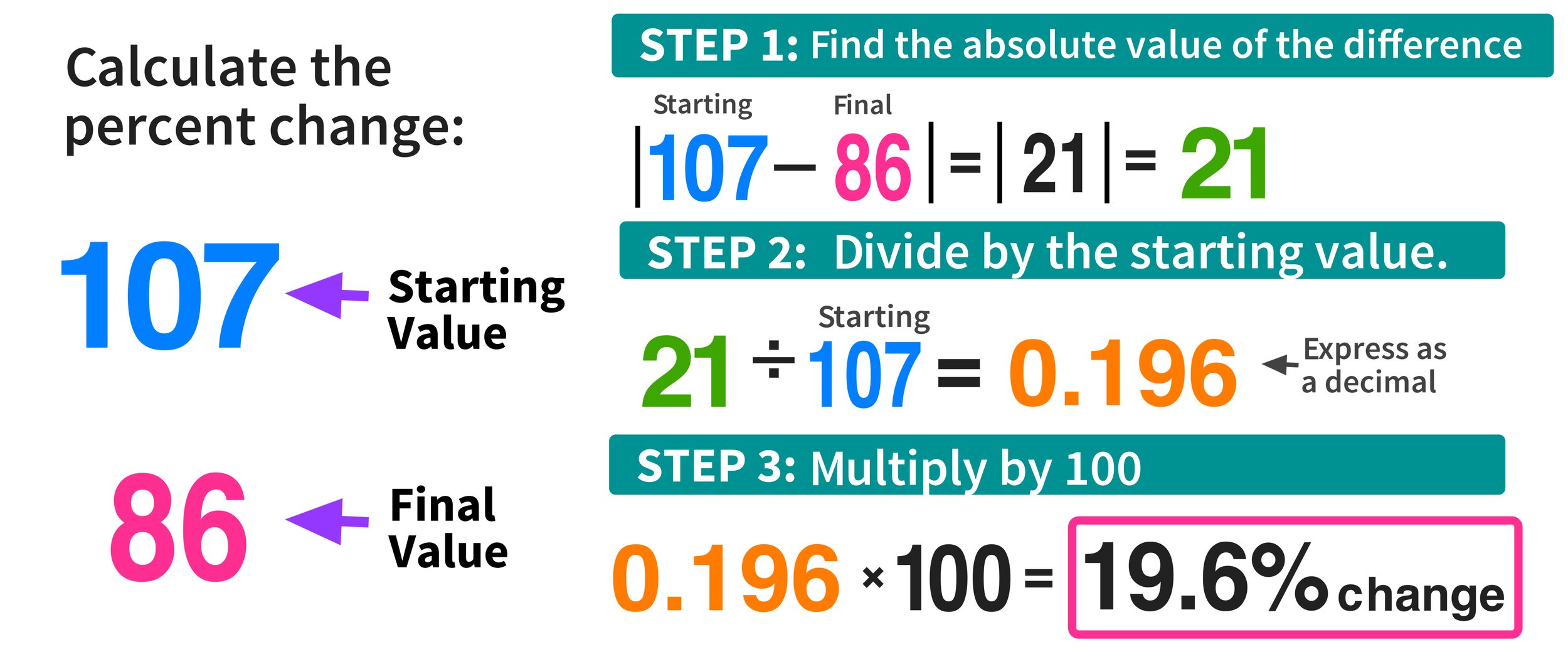
It’s crucial to understand that the formula calculates increase. If the “New Value” is actually smaller than the “Old Value,” the formula will yield a negative percentage, indicating a decrease. While mathematically correct, it’s often clearer to use a specific “percentage decrease” formula when a value has shrunk, or at least explicitly state “a percentage decrease of X%.” The percentage decrease formula uses the same logic, but often expressed as ((Old Value - New Value) / Old Value) * 100 to yield a positive percentage representing the decrease.
The Role of Compounding
While not directly part of the percentage increase formula, understanding compounding is vital when analyzing financial growth over multiple periods. If your investment increases by 10% this year, and that increased value then increases by another 10% next year, the total growth isn’t simply 20%. Compounding means that the increase is calculated on the new, higher value each time, leading to exponential growth. This is the bedrock of long-term wealth accumulation and highlights the power of consistent positive percentage increases.
Leveraging Financial Tools for Precision
Calculating percentage increase is simple enough to do manually, but modern financial tools offer efficiency, accuracy, and additional analytical capabilities.
Spreadsheets: Your Go-To Financial Calculator
Programs like Microsoft Excel, Google Sheets, or Apple Numbers are invaluable for financial analysis. They allow you to input your data, apply the percentage increase formula to multiple rows or columns, and instantly see results.
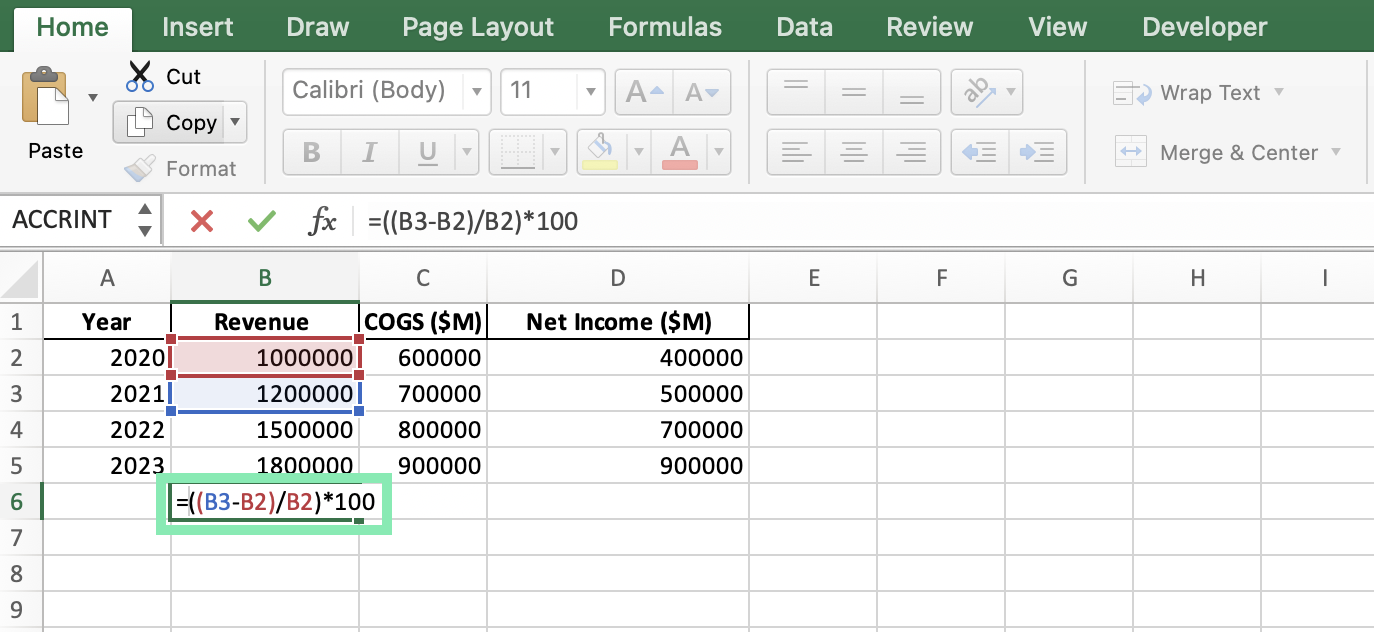
- Formula in Excel/Sheets: If your Old Value is in cell A1 and your New Value is in cell B1, the formula would be
=( (B1 - A1) / A1 ) * 100. You can then format the cell to display as a percentage with desired decimal places. - Tracking Trends: Spreadsheets make it easy to track percentage increases over time for various financial metrics, allowing you to create charts and graphs that visualize growth patterns.
Online Calculators and Financial Software
Numerous online percentage change calculators are available for quick, one-off calculations. For more sophisticated financial analysis, dedicated financial software or investment platforms often include built-in tools to calculate returns, growth rates, and other key performance indicators automatically. These tools can handle large datasets, perform complex calculations, and present data in user-friendly formats, saving significant time and reducing the risk of manual errors.
The Importance of Data Accuracy
Regardless of the tool used, the accuracy of your percentage increase calculation hinges entirely on the accuracy of your input data. Double-check your “Old Value” and “New Value” to ensure they are correct and correspond to the exact timeframe you intend to analyze. Minor data entry errors can lead to significantly skewed results, impacting your financial assessments and decisions.
Conclusion: Empowering Your Financial Journey
Mastering the calculation of percentage increase is more than just a mathematical trick; it’s a fundamental financial literacy skill that empowers individuals and businesses alike. From understanding how much your salary has grown, to evaluating the performance of your investment portfolio, to dissecting a company’s revenue trajectory, this single formula provides the contextual clarity needed to make informed decisions.
By consistently applying this knowledge, you transform raw numbers into meaningful insights. You can better assess risks, identify opportunities, and track progress towards your financial goals. In a world awash with data, the ability to properly interpret growth and change using percentage increase gives you a distinct advantage, fostering greater confidence and control over your financial destiny. Embrace this simple yet powerful tool, and take a significant step forward in your journey toward enhanced financial understanding and success.
aViewFromTheCave is a participant in the Amazon Services LLC Associates Program, an affiliate advertising program designed to provide a means for sites to earn advertising fees by advertising and linking to Amazon.com. Amazon, the Amazon logo, AmazonSupply, and the AmazonSupply logo are trademarks of Amazon.com, Inc. or its affiliates. As an Amazon Associate we earn affiliate commissions from qualifying purchases.