
Understanding your monthly income is the cornerstone of every sound financial plan. While it may seem like a simple question of looking at a bank deposit, the reality is often more complex. For many, income isn’t just a single recurring number; it is a composite of salaries, hourly wages, freelance dividends, investment returns, and seasonal bonuses. Whether you are looking to qualify for a mortgage, build a sustainable budget, or plan for retirement, knowing exactly how much money flows into your accounts each month is the first step toward mastery over your personal finances.
Defining Gross vs. Net Income: The Foundation of Calculation
Before you can arrive at a final figure, you must distinguish between the two primary ways income is measured: gross and net. Failing to understand the difference between these two can lead to significant budgeting errors and financial overextension.
Understanding Gross Monthly Income
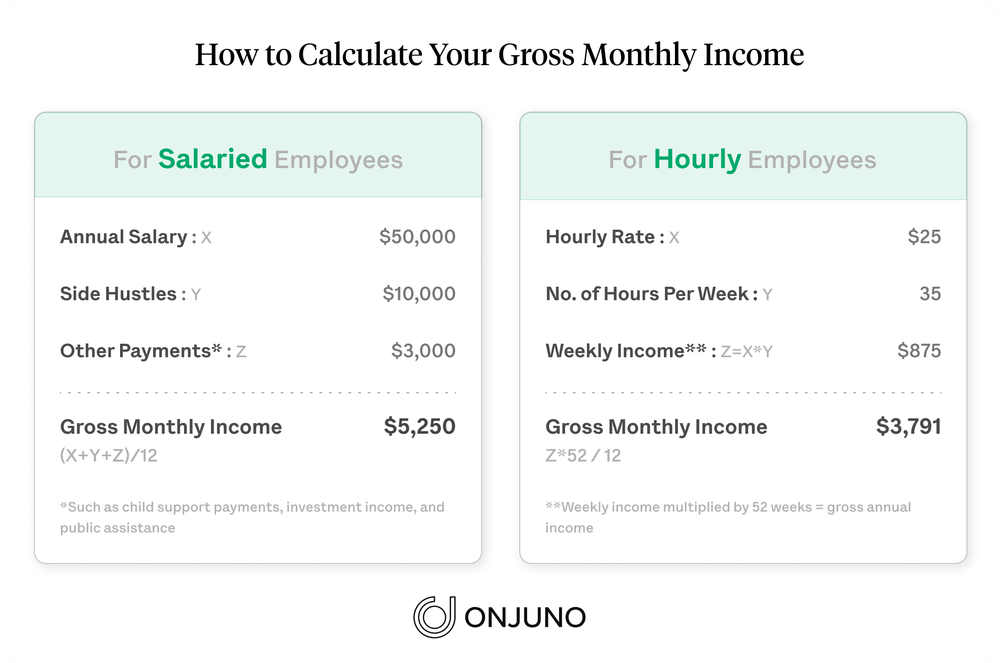
Gross monthly income is the total amount of money you earn before any taxes or deductions are taken out. For salaried employees, this is typically your annual salary divided by twelve. For hourly workers, it is your hourly rate multiplied by the number of hours worked in a month.
Lenders and landlords almost exclusively use gross income to determine your creditworthiness. When you apply for a car loan or a rental agreement, they want to see your “top-line” earnings because it represents your total earning capacity. However, gross income is a theoretical number when it comes to daily spending. You cannot pay your electric bill with the money that was withheld for federal income tax.
The Reality of Net Monthly Income (Take-Home Pay)
Net monthly income, often referred to as “take-home pay,” is the amount of money that actually hits your bank account. This is the figure that matters most for your personal budget. To find your net income, you must subtract all deductions from your gross pay, including:
-
Federal, state, and local income taxes.
-
FICA taxes (Social Security and Medicare).
-
Health, dental, and vision insurance premiums.
-
Retirement contributions (such as a 401(k) or 403(b)).
-
Garnishments or automatic savings transfers.
To find this number accurately, the most reliable source is your most recent pay stub. Look for the “Net Pay” or “Distribution” line. If your income varies, you should look at an average of your net pay over the last three to six months to find a realistic baseline.
Calculating Income for Different Employment Types
The method you use to find your monthly income depends heavily on how you are paid. The modern economy has moved away from a one-size-fits-all payroll model, requiring different mathematical approaches for different career paths.
Salaried Employees and Pay Frequency Nuances
If you receive a fixed annual salary, calculating your monthly income might seem straightforward, but your pay frequency can create “bonus” cash flow months.
-
Monthly Pay: You receive 12 checks a year. Your monthly income is simply your check amount.
-
Semi-Monthly Pay: You are paid twice a month (usually the 1st and 15th). Your monthly income is the sum of these two checks.
-
Bi-Weekly Pay: You are paid every two weeks. This results in 26 pay periods per year. In most months, you will receive two checks, but two months out of the year, you will receive three.
To find your “true” monthly average for a bi-weekly schedule, multiply one check by 26 and divide by 12. However, for budgeting purposes, many financial experts suggest basing your monthly income on only two checks and treating the “third check” months as forced savings or debt-repayment windfalls.
Hourly Wage Earners
For those paid by the hour, income can fluctuate based on scheduling, overtime, and holiday pay. To find an accurate monthly figure, review your work history from the past three months. Sum the total hours worked and divide by three to find your average monthly hours, then multiply by your hourly rate.
If your hours are strictly capped (e.g., exactly 40 hours per week), you can use the standard formula: (Hourly Wage × 40 hours × 52 weeks) / 12 months. Always remember to factor in whether your overtime is guaranteed or incidental; never include incidental overtime in your baseline monthly income calculation, as it can disappear without notice.
Freelancers, Contractors, and Small Business Owners
Calculating income is most difficult for the self-employed. Because revenue is often inconsistent, a single month’s snapshot is rarely accurate. To find your monthly income in this category, you should look at your “Net Profit” from the previous year’s tax returns (Schedule C) and divide by 12.
If your business is new, track your gross revenue for at least six months, subtract all business expenses (software, equipment, marketing), and set aside approximately 25-30% for self-employment taxes. The remaining amount is your personal monthly income. It is safer for freelancers to use a “conservative average”—the average of your three lowest-earning months—to ensure you can always cover your essential costs.
Accounting for Variable and Passive Revenue Streams
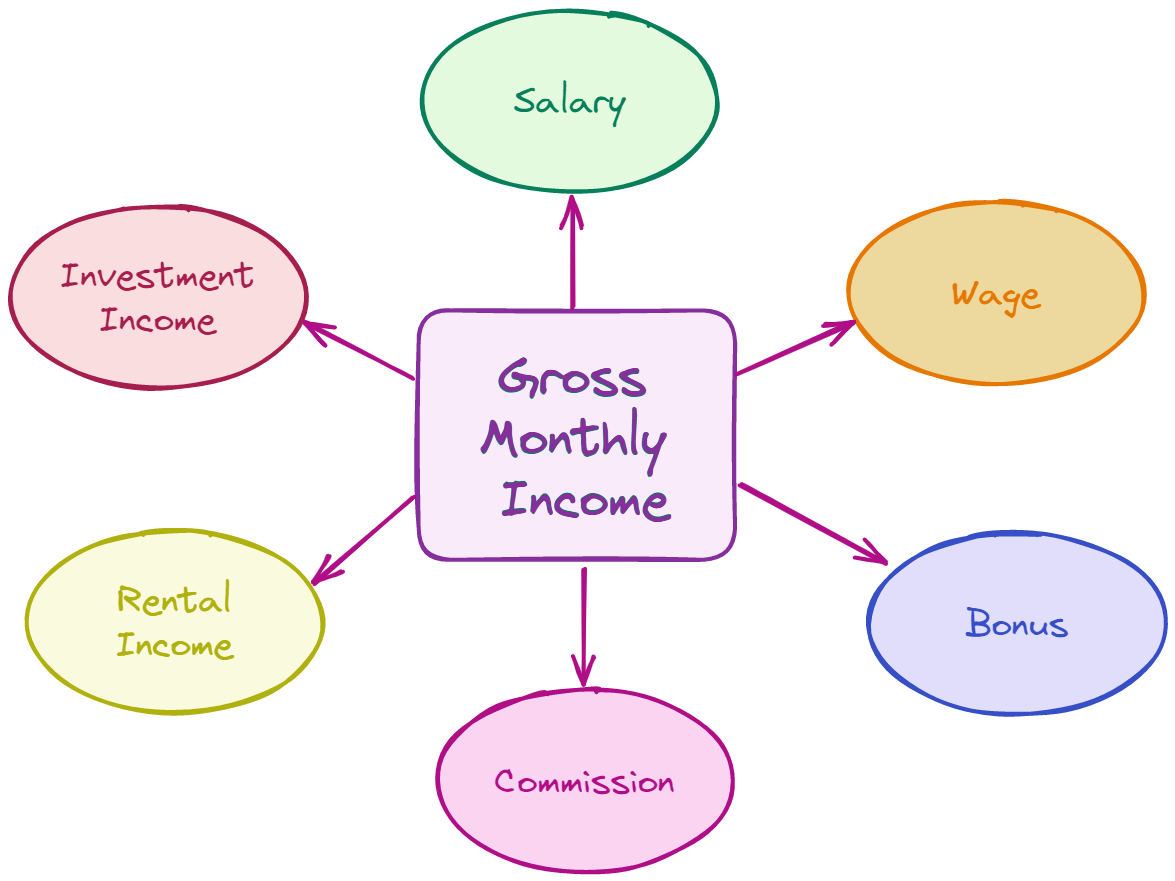
Monthly income is not limited to your primary job. In the era of the “side hustle” and retail investing, many people have secondary streams that must be accounted for to get a full picture of their financial health.
Bonuses, Commissions, and Tips
If a significant portion of your pay comes from commissions or tips, your income is “variable.” For tipped employees, such as those in the hospitality industry, it is vital to keep a daily log of earnings, as cash tips are often forgotten when calculating monthly totals.
For annual or quarterly bonuses, it is best not to include them in your regular monthly income calculation. Instead, treat them as “supplemental income.” If you must include them for a loan application, find the total amount received over the last two years and divide by 24 to get a monthly average that lenders will accept.
Investment Dividends and Interest
Many individuals overlook the passive income generated by brokerage accounts, high-yield savings accounts (HYSA), or certificates of deposit (CDs). While you might reinvest these dividends automatically, they still count as income.
Check your monthly brokerage statements for “Dividends Received” or “Interest Paid.” If you have a portfolio that pays out quarterly, total the annual dividends and divide by 12. While this might be a small amount for some, for seasoned investors, it can represent a significant portion of their monthly cash flow.
Rental Income and Side Hustles
If you own rental property, your monthly income is the rent collected minus the mortgage, insurance, taxes, and a maintenance reserve (usually 10-15% of the rent). For side hustles like ride-sharing or selling goods online, ensure you are subtracting the cost of goods sold and operating expenses (like fuel or platform fees) before adding the remainder to your monthly income total.
Tools and Methods for Tracking Your Cash Flow
Once you understand the components of your income, you need a system to monitor it. Income is not a static number; it evolves as you get raises, change jobs, or shift your investment strategy.
Manual Tracking via Spreadsheets
For those who want total control, a spreadsheet (like Excel or Google Sheets) is the gold standard. Create columns for “Source,” “Gross Amount,” “Deductions,” and “Net Deposit.” By updating this once a month, you can visualize trends. A spreadsheet allows you to calculate “Rolling Averages,” which is the most accurate way to understand your income over time, especially if you have seasonal fluctuations.
Digital Banking and Financial Management Apps
Modern fintech tools can automate much of the discovery process. Many banking apps now feature “Cash Flow” tabs that automatically aggregate deposits and categorize them as income. There are also third-party financial aggregators that link to your bank accounts, investment portfolios, and even your payroll provider to give you a real-time H1-level view of your total monthly earnings across all platforms.
Reviewing Tax Documents and Paystubs
If you are struggling to find a starting point, look at your most recent W-2 (for employees) or 1099-MISC/NEC (for contractors). Your W-2 will show your total Medicare wages, which is usually the most accurate reflection of your gross income. Dividing the “Year-to-Date” (YTD) figure on your latest paystub by the number of months passed in the year is the fastest way to find your current year’s monthly average.
Why Knowing Your Exact Monthly Income Matters
Finding out your monthly income is not just an exercise in mathematics; it is a strategic necessity. Without an accurate number, your financial planning is based on guesswork, which often leads to “lifestyle creep” or debt accumulation.
Budgeting and Debt Management
A budget is essentially a plan for your income. If you overestimate your monthly income by even $200, you could find yourself relying on credit cards to bridge the gap at the end of the month. Conversely, if you underestimate your income, you might be missing opportunities to invest or pay down high-interest debt faster. Knowing your net income allows you to apply the “50/30/20” rule effectively: 50% for needs, 30% for wants, and 20% for savings and debt repayment.
Qualifying for Loans and Housing
Whether you are applying for a mortgage or a personal loan, lenders will calculate your Debt-to-Income (DTI) ratio. This is your total monthly debt payments divided by your gross monthly income. Most lenders look for a DTI of 36% or lower. If you don’t know your gross monthly income, you won’t know if you are likely to be approved for a home or if you need to increase your income streams before applying.

Planning for Taxes and Retirement
For those with multiple income streams, knowing your total monthly income is vital for tax planning. If your side hustle moves you into a higher tax bracket, you may need to increase your retirement contributions to lower your taxable income. Additionally, most retirement planning is based on replacing a percentage of your current monthly income. You cannot accurately calculate your “FIRE” (Financial Independence, Retire Early) number or your traditional retirement goal without first knowing the monthly income your current lifestyle requires.
By taking the time to aggregate your paystubs, account for passive streams, and subtract necessary deductions, you transform from a passive observer of your bank account into an active manager of your wealth. Financial clarity begins with the simple, yet profound, act of defining your monthly income.
aViewFromTheCave is a participant in the Amazon Services LLC Associates Program, an affiliate advertising program designed to provide a means for sites to earn advertising fees by advertising and linking to Amazon.com. Amazon, the Amazon logo, AmazonSupply, and the AmazonSupply logo are trademarks of Amazon.com, Inc. or its affiliates. As an Amazon Associate we earn affiliate commissions from qualifying purchases.