
In the modern financial landscape, your bank account number is more than just a string of digits; it is the unique identifier that anchors your participation in the global economy. Whether you are setting up direct deposit for a new career opportunity, organizing automated bill payments to improve your credit score, or initiating a high-value wire transfer for an investment, your account number is the essential key. Despite its importance, many consumers find themselves searching for this information at critical moments.
Understanding where to find your account number—and distinguishing it from other identifiers like your routing number or debit card number—is a fundamental pillar of financial literacy. This guide explores the various physical and digital avenues for retrieving your account information, while providing insights into the security protocols necessary to protect your financial integrity.
The Anatomy of Banking Documentation: Finding Numbers in Print
While we live in an increasingly paperless world, physical documents remains the most reliable and “offline” way to verify your financial details. Traditional banking infrastructure still relies heavily on standardized printing formats that make account identification straightforward if you know where to look.
The Mathematics of a Personal Check
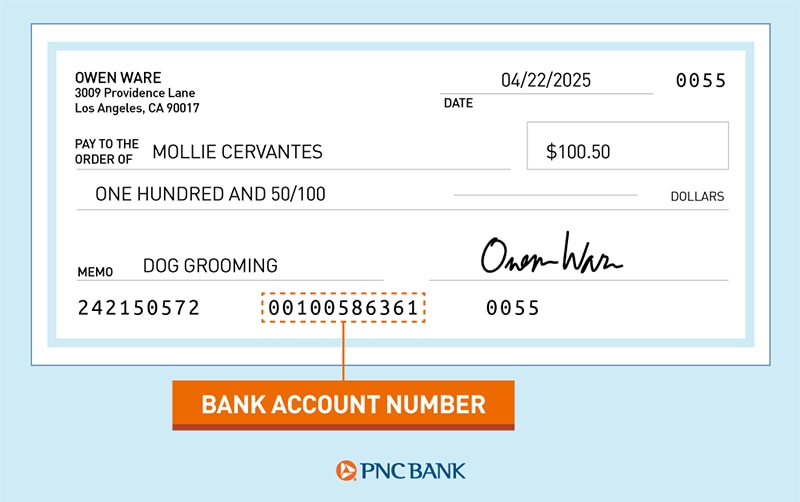
For those who still maintain a checkbook, the most immediate source of truth is the bottom of a personal check. At the base of every check is a series of numbers printed in a specialized font known as MICR (Magnetic Ink Character Recognition). This line typically contains three distinct sets of numbers:
- The Routing Number: Usually the first nine-digit sequence on the left, which identifies the specific financial institution.
- The Account Number: Generally the middle sequence. It varies in length depending on the bank but is the unique identifier for your specific funds.
- The Check Number: The shortest sequence, usually located on the far right, which corresponds to the number in the top-right corner of the check.
Understanding this sequence is vital because using the routing number in place of the account number (or vice versa) is one of the most common causes of failed electronic transfers and late payment fees.
Deciphering Monthly Bank Statements
Your monthly statement is a comprehensive legal record of your financial activity. Regardless of whether you receive this via mail or download it as a PDF, the account number is prominently displayed. Usually located in the top-right or top-left header of the first page, the statement will list the “Account Summary.”
Financial institutions often “mask” these numbers on statements for security—showing only the last four digits—but the full number is typically available on the original paper statement or the formal “Statement of Record” found within your banking portal.
The Initial Welcome Package
When you first open a checking or savings account, the bank provides a “Welcome Kit” or a “Signature Card.” These documents are the primary source of your account’s metadata. They contain not just the account number, but the specific sub-account codes that distinguish a basic checking account from a high-yield savings or a money market account. Archiving these documents in a secure physical or digital file is a best practice for long-term financial management.
Navigating Digital Channels: Retrieving Information in the Fintech Era
As banking has migrated to smartphones and web browsers, the method of accessing sensitive information has evolved. Digital platforms offer convenience but require a higher level of user interaction to ensure that sensitive numbers are not accidentally exposed to shoulder-surfers or screen-recording malware.
Leveraging Mobile Banking Applications
Most modern consumers interact with their money through a mobile app. To find your account number here, you typically need to navigate to the “Account Details” or “Settings” tab. Because of high-level security UX (User Experience) design, many apps default to hiding the full account number. Look for an “eye” icon or a “Show full number” toggle. This action usually triggers a secondary authentication requirement, such as FaceID, TouchID, or a mobile PIN, ensuring that only the authorized user can view the full string of digits.
Utilizing Web-Based Portals
For complex financial tasks, many prefer the desktop interface of a bank’s website. Once logged in, the account number is generally found by clicking on the specific account name (e.g., “Premier Checking”). Within the account dashboard, there is often a link labeled “Account and Routing Numbers.”

One professional tip for business owners and freelancers is to look for the “Direct Deposit Information” link. Banks often provide a pre-filled PDF form containing both the routing and account numbers, which can be downloaded and sent directly to HR departments or clients, reducing the risk of manual entry errors.
The Role of Digital Wallets
While Apple Pay, Google Pay, and Samsung Pay are primarily used for transactions, they do not always display your full bank account number. Instead, they often use “Tokenization” or “Device Account Numbers” to protect your real data. If you are looking for your bank account number specifically for an ACH transfer, your digital wallet is usually not the correct source; you must return to the primary banking app or website.
Security Protocols: Protecting Your Account Number from Malicious Actors
In the realm of personal finance, your account number is a “static credential.” Unlike a password that can be changed or a credit card that can be reissued with a new number if compromised, changing a bank account number is a bureaucratic ordeal that involves closing the account and rerouting all automated payments. Therefore, protecting this number is as important as knowing where to find it.
Distinguishing Between Public and Private Data
In the financial world, your Routing Number is essentially public information; it identifies your bank and can often be found via a simple Google search. However, your Account Number is private. You should treat it with the same level of confidentiality as your Social Security Number. Avoid emailing your account number in plain text. If you must share it for a business transaction, use encrypted document sharing services or provide it over a secure phone line.
Guarding Against Phishing and Social Engineering
A common tactic used by financial criminals is the “urgent verification” scam. You may receive an email or text claiming there is a problem with your account and asking you to “verify your account number” by clicking a link. Legitimate financial institutions will never ask you to provide your full account number via an unsolicited digital communication. If you need to verify your number for a legitimate bank representative, ensure you initiated the call through the official number on the back of your debit card.
The Importance of “Paper Shredding” and Digital Hygiene
If you rely on physical statements or checks to find your account number, ensure that these documents are disposed of properly. A significant percentage of identity theft still occurs through “dumpster diving” for financial records. Invest in a cross-cut shredder for any document containing your full account number. Digitally, ensure that you are not saving screenshots of your account numbers in unencrypted photo galleries or cloud storage folders that lack Two-Factor Authentication (2FA).
Specialized Accounts: Brokerage, Credit, and International Variants
Not all account numbers are created equal. Depending on the financial instrument you are using, the location and format of the account number may shift significantly.
Brokerage and Investment Accounts
For those managing portfolios with firms like Charles Schwab, Fidelity, or Vanguard, account numbers are often formatted differently than retail bank accounts. These numbers are vital for “In-Kind” transfers or when moving funds between a brokerage cash account and an external checking account. In these platforms, the account number is usually found under “Account Features” or “Positions.” If you hold multiple “buckets” within one login—such as a Traditional IRA, a Roth IRA, and a taxable brokerage account—each will have a distinct account number. Mixing these up during a transfer can have significant tax implications.
Credit Card Account Numbers vs. Credit Card Numbers
A common point of confusion in personal finance is the difference between the 16-digit number on the front of your credit card and the “Credit Account Number” found on your monthly statement. For the purpose of making payments to the card from your bank, you generally use the 16-digit card number. However, for internal bank communications or when linking accounts within the same institution, the “Account Number” (which is often different from the card number) is the relevant identifier.
International Banking and IBANs
If you are involved in international business or sending money across borders, the standard domestic account number is insufficient. You will likely need an IBAN (International Bank Account Number). The IBAN is an expanded version of your account number that includes a country code, check digits, and the bank identifier. While the core of the IBAN is your domestic account number, you must provide the full international string to ensure the funds reach the correct destination in the global SWIFT network.

Conclusion: Mastering Your Financial Data
Finding your account number is a simple task that sits at the center of complex financial management. Whether you find it at the bottom of a check, through a secure biometric login on a mobile app, or on a formal monthly statement, this number is the bridge between your labor and your capital.
By maintaining organized financial records—both physical and digital—and adhering to strict security protocols, you do more than just facilitate a transaction; you safeguard your financial future. Treat your account number with the respect it deserves as a primary key to your economic identity, and you will navigate the world of personal and business finance with greater confidence and security.
aViewFromTheCave is a participant in the Amazon Services LLC Associates Program, an affiliate advertising program designed to provide a means for sites to earn advertising fees by advertising and linking to Amazon.com. Amazon, the Amazon logo, AmazonSupply, and the AmazonSupply logo are trademarks of Amazon.com, Inc. or its affiliates. As an Amazon Associate we earn affiliate commissions from qualifying purchases.