
Navigating the complexities of federal taxes can be a daunting task, and for many, the uncertainty of an outstanding balance with the Internal Revenue Service (IRS) can be particularly stressful. Whether it’s due to an underpayment, an unexpected audit, or simply a discrepancy you’re unaware of, knowing your exact tax liability is the critical first step towards financial peace of mind and proactive resolution. Ignoring potential tax debts only compounds the problem, leading to escalating penalties and interest. This comprehensive guide will illuminate the official channels available to taxpayers for accurately determining their IRS balance, offer insights into common reasons for owing, and provide crucial advice on how to proceed once you have this vital information.
Understanding Your IRS Tax Liability
Before diving into how to ascertain your debt, it’s beneficial to understand why you might owe the IRS in the first place. Tax obligations are a fundamental aspect of personal finance, and unexpected debts often stem from a few common scenarios.
Common Reasons for Owing the IRS
Tax liabilities can arise from a variety of situations, many of which are not immediately apparent to the taxpayer throughout the year. One of the most frequent reasons is under-withholding from paychecks. If your W-4 form isn’t accurately reflecting your deductions, credits, or multiple income sources, your employer might be withholding less tax than required, leading to a balance due at tax time. Similarly, insufficient estimated tax payments are a common culprit for self-employed individuals, freelancers, or those with significant investment income. Without regular quarterly payments, the tax burden can accumulate substantially.
Another significant reason can be unexpected income or capital gains. Selling assets like stocks, real estate, or even cryptocurrencies can trigger capital gains taxes that weren’t accounted for during the year. Similarly, receiving substantial bonuses, lottery winnings, or other forms of irregular income without adjusting your tax strategy can lead to a shortfall. Errors or miscalculations on your tax return are also a possibility, whether accidental or due to misunderstanding tax laws. The IRS may identify these errors during processing, leading to a notice of additional tax due. Finally, life changes such as marriage, divorce, birth of a child, or a new job can all impact your tax situation, and failing to update your tax strategy accordingly can result in an unexpected bill.
The Importance of Knowing Your Exact Balance
Knowing your exact IRS balance is paramount for several reasons. Firstly, it prevents the accumulation of penalties and interest. The IRS charges both for failure to pay and failure to file on time, and these can quickly add up, making a manageable debt turn into a significant burden. Secondly, it enables proactive financial planning. Once you know what you owe, you can budget for it, explore payment options, or even challenge an incorrect assessment. Without this knowledge, you operate in the dark, potentially hindering other financial goals.
Furthermore, accurately understanding your tax liability allows you to maintain good standing with the IRS. Unresolved tax debts can lead to more severe collection actions, such as tax liens or levies, which can severely impact your credit score and financial assets. By addressing the debt promptly, you protect your financial health and future. It also empowers you to seek appropriate professional advice, as tax professionals can only offer the best solutions when they have a complete picture of your tax situation. In essence, knowledge is power when it comes to the IRS; it allows you to regain control and strategize effectively.
Official Channels to Check Your IRS Balance
The IRS provides several reliable and secure methods for taxpayers to ascertain their current tax balance. Utilizing these official channels ensures accuracy and provides legitimate paths for resolution.
IRS Online Account: Your Digital Hub
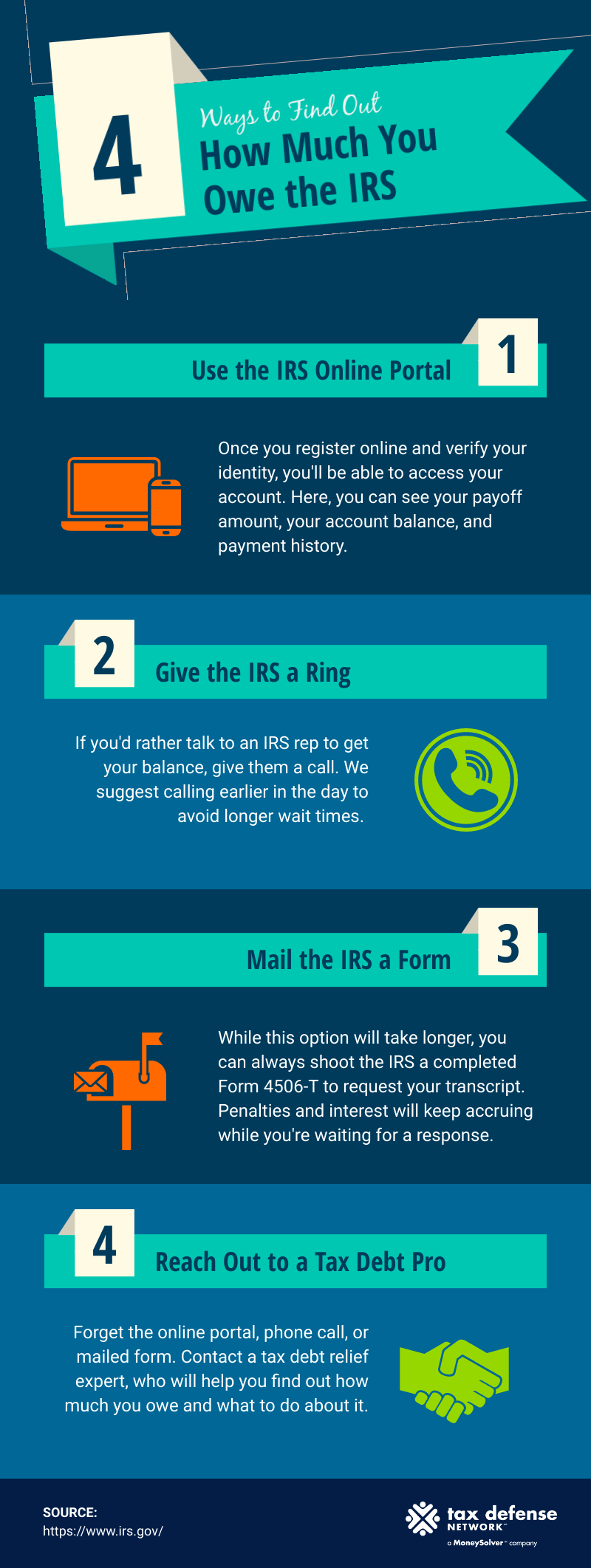
The IRS Online Account is arguably the most convenient and comprehensive tool for individual taxpayers to manage their federal tax information. After a secure identity verification process, setting up an account grants you immediate access to a wealth of personal tax data. Through this portal, you can view your balance for each tax year, including any accrued penalties and interest. Beyond just the current amount owed, the online account displays your payment history, allowing you to confirm past payments and see how they were applied. You can also access your tax records, such as tax transcripts, which provide a summary of your tax return information or your wage and income information. This digital hub also facilitates making payments directly from your bank account or through a debit/credit card, and even allows you to set up or modify a payment plan. Its 24/7 accessibility makes it an invaluable resource for proactive tax management.
Requesting a Tax Transcript
For those who prefer a documented summary or need official records for financial purposes, requesting a tax transcript is an excellent option. An account transcript provides most line items from your original return as filed, along with any adjustments made by you or the IRS, and includes payment information. A record of account transcript combines the account transcript and line-item information from your return. While it doesn’t explicitly state “you owe X amount,” by reviewing the figures, especially the “tax assessed” and “payments made” lines, you can deduce your current balance. Transcripts are available for the current tax year and up to 10 prior years. You can request them online via the “Get Transcript Online” tool, by mail using Form 4506-T, Request for Transcript of Tax Return, or by phone. It’s important to note that tax transcripts generally do not show state or local tax information.
Contacting the IRS Directly by Phone
Sometimes, the most direct approach is necessary, especially if you have complex questions or issues not easily resolved online. You can contact the IRS by phone, though be prepared for potentially long wait times, particularly during peak tax season. The general IRS toll-free number for individuals is 1-800-829-1040. When you call, have your Social Security number, date of birth, and the tax year in question ready. The IRS representative will ask you security questions to verify your identity before discussing your tax account. While this method can be frustrating due to hold times, it offers the advantage of speaking directly with a human who can provide real-time explanations and guide you through specific issues related to your balance.
Communicating Through Mail
While slower, traditional mail remains a legitimate channel for inquiring about your IRS balance. If you’ve received an official notice from the IRS, it typically includes contact information and instructions. Responding to these notices in writing is often necessary. If you haven’t received a notice but suspect you owe, you can write to the IRS. Be sure to include your full name, current address, Social Security number, and the tax year(s) you’re inquiring about. While you won’t get an immediate answer, the IRS will respond in writing. This method is often preferred for maintaining a paper trail of communication, which can be crucial for future reference or if disputes arise. Always send correspondence via certified mail with a return receipt requested to prove delivery.
Consulting a Tax Professional
For many, the most reassuring and efficient way to ascertain their IRS balance and understand their tax situation is by consulting a qualified tax professional. This could be a Certified Public Accountant (CPA), an Enrolled Agent (EA), or a tax attorney. These professionals have the expertise to access your tax records with your permission, interpret complex IRS notices, and clearly explain your liability. They can use their professional software to directly inquire about your balance or help you navigate the IRS Online Account. Beyond simply identifying the amount owed, a tax professional can also advise on the best course of action, help you negotiate with the IRS, or represent you in case of an audit. Their knowledge can be invaluable in demystifying your tax obligations and finding the most favorable resolution.
Deciphering IRS Notices and Communications
The IRS communicates through various notices and letters, each designed to convey specific information or request action. Understanding these communications is crucial for accurately determining your balance and responding appropriately.
Common Notice Types and What They Mean
The IRS sends out a multitude of notices, but a few are particularly common when it comes to outstanding balances. A CP14 notice is one of the most frequently received. It’s a reminder that you have a balance due and includes the amount of tax, penalties, and interest you owe. This notice often follows the filing of a tax return where a balance was due but not paid. Another common one is the CP501, CP503, or CP504 notice, which are increasingly urgent reminders that you have an unpaid tax balance. A CP504 often indicates intent to levy (take) your state tax refund or other property.

If the IRS believes you underreported your income, you might receive a CP2000 notice. This isn’t a bill but a proposed change to your tax return, suggesting you owe more tax due to discrepancies between what you reported and what third parties (like employers or banks) reported to the IRS. Other notices, such as Letter 1153, might inform you of a lien filing, while Letter 1058 typically indicates a final notice of intent to levy. Each notice type has specific implications and requires a tailored response.
Responding to IRS Correspondence
Receiving an IRS notice can be unsettling, but it’s imperative not to ignore it. The first step is to read the notice carefully and understand why it was sent and what action is required. Most notices will provide a clear deadline for response. If you agree with the notice, you should pay the amount due by the deadline or contact the IRS to set up a payment arrangement. If you disagree, you must respond in writing within the specified timeframe, clearly explaining your reasons and providing any supporting documentation. Keep copies of all correspondence you send to the IRS, and send it via certified mail with a return receipt requested. If the notice relates to a proposed change (like a CP2000), you might need to amend your return or provide proof that your original filing was correct. If you feel overwhelmed or unsure, this is an ideal time to consult a tax professional who can help you understand the notice and formulate an appropriate response. Timely and accurate responses can prevent further penalties and potential escalation of collection efforts.
What to Do If You Owe and Can’t Pay
Discovering you owe the IRS can be a stressful moment, but it’s crucial to remember that the IRS has various programs designed to help taxpayers who genuinely cannot afford to pay their tax debt immediately. The key is to communicate and act proactively.
Exploring IRS Payment Options
The IRS offers several avenues for taxpayers facing financial hardship. The most common is an Installment Agreement, which allows you to make monthly payments for up to 72 months. You’ll still accrue penalties and interest, but this plan prevents more aggressive collection actions. To qualify, you generally need to have filed all required tax returns and owe a combined total of under $50,000 in tax, penalties, and interest. Another option is an Offer in Compromise (OIC), which allows certain taxpayers to resolve their tax liability with the IRS for a lower amount than what they originally owe. An OIC is typically approved when there is doubt as to collectibility, meaning the IRS believes you cannot pay the full amount due to your current financial situation. This is a complex process and often requires the assistance of a tax professional.
For short-term financial difficulties, a Short-Term Payment Plan might be available, offering up to 180 days to pay off your tax debt in full, though penalties and interest still apply. In severe cases of financial distress, the IRS may place your account in Currently Not Collectible (CNC) status. This means the IRS has determined you are unable to pay any of your tax debt due to economic hardship. While in CNC status, the IRS will not actively pursue collection, but the debt remains, and penalties and interest continue to accrue. This status is temporary and is reviewed periodically.
Understanding Penalties and Interest
When you owe the IRS, it’s not just the principal tax amount you’re responsible for. The IRS imposes both penalties and interest on underpayments and late payments. The failure-to-pay penalty is 0.5% of the unpaid taxes for each month or part of a month that taxes remain unpaid, maxing out at 25% of your unpaid tax. There’s also a failure-to-file penalty, which is much steeper: 5% of the unpaid taxes for each month or part of a month that a tax return is late, capped at 25% of your unpaid tax, and often combined with a minimum penalty for returns over 60 days late.
In addition to these penalties, the IRS charges interest on underpayments, which applies to any unpaid tax from the due date of the payment until the date of payment. The interest rate is determined quarterly and is typically the federal short-term rate plus 3 percentage points. Interest is also charged on unpaid penalties. Understanding these charges highlights the importance of addressing your tax debt promptly, as they can significantly inflate the total amount owed over time. In certain circumstances, the IRS may abate (remove) penalties, especially if the failure to pay or file was due to reasonable cause and not willful neglect. However, interest is rarely abated.
Seeking Professional Assistance
When confronted with a tax debt you can’t readily pay, the value of seeking professional assistance cannot be overstated. A qualified tax professional – such as a CPA, Enrolled Agent, or tax attorney – can provide invaluable guidance. They can help you:
- Understand your rights and obligations: Ensuring you are not overwhelmed or taken advantage of.
- Evaluate your financial situation: To determine the most suitable payment option or relief program.
- Negotiate with the IRS: Acting as your representative, they can navigate the complexities of IRS procedures, paperwork, and communication.
- Prepare necessary documentation: Ensuring all forms and supporting evidence for installment agreements, OICs, or penalty abatements are correctly submitted.
- Develop a long-term strategy: To prevent future tax debts and manage your financial health effectively.
Attempting to resolve significant tax debt on your own can be an arduous and error-prone process. A professional can provide the expertise, advocacy, and peace of mind necessary to reach a favorable resolution.
Proactive Strategies for Future Tax Seasons
Preventing future tax debts is just as important as resolving current ones. By implementing proactive strategies, you can minimize the chances of owing the IRS and ensure a smoother tax season year after year.
Adjusting Withholdings and Estimated Payments
One of the most effective ways to avoid an unexpected tax bill is to carefully adjust your withholdings throughout the year. For employees, this means reviewing and updating your Form W-4 with your employer. Major life events like marriage, divorce, a new child, or a significant change in income are ideal times to re-evaluate your W-4. Using the IRS Tax Withholding Estimator tool on the IRS website can help you determine the correct number of allowances to claim to ensure your employer withholds roughly the right amount of tax. The goal is to avoid both significant under-withholding (leading to a tax bill) and over-withholding (giving the government an interest-free loan).
For self-employed individuals, freelancers, and those with substantial unearned income (investments, rental income), making accurate estimated tax payments quarterly is critical. These payments cover income tax, self-employment tax, and alternative minimum tax. The IRS provides Form 1040-ES, Estimated Tax for Individuals, to guide you. If your income fluctuates, you may need to adjust your estimated payments throughout the year to reflect your actual earnings. Failing to pay enough estimated tax can lead to penalties, even if you eventually pay your full tax liability by the April deadline.
Maintaining Accurate Records
Robust record-keeping is the bedrock of sound financial and tax management. Maintaining accurate records throughout the year simplifies tax preparation, supports any claims you make on your return, and is indispensable if you ever face an audit or need to clarify your tax situation with the IRS. Keep detailed records of all income sources, including W-2s, 1099s, and any other income statements. Likewise, meticulously document all deductible expenses, credits, and charitable contributions. This includes receipts, invoices, bank statements, and mileage logs.
Organize your records systematically, whether digitally or in physical folders, by category and tax year. Cloud storage solutions or dedicated accounting software can be invaluable for digital record-keeping, offering security and easy retrieval. Having a clear and complete paper trail not only helps you correctly calculate your tax liability but also provides the necessary evidence to support your position if the IRS ever questions your return. This proactive habit can save you significant time, stress, and potential penalties down the line.
The Value of Regular Financial Reviews
Beyond specific tax actions, adopting the habit of regular financial reviews is a powerful strategy for comprehensive tax and money management. Periodically (e.g., quarterly or semi-annually), take time to review your income, expenses, investments, and overall financial health. This holistic approach allows you to identify potential tax implications arising from your financial activities before they become problems.
During these reviews, consider:
- Income changes: Have you started a new job, taken on a side hustle, or seen a significant increase/decrease in investment income?
- Deduction and credit eligibility: Are there new deductions or credits you qualify for (e.g., new educational expenses, home improvements, medical costs)?
- Investment performance: How might capital gains or losses affect your tax liability?
- Retirement contributions: Are you maximizing tax-advantaged retirement accounts?
These reviews also offer an opportunity to identify any discrepancies in your financial statements or catch potential errors early. By staying attuned to your financial landscape throughout the year, you can make timely adjustments to your tax planning, preventing surprises and ensuring you are always on top of your obligations to the IRS.
In conclusion, understanding how much you owe the IRS is not just about avoiding penalties; it’s about empowerment and financial control. By utilizing the official channels, comprehending IRS communications, and knowing your options for payment, you can navigate your tax obligations with confidence. Furthermore, adopting proactive strategies for future tax seasons ensures long-term financial stability and peace of mind, transforming what can often be a source of anxiety into a manageable aspect of your personal finance journey.
aViewFromTheCave is a participant in the Amazon Services LLC Associates Program, an affiliate advertising program designed to provide a means for sites to earn advertising fees by advertising and linking to Amazon.com. Amazon, the Amazon logo, AmazonSupply, and the AmazonSupply logo are trademarks of Amazon.com, Inc. or its affiliates. As an Amazon Associate we earn affiliate commissions from qualifying purchases.