
In the intricate landscape of personal finance, your bank account number stands as a fundamental identifier, crucial for a wide array of transactions and financial management tasks. Whether you’re setting up direct deposit with a new employer, initiating an online bill payment, transferring funds to another account, or even filing your taxes, knowing this unique sequence of digits is indispensable. For Chase Bank customers, accessing this information is straightforward, yet the specific methods may not be immediately obvious to everyone. This comprehensive guide will navigate you through the most reliable ways to locate your Chase bank account number, ensuring you can manage your finances with confidence and efficiency.
The Essentials: Understanding Your Chase Account Numbers
Before diving into the “how-to,” it’s vital to grasp the significance of your account number and its relationship with other financial identifiers. This foundational understanding empowers you to distinguish between various numbers and use them correctly for different financial needs.
Differentiating Account Number from Debit Card Number
A common point of confusion for many is distinguishing between their bank account number and their debit card number. While both are critical to your financial life, they serve entirely different purposes. Your debit card number (typically 16 digits on the front of your card) is primarily for making purchases at point-of-sale terminals or online. It’s directly linked to your checking account but is a payment instrument, not the core identifier for your account itself. Your bank account number, on the other hand, is a longer, unique identifier (usually 10-12 digits for Chase checking accounts) that designates your specific financial account within the bank’s system. It’s what banks use to process direct deposits, ACH transfers, and wire transfers. Mixing these up can lead to transaction errors or security risks.
The Role of Routing Numbers
Complementary to your account number is your routing number. This 9-digit code identifies the financial institution (in this case, Chase Bank) itself. When you initiate a transaction like a direct deposit or an automated clearing house (ACH) transfer, both your account number and the bank’s routing number are required to ensure the funds reach the correct account at the correct bank. Chase, being a large national bank, may have different routing numbers depending on the state where the account was opened or the type of transaction. For most everyday transactions, your account’s specific routing number will be found alongside your account number.
Why You Might Need It
The reasons for needing your Chase bank account number are numerous and touch upon almost every aspect of personal finance. Here are some of the most common scenarios:
- Setting Up Direct Deposit: To receive your salary, government benefits, or tax refunds directly into your Chase account.
- Automated Bill Payments: Linking your account to utilities, loan providers, or other services for automatic payments.
- Electronic Fund Transfers (EFTs): Transferring money between your Chase account and an account at another bank (ACH transfers).
- Wire Transfers: Sending or receiving large sums of money, often internationally, where a higher level of security and verification is needed.
- Tax Purposes: Providing your account information to the IRS for refunds or tax payments.
- Setting up Third-Party Payment Apps: Linking services like PayPal, Venmo, or Zelle (though Zelle primarily uses phone numbers/emails, the underlying linking to your bank account often uses account numbers).
- Applying for Loans or Credit: Sometimes required to verify your banking relationship.
Primary Methods to Locate Your Chase Account Number
Chase Bank, recognizing the need for convenient access to this critical information, provides several reliable channels for customers to retrieve their account numbers. These methods range from digital platforms to traditional paper records, catering to various preferences and circumstances.
Online Banking (Chase.com): Your Digital Hub
For many modern banking customers, Chase’s online banking platform is the quickest and most secure way to access account details. If you’ve already enrolled in online banking, your account number is just a few clicks away.
- Log In: Visit Chase.com and log into your account using your username and password.
- Select Your Account: Once logged in, you’ll see a dashboard displaying all your Chase accounts (checking, savings, credit cards, etc.). Click on the specific checking or savings account for which you need the number.
- View Account Details: Look for a section labeled “Account details,” “See account details,” or similar. This is often found on the account’s overview page. Clicking this link will typically display your full account number, along with the routing number. Chase often masks parts of the account number for security, requiring an additional click or two to reveal the full sequence, usually after re-entering your password or answering a security question.
Chase Mobile App: Convenience at Your Fingertips
The Chase Mobile App offers a highly convenient way to manage your finances on the go, including finding your account number. The process mirrors that of online banking, optimized for a mobile interface.
- Open and Log In: Launch the Chase Mobile App on your smartphone or tablet and log in using your credentials, fingerprint, or facial recognition.
- Select Account: From the main dashboard, tap on the checking or savings account you need.
- Find Account Details: Look for an option like “Show details,” “Account details,” or a gear/settings icon related to that specific account. Similar to online banking, you might need to tap to “Show full account number” and verify your identity for security.
Your Physical Checkbook: A Traditional Source
For those who still use checks, your physical checkbook is a time-tested and reliable source for your account number.
- Locate a Check: Grab one of your personal checks.
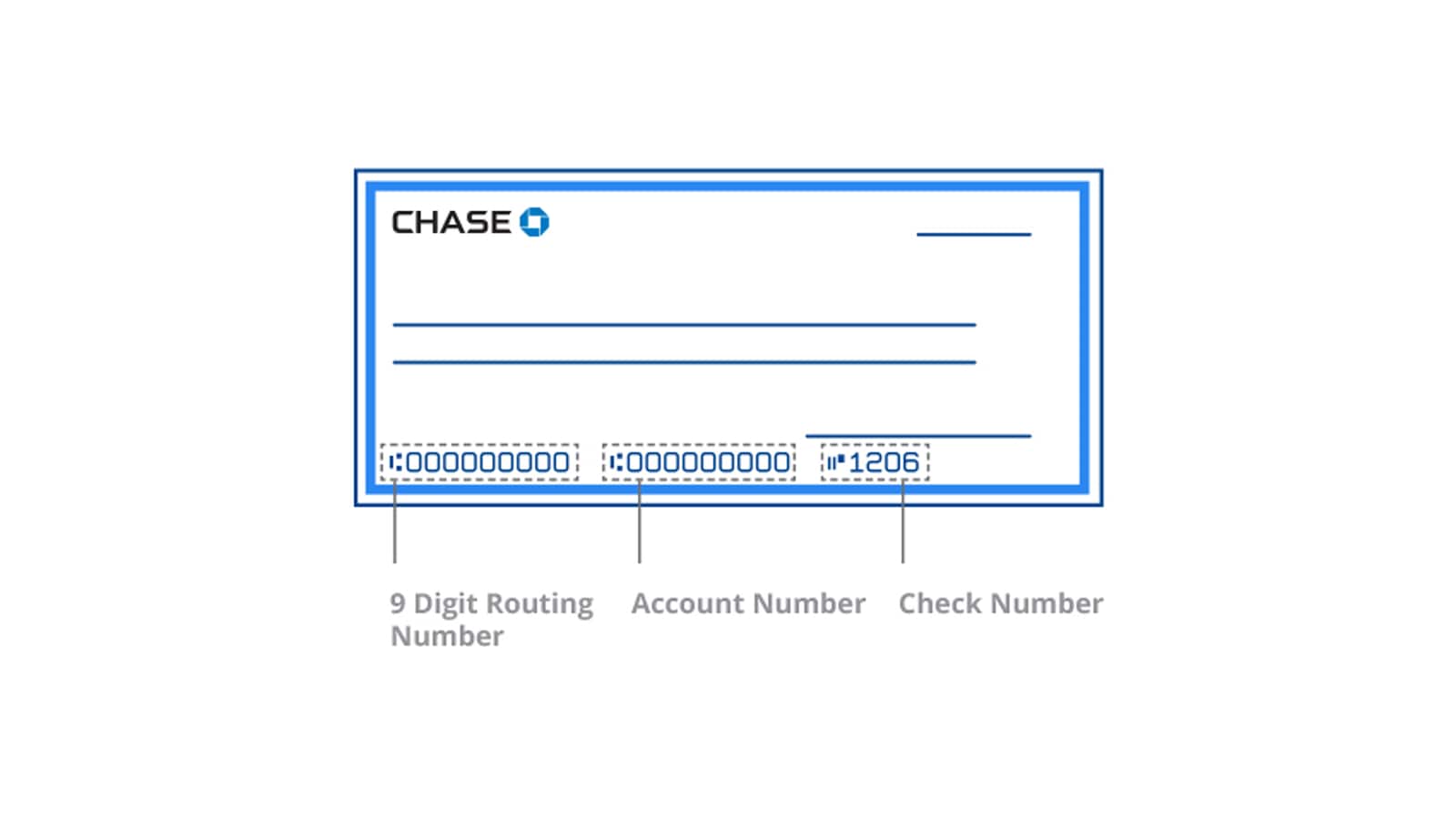
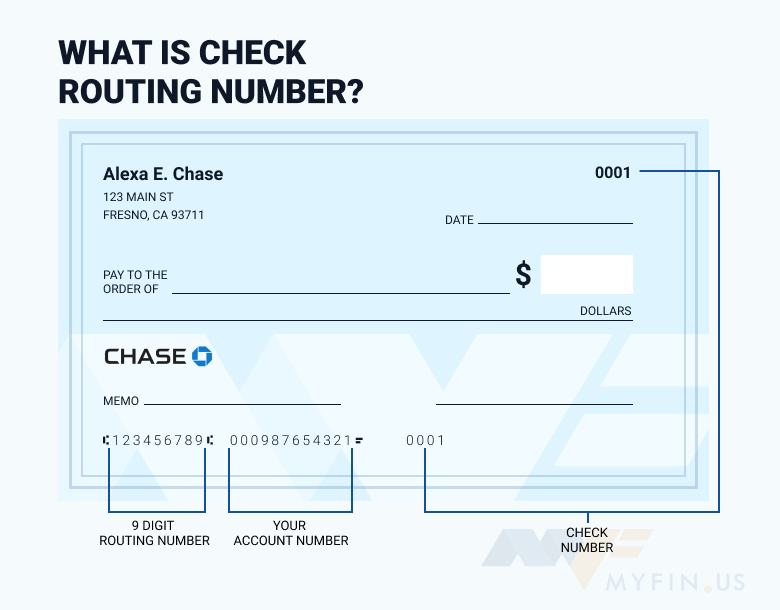
- Identify the Numbers: At the bottom of the check, you’ll see three sets of numbers printed in magnetic ink.
- The first set (left-most, usually 9 digits) is the routing number.
- The second set (middle, typically 10-12 digits) is your bank account number.
- The third set (right-most) is the check number.
- Security Note: While convenient, remember that anyone with access to your check can see your account and routing numbers. Always keep your checkbook in a secure location.
Bank Statements: Digital and Paper Records

Bank statements, whether electronic or physical, serve as official records of your account activity and contain your essential account information.
- Electronic Statements (eStatements):
- Access via Online Banking or the Mobile App: Navigate to the “Statements & Documents” section within your Chase online banking or mobile app.
- Download a Recent Statement: Select and download a recent checking or savings account statement (usually in PDF format).
- Find the Number: Your account number is typically displayed prominently at the top of the statement, often near your name and address.
- Paper Statements: If you receive paper statements by mail, simply locate a recent one. Your account number will be printed in a visible location, usually at the top of the statement.
Alternative and Support Channels for Retrieval
While the primary methods cover most situations, there might be instances where you need to explore alternative routes or seek direct assistance from Chase Bank.
Contacting Chase Customer Service: When All Else Fails
If you are unable to access online banking, don’t have a checkbook, or can’t locate a statement, reaching out to Chase customer service is your next best option.
- Phone Support: Call Chase’s customer service number (available on their website or the back of your debit card). Be prepared to go through a verification process, which will involve answering security questions, providing personal details, and possibly verifying recent transactions.
- Secure Message (Online Banking): If you can log into online banking but can’t find the number via the usual navigation, you can send a secure message to customer service requesting your account number. This is often more secure than email.
- What to Expect: Customer service representatives are trained to help you retrieve this information securely, but they will prioritize verifying your identity to prevent fraud.
Visiting a Chase Branch: In-Person Assistance
For a personalized and direct approach, visiting a local Chase branch can be highly effective.
- Locate a Branch: Use the Chase website or app to find the nearest branch.
- Bring ID: Always bring a valid form of photo identification (e.g., driver’s license, passport) to verify your identity.
- Speak with a Representative: A teller or personal banker will be able to look up your account details and provide you with the account and routing numbers after successful identity verification. This is also a good opportunity to ask any other account-related questions you might have.
Utilizing Other Financial Documents
In certain circumstances, other financial documents that link to your Chase account might indirectly contain your account number, though this is less common for direct retrieval. Examples could include:
- Direct Deposit Enrollment Forms: If you previously submitted a direct deposit form to an employer, a copy of that form would have your account number.
- Loan Documents: If you have a Chase loan and made payments directly from your Chase checking account, some loan documents or payment confirmations might show your linked account number.
Protecting Your Financial Information: Best Practices
Finding your Chase bank account number is only one part of the equation; equally important is understanding how to protect this sensitive information to safeguard your financial well-being.
The Risks of Unauthorized Access
Your bank account number, especially when combined with your routing number, is a key to your financial resources. If it falls into the wrong hands, it can be used for fraudulent activities such as:
- Unauthorized Withdrawals: Someone could initiate ACH transfers or withdrawals from your account.
- Identity Theft: While an account number alone isn’t enough for full identity theft, it’s a critical piece of the puzzle that can be combined with other personal information.
- Phishing and Scams: Fraudsters often try to trick individuals into revealing their account numbers under false pretenses.
Secure Storage and Sharing
Exercising caution when handling and sharing your account number is paramount.
- Secure Physical Documents: Keep physical checks, bank statements, and any documents containing your account number in a secure place, preferably under lock and key. Shred documents before discarding them.
- Digital Security: Ensure your online banking credentials are strong and unique. Use two-factor authentication whenever possible. Do not store your full account number on easily accessible digital files on your computer or phone unless they are heavily encrypted.
- Share Judiciously: Only provide your account number to trusted entities (e.g., your employer for direct deposit, government agencies, legitimate billers). Be wary of unsolicited requests for your account number via email, text message, or phone calls, as these are often phishing attempts. Chase Bank will never ask for your full account number via unsecured email.
- Verify Recipients: Before sharing, always double-check the legitimacy of the recipient. For example, if setting up direct deposit, verify the HR department’s official process.
Regular Monitoring of Accounts
Even with the best precautions, vigilance is key. Regularly review your bank statements and transaction history through online banking or the mobile app. Look for any unfamiliar transactions or discrepancies. If you spot anything suspicious, contact Chase Bank immediately. Early detection is crucial in mitigating potential financial fraud.
In conclusion, knowing how to quickly and securely find your Chase bank account number is a fundamental aspect of modern personal finance. By utilizing Chase’s robust online platforms, mobile app, traditional documents, or direct customer support, you can access this vital information whenever needed. More importantly, by adopting best practices for security and vigilance, you ensure that your financial life remains protected and under your control, empowering you to manage your money with confidence and peace of mind.
aViewFromTheCave is a participant in the Amazon Services LLC Associates Program, an affiliate advertising program designed to provide a means for sites to earn advertising fees by advertising and linking to Amazon.com. Amazon, the Amazon logo, AmazonSupply, and the AmazonSupply logo are trademarks of Amazon.com, Inc. or its affiliates. As an Amazon Associate we earn affiliate commissions from qualifying purchases.