
Filing taxes can often feel like navigating a complex maze, particularly with ever-evolving regulations and a myriad of forms. For the 2023 tax year, understanding your obligations and the most efficient ways to meet them is paramount. This guide aims to demystify the process, providing a professional, insightful, and engaging roadmap for individuals seeking clarity on how to successfully file their 2023 federal income taxes. Whether you’re a first-time filer, a seasoned taxpayer, or dealing with specific financial situations, proactive preparation and informed decision-making are your best allies in ensuring accuracy, maximizing potential refunds, and avoiding unnecessary penalties.
Understanding Your Tax Filing Obligations for 2023
Before diving into the specifics of filing, it’s crucial to grasp the fundamental requirements that dictate who needs to file, when, and what essential information you’ll need at your fingertips. The 2023 tax year covers income earned from January 1, 2023, to December 31, 2023, with tax returns generally due in April 2024.
Who Needs to File? (And Who Might Not)
The obligation to file a federal income tax return primarily hinges on your gross income, filing status, and age. The IRS sets specific filing thresholds, which vary based on whether you’re single, married filing jointly, head of household, or a qualifying widow(er). For instance, for the 2023 tax year, a single individual under age 65 generally needs to file if their gross income was at least $13,850. These thresholds are higher for those over 65 or blind.
However, even if your income falls below the filing threshold, you might still want to file. This is often the case if you had federal income tax withheld from your paychecks or made estimated tax payments, as filing is the only way to claim a refund for overpaid taxes. Similarly, if you qualify for certain refundable tax credits, such as the Earned Income Tax Credit (EITC) or the Child Tax Credit, you must file a return to receive them. Special rules also apply to self-employed individuals, who generally must file if their net earnings from self-employment were $400 or more.
Key Dates and Deadlines for the 2023 Tax Year
Adhering to tax deadlines is critical to avoid penalties. The primary deadline for filing 2023 federal income tax returns for most individual taxpayers is April 15, 2024. If April 15th falls on a weekend or holiday, the deadline is typically pushed to the next business day. For example, if you reside in Maine or Massachusetts, the deadline is April 17, 2024, due to Patriots’ Day and Emancipation Day, respectively.
If you cannot meet the April 15th deadline, you can file for an extension using Form 4868, which will generally grant you an additional six months to file, pushing your deadline to October 15, 2024. It’s crucial to remember that an extension to file is not an extension to pay. If you expect to owe taxes, you must still estimate and pay them by the original April deadline to avoid interest and penalties on underpayments. Estimated tax payments, often required for self-employed individuals or those with significant income not subject to withholding, also have quarterly deadlines throughout the year.
Essential Documents to Gather
Preparation is key to a smooth filing process. Begin gathering your documents well in advance. Common essential documents include:
- W-2 Forms: From each employer, showing wages and taxes withheld.
- 1099 Forms: Various types for different income sources (e.g., 1099-NEC for non-employee compensation, 1099-INT for interest income, 1099-DIV for dividends, 1099-B for stock sales, 1099-R for retirement distributions, 1099-G for government payments like unemployment).
- K-1 Forms: For income from partnerships, S corporations, and certain trusts.
- Proof of Deductions and Credits: This includes receipts for charitable contributions, medical expenses, mortgage interest statements (Form 1098), student loan interest statements (Form 1098-E), educational expenses (Form 1098-T), property tax records, and records of business expenses for self-employed individuals.
- Health Insurance Information: Form 1095-A, B, or C, if applicable, to verify health coverage.
- Previous Year’s Tax Return: A valuable reference for personal information, adjusted gross income (AGI), and carryovers.
- Personal Information: Your Social Security number (SSN) or Individual Taxpayer Identification Number (ITIN) for yourself, your spouse, and any dependents.
Organizing these documents beforehand will significantly streamline the tax preparation process, regardless of your chosen filing method.
Choosing Your Filing Method
Taxpayers have several options for filing their returns, ranging from do-it-yourself software to professional assistance. The best choice depends on the complexity of your tax situation, your comfort level with financial software, and your budget.
DIY Tax Software: Convenience and Control
For many, tax preparation software offers a convenient and cost-effective way to file. Programs like TurboTax, H&R Block Tax Software, and FreeTaxUSA guide users through the process with step-by-step interviews, automatically performing calculations and checking for common errors. They also ensure you receive any eligible deductions and credits.
- Pros: Generally less expensive than professional preparers, accessible 24/7, offers a sense of control over your data, and often includes features for e-filing directly to the IRS and state tax agencies. Many services offer free versions for simple tax returns.
- Cons: Requires a basic understanding of your financial situation, and complex scenarios might necessitate more research or a higher-priced version of the software. Users are ultimately responsible for the accuracy of the information entered.
- Considerations: Look for software that matches your tax complexity (e.g., investing income, self-employment), strong customer support, and robust audit defense options if that’s a concern.
Professional Tax Preparers: Expertise When You Need It
When your tax situation is complex—involving business income, rental properties, significant investments, foreign income, or recent life changes like marriage or a new home—a professional tax preparer can be invaluable. Certified Public Accountants (CPAs), Enrolled Agents (EAs), and other professional tax preparers offer expertise in navigating intricate tax codes, identifying overlooked deductions, and providing year-round tax planning advice.
- Pros: Reduces stress and time commitment, provides assurance of accuracy, offers personalized advice, and can represent you in an IRS audit. They are especially useful for complex returns or if you’re time-constrained.
- Cons: More expensive than DIY software, requires sharing sensitive financial information, and you must carefully vet the preparer’s qualifications and reputation.
- Considerations: Look for professionals with proper credentials (CPA, EA), good reviews, clear fee structures, and who are available to answer questions throughout the year. Avoid “ghost preparers” who don’t sign your return.
Free Filing Options: Maximizing Savings
Don’t overlook the free options available, especially if your income is moderate or your tax situation is straightforward.
- IRS Free File Program: Available for taxpayers with an Adjusted Gross Income (AGI) below a certain threshold (typically around $79,000 for 2023), this program partners with tax software companies to offer free online tax preparation and e-filing. If your income is above the threshold, you can still use Free File Fillable Forms, which are electronic versions of IRS paper forms.
- Volunteer Income Tax Assistance (VITA) and Tax Counseling for the Elderly (TCE): These IRS-sponsored programs offer free tax help to qualifying individuals, including those who make $64,000 or less, persons with disabilities, and limited English-speaking taxpayers. TCE specifically focuses on taxpayers age 60 and older. Certified volunteers provide free basic income tax return preparation with electronic filing. These services are invaluable for personal, in-person assistance.
Navigating the Filing Process: Step-by-Step
Once you’ve chosen your method and gathered your documents, the actual process of preparing and submitting your return begins. This phase demands attention to detail to ensure accuracy and compliance.
Collecting and Organizing Your Financial Data

This step cannot be overemphasized. A well-organized pile of documents (physical or digital) ensures you don’t miss any income, deduction, or credit. Create a checklist based on your income sources and potential deductions for the year. Group similar documents together and keep a record of any payments made or received that aren’t on official forms (e.g., cash charitable donations). Having a summary sheet of your major financial activities can also be incredibly helpful.
Understanding Your Income and Deductions
Accurately reporting all income is fundamental. This includes wages, salaries, tips, self-employment income, rental income, interest, dividends, capital gains, unemployment benefits, and any other taxable earnings. Once income is accounted for, you’ll turn your attention to deductions.
You generally have two choices: take the standard deduction or itemize your deductions.
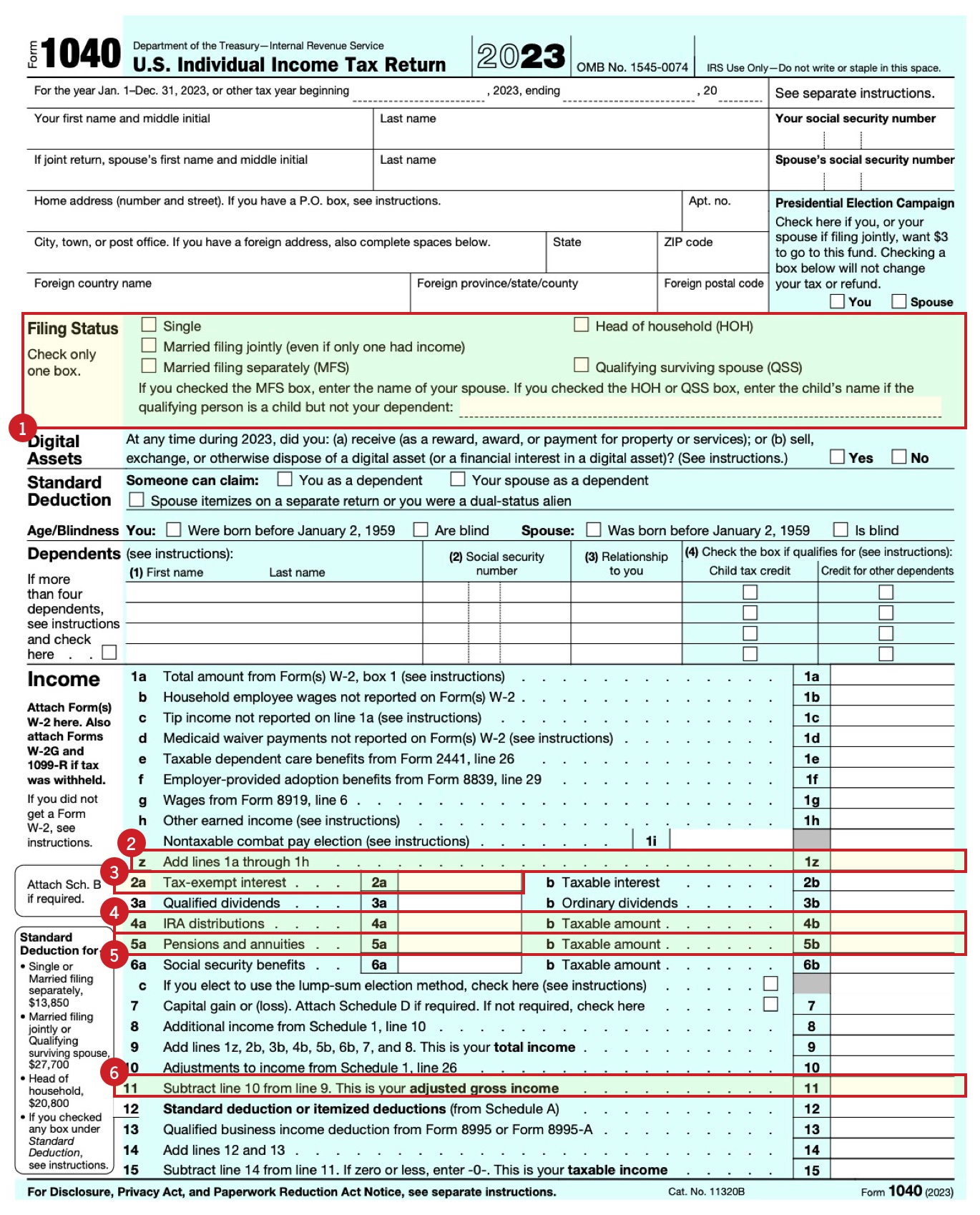
- Standard Deduction: A fixed dollar amount that reduces your taxable income, varying based on your filing status. For 2023, the standard deduction is $13,850 for single filers, $27,700 for married filing jointly, and $20,800 for head of household. Most taxpayers opt for the standard deduction as it’s simpler and often results in a larger deduction than itemizing.
- Itemized Deductions: If your eligible expenses exceed your standard deduction amount, you might itemize. These can include state and local taxes (capped at $10,000 per household), mortgage interest, medical expenses (exceeding 7.5% of AGI), charitable contributions, and certain casualty and theft losses. Careful record-keeping is crucial for itemizing.
Exploring Available Tax Credits
Tax credits are particularly valuable because they directly reduce your tax liability dollar-for-dollar, unlike deductions which only reduce your taxable income. Be sure to explore all credits you might qualify for:
- Child Tax Credit (CTC) and Credit for Other Dependents (ODC): Significant credits for families with qualifying children or other dependents.
- Earned Income Tax Credit (EITC): A refundable credit for low to moderate-income working individuals and families.
- Education Credits: Such as the American Opportunity Tax Credit and Lifetime Learning Credit, for qualified higher education expenses.
- Retirement Savings Contributions Credit (Saver’s Credit): For low and moderate-income taxpayers who contribute to retirement accounts.
- Residential Energy Credits: For certain energy-efficient home improvements.
- Child and Dependent Care Credit: For expenses paid for the care of a qualifying individual to allow you to work or look for work.
Tax software or a professional preparer can help identify which credits apply to your situation.
Reviewing for Accuracy and Avoiding Common Mistakes
Before submitting, a thorough review is non-negotiable. Many errors stem from simple mistakes:
- Incorrect SSN/ITINs: Double-check these for yourself, your spouse, and all dependents.
- Math Errors: Tax software usually prevents this, but manual calculations are prone to error.
- Wrong Filing Status: Ensure you’ve selected the most advantageous and correct filing status.
- Overlooking Income: Report all income sources, even small ones.
- Missing Deductions or Credits: Review your financial year to ensure you haven’t forgotten any eligible tax breaks.
- Incorrect Bank Information: If expecting a refund via direct deposit, verify your bank account and routing numbers.
Submitting Your Return: E-filing vs. Mail
The vast majority of taxpayers now e-file their returns, which is highly recommended.
- E-filing (Electronic Filing): This is the fastest, safest, and most accurate way to file. It processes refunds quicker, allows for easy confirmation of receipt, and significantly reduces the chance of errors. Most tax software and professional preparers offer e-filing services. You’ll typically need your Adjusted Gross Income (AGI) from your prior year’s return to verify your identity when e-filing.
- Mail: If you prefer to file a paper return, ensure it’s signed and dated, include all required schedules and forms, and attach copies of your W-2s and 1099-Rs. Mail it to the correct IRS address for your state, which can be found in the instruction booklet for Form 1040. Always send it with proof of mailing, such as certified mail.
Post-Filing Considerations
Your tax responsibilities don’t necessarily end the moment you hit “submit.” There are important steps to take after filing, especially concerning payments, refunds, and record-keeping.
What to Do If You Owe Taxes
If your return indicates you owe the government more taxes, several payment options are available:
- Direct Pay: Through your bank account directly from the IRS website.
- Debit/Credit Card: Via approved payment processors (though often with a processing fee).
- Electronic Federal Tax Payment System (EFTPS): A free service from the Treasury Department for individuals and businesses.
- Check or Money Order: Mailed with a Form 1040-V payment voucher.
If you cannot pay the full amount by the deadline, it’s crucial to still file on time and contact the IRS to explore payment options, such as an installment agreement or an Offer in Compromise. This helps avoid “failure to file” penalties, which are typically much higher than “failure to pay” penalties.
What to Expect with Your Refund
If you’re due a refund, e-filing with direct deposit is the fastest way to receive it. The IRS typically issues most refunds within 21 calendar days, though some may take longer due to errors, incomplete information, or if they need to verify certain credits like the EITC or Additional Child Tax Credit. You can track your refund’s status using the IRS’s “Where’s My Refund?” tool, usually available 24 hours after e-filing or four weeks after mailing a paper return.
Record Keeping and Future Planning
Maintain copies of your filed tax return and all supporting documents (W-2s, 1099s, receipts, etc.) for at least three years from the date you filed your return or two years from the date you paid the tax, whichever is later. For certain items, such as business property or investments, you may need to keep records longer. Digital storage is often preferred for convenience and security.
Use the insights gained from your 2023 tax filing to plan for future tax years. Did you pay too much in estimated taxes? Adjust your withholdings (W-4). Did you miss out on a deduction? Plan to track those expenses next year. Proactive tax planning can significantly impact your financial well-being.
Conclusion
Filing your 2023 taxes doesn’t have to be an overwhelming ordeal. By understanding your obligations, meticulously gathering your documents, choosing the most suitable filing method, and carefully reviewing your return, you can navigate the process with confidence. Embrace the available resources, whether it’s user-friendly software or the expertise of a professional, to ensure accuracy and optimize your financial outcome. Remember, proactive engagement with your tax responsibilities is a cornerstone of sound personal finance, laying the groundwork for greater financial clarity and security in the years to come.
aViewFromTheCave is a participant in the Amazon Services LLC Associates Program, an affiliate advertising program designed to provide a means for sites to earn advertising fees by advertising and linking to Amazon.com. Amazon, the Amazon logo, AmazonSupply, and the AmazonSupply logo are trademarks of Amazon.com, Inc. or its affiliates. As an Amazon Associate we earn affiliate commissions from qualifying purchases.