
Navigating the complexities of the tax season requires a blend of organizational discipline, financial literacy, and an understanding of the current regulatory environment. For the 2023 tax year, taxpayers faced a landscape influenced by inflationary adjustments, updated deduction limits, and evolving digital filing options. Whether you are filing for the first time or looking to optimize your return as an experienced investor, understanding the mechanics of the process is essential for maintaining your financial health and ensuring compliance with the Internal Revenue Service (IRS).
Filing taxes is not merely a legal obligation; it is a critical component of personal finance management. It provides a comprehensive snapshot of your annual income, expenses, and investment performance. By approaching the 2023 tax year with a strategic mindset, you can maximize your potential refund, minimize your liabilities, and gain valuable insights into your overall wealth-building strategy.
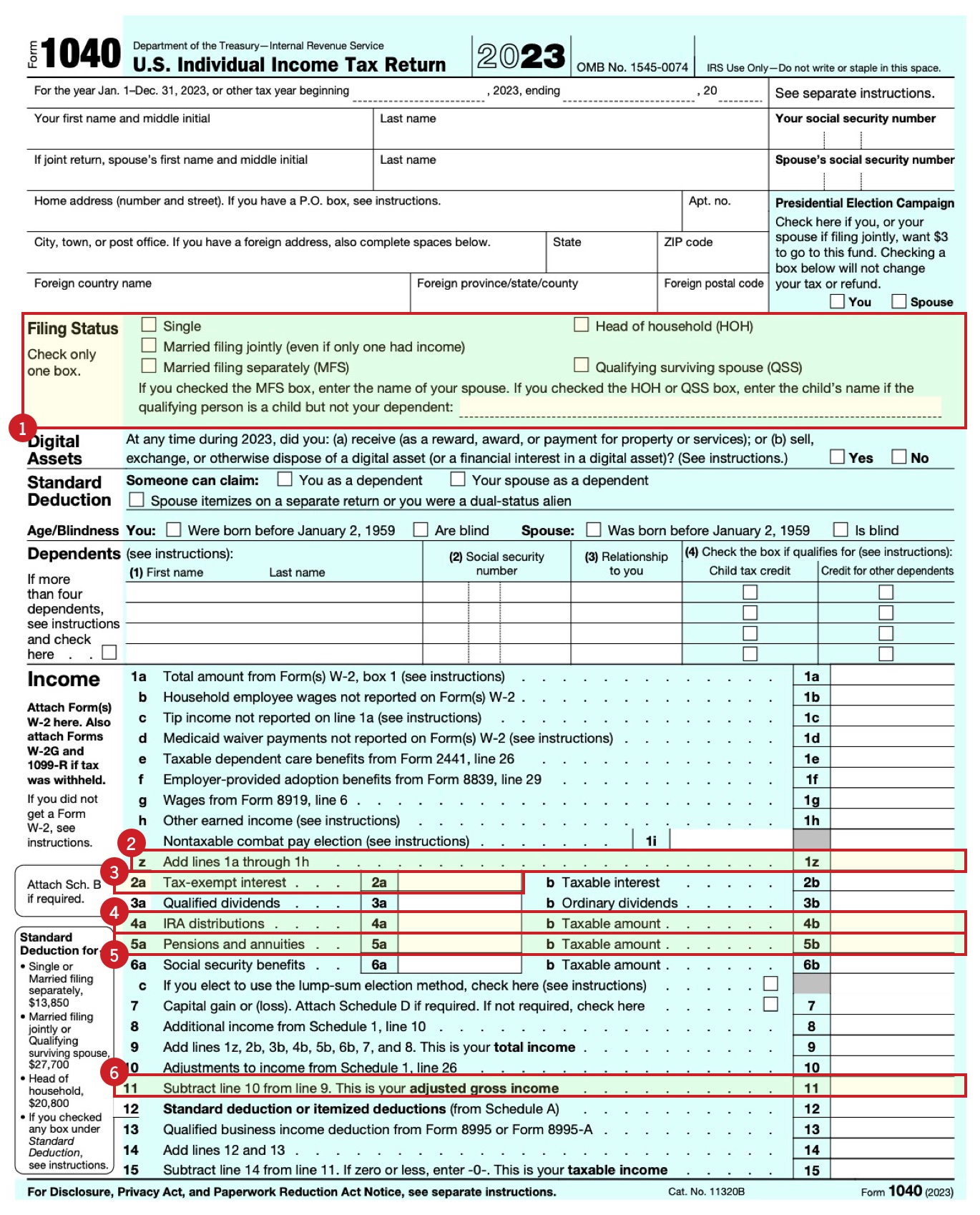
Understanding the 2023 Tax Landscape and Deadlines
The 2023 tax year was characterized by significant adjustments to tax brackets and standard deduction amounts, largely driven by the high inflation rates seen in previous years. These “inflation adjustments” were designed to prevent “bracket creep,” where taxpayers are pushed into higher tax brackets despite their purchasing power remaining stagnant.
Identifying Key Deadlines and Extensions
For most individual taxpayers, the deadline to file 2023 tax returns was April 15, 2024. However, the process of filing remains a priority for those who requested an automatic six-month extension, moving their deadline to October 15, 2024. It is important to distinguish between an extension to file and an extension to pay. Even with an extension, any taxes owed for the 2023 year were generally due by the April deadline to avoid interest and late-payment penalties.
If you are filing late without an extension, the priority shifts toward damage control. The IRS imposes penalties for both failure to file and failure to pay. Typically, the failure-to-file penalty is significantly higher than the failure-to-pay penalty, making it financially advantageous to submit your return as soon as possible, even if you cannot pay the full balance immediately.
New Tax Brackets and Standard Deduction Increases
For 2023, the tax brackets remained at 10%, 12%, 22%, 24%, 32%, 35%, and 37%. However, the income thresholds for these brackets were shifted upward by approximately 7%. For a single filer, the 10% bracket applied to the first $11,000 of income, while for married couples filing jointly, it applied to the first $22,000.
The standard deduction also saw a substantial increase. For the 2023 tax year, the standard deduction rose to $13,850 for single filers and $27,700 for married couples filing jointly. This increase meant that more taxpayers found it financially beneficial to take the standard deduction rather than itemizing their deductions, simplifying the filing process for millions of households.
Essential Documentation for a Seamless Filing Experience
The foundation of an accurate tax return is comprehensive documentation. In the world of personal finance, data integrity is paramount. Before opening any tax software or meeting with a professional, you must aggregate all records of income, adjustments, and potential credits.
Income Records: W-2s, 1099s, and Beyond
Your primary task is to account for all sources of “taxable income.” For employees, this is straightforward: the Form W-2 provides a summary of earnings and taxes withheld. However, for those participating in the “gig economy” or running side hustles, the 1099 series of forms is vital.
-
1099-NEC: Used for non-employee compensation, typically for freelancers or independent contractors.
-
1099-INT and 1099-DIV: These forms report interest and dividend income from savings accounts and investment portfolios.
-
1099-B: This is critical for investors, as it details the proceeds from the sale of stocks, bonds, or cryptocurrencies. In 2023, the IRS continued its focus on digital assets, requiring taxpayers to answer specifically whether they received, sold, or exchanged any financial interest in digital assets.
-
1099-K: While there was much discussion regarding the $600 threshold for third-party payment processors (like Venmo or PayPal), the IRS delayed the implementation of this lower threshold for 2023, maintaining the previous $20,000 and 200-transaction limit, though many taxpayers may have received these forms anyway.
Adjustments to Income (Above-the-Line Deductions)
One of the most effective ways to lower your tax liability is through adjustments to income, often referred to as “above-the-line” deductions. These are beneficial because they lower your Adjusted Gross Income (AGI), which is the number used to determine your eligibility for various other tax credits and deductions. Key adjustments for 2023 include:
-
Health Savings Account (HSA) Contributions: If you have a high-deductible health plan, contributions made with after-tax dollars are deductible.
-
Student Loan Interest: You may be able to deduct up to $2,500 of interest paid on qualified student loans.
-
IRA Contributions: Contributions to a traditional IRA may be deductible depending on your income level and whether you are covered by a retirement plan at work.
-
Self-Employment Expenses: Half of the self-employment tax, as well as health insurance premiums for the self-employed, can often be deducted here.
Choosing Your Filing Strategy: DIY vs. Professional Help
The method you choose to file your 2023 taxes should align with the complexity of your financial situation. As financial tools become more sophisticated, taxpayers have more options than ever, ranging from government-sponsored programs to high-end professional consultancy.

Leveraging IRS Free File and the New Direct File Pilot
For those with an AGI of $79,000 or less, the IRS Free File program offers access to brand-name tax software at no cost. This is a highly underutilized resource in personal finance that can save taxpayers hundreds of dollars in filing fees.
Additionally, 2023 marked the introduction of the IRS “Direct File” pilot program in certain states. This initiative allowed eligible taxpayers to file their returns directly with the IRS for free, bypass third-party software entirely. While limited in scope for its inaugural year, it represents a significant shift toward a more integrated, digital-first relationship between the government and the taxpayer.
When to Hire a Certified Public Accountant (CPA)
While software is excellent for standard W-2 income and basic deductions, certain financial milestones necessitate professional oversight. You should consider hiring a CPA or an Enrolled Agent if:
-
You Own a Business: Navigating depreciation, home office deductions, and payroll taxes requires professional expertise to maximize savings and ensure compliance.
-
You Have Complex Investments: High-volume stock trading, rental properties, or K-1 forms from partnerships can complicate a return significantly.
-
You Experienced Major Life Events: Marriage, divorce, the death of a spouse, or moving across state lines can create “nexus” issues or change your filing status in ways that software might not fully optimize.
-
You Want Audit Protection: A professional can represent you before the IRS, providing a layer of security that software cannot offer.
Maximizing Credits and Deductions for the 2023 Tax Year
Tax credits are more valuable than deductions because they provide a dollar-for-dollar reduction of your tax bill, whereas deductions only lower the amount of income that is taxed. For 2023, several credits remained central to middle-class and high-earner financial strategies alike.
High-Value Family and Earned Income Credits
The Child Tax Credit (CTC) remained a vital tool for families in 2023, offering up to $2,000 per qualifying child under age 17. While the pandemic-era expansions had expired, the credit remained partially refundable, providing much-needed liquidity to working families.
The Earned Income Tax Credit (EITC) continues to be one of the most effective poverty-reduction tools in the federal tax code. For the 2023 tax year, the maximum credit for a filer with three or more qualifying children was $7,430. Eligibility is strictly based on income levels and filing status, making it a critical area of focus for low-to-moderate-income earners.
Clean Energy and Education Credits
The Inflation Reduction Act introduced and expanded several “green” tax credits that were active for the 2023 tax year. The Energy Efficient Home Improvement Credit allowed homeowners to claim up to $3,200 for certain energy-saving retrofits, such as heat pumps, biomass stoves, and improved insulation. Furthermore, the Clean Vehicle Credit provided up to $7,500 for the purchase of a new plug-in electric vehicle (EV), subject to income caps and vehicle price limits.
On the education front, the American Opportunity Tax Credit (AOTC) and the Lifetime Learning Credit (LLC) remained available to help offset the costs of higher education. The AOTC is particularly valuable, offering a maximum annual credit of $2,500 per eligible student for the first four years of post-secondary education.
Finalizing Your Return and Planning for Future Financial Health
Once the data is entered and the credits are calculated, the final stage of filing is review and transmission. This is also the ideal time to transition from “tax filing” to “tax planning.”
Reviewing for Accuracy and Security
The majority of IRS processing delays are caused by simple errors. Before hitting “submit,” verify that Social Security numbers for all dependents are correct and that your bank’s routing and account numbers for direct deposit are accurate. Direct deposit is the fastest way to receive a refund, often taking less than 21 days when combined with electronic filing.
Security is another major concern. Tax-related identity theft involves someone using your stolen Social Security number to file a forged tax return and claim a fraudulent refund. Using an IRS Identity Protection PIN (IP PIN) is a proactive financial security measure that prevents anyone from filing a return using your SSN without the unique six-digit code.

Tax Planning for the Following Year
The process of filing your 2023 taxes should inform your financial decisions for 2024 and beyond. If you received a massive refund, it indicates that you essentially gave the government an interest-free loan. In this case, you may want to adjust your Form W-4 with your employer to increase your take-home pay throughout the year, allowing you to invest that money or pay down high-interest debt.
Conversely, if you owed a significant amount, you might need to increase your withholdings or start making quarterly estimated tax payments to avoid “underpayment penalties” in the future. Filing 2023 taxes is not just an annual chore; it is a diagnostic tool for your personal wealth. By analyzing where your money went—and how much of it the government kept—you can refine your budget, optimize your investment allocations, and move closer to your long-term financial goals.
aViewFromTheCave is a participant in the Amazon Services LLC Associates Program, an affiliate advertising program designed to provide a means for sites to earn advertising fees by advertising and linking to Amazon.com. Amazon, the Amazon logo, AmazonSupply, and the AmazonSupply logo are trademarks of Amazon.com, Inc. or its affiliates. As an Amazon Associate we earn affiliate commissions from qualifying purchases.