
In the vast and often intricate world of personal finance, business operations, and investment strategies, one fundamental mathematical concept acts as an indispensable cornerstone: the percentage. From understanding a discount on a new purchase to deciphering the growth of your investment portfolio, calculating the interest on a loan, or even budgeting your monthly expenses, percentages permeate nearly every financial decision we make. Far from being a mere academic exercise, mastering percentage calculations is a vital skill for anyone seeking to achieve financial literacy, make informed choices, and ultimately, build wealth. This guide will demystify percentages, providing you with a clear, practical roadmap to understand, calculate, and leverage them for your financial benefit.
The Foundational Role of Percentages in Finance
At its core, a percentage is a way of expressing a number as a fraction of 100. The word “percentage” derives from “per cent,” meaning “per hundred.” It provides a standardized, easily comparable way to represent proportions, ratios, and changes, making complex financial data digestible and actionable.
Understanding the Basics: What a Percentage Really Means
To grasp percentages, it’s crucial to understand their basic definition and how they relate to fractions and decimals. If you see “25%,” it simply means 25 out of 100. This can be written as the fraction 25/100 or the decimal 0.25. The conversion between these forms is fundamental:
-
To convert a percentage to a decimal: Divide the percentage by 100 (e.g., 25% = 25/100 = 0.25).
-
To convert a decimal to a percentage: Multiply the decimal by 100 and add the percent symbol (e.g., 0.75 = 0.75 * 100 = 75%).
-
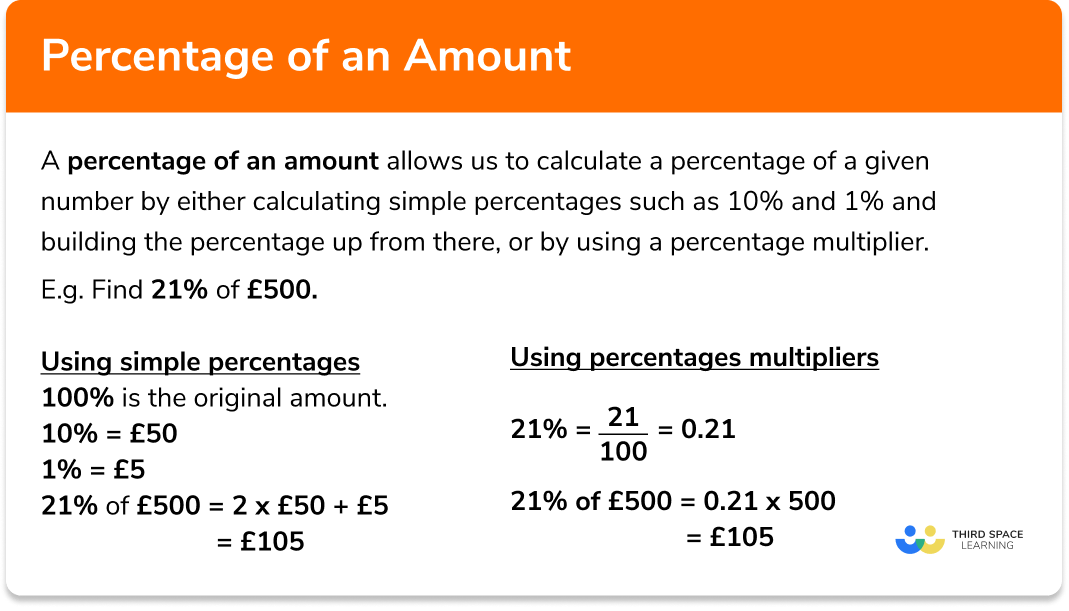
To calculate a percentage of a number: Convert the percentage to a decimal and multiply it by the number (e.g., 20% of $500 = 0.20 * $500 = $100).
These simple conversions are the bedrock upon which all more complex financial percentage calculations are built. Without a solid understanding of this basic relationship, navigating the financial landscape becomes infinitely more challenging.
Why Percentages Are Indispensable for Financial Literacy
Percentages offer a universal language for comparison, making them invaluable in finance. Imagine trying to compare an interest rate of “5 dollars per hundred” with “half a dollar per ten.” Percentages standardize this, allowing direct comparison (5% vs. 5%). This standardization is crucial for:
-
Evaluating relative values: Is a $10 discount on a $50 item better than a $20 discount on a $200 item? (20% vs. 10%).
-
Tracking performance over time: How much did your investment grow this year compared to last year?
-
Budgeting and allocation: What percentage of your income goes towards housing, savings, or entertainment?
-
Understanding financial products: Interest rates on loans, credit card APRs, investment returns, inflation rates – all are expressed as percentages.
A strong grasp of percentages empowers individuals to not only understand financial information but also to critically evaluate it, leading to smarter financial decisions.
Practical Applications: Calculating Key Financial Percentages
Beyond the basics, percentages come alive in their practical application across various financial scenarios. Mastering these common calculations will equip you with the tools to manage your money more effectively.
Discounts and Markups: Saving and Spending Smarter
Whether you’re a consumer looking for a bargain or a business owner setting prices, discounts and markups are daily occurrences.
-
Calculating a Discount: To find the amount saved, convert the discount percentage to a decimal and multiply by the original price. To find the final price, subtract the discount amount from the original price, or simply multiply the original price by (1 – discount percentage as a decimal).
- Example: A $75 shirt is 20% off. Discount amount = 0.20 * $75 = $15. Final price = $75 – $15 = $60. Alternatively, Final price = $75 * (1 – 0.20) = $75 * 0.80 = $60.
-
Calculating a Markup: Businesses apply markups to cover costs and generate profit. If an item costs a business $50 to acquire and they want a 30% markup, the markup amount is 0.30 * $50 = $15. The selling price would be $50 + $15 = $65.
Interest Rates: Understanding the Cost of Borrowing and Earning
Interest is the cost of borrowing money or the income earned from lending it. It’s almost always expressed as a percentage.
-
Simple Interest: Calculated only on the principal amount. Formula: Principal × Rate × Time (I = PRT).
- Example: A $1,000 loan with 5% simple interest for 2 years. Interest = $1,000 * 0.05 * 2 = $100.
-
Compound Interest: Interest calculated on the initial principal and also on the accumulated interest of previous periods. This is how most loans and investments work, leading to exponential growth or cost. While the formula for compound interest can be complex, understanding its percentage basis is key to appreciating its power (e.g., the “rule of 72” for estimating doubling time).
Investment Returns: Measuring Growth and Performance
Understanding how well your investments are performing is crucial. Returns are typically expressed as a percentage.
-
Percentage Return: (Current Value – Original Investment) / Original Investment * 100%.
- Example: You invest $1,000, and it grows to $1,200. Return = ($1,200 – $1,000) / $1,000 * 100% = ($200 / $1,000) * 100% = 20%.
Taxes and Commissions: Navigating Essential Deductions
From sales tax to income tax rates, and commissions paid to agents, percentages dictate significant financial outflows.
-
Sales Tax: If an item costs $100 and the sales tax is 8%, the tax amount is $100 * 0.08 = $8. Total cost = $108.
-
Income Tax Brackets: Your taxable income falls into different percentage brackets, determining the amount of tax you owe.
-
Commissions: A real estate agent might earn a 3% commission on a home sale. For a $300,000 home, the commission is $300,000 * 0.03 = $9,000.
Mastering Percentage Changes: Growth, Decline, and Projections

Beyond calculating a percentage of a single number, understanding percentage changes is vital for tracking financial performance over time, analyzing trends, and making future projections.
Calculating Percentage Increase: Tracking Growth and Appreciation
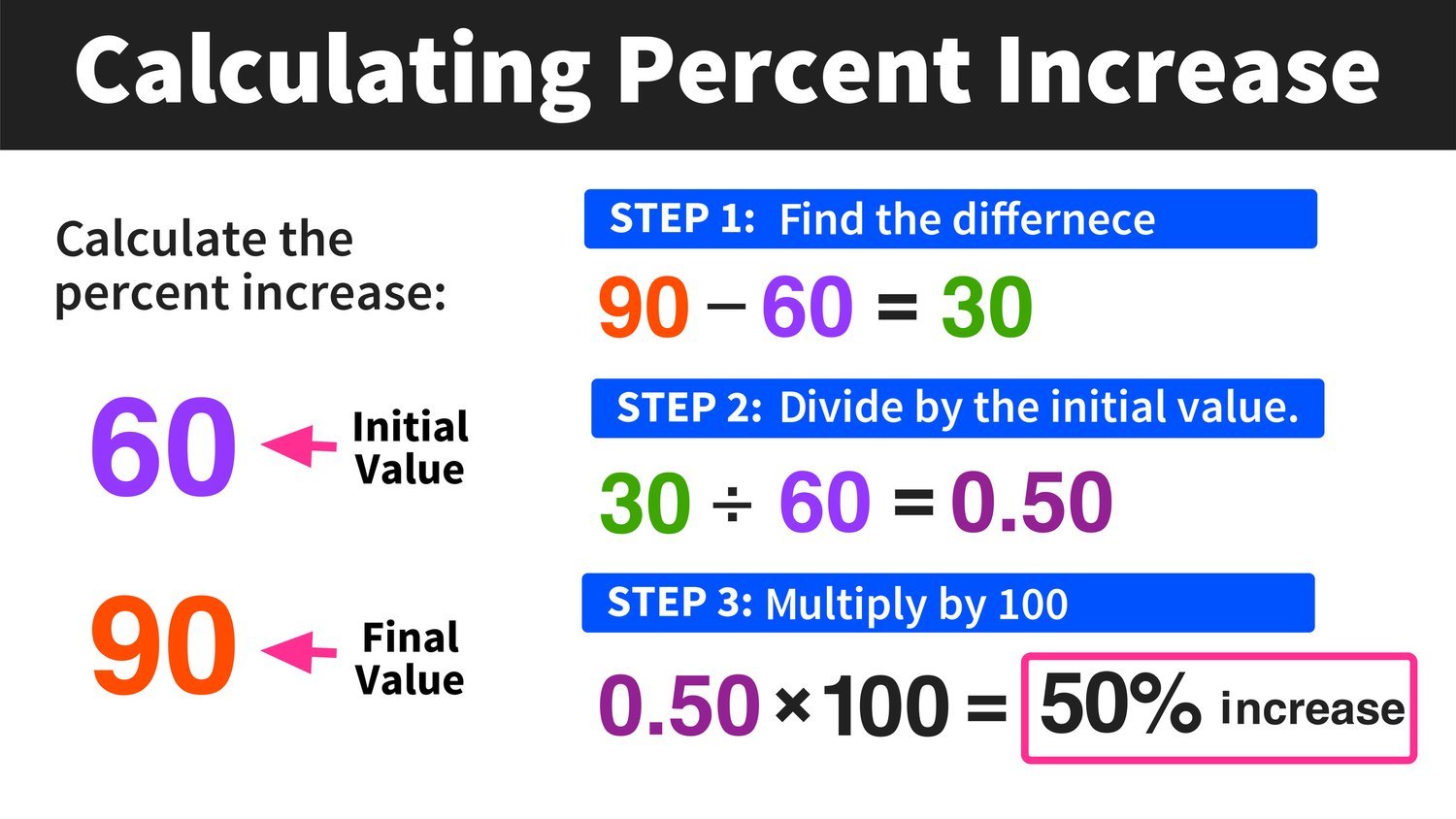
When a value grows, we calculate the percentage increase to quantify that growth relative to its starting point.
-
Formula: ((New Value – Original Value) / Original Value) * 100%.
- Example: Your stock portfolio grew from $10,000 to $12,000. Percentage Increase = (($12,000 – $10,000) / $10,000) * 100% = ($2,000 / $10,000) * 100% = 20%.
Calculating Percentage Decrease: Analyzing Losses and Depreciations
Conversely, if a value shrinks, we calculate the percentage decrease.
-
Formula: ((Original Value – New Value) / Original Value) * 100%.
- Example: The value of your car depreciated from $25,000 to $20,000. Percentage Decrease = (($25,000 – $20,000) / $25,000) * 100% = ($5,000 / $25,000) * 100% = 20%.
Notice that the base for calculating the change is always the original or starting value. This is a critical point to avoid miscalculations.
Beyond Simple Changes: Compound Growth and Annualized Returns
For investments, especially over multiple years, simple percentage changes don’t capture the full picture. Compound growth, where earnings also earn returns, leads to exponential increases. Annualized returns provide a way to compare the average yearly growth of investments held for different periods. While these calculations can involve more advanced formulas, understanding the underlying principle of compounding percentages is essential for long-term financial planning. The “Rule of 72,” for instance, uses a simple percentage calculation (72 / annual growth rate) to estimate how many years it will take for an investment to double.
Leveraging Tools and Strategies for Accuracy
While understanding the underlying math is crucial, modern tools can significantly aid in performing percentage calculations quickly and accurately.
Everyday Tools: Calculators, Spreadsheets, and Online Converters
-
Basic Calculators: Your smartphone’s calculator or a dedicated financial calculator can handle most percentage calculations. Many have a dedicated “%” button, but it’s often safer to perform the decimal conversion manually (e.g., 20% of 500 is 0.20 * 500).
-
Spreadsheets (Excel, Google Sheets): For more complex or repetitive calculations, spreadsheets are indispensable. They allow you to set up formulas once and apply them to vast datasets, ideal for budgeting, tracking investments, or analyzing business finances. Using cell references and built-in functions makes calculations efficient and reduces human error.
-
Online Converters and Financial Calculators: Numerous websites offer free tools for specific financial calculations, such as loan interest calculators, compound interest calculators, or percentage change tools. These can be great for quick checks or understanding specific scenarios.
Avoiding Common Pitfalls: Context, Base Values, and Misinterpretations
Even with tools, errors can occur if fundamental principles are misunderstood.
-
Incorrect Base Value: Always be certain which number represents the “whole” or the “original” value when calculating percentages. For example, a 10% increase followed by a 10% decrease does not bring you back to the original value if the base changes.
-
Percentage Points vs. Percent: A common error is confusing a change in “percentage points” with a “percentage change.” If an interest rate goes from 4% to 5%, that’s a 1 percentage point increase, but a (5-4)/4 = 25% percentage increase.
-
Ignoring Context: A percentage itself doesn’t always tell the whole story. A 20% return on a $100 investment is very different from a 20% return on a $1,000,000 investment, even though the percentage is the same. Always consider the absolute numbers alongside the percentages.
Building Financial Acumen: From Calculation to Insight
The goal isn’t just to calculate percentages, but to interpret them. Ask yourself:
-
What does this percentage tell me about my financial health?
-
How does this compare to benchmarks or historical data?
-
What are the implications for my financial goals?
Moving from mechanical calculation to insightful analysis is the mark of true financial acumen.
The Long-Term Impact: Percentages in Strategic Financial Planning
Understanding percentages is not just about day-to-day transactions; it’s a cornerstone of long-term strategic financial planning, enabling you to build a secure and prosperous future.
Budgeting and Expense Allocation: Crafting a Sustainable Financial Plan
Budgeting is essentially an exercise in percentage allocation. The popular “50/30/20 rule” (50% for needs, 30% for wants, 20% for savings/debt) is a prime example of using percentages to structure a budget. By calculating what percentage of your income goes to housing, food, transportation, and discretionary spending, you gain clarity on where your money is truly going. This insight allows you to identify areas for adjustment, optimize your spending, and ensure you’re allocating enough towards savings and investments. Without percentages, budgeting would be a chaotic tally of absolute numbers, making comparisons and adjustments far more difficult.
Retirement Planning and Savings Goals: Projecting Future Wealth
Retirement planning heavily relies on percentages to project future wealth. You might aim to save 15% of your income for retirement, or your financial advisor might project an average annual return of 7% on your investment portfolio. These percentages, especially when factoring in compound interest, are critical for estimating how much you need to save, how long it will take to reach your goals, and what your financial landscape might look like in retirement. Understanding the impact of even a small difference in savings rate or investment return percentage can significantly alter your financial trajectory over decades.
Evaluating Financial Products: Making Informed Decisions
Every financial product, from savings accounts and certificates of deposit (CDs) to mutual funds, stocks, and various types of loans, is presented with key information in percentages.
-
Annual Percentage Rate (APR) on loans/credit cards: This tells you the true annual cost of borrowing.
-
Annual Percentage Yield (APY) on savings accounts: This tells you the effective annual rate of return, including compounding.
-
Expense Ratios on mutual funds: A seemingly small percentage (e.g., 0.5%) can significantly eat into your long-term returns if not carefully considered.
-
Dividend Yields on stocks: The percentage return on investment generated by a stock through dividends.
By understanding how to calculate and interpret these percentages, you can critically compare different products, identify hidden costs, and make informed choices that align with your financial objectives rather than simply accepting what’s presented.
In conclusion, “how do I figure out the percentage?” is not merely a mathematical query but a gateway to financial empowerment. From the simplest discount to the most complex investment analysis, percentages are the ubiquitous language of money. By mastering their calculation and interpretation, you unlock the ability to make smarter decisions, plan more effectively, and navigate your financial journey with confidence and control. Embrace this fundamental skill, and you will transform your relationship with money, moving from passive observer to active architect of your financial future.
aViewFromTheCave is a participant in the Amazon Services LLC Associates Program, an affiliate advertising program designed to provide a means for sites to earn advertising fees by advertising and linking to Amazon.com. Amazon, the Amazon logo, AmazonSupply, and the AmazonSupply logo are trademarks of Amazon.com, Inc. or its affiliates. As an Amazon Associate we earn affiliate commissions from qualifying purchases.