
In the realm of personal finance and wealth management, the ability to calculate a percentage is more than a basic arithmetic skill; it is a fundamental tool for survival and growth. Whether you are evaluating the performance of a stock portfolio, determining the impact of an interest rate hike on a mortgage, or calculating a simple sales tax on a business purchase, percentages are the language of money. Understanding “how to figure out the percent of a number” allows an individual to move from a passive observer of their finances to an active, informed decision-maker.

The concept of a percentage—literally “per one hundred”—provides a standardized way to compare ratios and changes across different scales. In this guide, we will break down the mechanics of percentage calculations and apply them to the most critical sectors of your financial life.
The Fundamental Mechanics of Percentages in Finance
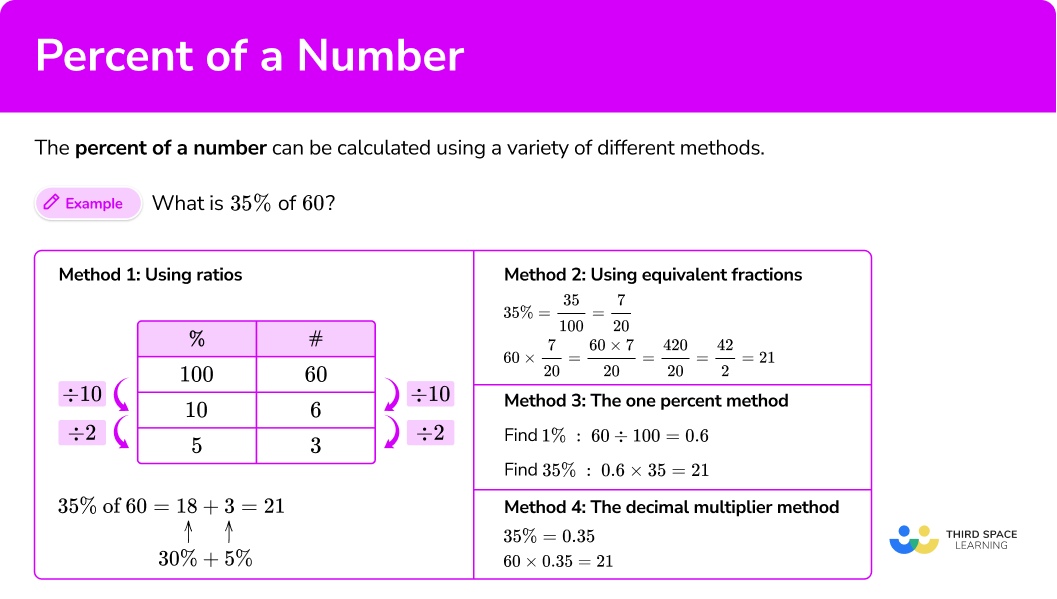
Before applying math to complex investment scenarios, one must master the core formulas. At its heart, a percentage represents a fraction of 100. When we ask, “What is 15% of $200?” we are essentially asking, “If $200 were divided into 100 equal parts, what would 15 of those parts be worth?”
The Basic Formula: Part over Whole
The most frequent calculation you will encounter is determining what percentage one number is of another. This is essential for budgeting—for example, figuring out what percentage of your monthly income is being spent on housing.
The formula is:
(Part / Whole) × 100 = Percentage
If your monthly take-home pay is $5,000 and your rent is $1,500, the calculation is (1,500 / 5,000) = 0.30. Multiply by 100 to get 30%. In financial planning, this percentage tells you instantly whether you are within the recommended guidelines for housing costs.
Calculating the Percent of a Specific Number
The inverse of the above is finding a specific dollar amount based on a known percentage. This is the “How do I figure out the percent of a number” question in its most literal form.
The formula is:
(Percentage / 100) × Total Amount = Result
For instance, if you want to set aside 15% of a $1,200 bonus for taxes, you would convert the percentage to a decimal (15 / 100 = 0.15) and multiply: 0.15 × 1,200 = $180. Mastering this allows for quick mental math when dealing with tips, discounts, or tax allocations.
Percentage Increase and Decrease
In the world of money, values are rarely static. Understanding the percentage change is vital for tracking inflation or salary raises.
The formula is:
[(New Value – Old Value) / Old Value] × 100
If a gallon of milk cost $3.50 last year and costs $4.00 today, the increase is ($0.50 / $3.50) × 100 = 14.2%. This calculation helps you understand the purchasing power of your dollar over time.
Evaluating Investment Returns and Growth
Once the basics are mastered, percentages become the primary metric for evaluating how hard your money is working for you. In investing, raw numbers can be deceiving. A $1,000 profit sounds excellent, but its value depends entirely on whether you had to invest $5,000 or $100,000 to get it.
Calculating ROI (Return on Investment)
Return on Investment (ROI) is the ultimate “percent of a number” application in finance. It allows investors to compare the efficiency of different investments, regardless of the asset class.
The formula for ROI is:
[(Current Value of Investment – Cost of Investment) / Cost of Investment] × 100

Consider two scenarios: You buy a stock for $1,000 and sell it for $1,200, or you buy a piece of equipment for your business for $10,000 and it generates $11,000 in extra profit. In the first case, your ROI is 20%. In the second, it is 10%. Even though the second investment “made” more money in raw dollars, the first investment was twice as efficient.
Understanding Compounded Growth and APY
When looking at savings accounts or certificates of deposit (CDs), you will encounter the Annual Percentage Yield (APY). This is different from a simple interest rate because it accounts for compounding—the process where you earn interest on your interest.
To figure out the future value of a number based on a compound percentage, the math becomes more exponential. However, for a simple one-year outlook, knowing the APY allows you to calculate exactly how much liquidity you will have. If you have $10,000 in a high-yield savings account at a 4.5% APY, you can quickly determine your yearly gain: $10,000 × 0.045 = $450.
Real vs. Nominal Returns
Sophisticated financial management requires calculating the “real” percentage return, which subtracts the inflation rate from your nominal return. If your stock portfolio grew by 8% this year, but inflation was 3%, your “real” percentage growth is approximately 5%. Figuring out this specific percentage is crucial for long-term retirement planning to ensure your future buying power is actually increasing.
Smart Budgeting and Debt Management Ratios
In personal finance, percentages are used to create “guardrails.” Without these ratios, it is easy to overspend in one category without realizing the systemic risk to your overall financial health.
The 50/30/20 Rule in Action
One of the most popular budgeting frameworks relies entirely on percentage allocations of your after-tax income:
- 50% for Needs: Housing, utilities, groceries, and insurance.
- 30% for Wants: Dining out, hobbies, and travel.
- 20% for Financial Goals: Debt repayment and savings.
To apply this, you must take your total monthly income (the “whole”) and find the percentage (the “part”). If you earn $6,000 a month, your “Needs” should not exceed $3,000. If they do, you are “over-leveraged” in that category, and the percentage calculation acts as a red flag to adjust your lifestyle.
Calculating Interest Costs on Loans and Credit Cards
Percentages can work against you just as easily as they work for you. Credit card APR (Annual Percentage Rate) is a “percent of a number” that compounds daily.
If you carry a $2,000 balance on a card with a 24% APR, figuring out the monthly interest is vital. A rough estimate is (0.24 / 12 months) = 2% per month. 2% of $2,000 is $40. This means before you even begin to pay down your debt, you are losing $40 every month just for the privilege of carrying that balance. Understanding this percentage helps consumers prioritize high-interest debt repayment.
Debt-to-Income Ratio (DTI)
Lenders use a specific percentage to decide if you qualify for a mortgage: the DTI ratio. This is calculated by dividing your total monthly debt payments by your gross monthly income. Most lenders look for a DTI of 36% or less. By calculating this percentage yourself before applying for a loan, you can gauge your “creditworthiness” and take steps to reduce debt if your percentage is too high.
Business Profitability and Margin Analysis
For entrepreneurs and small business owners, percentages are the difference between a thriving enterprise and bankruptcy. Calculating the percent of a number in a business context usually revolves around margins and markups.
Gross Margin vs. Markup
These two terms are often confused, but they represent very different financial realities.
- Markup is the percentage added to the cost of a product to set the selling price. If an item costs $100 and you sell it for $150, your markup is 50%.
- Gross Margin is the percentage of the selling price that is profit. Using the same example, your profit is $50. ($50 / $150) = 33.3%.
Knowing how to figure out these percentages is critical for pricing strategies. If your business overhead requires a 40% margin to stay afloat, a 50% markup will actually lead to a net loss because your margin is only 33.3%.
Tax Calculations and Deductions
Business owners must also calculate percentages for estimated tax payments. Depending on the jurisdiction and business structure, a freelancer might need to set aside 25% to 30% of every check. By calculating this percentage immediately upon receipt of payment, the business owner ensures they have the “percent of the number” required when tax season arrives, avoiding penalties and cash flow crises.
Break-Even Analysis
Finally, percentages help determine the “break-even point.” This involves figuring out what percentage of your total capacity or sales volume is required to cover fixed costs. If a restaurant has fixed costs of $10,000 a month and an average profit margin of 70% per meal, they can calculate the exact dollar amount of sales needed to reach zero profit before they begin making money for the owners.
In conclusion, the question “how do I figure out the percent of a number” is the gateway to financial literacy. Whether you are calculating the interest on a loan, the ROI on a stock, or the margin on a retail product, these simple mathematical relationships provide the clarity needed to navigate the complex world of money. By mastering these formulas, you transform raw data into actionable intelligence, ensuring a more secure and prosperous financial future.
aViewFromTheCave is a participant in the Amazon Services LLC Associates Program, an affiliate advertising program designed to provide a means for sites to earn advertising fees by advertising and linking to Amazon.com. Amazon, the Amazon logo, AmazonSupply, and the AmazonSupply logo are trademarks of Amazon.com, Inc. or its affiliates. As an Amazon Associate we earn affiliate commissions from qualifying purchases.