
Understanding your annual salary is more than just knowing a single number; it’s about comprehending the full scope of your earnings, deductions, and total compensation. Whether you’re a new graduate entering the workforce, a seasoned professional planning your financial future, or a freelancer trying to stabilize your income, accurately calculating and understanding your annual salary is a fundamental step towards effective personal finance management. This guide will walk you through the various components that contribute to your annual earnings, helping you piece together a complete and accurate financial picture.
Deconstructing the Core Components of Your Income
Before you can calculate your annual salary, it’s crucial to understand the foundational elements that make up your pay. This often involves distinguishing between different types of compensation and what those figures truly represent.
Gross vs. Net Salary: The Fundamental Distinction
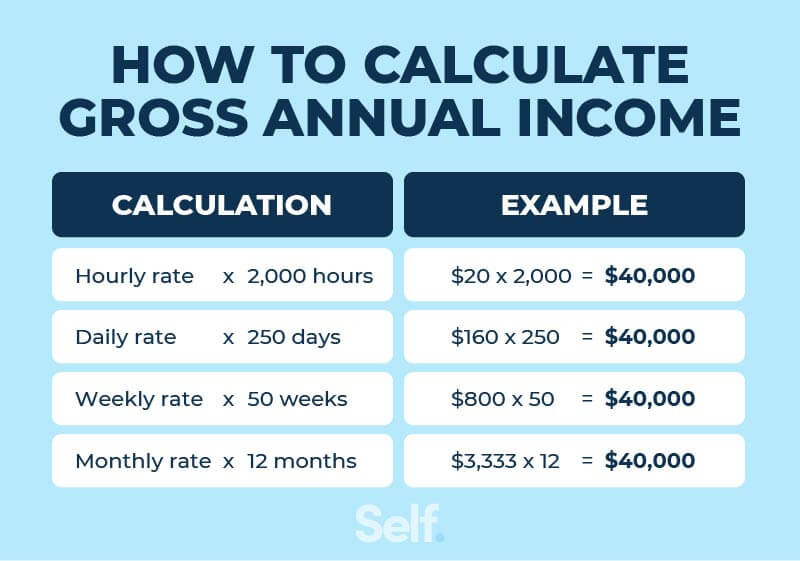
At the heart of salary understanding lies the difference between gross and net pay. Your gross annual salary is the total amount of money your employer pays you before any deductions are taken out. This is often the figure quoted in job offers and salary negotiations. It’s the full cost of your employment to the company, excluding benefits. On the other hand, your net annual salary, also known as “take-home pay,” is the amount you actually receive after all mandatory and voluntary deductions have been subtracted. This is the money that lands in your bank account, ready for budgeting and spending. Understanding both is critical, as your financial planning should primarily revolve around your net income, while your career growth and negotiation strategies often focus on gross income.
Hourly vs. Salaried Compensation: Understanding Your Pay Structure
Your employment structure significantly impacts how you calculate your annual salary.
- Salaried Employees: If you’re a salaried employee, you receive a fixed amount of pay over a period (e.g., bi-weekly, semi-monthly, monthly) regardless of the exact number of hours worked, as long as you fulfill your job duties. Your annual salary is often stated explicitly in your employment contract. For example, if you’re offered $60,000 per year, that’s your gross annual salary.
- Hourly Employees: For hourly employees, pay is calculated based on the number of hours worked multiplied by an hourly rate. This can fluctuate based on shifts, overtime, and periods of inactivity. Calculating an annual salary for hourly employees requires careful estimation of total hours expected to be worked throughout the year, including any regular overtime.
- Freelancers and Contractors: Individuals working on a project basis, as freelancers, or independent contractors have a more complex calculation. Their “annual salary” is essentially their total annual income from all clients, less business expenses. This often requires robust tracking of invoices, project payments, and operating costs to arrive at an accurate figure.
The Impact of Pay Periods: Bi-weekly, Semi-monthly, or Monthly
Your pay period – how often you receive a paycheck – affects the amount of each individual check but not your total annual salary.
- Bi-weekly: Paid every two weeks, resulting in 26 paychecks per year.
- Semi-monthly: Paid twice a month (e.g., on the 1st and 15th), resulting in 24 paychecks per year.
- Monthly: Paid once a month, resulting in 12 paychecks per year.
It’s important to know your pay frequency, as it helps you divide your gross annual salary into manageable segments for budgeting.
Calculating Your Annual Gross Salary: A Step-by-Step Guide
Once you understand your pay structure, you can move on to the actual calculation. The approach varies slightly depending on whether you’re salaried, hourly, or an independent worker.
For Salaried Employees: The Straightforward Path
If your employer has stated your annual salary directly, you’re already most of the way there. That stated figure is your gross annual salary.
- Example: If your offer letter states an annual salary of $75,000, your gross annual salary is $75,000.
To calculate your gross pay per period: - Bi-weekly: $75,000 / 26 = $2,884.62 per paycheck
- Semi-monthly: $75,000 / 24 = $3,125.00 per paycheck
- Monthly: $75,000 / 12 = $6,250.00 per paycheck
For Hourly Employees: Factoring in Hours and Overtime
Calculating an annual salary for hourly workers requires projection.
- Determine your standard weekly hours: This might be 40 hours for full-time.
- Calculate your regular annual hours: Weekly hours × 52 weeks. (e.g., 40 hours/week * 52 weeks = 2080 hours)
- Multiply by your hourly rate: Regular annual hours × hourly rate. (e.g., 2080 hours * $25/hour = $52,000)
- Estimate Overtime: If you consistently work overtime, factor it in. Overtime is typically 1.5 times your regular hourly rate for hours worked over 40 in a week.
- Example: If you typically work 5 hours of overtime per week at $25/hour: 5 hours * ($25 * 1.5) * 52 weeks = 5 * $37.50 * 52 = $9,750 in annual overtime pay.
- Add regular and overtime pay: $52,000 + $9,750 = $61,750 gross annual salary.
Remember that overtime can fluctuate, so this calculation might be an estimate.
For Freelancers and Contractors: Projecting and Subtracting
Freelancers calculate their “annual salary” by projecting their total revenue and then subtracting business expenses.
- Project your annual revenue: Estimate income from all clients and projects over a year. Look at past performance, current contracts, and anticipated new business.
- Estimate annual business expenses: This includes software, home office deductions, travel, marketing, professional development, etc.
- Calculate Estimated Annual Income: Total Projected Revenue – Total Estimated Business Expenses.
- Example: Projected revenue of $90,000, estimated expenses of $15,000. Your estimated gross annual income (before personal taxes) is $75,000.
This figure is essentially your gross income before you pay your personal income and self-employment taxes.
- Example: Projected revenue of $90,000, estimated expenses of $15,000. Your estimated gross annual income (before personal taxes) is $75,000.
Decoding Your Pay Stub: Your Personal Financial Statement
Your pay stub is a detailed record of your earnings and deductions for a specific pay period. It’s an invaluable tool for understanding how your gross pay transforms into your net pay and for verifying the accuracy of your compensation.

Understanding Pre-Tax and Post-Tax Deductions
Deductions are amounts subtracted from your gross pay. They fall into two main categories:
- Pre-Tax Deductions: These are deductions taken before taxes are calculated, reducing your taxable income. Common examples include contributions to a 401(k) or 403(b) retirement plan, health insurance premiums, and Flexible Spending Account (FSA) or Health Savings Account (HSA) contributions. Reducing your taxable income means you pay less in income tax.
- Post-Tax Deductions: These are deductions taken after taxes have been calculated. Examples might include Roth 401(k) contributions (which are taxed now but grow tax-free in retirement), union dues, garnishments, or certain disability insurance premiums.
Decoding Mandatory Deductions: Taxes, Social Security, and Medicare
Every employee in the U.S. will see these mandatory deductions on their pay stub:
- Federal Income Tax: Withheld based on your W-4 form. The amount depends on your income level, filing status, and allowances/credits claimed.
- State Income Tax: Applicable in most states (some states do not have state income tax). The amount varies by state.
- Local Income Tax: Applicable in some cities or localities.
- Social Security Tax (FICA – OASDI): A flat percentage (currently 6.2% for employees) on earnings up to a certain annual limit. Employers pay an equal amount.
- Medicare Tax (FICA – HI): A flat percentage (currently 1.45% for employees) on all earnings, with no income limit. Employers also pay an equal amount. An additional Medicare tax may apply to high earners.
Voluntary Deductions: Investing in Your Future and Well-being
Beyond mandatory taxes, your pay stub will likely show deductions for benefits you’ve elected to receive:
- Health Insurance Premiums: Your share of the cost for medical, dental, or vision coverage.
- Retirement Contributions: Amounts you contribute to your 401(k), 403(b), or other employer-sponsored retirement plans.
- Life and Disability Insurance: Premiums for coverage elected through your employer.
- Commuter Benefits: Pre-tax deductions for public transit or parking.
- Loan Repayments: For employer-sponsored loans or wage garnishments.
By carefully reviewing each line item on your pay stub, you can gain a clear understanding of how your gross income is allocated and what your true take-home pay is.
Beyond the Base: Other Elements of Total Compensation
Your annual salary is often just one piece of your total compensation package. Many employers offer additional benefits and perks that significantly increase the overall value of your employment. Understanding these elements is key to truly figuring out your “annual salary” in a broader sense.
Bonuses, Commissions, and Performance-Based Pay
Many roles, especially in sales or executive positions, include variable pay components that can substantially boost your annual earnings.
- Performance Bonuses: A one-time payment based on individual, team, or company performance.
- Commissions: A percentage of sales revenue or profit generated.
- Profit Sharing: A portion of the company’s profits distributed to employees.
When calculating your estimated annual income, you might include a conservative estimate for these components based on past performance or company targets.
Stock Options and Equity Compensation
For employees in startups or publicly traded companies, equity compensation can be a significant part of their total package.
- Stock Options: The right to purchase company stock at a predetermined price (the “grant price”) in the future. Their value depends on the stock price appreciating above the grant price.
- Restricted Stock Units (RSUs): A grant of company shares that vests over time, meaning you gain full ownership after a specified period or meeting certain conditions. Once vested, they become shares of stock and are taxed as ordinary income at their fair market value.
These forms of compensation can add substantial value but often come with vesting schedules and market risks. They might not be immediately liquid cash but are a tangible part of your wealth accumulation.
Employer Contributions to Retirement and Healthcare
Often overlooked, these employer contributions are part of your “invisible” salary.
- 401(k) Match: Many employers match a percentage of your contributions to your retirement plan, effectively giving you free money that goes directly into your retirement savings.
- Health Insurance Contributions: While you might pay a portion of your health insurance premiums, your employer typically covers a much larger percentage of the total cost. This is a significant benefit.
- Other Benefits: This can include tuition reimbursement, paid time off (PTO), life insurance, disability insurance, wellness programs, and more. While not directly cash in hand, these benefits reduce your out-of-pocket expenses and improve your quality of life, effectively increasing your overall compensation value.
Tools and Strategies for Accurate Salary Management
Knowing how to figure out your annual salary is an ongoing process, not a one-time calculation. Employing the right tools and strategies can help you maintain an accurate financial picture.
Leveraging Online Calculators and Financial Apps
Many online resources can assist you. “Take-home pay calculators” allow you to input your gross salary, pay frequency, state, and deduction estimates to give you a projected net pay. Budgeting apps often help you track income and expenses, providing a real-time view of your financial health. These tools are excellent for initial estimates and ongoing monitoring.
Maintaining Good Records: Pay Stubs, Contracts, and Tax Documents
The foundation of accurate salary knowledge is meticulous record-keeping.
- Keep all pay stubs: These are your primary source of truth for earnings and deductions. Many companies provide digital access to these.
- Store employment contracts and offer letters: These documents detail your agreed-upon salary, bonuses, and benefits.
- Review your W-2 (or 1099 for contractors) annually: These year-end tax forms summarize your total taxable earnings and withholdings, providing a definitive record of your annual income for tax purposes. Cross-reference these with your own records to ensure accuracy.

Financial Planning: Budgeting and Future Income Projections
Figuring out your annual salary is not just about looking backward; it’s also about planning forward.
- Create a budget: A budget uses your net annual salary to allocate funds for expenses, savings, and debt repayment. It helps you live within your means and work towards financial goals.
- Project future income: As you gain experience or skills, anticipate salary increases. If you’re an hourly worker, consider how increasing hours or hourly rates might affect your income. Freelancers should constantly be projecting new client work.
- Consider inflation and cost of living: Your purchasing power can change over time. When comparing salaries or planning for the future, factor in how inflation might affect the real value of your income.
By taking a holistic approach and regularly reviewing your income sources, deductions, and total compensation, you can confidently figure out your annual salary and make informed financial decisions that support your personal and professional goals.
aViewFromTheCave is a participant in the Amazon Services LLC Associates Program, an affiliate advertising program designed to provide a means for sites to earn advertising fees by advertising and linking to Amazon.com. Amazon, the Amazon logo, AmazonSupply, and the AmazonSupply logo are trademarks of Amazon.com, Inc. or its affiliates. As an Amazon Associate we earn affiliate commissions from qualifying purchases.