
In the intricate world of finance, numbers speak volumes, and among them, percentages hold a particularly powerful voice. From understanding discounts on a new purchase to deciphering interest rates on a loan, evaluating investment returns, or even calculating profit margins for a business, the ability to “figure out a percentage of something” is not just a mathematical skill – it’s a cornerstone of financial literacy. This guide aims to demystify percentages, providing you with a robust understanding and practical tools to confidently navigate your financial journey, making informed decisions every step of the way.

Understanding the Core Concept of Percentages
Before we delve into specific calculations, it’s crucial to grasp what a percentage fundamentally represents and why it’s so pervasive in financial contexts.
What Exactly is a Percentage?
At its simplest, a percentage is a way of expressing a number as a fraction of 100. The word “percent” literally means “per hundred” or “out of one hundred.” So, if you see “25%”, it means 25 out of every 100. This standardized way of comparing parts to a whole makes it incredibly useful for expressing proportions and changes in a universally understood manner, regardless of the original size of the whole. It allows for easy comparison between different financial scenarios that might otherwise involve very different absolute numbers.
The Fundamental Formula: Part/Whole x 100
The bedrock of all percentage calculations is a simple, elegant formula:
Percentage = (Part / Whole) × 100
Here, the “Part” refers to the specific amount you are interested in, and the “Whole” is the total amount or the base from which you are calculating the percentage. Multiplying by 100 converts the resulting decimal or fraction into a percentage format. Understanding this formula is paramount because it is the foundation upon which all other percentage applications are built, especially in finance. Whether you’re trying to figure out what portion of your income goes to housing or what percentage of your portfolio a single stock represents, this formula is your starting point.
Why Percentages are Indispensable in Finance
The ubiquitous nature of percentages in finance is no accident. They provide a clear, relative measure that is essential for:
- Comparison: Easily compare performance (e.g., which investment fund grew more), costs (e.g., which loan has a higher interest rate), or contributions (e.g., how much of a budget is allocated to different categories) regardless of their absolute values.
- Tracking Change: Expressing growth, decline, inflation, or discounts in a standardized way (e.g., “The stock price increased by 10%”) makes trends easy to understand and communicate.
- Decision Making: From evaluating sales promotions (“30% off!”) to assessing the impact of tax rates or understanding the true cost of borrowing, percentages empower individuals and businesses to make financially sound choices.
- Financial Reporting: Corporate financial statements, economic indicators, and personal budget analyses heavily rely on percentages to present data concisely and meaningfully.
Mastering Basic Percentage Calculations for Personal Finance
With the foundational understanding established, let’s explore the most common percentage calculations you’ll encounter in your daily financial life.
Calculating a Percentage Of a Number
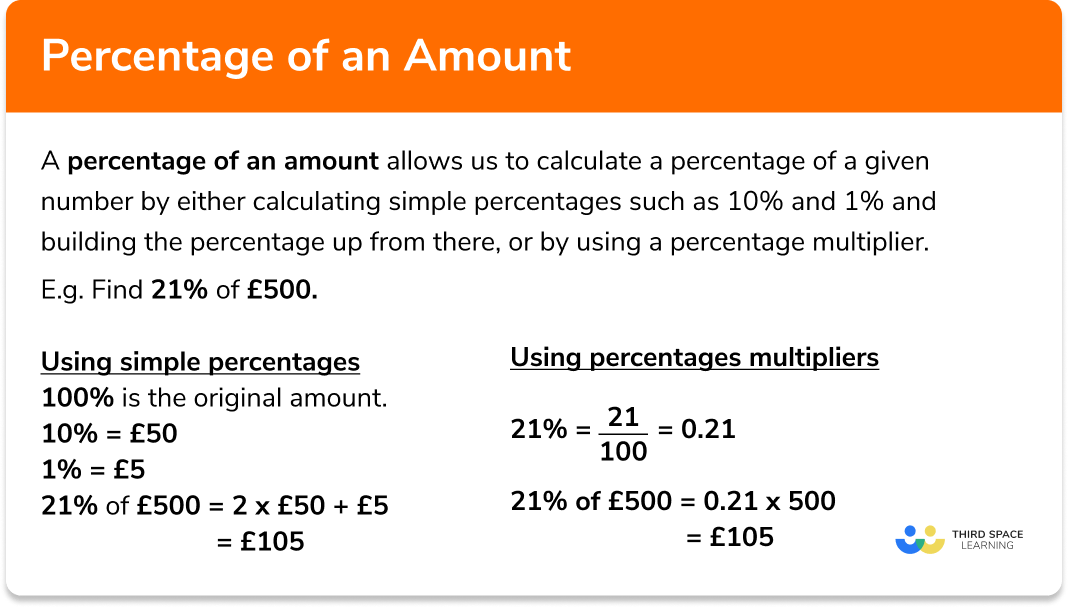
This is perhaps the most frequent calculation. You have a total amount (the “Whole”) and want to find a specific portion of it expressed as a percentage.
Formula: Percentage (as a decimal) × Whole = Part
To convert a percentage to a decimal, simply divide it by 100 (e.g., 20% becomes 0.20).
-
Example 1: Discounts and Sales Tax
- You want to buy a jacket that costs $150, and it’s 20% off.
- Convert 20% to a decimal: 20 / 100 = 0.20
- Calculate the discount amount: 0.20 × $150 = $30
- The final price: $150 – $30 = $120
- Alternatively, you pay 7% sales tax on a $50 purchase.
- Tax amount: 0.07 × $50 = $3.50
- Total cost: $50 + $3.50 = $53.50
- You want to buy a jacket that costs $150, and it’s 20% off.
-
Example 2: Tips and Commissions
- You want to leave a 15% tip on a $60 dinner bill.
- Tip amount: 0.15 × $60 = $9
- A salesperson earns a 5% commission on a $1,000 sale.
- Commission earned: 0.05 × $1,000 = $50
- You want to leave a 15% tip on a $60 dinner bill.
Determining What Percentage One Number Is Of Another
This calculation helps you understand proportions and is vital for budgeting, tracking expenses, and analyzing investment returns. Here, you have the “Part” and the “Whole,” and you want to find the “Percentage.”
Formula: (Part / Whole) × 100 = Percentage
-
Example 1: Budget Allocation
- Your monthly income is $4,000, and you spend $1,200 on rent. What percentage of your income goes to rent?
- ($1,200 / $4,000) × 100 = 0.30 × 100 = 30%
- You spent $300 on groceries from a $2,000 total budget.
- ($300 / $2,000) × 100 = 0.15 × 100 = 15%
- Your monthly income is $4,000, and you spend $1,200 on rent. What percentage of your income goes to rent?
-
Example 2: Investment Returns
- You invested $5,000 and made a profit of $500. What is your percentage return?
- ($500 / $5,000) × 100 = 0.10 × 100 = 10%
- You invested $5,000 and made a profit of $500. What is your percentage return?
Finding the Original Number from a Percentage
This is often a trickier calculation but incredibly useful for understanding original prices after discounts or markups, or for working backward in financial scenarios.
Formula: Part / (Percentage as a decimal) = Whole
- Example: Reversing a Discount
- An item is currently priced at $75 after a 25% discount. What was the original price?
- If it’s 25% off, you are paying 100% – 25% = 75% of the original price.
- Convert 75% to a decimal: 0.75
- Original price: $75 / 0.75 = $100
- An item is currently priced at $75 after a 25% discount. What was the original price?
Advanced Applications of Percentages in Investing and Business Finance
Beyond daily personal finance, percentages are critical tools for more complex financial analysis in investing and business.
Growth and Decline Rates
Percentages are the language of financial change over time.
- Investment Returns: A stock’s annual growth is almost always expressed as a percentage. Understanding the Compound Annual Growth Rate (CAGR) allows you to evaluate the smoothed annual growth rate of an investment over multiple years, crucial for long-term planning.
- Inflation: The annual percentage increase in the cost of goods and services erodes purchasing power. A 3% inflation rate means your money buys 3% less than it did a year ago.
- Business Growth: Companies report revenue growth, profit growth, and market share changes in percentages, offering investors a concise view of their performance.
Interest Rates and Loan Repayments
Interest is essentially the percentage cost of borrowing money or the percentage return on lending it.
- Simple vs. Compound Interest: Simple interest is calculated only on the principal amount, while compound interest is calculated on the principal plus accumulated interest. Understanding the percentage rate and its compounding frequency is vital for knowing the true cost of loans (like mortgages or credit cards) or the true growth of savings.
- Annual Percentage Rate (APR): This standardized percentage represents the annual cost of a loan, including interest and other fees, providing a comparable measure across different lenders.
- Loan Repayments: Mortgage and car loan calculators heavily rely on percentage interest rates to determine your monthly payments and total cost over the loan’s lifetime.
Profit Margins and Financial Ratios
Businesses use percentages extensively to analyze their health and efficiency.
- Gross Profit Margin: (Gross Profit / Revenue) × 100. This percentage indicates how much revenue a company retains after covering the direct costs of goods sold, offering insight into operational efficiency.
- Net Profit Margin: (Net Profit / Revenue) × 100. This is the ultimate bottom line, showing the percentage of revenue left after all expenses, including taxes, are accounted for.
- Return on Investment (ROI): (Net Profit from Investment / Cost of Investment) × 100. A critical metric for evaluating the efficiency of an investment or comparing the profitability of different projects.
Tools and Strategies for Accurate Percentage Calculations
While the underlying math is straightforward, modern tools can significantly enhance accuracy and efficiency.
Leveraging Digital Calculators and Spreadsheets
- Basic Calculators: For simple “part of a whole” or “what percentage is it” calculations, any standard calculator will suffice. Many calculators even have a dedicated “%” button, though understanding the manual calculation is always beneficial.
- Spreadsheet Software (Excel, Google Sheets): For more complex financial modeling, budgeting, or investment tracking, spreadsheets are invaluable. They allow you to set up formulas once and apply them to vast amounts of data.
- To calculate a percentage in Excel:
= (Part/Whole)*100or simply=(Part/Whole)and then format the cell as a percentage. - To find a percentage of a number:
= 0.20 * 150for 20% of 150.
- To calculate a percentage in Excel:
Mental Math Shortcuts for Quick Estimates
Sometimes you need a quick estimate.
- Finding 10%: Move the decimal one place to the left. (10% of $150 is $15).
- Finding 5%: Find 10% and divide by two. (5% of $150 is $7.50).
- Finding 1%: Move the decimal two places to the left. (1% of $150 is $1.50).
These shortcuts are particularly useful for quickly estimating tips, discounts, or checking figures on the fly.
Avoiding Common Percentage Pitfalls
- Base Errors: Always be clear about what the “Whole” is. For example, if a stock drops 10% and then rises 10%, it doesn’t return to its original value because the base for the second calculation is lower.
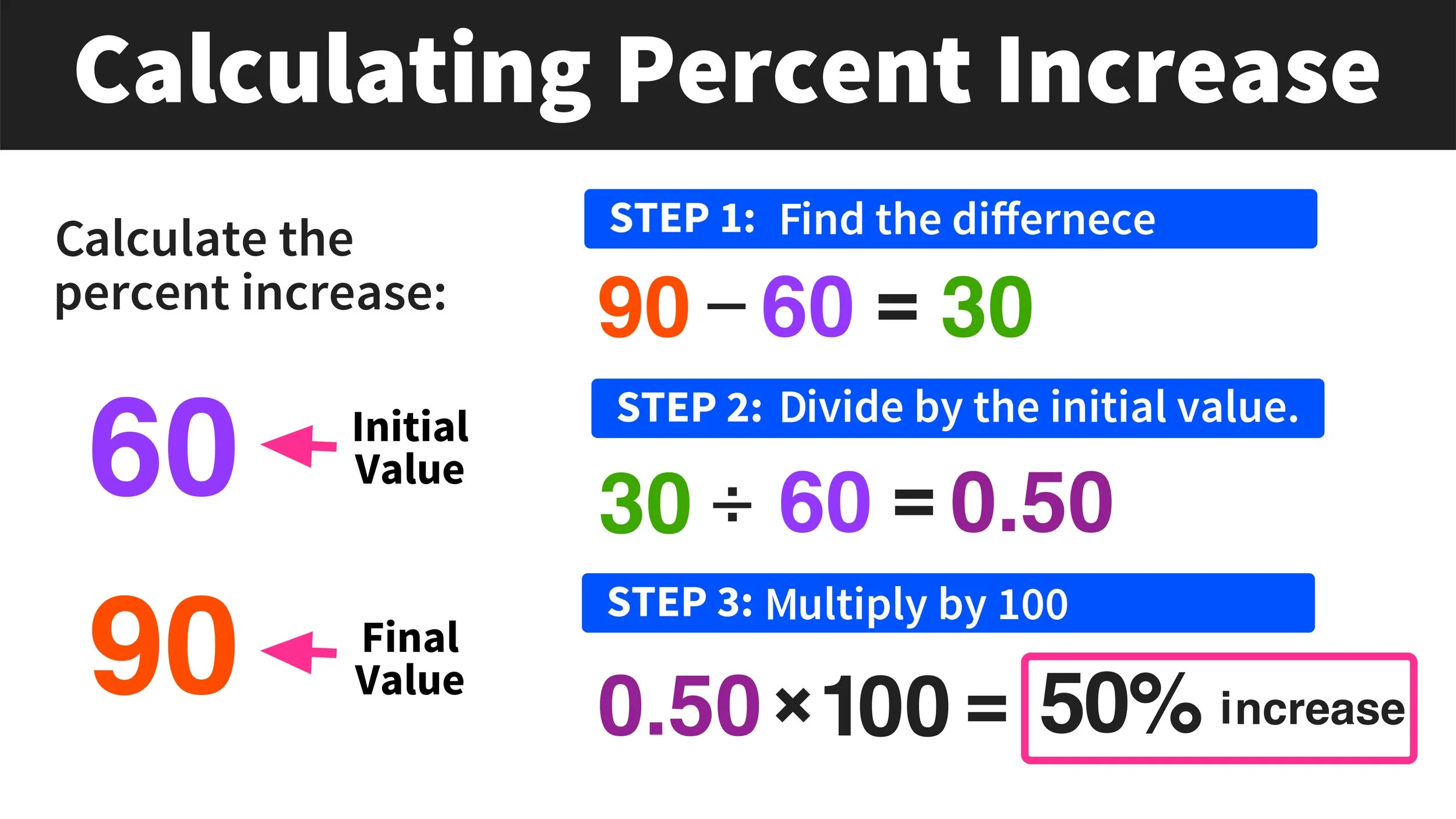
- Percentage Points vs. Percentage Change: A shift from 10% interest to 12% is a 2 percentage point increase, but a (2/10)*100 = 20% percentage *change*. Understanding the distinction is crucial in financial discussions.
Empowering Your Financial Journey with Percentage Literacy
The ability to confidently “figure out a percentage of something” transcends mere arithmetic; it’s a critical skill for financial empowerment.
Making Informed Decisions
From analyzing mortgage rates and understanding credit card interest to evaluating investment opportunities, budgeting effectively, and even maximizing shopping discounts, a solid grasp of percentages allows you to interpret financial information accurately and make choices that align with your goals. You’ll be able to compare options Apples to Apples, avoiding costly misunderstandings and capitalizing on beneficial opportunities.
Building Financial Confidence
Financial literacy reduces anxiety and builds confidence. When you understand how percentages work, you’re better equipped to manage your money, challenge misleading claims, and engage meaningfully with financial advisors or institutions. It transforms you from a passive recipient of financial data into an active participant, capable of strategic financial planning and execution.
In conclusion, percentages are far more than just mathematical symbols; they are the fundamental building blocks of financial understanding. By mastering their calculation and application, you unlock a deeper insight into your personal finances, investments, and the broader economic landscape, paving the way for a more secure and prosperous financial future.
aViewFromTheCave is a participant in the Amazon Services LLC Associates Program, an affiliate advertising program designed to provide a means for sites to earn advertising fees by advertising and linking to Amazon.com. Amazon, the Amazon logo, AmazonSupply, and the AmazonSupply logo are trademarks of Amazon.com, Inc. or its affiliates. As an Amazon Associate we earn affiliate commissions from qualifying purchases.