
Estimating your future Social Security benefits is a cornerstone of effective retirement planning. For many Americans, Social Security represents a significant, if not primary, source of income in their later years. Understanding how much you can expect to receive allows you to make more informed decisions about savings, investments, and your eventual retirement date. It’s not just about a single number; it’s about understanding the factors that shape that number and how your choices today can profoundly impact your financial security tomorrow. This guide will walk you through the most reliable methods for estimating your benefits, explain the critical variables involved, and show you how to integrate these estimates into your broader financial strategy, all within the context of sound personal finance.

Why Estimating Your Social Security Benefits Matters for Retirement Planning
Social Security is more than just a government program; it’s a critical component of millions of Americans’ retirement security. Accurately estimating these future payments is not merely an administrative exercise; it’s a vital step in constructing a robust and realistic financial roadmap for your later years.
The Foundation of Your Retirement Income
For a substantial portion of retirees, Social Security benefits form the bedrock of their retirement income, often supplementing pensions, 401(k)s, IRAs, and personal savings. In some cases, it can be the primary source. Without a clear picture of what these benefits might be, it’s challenging to determine how much you truly need to save from other sources to maintain your desired lifestyle in retirement. An accurate estimate provides a baseline, allowing you to project your overall income and expenditure more precisely. It helps you avoid over-saving or, more critically, under-saving, ensuring you have enough to cover essential living expenses and discretionary spending.
Making Informed Decisions About Retirement Age
One of the most impactful decisions you’ll make regarding Social Security is when to claim your benefits. You can begin receiving benefits as early as age 62, at your Full Retirement Age (FRA), or delay claiming until age 70. Each option comes with significant financial implications. Claiming early means a permanently reduced monthly benefit, while delaying past your FRA can result in a higher monthly payment for life. Estimating your benefits at various claiming ages allows you to model different scenarios. This empowers you to weigh the trade-offs between immediate income and a larger future payout, helping you decide whether working a few extra years to boost your monthly check aligns with your retirement goals and health status.
Mitigating Future Financial Surprises
Retirement should be a time of peace and financial stability, not unexpected financial strain. Ignoring or inaccurately guesstimating your Social Security benefits can lead to significant gaps in your retirement budget. What might seem like a small difference in a monthly estimate can amount to tens of thousands of dollars over a typical retirement lifespan. By proactively estimating your benefits, you can identify potential shortfalls years in advance, giving you ample time to adjust your savings, investment strategies, or even your expected retirement date. This foresight is invaluable in building a resilient financial plan that can withstand unforeseen circumstances and ensure a comfortable retirement.
The Official and Most Accurate Method: Your My Social Security Account
When it comes to estimating your Social Security benefits, there is no substitute for the official source: the Social Security Administration (SSA) itself. The “My Social Security” online account is your personalized gateway to your earnings record and provides the most accurate benefit estimates based on your actual work history.
Setting Up Your Secure Online Account
Creating a “My Social Security” account is a straightforward, secure process that offers immense value. You’ll need to visit the official SSA website (ssa.gov) and follow the prompts to create your account. This involves providing personal information for verification, such as your Social Security number, date of birth, and possibly answering security questions based on your credit history. The SSA employs robust security measures to protect your data, making this the safest way to access your personal Social Security information. Once established, your account provides secure, 24/7 access to your earnings history and benefit estimates.
Navigating Your Social Security Statement
The centerpiece of your “My Social Security” account is your personalized Social Security Statement. Historically mailed annually, this statement is now primarily available online. It provides a comprehensive overview of your earnings record, showing the taxable earnings reported to the SSA for each year you’ve worked. It’s crucial to review this record carefully for any inaccuracies, as errors could negatively impact your future benefits. The statement also presents estimated benefit amounts for various scenarios: your estimated retirement benefit at age 62, at your Full Retirement Age (FRA), and at age 70. Furthermore, it includes estimates for potential disability benefits and survivor benefits for your family, offering a holistic view of the protection Social Security provides.
Using the Online Calculators for Personalized Estimates
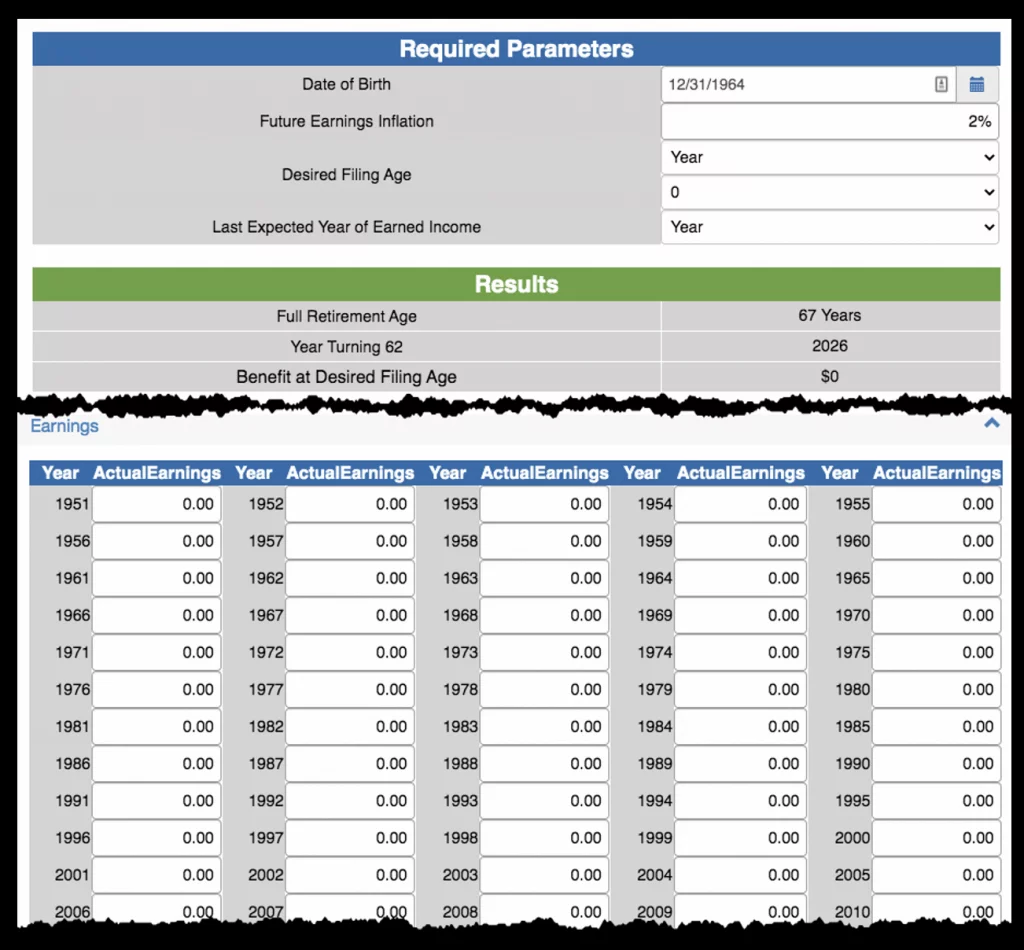
Beyond the static estimates on your statement, your “My Social Security” account features powerful online calculators. These tools allow you to generate more dynamic and personalized projections. You can input different scenarios, such as varying future earnings, or hypothetical retirement ages, to see how these choices impact your estimated monthly benefit. For example, you can project how delaying retirement by a year or two might increase your payments, or how a change in your average future earnings could affect the outcome. These calculators are invaluable for “what-if” planning, enabling you to explore the financial consequences of different life and career decisions in real-time, all based on your actual earnings data held by the SSA.
Key Factors That Influence Your Social Security Benefit Amount
Understanding the mechanism behind Social Security benefit calculations is essential for accurate estimation. Several critical factors converge to determine your eventual monthly payout.
Your Lifetime Earnings Record: The 35 Most High-Earning Years
The foundation of your Social Security benefit calculation is your lifetime earnings record. Specifically, the SSA uses your 35 highest-earning years, adjusted for inflation, to determine your “Average Indexed Monthly Earnings” (AIME). If you have fewer than 35 years of work history, the SSA will fill in the missing years with zeros, which will lower your average. This highlights the importance of consistent employment and earning at least the minimum required to contribute to Social Security. Higher lifetime earnings generally translate to higher monthly benefits, up to a certain maximum. Therefore, striving for higher income throughout your career can significantly boost your Social Security payout.
Your Age at Which You Claim Benefits: Full Retirement Age (FRA) vs. Early or Delayed Claiming
The age at which you choose to start receiving benefits is arguably the most impactful factor within your control. Your “Full Retirement Age” (FRA) is the age at which you are entitled to 100% of your primary insurance amount (PIA). This age varies depending on your birth year, ranging from 66 for those born between 1943 and 1954, gradually increasing to 67 for those born in 1960 or later.
- Claiming Early (as early as age 62): If you claim before your FRA, your monthly benefit will be permanently reduced. The reduction can be substantial, up to 30% if you claim at age 62 and your FRA is 67.
- Claiming at Full Retirement Age (FRA): You receive 100% of your calculated benefit amount.
- Delaying Claiming (up to age 70): For each year you delay claiming benefits past your FRA, your monthly payment increases by a specific percentage, known as “delayed retirement credits.” These credits add up to 8% per year, compounding annually, until you reach age 70. This can result in a permanent increase of up to 32% (if your FRA is 67) compared to your FRA benefit. This strategy is often considered for those who can afford to wait and want to maximize their guaranteed income stream.

Cost-of-Living Adjustments (COLAs) and Future Changes
Once you begin receiving benefits, your monthly payment is subject to annual Cost-of-Living Adjustments (COLAs). These adjustments are designed to help Social Security benefits keep pace with inflation and maintain beneficiaries’ purchasing power. COLAs are determined by a formula based on the Consumer Price Index for Urban Wage Earners and Clerical Workers (CPI-W). While COLAs can help preserve the value of your benefits over time, future legislative changes to the Social Security program, while not directly impacting your estimate today, are a factor to monitor. Policymakers continually discuss potential reforms, such as changes to the benefit formula or eligibility requirements, which could affect future generations of retirees.
Spousal, Survivor, and Disability Benefits
Social Security isn’t just about your individual retirement benefit. The program also provides crucial financial protection through spousal, survivor, and disability benefits.
- Spousal Benefits: If you are married, divorced (under certain conditions), or have children, you may be eligible for benefits based on your spouse’s (or ex-spouse’s) earnings record, even if you haven’t worked or have a limited work history. Spousal benefits can be up to 50% of your spouse’s full retirement age benefit.
- Survivor Benefits: In the event of a wage earner’s death, certain family members (e.g., a surviving spouse, minor children, or dependent parents) may be eligible for survivor benefits. These benefits provide vital financial support during a difficult time.
- Disability Benefits: If you become severely disabled and unable to work, you may be eligible for Social Security Disability Insurance (SSDI) benefits, provided you have accumulated enough work credits. Your “My Social Security” statement also estimates these potential benefits, offering another layer of financial security.
Understanding these interconnected benefits allows for more comprehensive family financial planning.
Exploring Alternative Estimation Tools and Professional Guidance
While your “My Social Security” account is the definitive source, other tools and experts can complement your understanding and help you strategize.
Reputable Third-Party Social Security Calculators
Several financial institutions and reputable personal finance websites offer their own Social Security calculators. These tools can be useful for quick estimates or for comparing scenarios without logging into your SSA account. They often allow you to input various assumptions about your future earnings, retirement age, and even your spouse’s earnings, providing projected benefit amounts.
- Examples: Websites like AARP, Fidelity, Vanguard, and other financial planning resources often have user-friendly calculators.
- Caveat: Always remember that these third-party calculators rely on the data you provide and often use general assumptions about inflation and future earnings. They are not privy to your exact, indexed earnings record with the SSA. Therefore, while helpful for illustrative purposes, their estimates should be cross-referenced with your official SSA statement for accuracy. They serve best as complementary tools for exploring different “what-if” scenarios, but not as definitive sources.
When to Consult a Financial Advisor
For complex situations or if you desire a deeply personalized strategy, consulting a qualified financial advisor specializing in retirement planning can be invaluable.
- Complex Scenarios: Advisors can help navigate intricate situations, such as coordinating Social Security with other retirement accounts (401k, IRA), managing spousal or survivor benefits, or planning for clients with unique health circumstances or unusual work histories.
- Holistic Planning: A good financial advisor will integrate your Social Security estimates into your entire financial picture, considering your tax situation, investment portfolio, healthcare costs, estate plan, and desired lifestyle. They can help optimize claiming strategies, advise on withdrawal sequencing from different accounts, and ensure your Social Security benefits work in harmony with your overall wealth management.
- Understanding Rule Changes: Financial advisors stay abreast of changes in Social Security rules and can help you understand how potential legislative adjustments might impact your long-term plan. They provide a level of nuanced, expert guidance that online calculators cannot offer.
Understanding the Limitations of Estimates
It’s crucial to remember that all Social Security benefit estimates, even those from the SSA, are estimates. They are based on your current earnings record and projections for your future earnings.
- Future Earnings: Estimates assume you will continue to earn at your current rate until retirement or provide an option to input a future earnings trajectory. Significant changes in your career path, such as periods of unemployment, part-time work, or a substantial increase/decrease in salary, will alter your actual benefits.
- Legislative Changes: While the current system is stable, Social Security is a political program. Future legislative changes, though not immediately projected into your personal estimates, could theoretically impact benefit levels or eligibility rules for future retirees.
- Inflation & COLAs: While COLAs aim to keep pace with inflation, their exact future amounts are unpredictable. Long-term projections must account for the uncertainty of future economic conditions.
- Health & Longevity: Your personal longevity and health status will ultimately determine how long you receive benefits, impacting the total value received over your lifetime. These are personal variables that estimates cannot precisely predict.
Therefore, view estimates as dynamic snapshots, not unchangeable guarantees. Regularly reviewing and updating your estimates is a vital part of ongoing financial planning.
Integrating Social Security Estimates into Your Broader Financial Plan
Estimating your Social Security benefits is only the first step. The real value comes from integrating these figures into your comprehensive retirement financial plan.
Creating a Comprehensive Retirement Budget
Once you have a solid estimate of your Social Security income, the next crucial step is to build a detailed retirement budget. This budget should account for all your anticipated expenses, including housing, utilities, food, transportation, healthcare (a significant and often underestimated cost), insurance, taxes, and discretionary spending like travel and hobbies. Compare your estimated Social Security benefits against these projected expenses.
- Identify Gaps: If your Social Security income alone doesn’t cover your essential living costs, you’ll immediately see the income gap that needs to be filled by other retirement savings or part-time work.
- Prioritize Spending: A clear budget helps you prioritize spending, ensuring that your Social Security income, combined with other sources, allows you to meet your needs and fund your desired lifestyle.
- Realistic Expectations: It fosters realistic expectations about what your retirement income can support, helping you avoid overspending early in retirement and running out of funds later.
Coordinating with Other Retirement Income Streams
Social Security rarely stands alone as an income source. It needs to be strategically coordinated with your other retirement assets.
- Pensions and Annuities: If you have a traditional pension or an annuity, how do these fixed income sources interact with Social Security?
- 401(k)s and IRAs: Your tax-advantaged retirement accounts will likely be a significant source of flexible income. Understanding your Social Security amount helps you determine appropriate withdrawal rates from these accounts, balancing tax efficiency and longevity. For instance, if Social Security covers your basic needs, you might be able to take more conservative withdrawals from your investment accounts, allowing them more time to grow.
- Investment Income: For those with substantial taxable investment portfolios, integrating the income from these sources with Social Security requires careful planning to optimize cash flow and minimize tax liabilities.
A holistic approach ensures that all your income streams work synergistically to support your financial goals throughout retirement.
Adapting Your Plan as Circumstances Evolve
Life is dynamic, and your retirement plan should be too. Your initial Social Security estimates and overall financial plan should not be set in stone.
- Annual Review: Make it a habit to review your “My Social Security” statement annually, especially if your earnings or employment situation changes.
- Life Events: Significant life events, such as marriage, divorce, the birth of a child, changes in health, or the death of a spouse, can all impact your Social Security benefits and overall financial needs. Your plan should be flexible enough to adapt to these changes.
- Economic Shifts: Economic conditions, inflation rates, and investment market performance can also influence your financial outlook. Regularly reassessing your plan allows you to make necessary adjustments to stay on track.
By viewing Social Security estimates as a living part of your financial strategy, you can proactively manage your retirement wealth, ensuring long-term financial stability and peace of mind.
In conclusion, accurately estimating your Social Security benefits is an indispensable part of comprehensive retirement planning. Utilizing your “My Social Security” account provides the most precise figures, while understanding the factors influencing your benefits empowers you to make strategic claiming decisions. By integrating these estimates into a broader financial strategy and regularly reviewing your plan, you can build a robust foundation for a secure and fulfilling retirement.
aViewFromTheCave is a participant in the Amazon Services LLC Associates Program, an affiliate advertising program designed to provide a means for sites to earn advertising fees by advertising and linking to Amazon.com. Amazon, the Amazon logo, AmazonSupply, and the AmazonSupply logo are trademarks of Amazon.com, Inc. or its affiliates. As an Amazon Associate we earn affiliate commissions from qualifying purchases.