
In an increasingly data-driven world, the ability to interpret and manipulate numbers is a fundamental skill. Among the most critical arithmetic operations for personal and business finance is the simple act of deducting a percentage from a number. This isn’t merely a mathematical exercise; it’s a foundational skill that underpins everything from understanding a sale discount to calculating net profit, assessing investment losses, or comprehending your take-home pay. Mastering this concept empowers individuals and businesses to make informed financial decisions, optimize spending, accurately track income, and effectively manage assets.
This article will demystify the process of deducting a percentage from a number, moving beyond mere calculation to illustrate its profound relevance across various facets of personal finance, investing, business operations, and online income generation. We will explore the fundamental formulas, delve into practical applications, and identify the tools that can streamline these calculations, ultimately enhancing your financial literacy and control.
The Fundamental Formula: Unlocking Financial Clarity
At its heart, deducting a percentage from a number is a straightforward mathematical operation. However, understanding the core principles and the different ways to execute this calculation is crucial for building a robust financial toolkit.
Deconstructing the Basic Calculation
There are two primary methods to deduct a percentage from a number, each yielding the same correct result. Familiarity with both can provide flexibility and aid comprehension.
Method 1: Calculate the Percentage Amount First, Then Subtract
This method breaks the process into two intuitive steps:
- Calculate the percentage amount: Multiply the original number by the percentage (expressed as a decimal or a fraction of 100).
Percentage Amount = Original Number × (Percentage / 100)
- Subtract this amount from the original number:
Result = Original Number – Percentage Amount
Example: Deduct 25% from $200.
Percentage Amount = $200 × (25 / 100) = $200 × 0.25 = $50Result = $200 – $50 = $150
Method 2: Direct Calculation Using the Complement
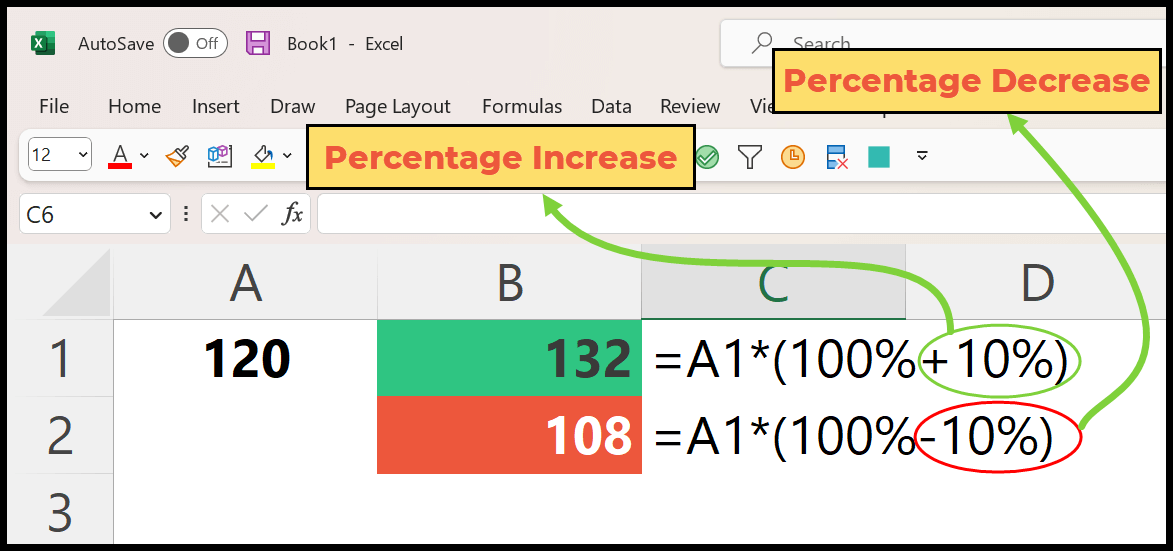
This method is often more efficient, especially when using calculators or spreadsheets, as it combines the steps into a single operation. It leverages the concept that if you’re deducting 25%, you’re effectively retaining 75% (100% – 25%).
- Determine the complement percentage: Subtract the percentage to be deducted from 100%.
Complement Percentage = 100% - Percentage to Deduct
- Multiply the original number by the complement percentage (as a decimal):
Result = Original Number × (Complement Percentage / 100)
Example: Deduct 25% from $200.
Complement Percentage = 100% - 25% = 75%Result = $200 × (75 / 100) = $200 × 0.75 = $150
Both methods confirm that deducting 25% from $200 leaves you with $150. Choosing which method to use often comes down to personal preference or the specific tool you are employing.
Practical Application: Discounts, Markdowns, and Savings
One of the most common and relatable applications of percentage deduction in personal finance is understanding sales and discounts. When a store advertises “30% off,” you’re performing this calculation to determine the final price and your actual savings.
Imagine a item priced at $75, with a 40% discount.
Using Method 1:
- Discount amount = $75 * (40 / 100) = $75 * 0.40 = $30
- Final price = $75 – $30 = $45
Your savings are $30, and the item costs $45.
Understanding this helps you not only budget for purchases but also quickly assess the real value of a sale, comparing prices effectively across different retailers or promotions. This knowledge shifts you from passively accepting a “deal” to actively calculating its financial impact.
Navigating Personal Finance with Percentage Deduction
Beyond sales, the ability to deduct percentages is a cornerstone of sound personal financial management. It’s a skill that impacts budgeting, understanding income, and evaluating investments.
Budgeting for Discounts and Irregular Income
For those on a tight budget or with fluctuating income, understanding percentage deductions is invaluable. If you regularly utilize coupons or loyalty programs that offer percentage-based discounts (e.g., 15% off your total grocery bill), accurately factoring these into your budget can prevent overspending and provide a clearer picture of your actual expenditure. Similarly, if a portion of your income is subject to variable percentage-based deductions (like commissions with processing fees or royalty payments after platform cuts), calculating your net income precisely is crucial for realistic budgeting and financial planning.
Understanding Tax Deductions and Net Income
Perhaps one of the most significant real-world applications of percentage deduction is in understanding your paycheck. Taxes, social security contributions, retirement plan deductions, and even some health insurance premiums are often calculated as a percentage of your gross income.
To calculate your net (take-home) pay, you effectively deduct multiple percentages from your gross earnings. While your employer’s payroll department handles the complex calculations, understanding the mechanism empowers you to:
- Verify your pay stub for accuracy.
- Estimate your net income after a raise or a change in deductions.
- Strategize about increasing retirement contributions (e.g., contributing an additional 2% of your salary).
- Better grasp the impact of tax law changes.
This knowledge transforms a mysterious number on a pay stub into an understandable financial breakdown.
Evaluating Investment Returns and Capital Losses
In the world of investing, percentages are ubiquitous. While much focus is on percentage gains, understanding percentage deductions is equally important, particularly when managing risk and analyzing performance. If an investment portfolio declines by 8%, you need to quickly calculate its current value to assess the impact on your overall wealth.
Example: You have $10,000 invested, and it experiences a 8% downturn.
- Loss amount = $10,000 * (8 / 100) = $800
- Current value = $10,000 – $800 = $9,200
This calculation helps investors not only track losses but also understand how much a stock or fund needs to recover to break even. It’s also vital when calculating capital gains tax after specific deductions or factoring in brokerage fees that might be a percentage of your transaction value.
Business Finance and Online Entrepreneurship Applications

For business owners, freelancers, and online entrepreneurs, the ability to deduct percentages is not just a convenience but a daily necessity for profitability, pricing, and operational efficiency.
Pricing Strategies and Profit Margin Analysis
Businesses constantly use percentage deductions. When setting sale prices, a retailer might decide to offer 20% off all items. To calculate the new price, they deduct 20% from the original. More critically, calculating profit margins often involves deducting costs and overheads, sometimes expressed as a percentage, from revenue. If your cost of goods sold is 60% of your selling price, you’re effectively starting with a 40% gross profit margin before other deductions.
Example: An item sells for $50. The cost of goods sold is 40% of the selling price.
- Cost of goods = $50 * (40 / 100) = $20
- Gross profit = $50 – $20 = $30
The calculation helps in setting competitive prices while ensuring desired profitability.
Managing Commissions, Fees, and Returns
Online income generation and freelance work are heavily reliant on percentage deductions. Platforms like Etsy, Amazon, or Upwork typically charge a percentage fee on sales or services rendered. Payment processors like Stripe or PayPal also deduct a percentage from each transaction. Calculating your net earnings requires accurately deducting these percentages.
Example: You sell an item for $100. The platform takes a 15% commission, and the payment processor takes 2.9%.
- Platform fee = $100 * 0.15 = $15
- Remaining after platform fee = $100 – $15 = $85
- Payment processor fee = $85 * 0.029 = $2.46 (approx)
- Net earnings = $85 – $2.46 = $82.54
Similarly, when dealing with product returns, businesses often need to calculate refunds after deducting restocking fees (e.g., 10% of the item’s price) or shipping costs. This precision is vital for accurate bookkeeping and financial forecasting.
Inventory Shrinkage and Wastage Calculation
For businesses managing physical inventory, losses due to theft, damage, obsolescence, or spoilage (known as ‘shrinkage’ or ‘wastage’) are an unfortunate reality. These losses are often expressed as a percentage of total inventory value or quantity. Accurately calculating the financial impact of, say, a 2% inventory shrinkage is critical for financial reporting, insurance claims, and implementing loss prevention strategies. Understanding the dollar value of a percentage loss helps quantify the problem and inform strategic decisions.
Tools for Precision: Automating Percentage Deductions
While manual calculation is possible, leveraging modern financial tools can significantly enhance accuracy and efficiency, especially when dealing with complex scenarios or large datasets.
Harnessing Spreadsheet Software (Excel, Google Sheets)
Spreadsheets are indispensable for financial calculations. They allow you to set up templates for recurring deductions, perform calculations on entire columns of data, and easily adjust variables.
Example in Excel/Google Sheets:
If your original number is in cell A1 and the percentage to deduct is in cell B1 (entered as a whole number, e.g., “25” for 25%), you can use these formulas:
- Method 1:
=A1-(A1*B1/100) - Method 2:
=A1*(1-B1/100)
If B1 is entered as a decimal (e.g., “0.25”), the formula would be=A1*(1-B1).
This functionality is invaluable for budgeting, managing multiple transactions, calculating payroll deductions, or analyzing vast sets of sales data.
Everyday Financial Calculators and Apps
For quick, on-the-go calculations, a standard calculator or a smartphone calculator app is perfectly adequate. Many calculators have a dedicated percentage (%) button, simplifying the process. To deduct 25% from 200:
- Enter
200 - Press
- - Enter
25 - Press
%(the display might show 50, which is 25% of 200) - Press
=(the display will show 150)
Various financial apps also offer built-in percentage calculators or allow for custom formulas, making complex financial planning accessible from your pocket.
Specialized Online Financial Tools
The internet hosts a plethora of specialized online calculators designed for specific financial tasks. These include:
- Tax calculators: Often allow you to input income and various deductions to estimate net tax liability.
- Loan and mortgage calculators: Help determine principal and interest deductions from payments.
- Investment return calculators: Can factor in fees and potential losses to project net portfolio values.
- Sales tax/discount calculators: Quickly show final prices after percentage-based adjustments.
These tools streamline calculations, reduce the chance of manual error, and often provide additional insights relevant to the financial context.
Avoiding Common Mistakes and Mastering Nuances
While the basic percentage deduction is simple, certain nuances and common pitfalls can lead to errors if not understood.
Percentage Points vs. Percentage Change
It’s crucial to distinguish between a “percentage point” change and a “percentage change” when discussing financial data, especially in investing or economic news.
- Percentage point change: A direct arithmetic difference between two percentages. If an interest rate goes from 4% to 5%, that’s a 1 percentage point increase.
- Percentage change: A relative change. If an interest rate goes from 4% to 5%, that’s a
(5-4)/4 * 100% = 25%increase in the rate itself.
Understanding this difference is critical for accurately interpreting financial reports and avoiding miscalculations that can affect investment decisions or economic forecasts.
The Order of Multiple Deductions
A common mistake is assuming that multiple successive percentage deductions are additive. For example, a 10% discount followed by an additional 5% discount is not a 15% total discount from the original price.
Instead, each deduction is applied to the reduced amount.
Example: An item costs $100. First discount is 10%, second is 5%.
- After 10% discount: $100 – ($100 * 0.10) = $90
- After 5% additional discount: $90 – ($90 * 0.05) = $90 – $4.50 = $85.50
If you had incorrectly applied a 15% discount directly: $100 – ($100 * 0.15) = $85. While the difference ($0.50) might seem small on a single item, it can accumulate significantly in business operations or large investment portfolios.
Verifying Your Calculations
No matter how confident you are, especially when dealing with substantial financial implications, always double-check your calculations. Use a different method, input the numbers into a spreadsheet, or have a colleague verify if possible. A small error in a percentage deduction can have cascading effects on budgets, profits, or investment portfolios.

Conclusion
The ability to deduct a percentage from a number is far more than a simple arithmetic function; it is a vital skill for anyone navigating the complexities of modern finance. From making smart shopping choices and understanding your take-home pay to analyzing investment performance and ensuring business profitability, this fundamental calculation empowers you to make informed, data-driven decisions. By mastering the core formulas, recognizing their widespread applications in personal and business finance, and utilizing available tools, you gain a significant advantage in managing your money effectively. Embrace this skill, practice it regularly, and unlock a deeper understanding of your financial world.
aViewFromTheCave is a participant in the Amazon Services LLC Associates Program, an affiliate advertising program designed to provide a means for sites to earn advertising fees by advertising and linking to Amazon.com. Amazon, the Amazon logo, AmazonSupply, and the AmazonSupply logo are trademarks of Amazon.com, Inc. or its affiliates. As an Amazon Associate we earn affiliate commissions from qualifying purchases.