
Cash App has become an indispensable financial tool for millions, simplifying everything from peer-to-peer payments to direct deposits. However, a common question often arises among users: “How do I effectively and securely cash out my funds?” Understanding the mechanics, costs, and best practices for withdrawing your money from Cash App is crucial for savvy financial management. This comprehensive guide will navigate you through the process, ensuring you can access your funds with confidence and strategic insight, firmly rooted in the principles of personal finance and financial tools.
Understanding Cash App’s Withdrawal Mechanisms
At its core, cashing out from Cash App involves transferring money from your Cash App balance to an external bank account, typically linked via a debit card. Cash App provides users with two primary methods for doing this, each with distinct financial implications concerning speed and cost.
Instant vs. Standard Deposits: Navigating Speed and Fees
The choice between an instant and a standard deposit is a key financial decision that balances immediacy with cost-effectiveness.
-
Standard Deposits: This is the default and most cost-effective option. When you choose a standard deposit, your funds are typically transferred to your linked bank account within 1 to 3 business days. The significant advantage of this method from a personal finance perspective is that it is entirely free. For routine transfers or funds that aren’t urgently needed, opting for a standard deposit is the most financially prudent choice, allowing you to retain the full value of your funds.
-
Instant Deposits: For those moments when time is of the essence, Cash App offers instant deposits. As the name suggests, these transfers land in your bank account almost immediately, usually within minutes. However, this convenience comes at a price. Cash App charges a 1.75% fee (with a minimum of $0.25) for instant transfers. For example, cashing out $100 instantly would incur a $1.75 fee, meaning you’d only receive $98.25. While invaluable in emergencies or urgent situations, frequently using instant deposits can erode your funds over time. A financially astute user will weigh the urgency against the cost before opting for this method.
Cashing Out to a Debit Card: The Direct Route
It’s important to clarify that when you initiate a cash-out, the funds are transferred to the bank account associated with your linked debit card. Cash App doesn’t directly deposit into a credit card or a separate bank account not linked through a debit card. Therefore, having a valid, active debit card linked to the bank account where you wish to receive your funds is a prerequisite for any withdrawal. This direct route streamlines the process but also means users must ensure their linked debit card and associated bank account are in good standing and up-to-date.
Step-by-Step Guide to Cashing Out Your Funds
Accessing your money from Cash App is a straightforward process, but understanding each step ensures a smooth financial transaction.
Linking Your Bank Account/Debit Card (Pre-requisite)
Before you can cash out, Cash App needs to know where to send your money. This involves securely linking your bank account via its associated debit card. If you haven’t done this already, here’s how:
-
Open the Cash App and tap the profile icon (usually a circle with your picture or initials) in the top-right corner.
-
Scroll down and tap “Linked Banks.”
-
Tap “Link Bank” and follow the prompts to enter your debit card number, expiration date, CVV, and ZIP code.
-
Once linked, Cash App verifies this connection, securing the pathway for your funds.
It’s crucial to link a debit card from a legitimate bank account that you control. This safeguards your funds and prevents potential issues with transfers.
Initiating a Standard or Instant Transfer
Once your bank account is linked, cashing out is simple:
-
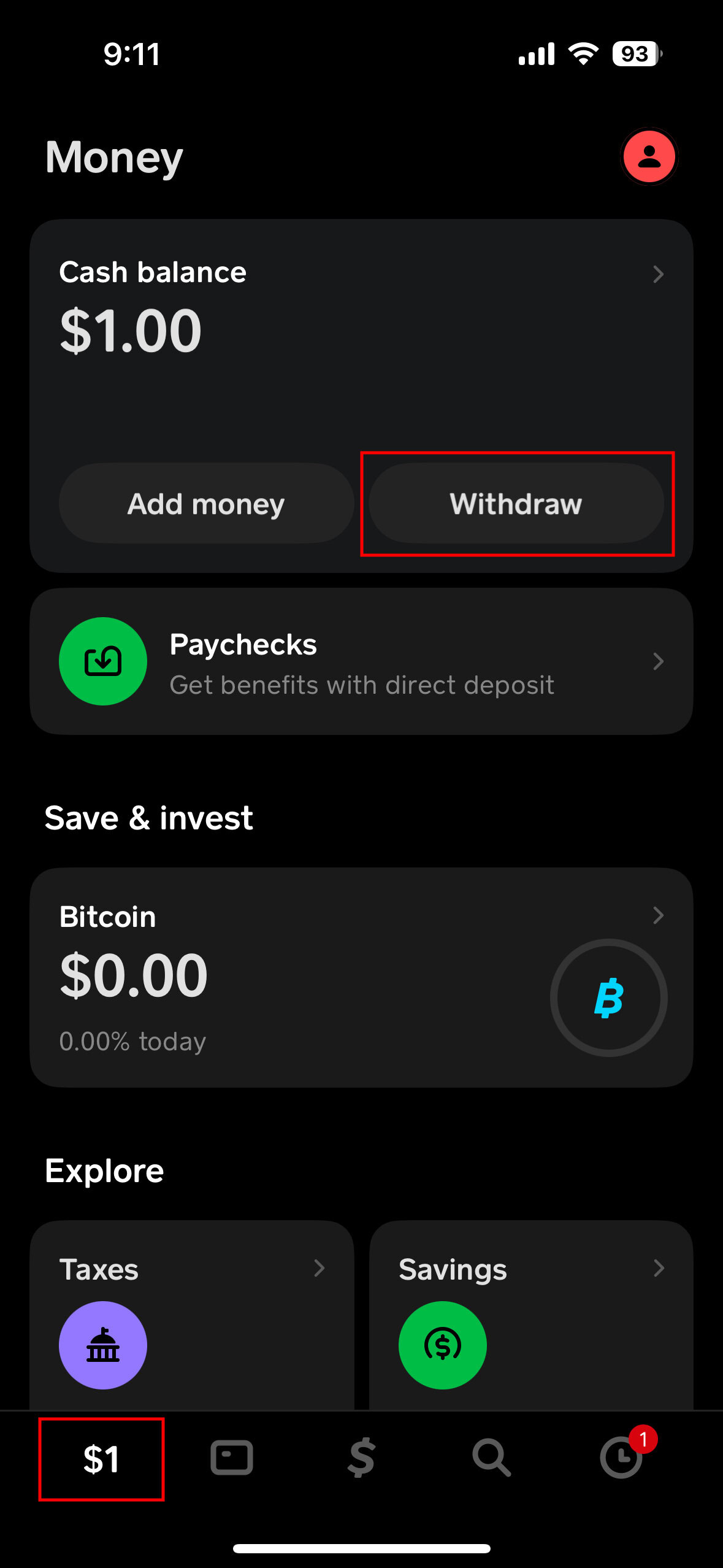
From the Cash App home screen, tap the “Banking” tab (the house icon) in the bottom-left corner. This displays your current Cash App balance.
-
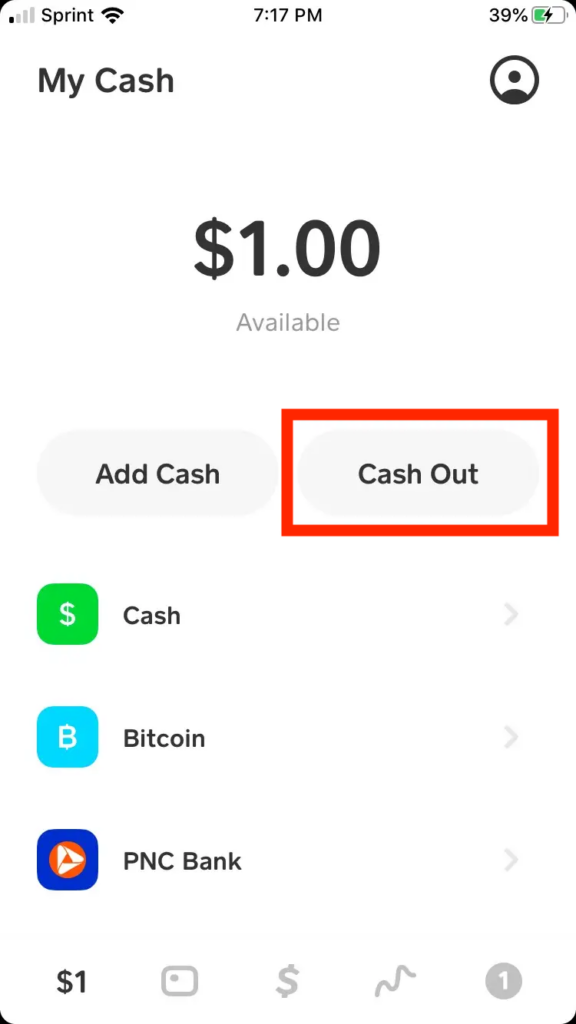
Tap the “Cash Out” button located directly beneath your balance.
-
Enter the amount you wish to transfer.
-
You will then be prompted to choose between “Standard” (1-3 business days, free) or “Instant” (within minutes, 1.75% fee).
-
Select your preferred speed and confirm the transaction by entering your PIN or using your Touch ID/Face ID.
A confirmation screen will appear, detailing the transaction and estimated arrival time. Always double-check the amount and transfer type before confirming to avoid unwanted fees or delays.
Verifying Your Identity for Larger Withdrawals
Cash App, like all regulated financial institutions, adheres to “Know Your Customer” (KYC) guidelines. To prevent fraud and comply with financial regulations, Cash App may require identity verification for larger transactions or to increase your withdrawal limits. This typically involves providing your full legal name, date of birth, and the last four digits of your Social Security Number (SSN).
- Why it matters financially: Verification not only increases your weekly and monthly cash-out limits but also adds a layer of security to your account, protecting your financial assets. Attempting to withdraw substantial sums without prior verification may result in temporary holds or requests for information, causing delays in accessing your funds. It’s a proactive step in responsible financial management within the digital sphere.
Financial Considerations and Best Practices for Cash App Withdrawals
Maximizing your financial control with Cash App extends beyond knowing the steps to withdraw. It involves strategic thinking about limits, fees, and security.
Understanding Withdrawal Limits and How They Affect Your Finances
Cash App imposes limits on how much money you can send and receive, as well as how much you can cash out.
-
Unverified Accounts: Initially, unverified accounts have lower limits, which can be restrictive if you frequently deal with larger sums. For instance, you might only be able to cash out a few thousand dollars per week.
-
Verified Accounts: After verifying your identity (providing your full name, DOB, and the last four digits of your SSN), your limits significantly increase, often allowing much larger weekly and monthly withdrawals.
- Financial Impact: Being aware of these limits is crucial for financial planning. If you anticipate needing to cash out a significant amount, ensure your account is verified well in advance to avoid hitting unexpected ceilings and encountering delays when urgent access to funds is required. Planning large financial movements necessitates understanding these operational boundaries.
Minimizing Fees: A Strategic Approach
Fees, even small ones, can add up and impact your overall financial position.
-
Prioritize Standard Transfers: The most effective way to minimize fees is to consistently choose the standard deposit option. If you can anticipate your need for funds a few days in advance, there is no financial reason to pay the 1.75% instant transfer fee.
-
Batch Withdrawals (Where Appropriate): Instead of making multiple small instant transfers, which each incur the 1.75% fee, consider consolidating your withdrawals into fewer, larger standard transfers. This reduces the frequency of fee payments.
-
Calculate the Cost: Before initiating an instant transfer, quickly calculate the fee (e.g., 1.75% of your desired amount). Ask yourself if the immediate access is truly worth that specific dollar amount, especially for non-critical expenses.
Security Measures for Protecting Your Funds
Your financial security is paramount. When using Cash App or any financial tool, vigilance is key.
-
Link Only Trusted Accounts: Ensure the debit card and bank account you link belong solely to you and are from a reputable financial institution. Avoid linking shared accounts or those you don’t fully control.
-
Enable Strong Security Features: Always activate Two-Factor Authentication (2FA) for your Cash App account. This adds an extra layer of protection, requiring a code from your phone in addition to your password.
-
Monitor Activity Regularly: Regularly review your Cash App activity feed and your bank statements for any unauthorized transactions. Promptly report suspicious activity to Cash App support and your bank.
-
Beware of Scams: Be highly skeptical of unsolicited requests for money or information, especially those claiming to be from Cash App support. Never share your PIN, login details, or sensitive financial information via unverified channels. Phishing scams targeting financial app users are rampant.
Troubleshooting Common Cash Out Issues (Financial Impact)
Even with careful planning, sometimes issues arise. Understanding how to troubleshoot common problems can mitigate their financial impact.
Delayed Transfers: What to Do and When to Worry
While standard transfers are typically 1-3 business days, certain factors can cause delays:
-
Bank Holidays and Weekends: Transfers initiated on Fridays, weekends, or bank holidays will naturally take longer, as banks do not process transactions on these days.
-
Bank Processing Times: Different banks have varying processing times. Some might clear funds faster than others.
-
What to do:
-
Check your Cash App activity feed for the transaction status.
-
Review your bank statement to see if the funds are pending or have arrived.
-
If after the expected 3 business days (excluding weekends/holidays) the funds haven’t appeared, contact your bank first, then Cash App Support.
-
-
Financial Impact: Delays can disrupt financial planning, especially if funds were earmarked for immediate expenses. Understanding these potential delays helps in setting realistic expectations and planning backup liquidity.
Failed Transfers: Identifying and Resolving Problems
A failed transfer means your money didn’t reach your bank account. Common reasons include:
-
Incorrect Bank Details: An expired or incorrectly entered debit card number is a frequent culprit.
-
Exceeding Limits: Attempting to cash out an amount exceeding your daily/weekly limit.
-
Bank Holds: Your bank might place a hold on incoming funds for various reasons (e.g., suspicious activity, large amount).
-
What to do:
-
Verify that your linked debit card details are correct and up-to-date in Cash App.
-
Check your withdrawal limits and ensure you haven’t exceeded them.
-
Contact your bank to inquire if there’s an issue on their end preventing the deposit.
-
If the problem persists, reach out to Cash App Support with transaction details.
-
-
Financial Impact: Failed transfers cause immediate financial inconvenience and can lead to missed payments or unexpected overdrafts if you were relying on those funds. Prompt resolution is key to maintaining financial stability.
Account Holds and Freezes: Navigating Compliance
In rare cases, Cash App may place a temporary hold or freeze on your account. This usually happens due to:
-
Suspicious Activity: Cash App’s automated security systems detecting unusual transaction patterns.
-
Regulatory Review: Compliance checks related to anti-money laundering (AML) or other financial regulations.
-
What to do:
-
Cooperate fully with Cash App support. They will likely request additional documentation or information to verify your identity or the legitimacy of your transactions.
-
Provide all requested details promptly and accurately.
-
-
Financial Impact: An account freeze can severely restrict access to your funds, causing significant financial stress and disruption. Preventing this through responsible use, adherence to terms of service, and prompt identity verification is the best approach.
Beyond Cashing Out: Comprehensive Financial Management with Cash App
While this guide focuses on withdrawals, it’s worth noting that Cash App offers broader features that contribute to comprehensive personal financial management. Its intuitive interface allows you to:
-
Budget and Track Spending: The activity feed provides a clear record of your income and expenses, helping you monitor where your money goes. Integrate this data into your personal budgeting strategy.
-
Strategic Use for Payments and Transfers: Utilize Cash App for quick P2P payments, receive direct deposits from employers, and use the associated Cash Card for everyday spending. These features, when managed responsibly, can streamline your financial life, making it a powerful tool beyond just a means to “cash out.”
Conclusion
Cashing out on Cash App is a fundamental aspect of managing your digital finances. By understanding the differences between instant and standard transfers, adhering to security best practices, and being aware of withdrawal limits, you can effectively and securely access your funds. Approach Cash App with a strategic mindset, much like any other financial tool, to optimize your transactions, minimize fees, and safeguard your money. With this knowledge, you are now equipped to navigate Cash App withdrawals confidently and efficiently, ensuring your financial autonomy in the digital age.
aViewFromTheCave is a participant in the Amazon Services LLC Associates Program, an affiliate advertising program designed to provide a means for sites to earn advertising fees by advertising and linking to Amazon.com. Amazon, the Amazon logo, AmazonSupply, and the AmazonSupply logo are trademarks of Amazon.com, Inc. or its affiliates. As an Amazon Associate we earn affiliate commissions from qualifying purchases.