
Understanding your annual income is the cornerstone of a healthy financial life. Whether you are applying for a mortgage, preparing your tax return, or simply trying to build a sustainable monthly budget, knowing exactly how much you earn over a twelve-month period is essential. While it might seem as simple as looking at a single number on a paycheck stub, the reality of modern compensation—which often includes bonuses, commissions, and variable freelance earnings—requires a more nuanced approach.
This guide will break down the methodologies for calculating annual income across various employment types, explain the critical difference between gross and net earnings, and explore why this figure is the most important metric in your personal finance toolkit.
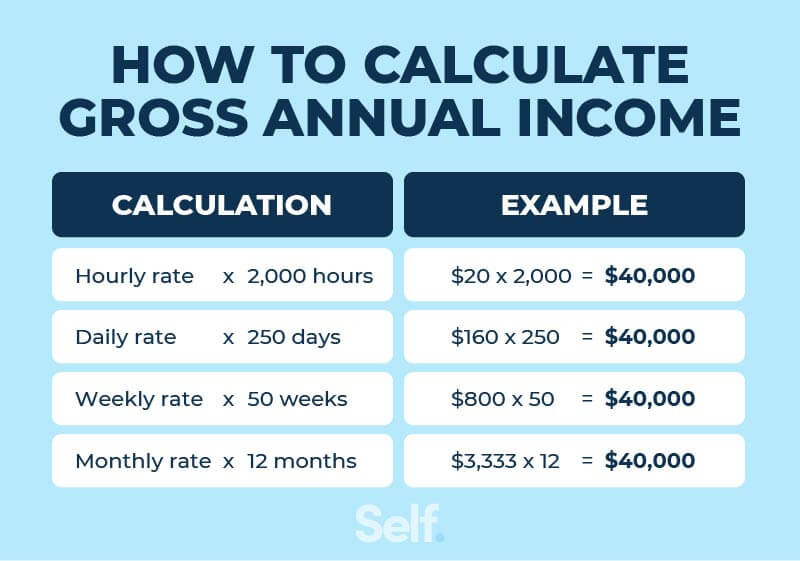
Understanding the Fundamentals: Gross vs. Net Annual Income
Before diving into the mathematical formulas, it is crucial to distinguish between the two primary ways annual income is measured: Gross and Net. Confusing these two can lead to significant errors in budgeting and financial planning.
Gross Annual Income: The Starting Point
Gross annual income is the total amount of money you earn in a year before any taxes, social security contributions, or health insurance premiums are deducted. If you are a salaried employee, this is typically the figure stated in your employment contract or offer letter. For example, if you are hired at a salary of $75,000 per year, that is your gross annual income.
Gross income is the metric most often used by lenders, such as banks and credit card companies, to determine your creditworthiness. They want to see the “top-line” number to assess your earning potential and debt-to-income ratio.
Net Annual Income: Your Actual Spending Power
Net annual income, often referred to as “take-home pay,” is the amount of money that actually lands in your bank account after all deductions have been made. These deductions include:
- Federal and State Income Taxes: Depending on your tax bracket and location.
- FICA Taxes: Social Security and Medicare contributions.
- Benefits Premiums: Contributions toward health, dental, or vision insurance.
- Retirement Contributions: Pre-tax deductions for 401(k) or 403(b) accounts.
Calculating your net income is vital for day-to-day survival. While your gross income might look impressive, your net income dictates your ability to pay rent, buy groceries, and invest in side hustles.
Calculation Methods for Different Employment Types
The process for calculating your annual income varies significantly depending on how you are compensated. Most workers fall into one of three categories: hourly, salaried, or self-employed.
Calculating Income for Hourly Workers
If you are paid by the hour, your income depends on the number of hours you work each week. To find your annual gross income, you can use the standard 2,080-hour rule (40 hours per week multiplied by 52 weeks).
The Formula:
(Hourly Rate) × (Hours per Week) × 52 = Annual Gross Income
For example, if you earn $25 per hour and work a standard 40-hour week:
$25 × 40 = $1,000 per week.
$1,000 × 52 = $52,000 per year.
However, you must also account for overtime. If you regularly work 5 hours of overtime per week at a “time-and-a-half” rate ($37.50 in this case), you would add that to your base calculation. Accurate record-keeping of pay stubs is essential for hourly workers to ensure seasonal fluctuations are accounted for.
Calculating Income for Salaried Employees
Salaried employees have the easiest calculation, but they must be careful not to overlook “hidden” income. Your base salary is your starting point, but you must also include any recurring bonuses, profit-sharing distributions, or commissions.
If you are paid bi-weekly (every two weeks), you will receive 26 paychecks a year. If you are paid semi-monthly (twice a month), you will receive 24.
The Formula:
(Gross Pay per Pay Period) × (Number of Pay Periods per Year) = Annual Base Salary
To get a true annual figure, add any annual bonuses or performance-based incentives received during that calendar year.

Calculating Income for Freelancers and Business Owners
For the self-employed, calculating annual income is more complex because earnings often fluctuate. In this niche, you typically look at your “Net Profit” rather than just total revenue.
The Formula:
(Total Revenue) – (Business Expenses) = Net Business Income
If you are a freelancer, you should track your income monthly. At the end of the year, aggregate these totals and subtract deductible business expenses (software subscriptions, office space, equipment). For tax purposes, this “Net Business Income” is what is used to calculate your self-employment tax. It is highly recommended to use a rolling average of the last two years to estimate your current annual income if your work is highly seasonal.
Accounting for Variable Compensation and “The Extras”
In the modern economy, a “salary” is often just one part of a total compensation package. To truly understand your financial standing, you must look at the variables that can swing your annual income by thousands of dollars.
Bonuses, Commissions, and Tips
For professionals in sales or the service industry, variable pay can sometimes exceed base pay. When calculating your annual income for a loan application, most lenders will ask for a two-year average of commissions and bonuses to ensure the income is stable.
If you are calculating this for your own personal budget, it is safer to be conservative. Use a “floor” estimate—the minimum you expect to earn—rather than the “ceiling.” This prevents you from overextending your finances based on a “good year” that may not repeat.
Non-Monetary Benefits and Total Compensation
While not “income” in the sense that you can spend it at a store, total compensation includes the value of benefits provided by an employer. This includes:
- Employer 401(k) Matching: If your employer matches 5% of your salary, that is effectively a 5% raise that goes straight into your net worth.
- Health Insurance Premiums: If an employer pays $500 a month toward your insurance, that is $6,000 of value you aren’t paying out of pocket.
- Stock Options or RSUs: Restricted Stock Units (RSUs) that vest during the year should be calculated based on their market value at the time of vesting, as they are considered taxable income.
Why Accuracy Matters: Taxes, Loans, and Financial Planning
Calculating your annual income is not just an academic exercise; it has real-world implications for your legal and financial health.
Tax Liability and Bracket Management
The United States (and many other countries) uses a progressive tax system. Knowing your annual gross income allows you to estimate which tax bracket you fall into. This knowledge enables “tax planning.” For instance, if you realize you are just $2,000 over the threshold for a higher tax bracket, you might choose to increase your traditional 401(k) contributions to lower your Adjusted Gross Income (AGI), potentially saving you thousands in taxes.
Qualifying for Significant Purchases
When you apply for a mortgage, the lender uses your gross annual income to calculate your Front-End and Back-End Debt-to-Income (DTI) ratios. Generally, lenders prefer a DTI where your total monthly debt payments (including the new mortgage) do not exceed 36% to 43% of your gross monthly income. If you under-calculate your income by forgetting to include a regular bonus, you might be denied a loan for a house you can actually afford. Conversely, over-calculating can lead you to take on a debt burden that is unsustainable.
Strategic Financial Goal Setting
Finally, knowing your annual income allows you to set realistic goals for the future. Financial advisors often recommend the “50/30/20 rule”: 50% of your net income for needs, 30% for wants, and 20% for savings and debt repayment. You cannot apply this rule effectively if you do not have an accurate annual net income figure. By seeing the “big picture” of your yearly earnings, you can make informed decisions about when to pivot to a new career, when to start a side hustle, or when you have finally reached “financial independence.”
Tools and Resources for Maintaining Financial Clarity
In an era of digital finance, you do not need to rely on a pencil and paper to keep track of your earnings. Utilizing tools can help maintain an “always-accurate” view of your annual income.
Spreadsheets and Manual Tracking
For those who want total control, a simple spreadsheet (using Excel or Google Sheets) is the best way to track income. Create columns for “Date,” “Source,” “Gross Amount,” “Tax Withheld,” and “Net Amount.” This is especially useful for freelancers who receive multiple 1099 forms at the end of the year. Updating this once a week ensures there are no surprises come April.
Financial Management Apps
There are numerous personal finance tools designed to aggregate your accounts and categorize your income. By linking your bank accounts, these tools can automatically detect salary deposits and provide a “running total” of your year-to-date (YTD) earnings. This provides a visual representation of your income trends, helping you identify if your annual income is growing or stagnating.

Seeking Professional Guidance
If your income structure is particularly complex—involving K-1 forms, rental properties, dividends, and international earnings—it is wise to consult a Certified Public Accountant (CPA) or a Financial Planner. They can help you calculate your “Adjusted Gross Income” (AGI) and “Modified Adjusted Gross Income” (MAGI), which are the specific figures used to determine eligibility for many government benefits and tax credits.
In conclusion, calculating your annual income is a fundamental skill in the world of personal finance. By understanding the difference between gross and net, accounting for all forms of compensation, and using the right tools for tracking, you gain the clarity needed to make confident, informed decisions about your financial future. Whether you are aiming to climb the corporate ladder or grow a personal brand into a business empire, your annual income is the primary metric of your economic progress.
aViewFromTheCave is a participant in the Amazon Services LLC Associates Program, an affiliate advertising program designed to provide a means for sites to earn advertising fees by advertising and linking to Amazon.com. Amazon, the Amazon logo, AmazonSupply, and the AmazonSupply logo are trademarks of Amazon.com, Inc. or its affiliates. As an Amazon Associate we earn affiliate commissions from qualifying purchases.