
Understanding how to calculate 10 percent of any given number is a surprisingly potent skill that transcends basic arithmetic, serving as a cornerstone for informed financial decision-making, savvy budgeting, and quick estimations in both personal and professional monetary contexts. While seemingly a simple mathematical operation, its frequent appearance in financial scenarios—from discounts and tips to savings goals and investment returns—makes mastering this calculation an invaluable asset. This guide will demystify the process, explore its widespread financial applications, and empower you to confidently apply this fundamental skill to optimize your financial well-being.
The Fundamental Methods for 10 Percent Calculation
At its core, calculating 10 percent is remarkably straightforward, requiring minimal mathematical prowess. There are two primary methods, both equally effective and simple to implement, offering flexibility based on your preference and the specific context.
The Decimal Point Shift Method: Simple and Swift
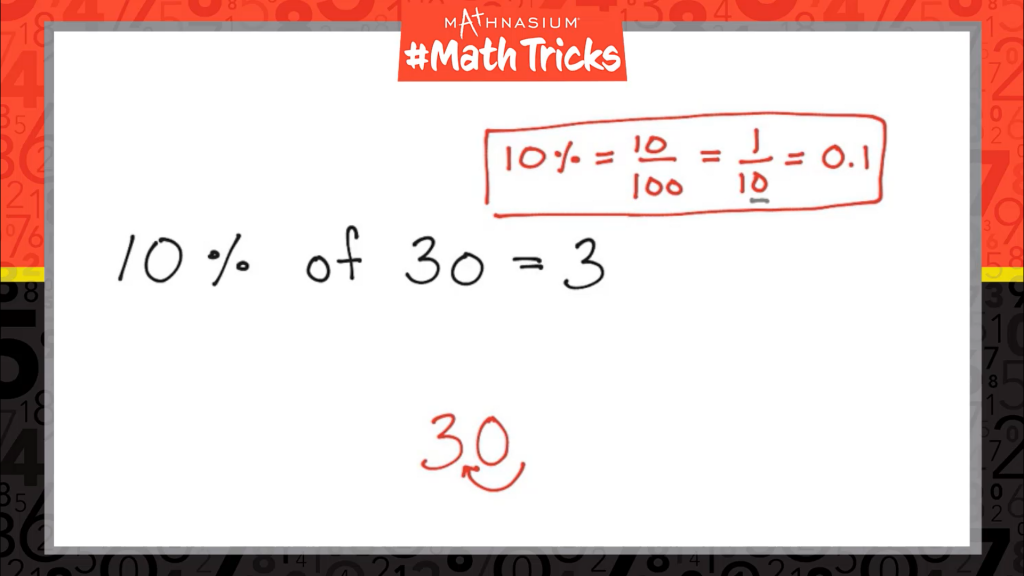
This is arguably the most intuitive and fastest way to determine 10 percent of a number, particularly useful for mental calculations. The principle is based on the fact that 10 percent is equivalent to one-tenth (1/10) of a whole.
How it works:
To find 10 percent of any number, simply move the decimal point one place to the left.
Examples:
- To calculate 10% of $250: The number is 250.00. Move the decimal one place to the left to get 25.00. So, 10% of $250 is $25.
- To calculate 10% of $75.50: The number is 75.50. Move the decimal one place to the left to get 7.550. So, 10% of $75.50 is $7.55.
- To calculate 10% of $1,234.99: The number is 1234.99. Move the decimal one place to the left to get 123.499. Rounded to the nearest cent, 10% of $1,234.99 is $123.50.
This method shines in situations where you need a quick estimate or an exact figure without the aid of a calculator, making it perfect for on-the-spot financial judgments.
The Division Method: Precision Through Division
Another equally valid and often more explicit approach is to divide the number by 10. This method directly reflects the definition of 10 percent as “one-tenth.”
How it works:
Divide the number by 10.
Examples:
- To calculate 10% of $400: $400 ÷ 10 = $40. So, 10% of $400 is $40.
- To calculate 10% of $189: $189 ÷ 10 = $18.90. So, 10% of $189 is $18.90.
- To calculate 10% of $5,000: $5,000 ÷ 10 = $500. So, 10% of $5,000 is $500.
While conceptually similar to the decimal point shift, the division method can sometimes feel more intuitive for those who prefer explicit mathematical operations, and it can be easily performed with a basic calculator or even manually for simpler numbers. Both methods yield identical results and are foundational for the numerous financial applications discussed below.
Why 10 Percent Holds Financial Significance
Beyond its arithmetical simplicity, the 10 percent calculation holds a disproportionately high level of importance in the financial realm. Its ubiquitous presence is not accidental; rather, it stems from its ease of use for quick mental math and its role as a common, digestible benchmark across various financial strategies and transactions.
The Power of Mental Math in Everyday Finances
One of the most compelling reasons for the financial significance of 10 percent is its inherent compatibility with mental arithmetic. In a world where financial decisions often need to be made swiftly—whether calculating a tip at a restaurant, estimating a discount on a purchase, or quickly assessing a budget allocation—the ability to perform these calculations in your head is a powerful advantage. This quick mental agility helps in avoiding overspending, ensuring proper tipping, and making informed choices without always reaching for a calculator or smartphone. It fosters a more active and engaged approach to personal finance.
A Common Benchmark in Financial Planning
The “10 percent rule” or variations thereof frequently appears in financial advice, from retirement planning to emergency savings. For instance, a common guideline suggests saving at least 10-15% of every paycheck. This percentage is often chosen for its attainability for many individuals, making the goal less daunting than, say, saving 25% or 30%. It serves as an accessible entry point into consistent savings habits. Similarly, in investing, while returns fluctuate, discussing potential growth in terms of 10 percent can provide a relatable benchmark for understanding compound interest or portfolio performance, even if actual returns vary. This widespread use as a benchmark makes understanding 10 percent a crucial aspect of financial literacy.
Real-World Financial Applications of 10 Percent
The practical utility of calculating 10 percent permeates nearly every facet of our financial lives. From daily transactions to long-term planning, this simple calculation proves invaluable.
Navigating Discounts, Sales, and Tips
- Discounts: Imagine you’re shopping, and a store offers “10% off” on an item priced at $80. Quickly shifting the decimal point, you know the discount is $8, making the final price $72. This instant calculation allows you to compare deals effectively and budget accurately.
- Sales Tax: While sales tax rates vary, understanding how to calculate 10% provides a quick upper estimate for the tax on an item, helping you anticipate the total cost before reaching the register.
- Tips/Gratuities: A standard practice in many service industries is to tip 15-20%. Knowing how to find 10% quickly provides a great starting point. If your bill is $50, 10% is $5. From there, you can easily calculate 15% ($5 + $2.50 = $7.50) or 20% ($5 x 2 = $10). This ensures fair compensation for service providers without guesswork.
Budgeting and Savings: The 10% Rule

One of the most powerful applications of 10 percent is in personal budgeting and savings. The “pay yourself first” principle often recommends setting aside a percentage of your income specifically for savings or investments before any other expenses. A common, manageable target is 10%. If you earn $3,000 per month, automatically transferring $300 (10%) to a savings account each payday can build significant wealth over time. This consistent, albeit modest, contribution leverages the power of compound interest and establishes a disciplined financial habit, serving as a fundamental pillar of long-term financial security.
Understanding Taxes and Commissions
- Income Tax Withholding: While complex tax brackets exist, estimating 10% of a bonus or a side income helps in mentally preparing for potential tax liabilities. For very simple scenarios or quick mental checks, it serves as a rough guide.
- Commissions: Many sales roles operate on a commission basis. If a salesperson earns a 10% commission on a $10,000 sale, they instantly know their earning is $1,000. This immediate understanding of earnings potential is critical for motivation and financial planning within commission-based professions.
Quick Financial Estimations in Business and Investing
In business, a quick 10% calculation can be used for:
- Profit Margins: Estimating if a 10% profit margin on a product is achievable.
- Cost Increases/Decreases: Quickly assessing the impact of a 10% change in raw material costs on overall production expenses.
- Inventory Adjustments: Determining how many units represent a 10% increase or decrease in stock levels.
For investors, 10% can be a useful mental benchmark for:
- Portfolio Growth: If your portfolio is worth $50,000, and you aim for a 10% annual return, you know you’re targeting $5,000 in growth.
- Position Sizing: Deciding to allocate no more than 10% of your portfolio to a single risky asset.
- Market Corrections: Understanding that a 10% market downturn means a specific dollar reduction in your investment value, helping to manage emotional responses during volatility.
These examples highlight how the ability to quickly calculate 10 percent fosters greater financial awareness and enables more proactive decision-making across various financial domains.
Leveraging Tools for Accuracy and Efficiency
While mental math with 10 percent is incredibly powerful, there are times when precision is paramount or when dealing with larger, more complex numbers where tools can enhance accuracy and efficiency.
Digital Calculators and Smartphone Apps
For most everyday financial tasks, a basic digital calculator (physical or on your smartphone) is more than sufficient. Simply input the number, press the multiplication button, enter “0.10” (which is the decimal equivalent of 10 percent), and press equals. Some calculators also have a dedicated percent (%) button, allowing you to input the number, then “x”, then “10”, then “%”.
Many banking and budgeting apps also include built-in calculators or features that display percentages, streamlining the process even further, especially when tracking savings goals or analyzing spending categories.
Spreadsheets for Complex Financial Scenarios
When dealing with larger datasets, recurring calculations, or complex financial models, spreadsheet software like Microsoft Excel or Google Sheets becomes an indispensable tool. Here, calculating 10 percent is effortlessly handled with simple formulas:
- Direct Multiplication: If your number is in cell A1, you can type
=A1*0.10in another cell to get 10 percent of that number. - Using the Percent Symbol: Alternatively, you can type
=A1*10%to achieve the same result.
Spreadsheets allow you to quickly apply this calculation across hundreds or thousands of cells, making them perfect for detailed budget analyses, tracking investment performance over time, calculating employee commissions across an entire sales team, or modeling various financial “what-if” scenarios. For serious financial management, mastering basic spreadsheet functions, including percentage calculations, is a critical skill.
Mastering the Art of Financial Estimation
The ability to calculate 10 percent effortlessly is not just about getting the right answer; it’s about building a foundational skill that enhances your overall financial literacy and confidence.
Developing Your Mental Math Muscle
Regularly practicing the decimal point shift method, even for small amounts, will strengthen your mental math abilities. Challenge yourself to estimate discounts, tips, or potential savings without immediately resorting to a calculator. This continuous exercise hones your intuition for numbers, making you a more astute and engaged participant in your financial life. The more you practice, the more these calculations become second nature, freeing up mental bandwidth for higher-level financial planning.

When Approximation is Sufficient
While precise calculations are vital for certain financial tasks (like tax preparation or investment portfolio rebalancing), many everyday situations only require a good approximation. Knowing 10 percent of a number allows you to quickly estimate 5 percent (half of 10%) or 20 percent (double of 10%), providing valuable financial context without needing exact figures. For instance, quickly estimating a 15% tip is easy if you know 10%, then add half of that amount. This flexibility in approximation is particularly useful when making quick purchasing decisions, assessing the fairness of a bill, or just getting a ballpark figure for future financial planning.
In conclusion, the seemingly simple question “How do I calculate 10 percent of a number?” unlocks a powerful gateway to enhanced financial understanding and control. By mastering the fundamental methods and consistently applying them across various real-world scenarios—from daily spending to long-term savings and investing—you empower yourself with a crucial tool for achieving your financial goals and navigating the monetary landscape with greater confidence and insight.
aViewFromTheCave is a participant in the Amazon Services LLC Associates Program, an affiliate advertising program designed to provide a means for sites to earn advertising fees by advertising and linking to Amazon.com. Amazon, the Amazon logo, AmazonSupply, and the AmazonSupply logo are trademarks of Amazon.com, Inc. or its affiliates. As an Amazon Associate we earn affiliate commissions from qualifying purchases.