
Embarking on the journey of stock market investing can initially seem daunting, a complex world reserved for financial gurus and seasoned professionals. However, understanding how to buy stock in a company is a fundamental skill accessible to anyone willing to learn and commit to a long-term financial strategy. This guide aims to demystify the process, providing a professional, insightful, and engaging roadmap for new investors to confidently make their first stock purchase and build a resilient investment portfolio. By breaking down the essential steps, from understanding what a stock is to placing your first order and managing your investments, you’ll gain the knowledge needed to participate in the growth of companies you believe in and work towards your financial goals.
Understanding the Fundamentals: What is Stock Investing?
Before diving into the mechanics of purchasing, it’s crucial to grasp the foundational concepts of stock investing. This initial understanding will equip you with the context necessary to make informed decisions and appreciate the potential, as well as the inherent risks, involved.
Defining Stock and Share Ownership
At its core, a “stock” (or “share”) represents a fractional ownership interest in a company. When you buy a company’s stock, you become a shareholder, meaning you own a tiny piece of that business. This ownership stake grants you certain rights, most notably the right to a portion of the company’s earnings (dividends, if declared) and, in many cases, voting rights on significant corporate matters. The value of your stock fluctuates based on market demand, company performance, economic conditions, and investor sentiment. As the company grows and its value increases, so too can the value of your shares, offering the potential for capital appreciation.
Why Invest in Stocks? Potential Rewards and Inherent Risks
People invest in stocks primarily for wealth creation. Stocks have historically outperformed many other asset classes over the long term, offering significant potential for capital gains and income through dividends. Investing in stocks allows individuals to participate in the economic growth of specific industries and the broader market. It’s a powerful tool for combating inflation and growing your purchasing power over time.
However, it’s equally important to acknowledge the inherent risks. Stock prices can be volatile, meaning they can rise and fall significantly over short periods. There’s no guarantee that a stock will increase in value; you could lose some or all of your initial investment. Company-specific risks (e.g., poor management, competitive pressures), industry-specific risks, and broader market risks (e.g., recessions, geopolitical events) all contribute to this volatility. A balanced perspective, acknowledging both the rewards and risks, is essential for a sustainable investing approach.
Common Stock vs. Preferred Stock
While the term “stock” often refers to common stock, it’s worth noting the distinction. Common stock typically comes with voting rights, allowing shareholders to influence corporate policy and elect the board of directors. The value and dividends (if paid) of common stock fluctuate more directly with the company’s performance. Preferred stock, on the other hand, usually does not carry voting rights but often offers a fixed dividend payment and a higher claim on the company’s assets and earnings than common stockholders in the event of liquidation. For most individual investors looking to start, common stock is the primary focus due to its greater growth potential.
Setting Up Your Investment Journey: Choosing the Right Platform
Once you understand what stocks are, the next practical step is to establish the infrastructure for your investments. This involves selecting an appropriate investment account and a reputable brokerage firm to facilitate your trades.
Navigating Brokerage Options: Full-Service vs. Discount Brokers
To buy stocks, you typically need an account with a brokerage firm. These firms act as intermediaries, executing buy and sell orders on your behalf. There are generally two main types:
- Full-Service Brokers: These firms offer a wide range of services, including personalized financial advice, wealth management, tax planning, and in-depth research. They are ideal for investors who prefer a hands-off approach, seek comprehensive guidance, or have complex financial situations. However, these services come at a higher cost, often through higher commissions or management fees.
- Discount Brokers (Online Brokers): These platforms are designed for self-directed investors. They provide tools and resources for you to conduct your own research, place trades independently, and manage your portfolio. Modern discount brokers often feature commission-free trading for stocks and ETFs, making them a very cost-effective option for beginners and active traders alike. Most individual investors starting out will find a discount online broker sufficient and more economical.
Selecting Your Investment Account: Brokerage, IRA, or Robo-Advisor?
Beyond choosing a broker, you’ll need to decide on the type of account that best suits your financial goals and tax situation:
- Taxable Brokerage Account: This is the most straightforward option. You deposit funds, buy stocks, and pay taxes on any capital gains or dividends in the year they are realized. It offers maximum flexibility in terms of withdrawals but no special tax advantages.
- Individual Retirement Account (IRA): IRAs are designed for retirement savings and offer significant tax benefits.
- Traditional IRA: Contributions might be tax-deductible, and earnings grow tax-deferred until withdrawal in retirement.
- Roth IRA: Contributions are made with after-tax money, but qualified withdrawals in retirement are entirely tax-free.
Choosing between a Traditional and Roth IRA depends on your current income, expected future income, and tax strategy.
- Robo-Advisors: These are digital platforms that use algorithms to manage your investments based on your financial goals, risk tolerance, and time horizon. They typically invest in diversified portfolios of ETFs and are excellent for beginners who want a professionally managed, low-cost solution without actively picking individual stocks. Some robo-advisors now offer hybrid models that include access to human advisors.
Key Factors When Choosing a Brokerage Firm
When making your selection, consider these critical factors:
- Fees and Commissions: Look for platforms with low or no trading commissions on stocks and ETFs. Be aware of other potential fees, such as account maintenance fees, transfer fees, or inactivity fees.
- Investment Options: Ensure the broker offers access to the types of investments you want (e.g., individual stocks, ETFs, mutual funds, options).
- Research and Tools: A good broker provides robust research reports, analytical tools, educational resources, and screeners to help you identify potential investments.
- Customer Service: Responsive and knowledgeable customer support is vital, especially when you’re starting.
- User Experience: The platform should be intuitive and easy to navigate, whether on a desktop or mobile app.
- Security: Choose a broker regulated by relevant authorities (e.g., SEC and FINRA in the U.S.) and one that offers robust security measures and SIPC protection for your assets.
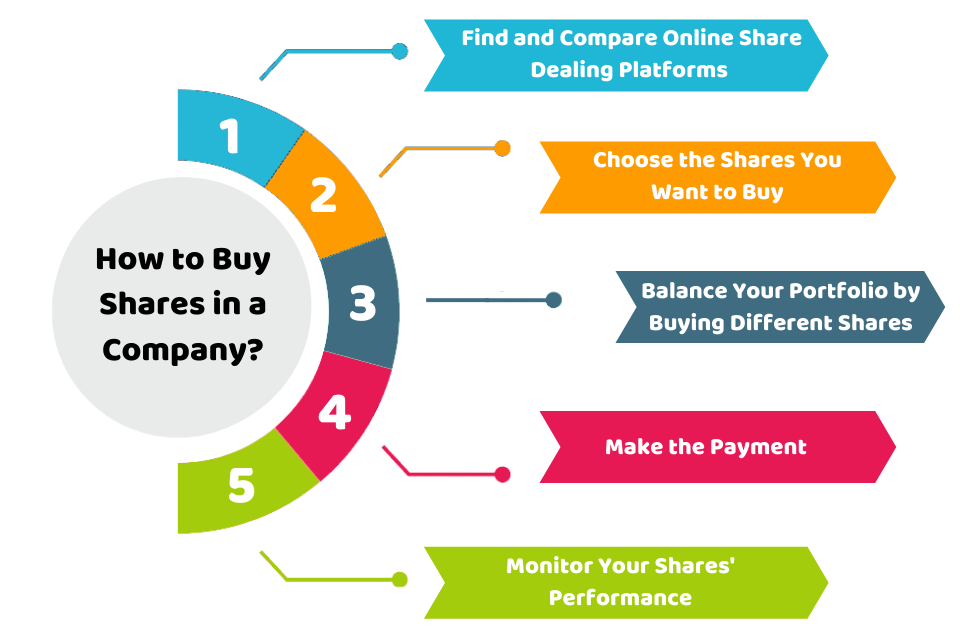
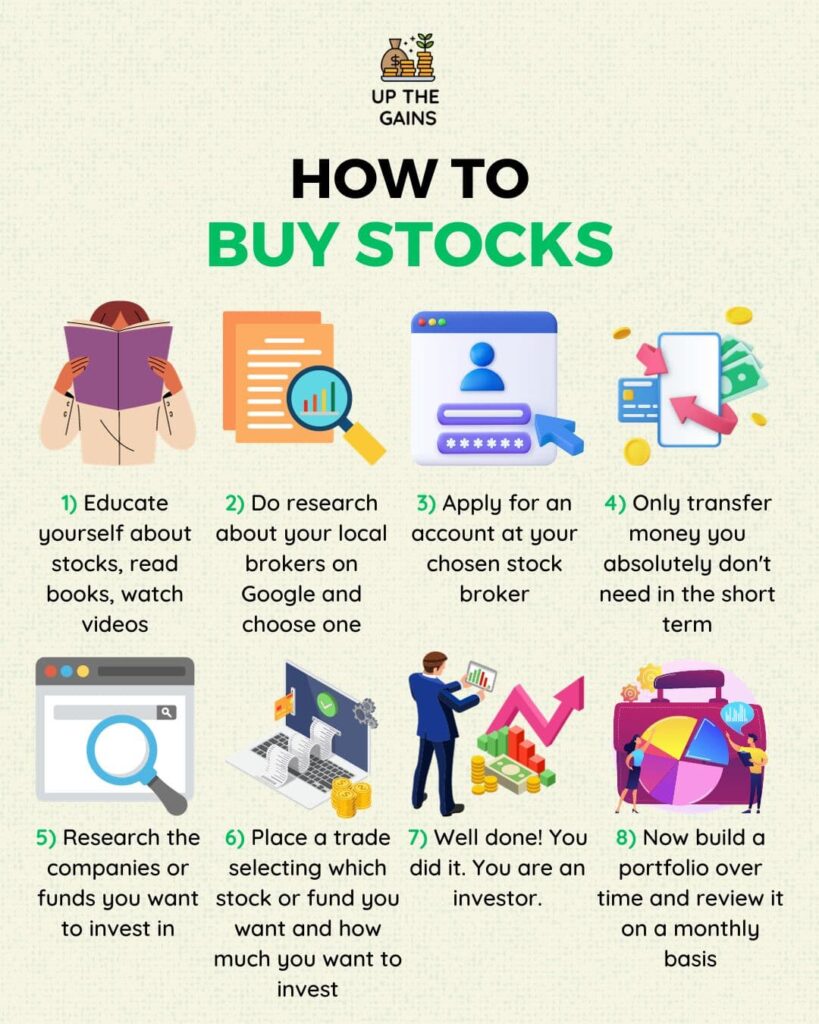
Executing Your First Stock Purchase: A Step-by-Step Walkthrough
Once your account is open and funded, you’re ready to make your initial foray into the stock market. This section guides you through the process of selecting a company and placing your first trade.
Funding Your Account
Before you can buy any stock, you need to deposit money into your brokerage account. Most brokers offer several ways to do this:
- Electronic Funds Transfer (EFT) / ACH Transfer: This is a common and usually free method to link your bank account and transfer funds. It may take a few business days for the funds to clear and become available for trading.
- Wire Transfer: Faster than ACH but often involves fees from your bank and/or the brokerage.
- Check Deposit: Slower processing time compared to electronic methods.
- Rollover from another retirement account: If applicable for IRAs.
Ensure your funds have fully settled before attempting to place a trade, as some brokers may allow you to place trades with unsettled funds but with restrictions.
Researching and Selecting Companies for Investment
This is arguably the most critical step. Don’t just pick a company because you like its products or heard a tip. Thorough research is paramount.
- Understand the Business: What does the company do? How does it make money? What are its competitive advantages?
- Financial Health: Examine financial statements (income statement, balance sheet, cash flow statement). Look at key metrics like revenue growth, profit margins, debt levels, and cash flow.
- Industry and Competitive Landscape: How does the company stack up against its competitors? What are the industry trends?
- Management Team: Assess the leadership’s experience, track record, and vision.
- Valuation: Is the stock currently undervalued, fairly valued, or overvalued compared to its peers and historical performance? Tools like P/E ratio, P/S ratio, and dividend yield can offer insights.
- Future Prospects: What are the company’s growth opportunities and potential challenges?
Utilize the research tools provided by your broker, financial news websites, SEC filings (like 10-K and 10-Q reports), and independent financial analysis sites. Invest in companies whose business models you understand and believe have long-term potential.
Understanding Order Types: Market, Limit, Stop
When you’re ready to buy, you’ll need to specify an “order type” to tell your broker how you want the trade executed:
- Market Order: This is the simplest and most common order type. You instruct your broker to buy or sell shares immediately at the best available current market price. While it guarantees execution, it does not guarantee a specific price, which can be problematic in fast-moving markets.
- Limit Order: With a limit order, you specify the maximum price you’re willing to pay for a stock (for a buy order) or the minimum price you’re willing to accept (for a sell order). Your order will only execute if the stock reaches or crosses that price. This gives you more control over the price but doesn’t guarantee execution.
- Stop Order (or Stop-Loss Order): This order becomes a market order once a specified “stop price” is reached. For example, a stop-loss order to sell at $50 means if the stock drops to $50, your order converts to a market order and sells immediately. It’s used to limit potential losses but doesn’t guarantee a sale at exactly $50 in a volatile market.
For beginners, a limit order often provides better control, especially when buying stocks with wider bid-ask spreads or those experiencing significant price fluctuations.
Placing Your Trade
With your research complete and your order type decided, placing the trade is straightforward:
- Log in to your brokerage account.
- Navigate to the trading section.
- Search for the company’s ticker symbol. (e.g., AAPL for Apple, MSFT for Microsoft).
- Select “Buy”.
- Enter the number of shares you wish to purchase or the dollar amount if your broker supports fractional shares.
- Choose your order type (e.g., Market, Limit). If using a limit order, specify your desired price.
- Select the “Time in Force” (e.g., “Day” for an order that expires at the end of the trading day, or “Good ‘Til Cancelled” (GTC) for an order that remains active until filled or canceled).
- Review all details of your order carefully.
- Submit the order.
You’ll receive a confirmation once your order is executed. Your brokerage account statement will reflect your new stock holdings.
Building a Resilient Portfolio: Strategies for Long-Term Success
Buying your first stock is just the beginning. True success in investing comes from a thoughtful, disciplined approach to portfolio construction and ongoing management.
The Power of Diversification: Don’t Put All Your Eggs in One Basket
Diversification is a cornerstone of sound investing. It means spreading your investments across various assets, industries, and geographies to reduce overall risk. If one investment performs poorly, others may perform well, cushioning the impact on your total portfolio. Instead of putting all your capital into a single stock, consider:
- Investing in different companies: Select stocks from various sectors (e.g., technology, healthcare, financials, consumer staples).
- Asset allocation: Combine stocks with other asset classes like bonds, real estate, or commodities.
- Geographic diversification: Invest in companies operating in different countries or regions.
- Exchange-Traded Funds (ETFs) and Mutual Funds: These funds hold a basket of many different stocks or other securities, providing instant diversification with a single purchase. For beginners, investing in broad market index ETFs (like those tracking the S&P 500) is an excellent way to gain diversified exposure with low costs.
Long-Term Investing vs. Short-Term Trading
It’s crucial to distinguish between investing and trading. Long-term investing focuses on holding assets for several years or even decades, aiming to benefit from compounding returns and the fundamental growth of companies. This strategy typically involves less frequent trading and often rides out short-term market fluctuations. Short-term trading, on the other hand, involves buying and selling securities frequently (daily, weekly, monthly) to profit from minor price movements. This is a significantly more speculative and higher-risk endeavor, often requiring extensive knowledge, time, and emotional discipline. For the vast majority of new investors, a long-term, buy-and-hold strategy focused on quality companies or diversified funds is overwhelmingly recommended.
Continuous Learning and Monitoring Your Investments
The investment landscape is dynamic. Successful investors are continuous learners. Stay informed about economic trends, market news, and the performance of the companies you own. Regularly review your portfolio to ensure it aligns with your financial goals, risk tolerance, and time horizon. This doesn’t mean constantly tinkering; rather, it involves periodic rebalancing and making adjustments when your circumstances or the underlying fundamentals of an investment significantly change. Set up alerts for company news, earnings reports, and dividend announcements. Use the educational resources provided by your broker or reputable financial news outlets to expand your knowledge.
Common Pitfalls and How to Avoid Them
Even with the right knowledge and tools, new investors can fall prey to common mistakes. Recognizing these pitfalls can help you navigate the market more effectively and protect your capital.
Emotional Investing and Market Timing
One of the biggest dangers to long-term returns is emotional decision-making. Fear (leading to panic selling during downturns) and greed (leading to buying into speculative bubbles or chasing hot stocks) can severely erode wealth. Similarly, “market timing” – attempting to predict the perfect time to enter or exit the market – is notoriously difficult, even for professionals, and often leads to missed opportunities or sub-optimal returns. Instead, adopt a disciplined approach: stick to your investment plan, make decisions based on research and your financial goals, and remember that time in the market generally beats timing the market.
Overlooking Fees and Taxes
While commission-free trading has become widespread, other fees can still eat into your returns. These can include expense ratios for ETFs and mutual funds, account maintenance fees, transfer fees, or advisory fees if you use a full-service broker or robo-advisor with premium features. Always read the fee schedule carefully.
Taxes are another critical consideration. Capital gains taxes (on profits from selling stocks) and taxes on dividends can significantly impact your net returns. Understanding the difference between short-term and long-term capital gains tax rates, and utilizing tax-advantaged accounts like IRAs, is crucial for optimizing your investment strategy. Consult a tax professional for personalized advice.
Lack of Due Diligence
Investing without proper research is akin to gambling. Relying solely on headlines, social media chatter, or “hot tips” without understanding the underlying business and its financial health is a recipe for disaster. Before investing, always conduct your own due diligence. Understand the company’s business model, competitive landscape, financial statements, and future prospects. If you don’t understand it, don’t invest in it. A well-researched decision, even if it doesn’t yield immediate results, builds a stronger foundation for long-term success than speculative bets.
In conclusion, buying stock in a company is a rewarding step toward taking control of your financial future. By understanding the fundamentals of stock ownership, carefully choosing your investment platform, executing trades with confidence, and adhering to sound long-term strategies like diversification and continuous learning, you can build a robust portfolio. Avoid the common pitfalls of emotional decisions and insufficient research, and remember that patience and discipline are your greatest allies in the journey of wealth creation through stock market investing.
aViewFromTheCave is a participant in the Amazon Services LLC Associates Program, an affiliate advertising program designed to provide a means for sites to earn advertising fees by advertising and linking to Amazon.com. Amazon, the Amazon logo, AmazonSupply, and the AmazonSupply logo are trademarks of Amazon.com, Inc. or its affiliates. As an Amazon Associate we earn affiliate commissions from qualifying purchases.