
Blockchain technology, often hailed as one of the most transformative innovations since the internet, underpins cryptocurrencies like Bitcoin and Ethereum, but its potential applications extend far beyond digital money. At its core, a blockchain is a distributed, immutable ledger that records transactions in a secure and transparent manner. Understanding “how blockchains work” requires delving into a fascinating intersection of cryptography, network theory, and computer science. This article will unravel the intricate mechanisms that allow this decentralized system to operate without the need for a central authority, offering insights into its fundamental components, operational processes, and the profound implications it holds for digital security and data management.
The Fundamental Concept: Decentralization and Distributed Ledgers
The genesis of blockchain technology lies in a radical departure from traditional centralized systems. For centuries, ledgers – records of transactions – have been maintained by single entities: banks, governments, or corporations. Blockchain proposes a new paradigm where trust is not placed in an intermediary, but rather in a network of participants and cryptographic proofs.
What is a Ledger?
Before diving into distributed ledgers, it’s helpful to understand a traditional ledger. Imagine a physical accounting book where every financial transaction is meticulously recorded, showing who paid whom, how much, and when. In the digital age, these ledgers became databases controlled by a central authority. For instance, when you send money via a traditional bank, the bank’s central server updates its ledger, deducting funds from your account and adding them to the recipient’s. This system relies entirely on your trust in the bank to maintain accurate records and secure your assets.
The Shift to Distributed Ledgers (DLT)
A distributed ledger technology (DLT) is a database that is shared, replicated, and synchronized among multiple participants (nodes) across a network. Instead of a single central authority maintaining the ledger, every participant holds an identical copy. When a new transaction occurs, it is validated by the network and then added to every copy of the ledger. This collective maintenance ensures redundancy and resilience; if one node fails, the ledger remains intact across the others. Blockchain is a specific type of DLT where transactions are grouped into “blocks” that are then cryptographically linked together in a chronological “chain.”
Why Decentralization Matters
Decentralization is the cornerstone of blockchain’s appeal. In a centralized system, the central authority is a single point of failure. It can be hacked, subjected to censorship, or manipulate records. Decentralization mitigates these risks by distributing control and data across many independent nodes.
- Trustlessness: Participants don’t need to trust a central intermediary. They trust the cryptographic protocols and the consensus mechanisms of the network.
- Censorship Resistance: No single entity can prevent a valid transaction from being recorded, making the network resistant to censorship.
- Transparency (Pseudo-Anonymity): While individual identities may be pseudonymous (represented by wallet addresses), all transactions on the public ledger are transparent and verifiable by anyone.
- Security: The distributed nature and cryptographic linking of blocks make it incredibly difficult for an attacker to alter past records without being detected by the network.
The Core Components of a Blockchain
To understand the operational mechanics of a blockchain, it’s essential to dissect its fundamental building blocks and the technologies that bind them together.
Blocks: The Building Blocks of Data
A “block” is essentially a container for data. In the context of a blockchain, each block typically contains:
- A List of Transactions: These are the primary data units, such as financial transfers, data entries, or smart contract executions. Each transaction includes details like sender, recipient, amount, and a timestamp.
- A Timestamp: The exact time the block was created.
- The Hash of the Previous Block: This is the crucial element that links blocks together, forming the “chain.” A hash is a unique, fixed-length string of characters generated from the block’s data. Even a tiny change in the data will produce a completely different hash.
- A Nonce: (In Proof-of-Work systems) This is a random number that miners adjust to find a valid hash for the block, meeting specific network difficulty targets.
- A Merkle Root: A cryptographic hash of all the transactions in the block, allowing for efficient verification of transaction inclusion without needing to download the entire block.
Chains: Linking Blocks Together
The “chain” aspect of blockchain comes from the cryptographic link between successive blocks. Each new block contains the cryptographic hash of the previous block. This creates an unbreakable, chronological sequence. If an attacker tries to alter a transaction in an old block, its hash would change. Consequently, the hash stored in the next block (which points to the old block’s original hash) would no longer match. This invalidates the entire chain from that point forward, immediately alerting the network to the tampering attempt. This cryptographic chaining ensures the ledger’s immutability; once a block is added and confirmed, it is practically impossible to alter it without the network’s consensus.
Nodes: The Network’s Participants
Nodes are the computers that participate in the blockchain network. They perform various functions crucial to the system’s operation:
- Full Nodes: These nodes download and store a complete copy of the blockchain ledger. They validate transactions and blocks according to the network’s rules, enforce consensus, and broadcast new transactions and blocks to other nodes. Full nodes are vital for the network’s security and decentralization.
- Mining/Staking Nodes (Validators): In specific blockchain implementations, these nodes perform the computationally intensive work (mining in Proof of Work) or stake their cryptocurrency (in Proof of Stake) to create new blocks and add them to the chain. They are rewarded for their efforts.
- Light Nodes: These nodes do not store the entire blockchain but rather a subset of it, relying on full nodes for verification. They are typically used in resource-constrained environments like mobile devices.
Cryptography: The Underlying Security Layer
Cryptography is the backbone of blockchain security. Two primary cryptographic techniques are fundamental:
- Hashing Functions: These mathematical functions take an input (e.g., a block of data) and produce a fixed-size output string of characters (the hash). They are one-way (irreversible), deterministic (same input always yields same output), and collision-resistant (extremely unlikely for two different inputs to produce the same hash). Hashing is used for linking blocks, creating Merkle roots, and securing transaction data.
- Digital Signatures (Public-Key Cryptography): This mechanism ensures that transactions are authentic and authorized. Each participant has a pair of cryptographic keys: a public key and a private key. The private key is kept secret and used to “sign” transactions, proving ownership of funds or data. The public key is shared and used by others to verify the signature, confirming that the transaction originated from the legitimate owner and has not been tampered with.
The Consensus Mechanism: Reaching Agreement in a Distributed System
One of the greatest challenges in a distributed system without a central authority is how all independent nodes agree on the true state of the ledger. This problem is solved by “consensus mechanisms.”
The Challenge of Distributed Consensus
In a distributed network, various issues can arise: network latency, node failures, or even malicious actors attempting to submit false transactions. Without a central arbiter, how can all nodes agree on the correct order of transactions and prevent double-spending (using the same digital funds twice)? Consensus mechanisms provide a set of rules and incentives that ensure all honest nodes eventually arrive at the same, correct version of the ledger.
Proof of Work (PoW): Bitcoin’s Innovation
Proof of Work (PoW) is the original and most well-known consensus mechanism, first implemented by Bitcoin.
- Mining: Participants called “miners” compete to solve a complex computational puzzle. This puzzle involves finding a “nonce” – a random number – that, when combined with the block’s data and hashed, produces a result (the block hash) that meets a specific target difficulty (e.g., starts with a certain number of zeros).
- Computational Effort: Solving this puzzle requires significant computational power and energy, hence “Proof of Work.” It’s difficult to find the solution but easy for any node to verify once found.
- Block Addition: The first miner to find a valid nonce broadcasts their newly formed block to the network. Other nodes verify the block’s validity (checking transactions, previous hash, and nonce). If valid, they add it to their copy of the blockchain and begin working on the next block.
- Incentives and Security: Miners are rewarded with newly minted cryptocurrency and transaction fees for successfully adding a block. The immense computational power required to consistently solve blocks makes it economically unfeasible to attack the network (a “51% attack” where an entity controls most of the network’s computing power) and rewrite history.
Proof of Stake (PoS): A Greener Alternative
Proof of Stake (PoS) emerged as an alternative to PoW, primarily to address its energy consumption concerns.
- Staking: Instead of expending computational power, participants (called “validators” or “forgers”) “stake” a certain amount of the network’s native cryptocurrency as collateral. This stake acts as a financial incentive to behave honestly.
- Validator Selection: Validators are chosen to create new blocks based on factors like the amount of cryptocurrency they’ve staked, how long it’s been staked, and sometimes a random element. The more coins staked, the higher the chance of being selected.
- Block Creation and Rewards: The selected validator proposes and validates a new block. If other validators confirm its validity, the block is added to the chain, and the validator receives a reward (often transaction fees or newly minted coins).
- Security and Penalties: If a validator acts maliciously (e.g., attempts to double-spend), they risk losing a portion or all of their staked currency (a process called “slashing”). This provides a strong economic disincentive for dishonesty. PoS networks generally consume significantly less energy than PoW networks.
Other Consensus Mechanisms
While PoW and PoS are dominant, other mechanisms exist, often tailored for specific blockchain applications:
- Delegated Proof of Stake (DPoS): Users elect a smaller group of delegates (witnesses) to validate blocks, offering faster transaction times but slightly more centralization.
- Proof of Authority (PoA): Relies on a limited number of pre-approved, trusted validators, suitable for private or consortium blockchains where identity and reputation are key.
The Blockchain Transaction Lifecycle
Understanding the journey of a transaction from initiation to finality provides a clear picture of how these components interact.
Initiating a Transaction
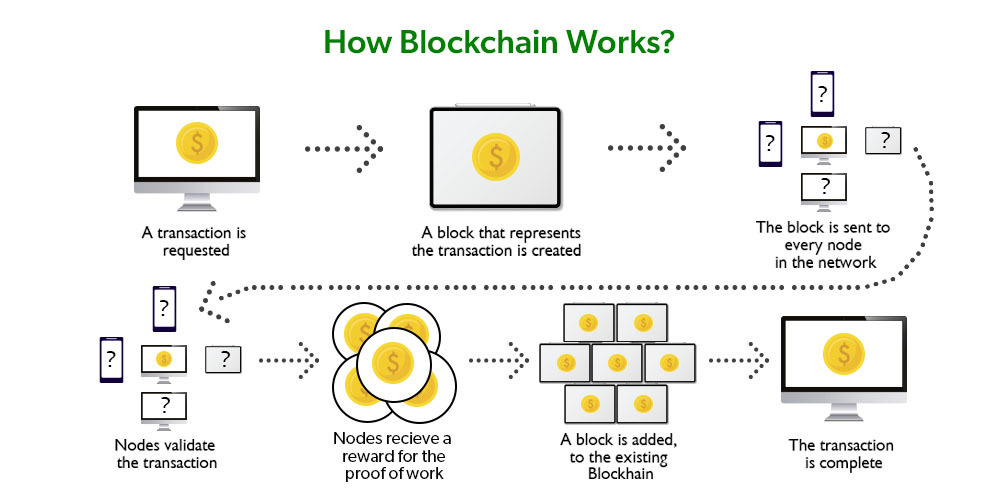
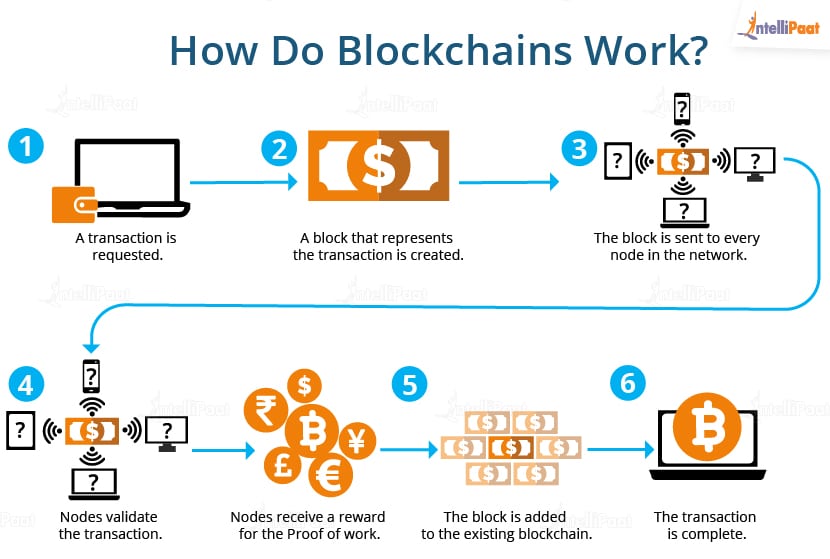
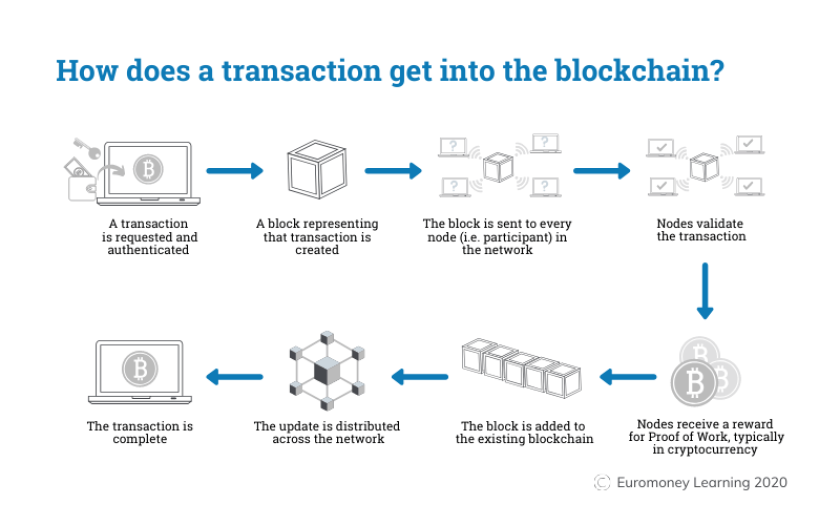
The process begins when a user wants to send value or data. Using their cryptocurrency wallet software, the user creates a transaction, specifying the recipient’s address and the amount. This transaction is then digitally signed with the user’s private key, proving their ownership and authorization.
Verification and Broadcasting
Once signed, the transaction is broadcast to the blockchain network. Individual nodes receive this transaction and independently verify its validity:
- Is the sender’s digital signature valid?
- Does the sender have sufficient funds (or data access rights) to complete the transaction?
- Has the transaction already been included in the blockchain (to prevent double-spending)?
If valid, the transaction is added to a “mempool” (memory pool) – a waiting area for unconfirmed transactions – and relayed to other nodes across the network.
Block Creation and Addition
Miners (PoW) or validators (PoS) gather a selection of unconfirmed transactions from their mempool. They then perform the necessary work (solving the PoW puzzle or being selected in PoS) to propose a new block containing these transactions.
- Once a miner finds a valid proof of work (or a validator is chosen and proposes a block), they broadcast the new block to the network.
- Other nodes verify the block’s integrity, ensuring all transactions are valid, the previous block’s hash is correct, and (in PoW) the nonce leads to a valid block hash.
- If the block is deemed valid by a majority of the network, it is added to their copy of the blockchain. This block is now considered “confirmed.”
Finality and Immutability
For a transaction to be considered truly “final,” it needs to be included in a block that has been followed by several subsequent blocks. This is because, in rare cases of network splits, two different valid blocks might be proposed almost simultaneously, leading to temporary forks. The longest chain rule (or similar mechanisms in PoS) dictates that the chain with the most cumulative work (or stake) is the canonical one. Once a transaction is buried under several blocks (e.g., 6 confirmations for Bitcoin), it becomes virtually irreversible, embodying the blockchain’s core promise of immutability.
Key Characteristics and Benefits of Blockchain Technology
The unique operational model of blockchain bestows upon it several distinctive characteristics and benefits, making it a compelling solution for various digital challenges.
Immutability and Transparency
Once data (a transaction) is recorded in a block and that block is added to the chain, it cannot be altered or removed. This immutability, combined with the transparent nature of public blockchains where all transactions are visible to everyone, creates an unprecedented level of auditability and trust. Every participant can independently verify the history of transactions without relying on a central authority.
Security and Cryptographic Integrity
The combination of cryptographic hashing, digital signatures, and the distributed nature of the ledger makes blockchain highly secure. Any attempt to tamper with a block would invalidate its hash, breaking the chain and alerting the network. The computational resources required to overwrite a significant portion of a large, active blockchain are prohibitive, making it an extremely robust system against malicious attacks.
Censorship Resistance and Trustlessness
Because there’s no central point of control, no single entity can dictate what transactions are allowed or denied, nor can they shut down the network. This makes public blockchains inherently censorship-resistant. Furthermore, the reliance on cryptographic proofs and consensus mechanisms rather than intermediaries means participants don’t need to trust each other, only the protocol itself—a concept known as “trustlessness.”
Efficiency and Automation (Smart Contracts)
While the transaction processing speed of some blockchains can be slower than centralized systems, the ability to remove intermediaries can lead to significant efficiencies in certain contexts. For instance, “smart contracts” – self-executing contracts with the terms of the agreement directly written into code – automate processes, reduce administrative overhead, and eliminate the need for third-party enforcement, enhancing efficiency and reducing costs across various industries.
In conclusion, “how blockchains work” boils down to a sophisticated interplay of blocks, chains, nodes, and cryptographic principles, all orchestrated by robust consensus mechanisms. This intricate architecture creates a decentralized, secure, and transparent ledger system with profound implications for digital trust, data management, and the future of interconnected technologies. As the technology continues to evolve, understanding these foundational principles will be crucial for navigating its expanding applications and impact across the digital landscape.
aViewFromTheCave is a participant in the Amazon Services LLC Associates Program, an affiliate advertising program designed to provide a means for sites to earn advertising fees by advertising and linking to Amazon.com. Amazon, the Amazon logo, AmazonSupply, and the AmazonSupply logo are trademarks of Amazon.com, Inc. or its affiliates. As an Amazon Associate we earn affiliate commissions from qualifying purchases.