
For the modern investor, the question “how did the stock market do today?” is often the first thought upon the closing bell at 4:00 PM EST. However, the answer is rarely a simple “up” or “down.” Daily market performance is a complex tapestry woven from economic data, corporate earnings, geopolitical shifts, and investor psychology. Understanding how to read these daily movements is a fundamental skill for anyone looking to build long-term wealth and navigate the volatility of the financial landscape.
In this guide, we will break down the mechanics of daily market performance, explore the indicators that move the needle, and discuss how to interpret short-term fluctuations without losing sight of your overarching financial goals.
Decoding the Major Indices: More Than Just Numbers
When people ask how the market performed, they are usually referring to the “Big Three” indices. Each of these benchmarks tells a different story about the health of the economy and the sentiment of investors.
The S&P 500: The Broader Market Barometer
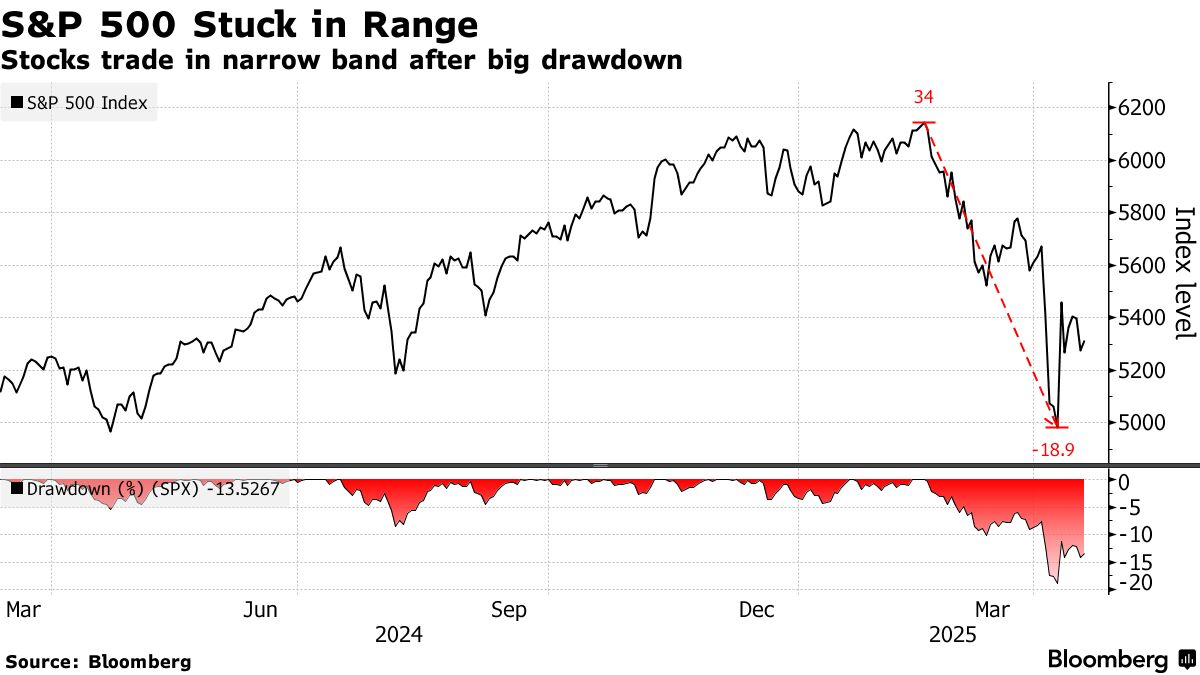
The Standard & Poor’s 500 is widely considered the most accurate reflection of the U.S. stock market. Comprising 500 of the largest publicly traded companies, it is a market-capitalization-weighted index. This means that larger companies, like Apple or Microsoft, have a more significant impact on the index’s movement than smaller ones. When the S&P 500 is “up,” it generally indicates that the core of corporate America is seeing positive momentum. Professional fund managers and institutional investors use this index as their primary benchmark for success.
The Dow Jones Industrial Average: The Blue-Chip Pulse
The Dow is the oldest and perhaps most famous index, consisting of 30 “blue-chip” companies. Unlike the S&P 500, the Dow is price-weighted, meaning stocks with higher share prices influence the index more than those with lower prices. While it is less diverse than other indices, it serves as a vital indicator of the health of established, industrial, and consumer-focused giants. If the Dow is leading the market’s gains, it often suggests a “flight to quality,” where investors are seeking safety in stable, dividend-paying companies.
The Nasdaq Composite: The Tech and Growth Engine
The Nasdaq is heavily weighted toward the technology, biotechnology, and growth sectors. Because these industries are sensitive to interest rates and future earnings projections, the Nasdaq tends to be more volatile than the Dow or the S&P 500. On days when the Nasdaq outperforms, it usually signals high risk-appetite among investors. Conversely, if the Nasdaq is lagging, it may indicate concerns over inflation or rising borrowing costs, which disproportionately affect growth-oriented firms.
Key Indicators That Drive Daily Price Action
The “why” behind a day’s market movement is often found in the economic calendar. Markets are forward-looking mechanisms; they don’t just react to what is happening now, but to what they expect to happen in the future.
Economic Data Releases and Federal Reserve Policy
On any given day, the release of a single report can send the markets into a frenzy. Key data points include the Consumer Price Index (CPI), which measures inflation, and the Non-Farm Payrolls (NFP) report, which indicates the health of the labor market.
Perhaps the most influential force is the Federal Reserve. Investors hang on every word from Fed officials to gauge the direction of interest rates. If data suggests inflation is cooling, the market may rally on the hope of rate cuts. If the labor market is “too hot,” the market might dip, fearing the Fed will keep rates high to prevent the economy from overheating.
Corporate Earnings Reports: The Fundamental Catalyst
During “earnings season”—the weeks following the end of each fiscal quarter—daily market performance is driven largely by individual company results. A company might report record profits, but if its “guidance” (its forecast for future quarters) is weak, its stock price might tumble. Because the largest companies carry so much weight in the indices, a disappointing earnings report from a tech giant can drag down the entire market, regardless of how other companies performed.
Geopolitical Events and Market Sentiment
Markets hate uncertainty. Geopolitical tensions, trade negotiations, or sudden changes in government policy can trigger “sell-offs” as investors move their capital into safer assets like gold or government bonds. Daily performance is often a reflection of the collective “mood” of the market, known as sentiment. Tools like the CBOE Volatility Index (VIX), often called the “Fear Gauge,” help investors understand whether the day’s movement was driven by rational data or emotional panic.
Sector Performance: Where Was the Money Flowing?
To truly understand how the market did today, you must look beneath the surface of the major indices. The stock market is divided into 11 sectors, and they rarely move in unison.
Cyclical vs. Defensive Sectors
In a healthy, growing economy, “cyclical” sectors like Consumer Discretionary, Financials, and Industrials tend to lead the way. These companies thrive when consumers have extra cash to spend. On the other hand, during days of economic uncertainty, “defensive” sectors like Utilities, Healthcare, and Consumer Staples often outperform. These sectors provide essential services that people need regardless of the economy, making them a safe haven for capital during market downturns.
The Impact of Interest Rates on Different Industries
Daily performance is also dictated by how different sectors respond to the yield curve. For instance, the Financial sector (banks and insurance companies) often benefits from higher interest rates as it allows them to increase their net interest margins. Meanwhile, the Real Estate and Tech sectors often struggle when rates rise because they rely heavily on cheap debt to fuel growth and acquisitions. Tracking which sectors are “green” and which are “red” provides a roadmap of where institutional “smart money” is rotating.
Navigating Volatility: How to React to Daily Gains and Losses
It is easy to get caught up in the dopamine hit of a “green day” or the anxiety of a “red day.” However, successful investing requires a disciplined approach to daily fluctuations.
The Danger of Short-Termism
The biggest mistake an individual investor can make is reacting emotionally to a single day’s performance. The stock market is inherently volatile in the short term, but it has historically trended upward over the long term. If you find yourself wanting to sell your holdings because the S&P 500 dropped 2% today, you may be falling into the trap of short-termism. Remember that “time in the market” is almost always superior to “timing the market.”
Using Technical Analysis to Contextualize Daily Moves
For those who want to understand the “how” of daily movement, technical analysis offers clues. Traders look at support and resistance levels—price points where a stock or index historically struggles to fall below or rise above. If the market closes at a “new high,” it may signal continued bullish momentum. If it breaks a key support level, it might indicate further selling pressure ahead. Using these tools helps remove emotion from the equation by providing a data-driven framework for daily action.
Developing a Long-Term Investment Mindset
To survive the daily grind of the stock market, you must align your daily observations with your long-term financial plan. Are you a dividend investor looking for income? If so, a down day might actually be a “sale” that allows you to buy more shares at a lower price. Are you a growth investor? Then a volatile day in the Nasdaq is simply part of the journey. By maintaining a “Money” mindset—focusing on assets, liabilities, and long-term compounding—daily market noise becomes much easier to manage.
Essential Tools for Tracking the Market in Real-Time
In the digital age, you don’t need a Bloomberg Terminal to know how the market is doing. However, the quality of your information determines the quality of your decisions.
Financial News Platforms and Terminals
While mainstream news provides headlines, dedicated financial platforms like CNBC, Reuters, and Yahoo Finance offer deeper dives into the “why.” These platforms provide real-time updates on pre-market trading, mid-day shifts, and after-hours earnings reports. Pay close attention to the “closing cross”—the final minutes of the trading day where massive volumes of shares are traded, often setting the tone for the following morning.
Portfolio Tracking Apps and Watchlists
The most relevant way to answer “how did the market do today?” is to see how your market did. Using portfolio trackers allows you to see the weighted performance of your specific holdings. It is possible for the Dow to be down while your personal portfolio is up, especially if you are diversified into international markets, commodities, or specialized ETFs. Building a “watchlist” of stocks you are interested in also allows you to monitor how they react to daily news, providing valuable education for future investment opportunities.
Conclusion
Understanding how the stock market did today is about more than just checking a percentage on a screen. It is about understanding the interplay between economic policy, corporate health, and human psychology. By analyzing the major indices, keeping an eye on sector rotation, and maintaining a disciplined long-term perspective, you can transform daily market updates from a source of stress into a powerful tool for financial mastery. Whether the bulls or the bears won the day, the informed investor is always looking at the bigger picture: the steady accumulation of wealth over time.
aViewFromTheCave is a participant in the Amazon Services LLC Associates Program, an affiliate advertising program designed to provide a means for sites to earn advertising fees by advertising and linking to Amazon.com. Amazon, the Amazon logo, AmazonSupply, and the AmazonSupply logo are trademarks of Amazon.com, Inc. or its affiliates. As an Amazon Associate we earn affiliate commissions from qualifying purchases.