
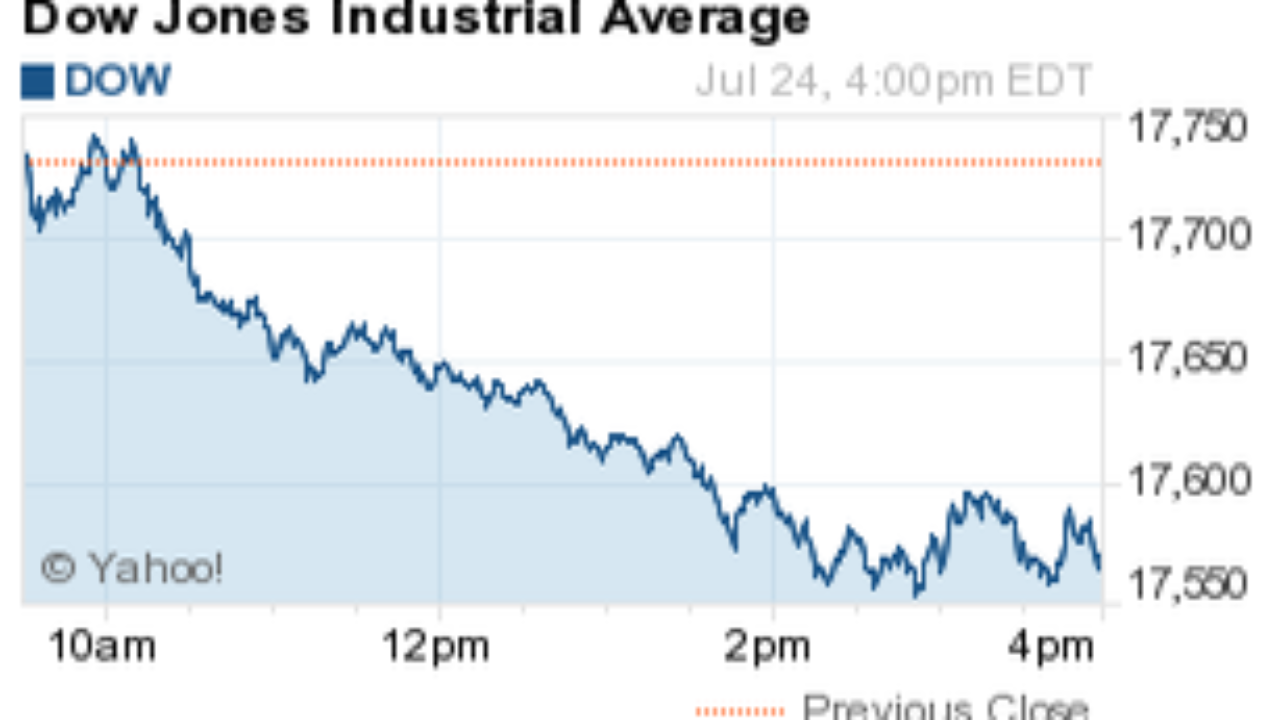
The daily performance of the Dow Jones Industrial Average (DJIA) is often the headline indicator for market enthusiasts, professional investors, and the general public alike. As one of the oldest and most widely recognized stock market indices globally, its movements are closely watched, reflecting the pulse of the American economy and corporate health. But understanding “how the Dow did today” goes far beyond simply quoting a number; it involves deciphering complex market dynamics, economic signals, and investor sentiment.
Understanding the Dow Jones Industrial Average (DJIA)
To truly appreciate the significance of the Dow’s daily performance, one must first grasp its fundamental nature, its history, and how it is constructed. It’s more than just a collection of stocks; it’s a barometer for a significant segment of the U.S. industrial and economic landscape.

What is the DJIA? A Brief History and Purpose
The Dow Jones Industrial Average was created in 1896 by Charles Dow and Edward Jones. Its initial purpose was to provide a clear, concise measure of the health of the U.S. industrial sector. Starting with just 12 companies, it evolved to 20 in 1916 and eventually settled on 30 companies in 1928, where it remains today. Despite its name, which still includes “Industrial,” the index now encompasses a broad range of sectors, reflecting the shift from a primarily manufacturing-based economy to one driven by technology, finance, and services. Its core purpose endures: to serve as a bellwether for the overall health and direction of the U.S. stock market and, by extension, the broader economy.
The “30 Stocks”: Who’s In and Why It Matters
The DJIA is composed of 30 large, publicly owned companies based in the United States. These companies are often referred to as “blue-chip” stocks, signifying their long-standing reputation for stability, profitability, and leadership within their respective industries. The selection process for these 30 components is not governed by a rigid quantitative formula but rather by a committee from S&P Dow Jones Indices. They aim to choose companies with excellent reputations, demonstrated growth, and broad investor interest, ensuring that the index remains a relevant and accurate reflection of the U.S. equity market. The components change infrequently, only when a company’s market relevance significantly diminishes, or an industry shift warrants a new representative. For instance, a company like Apple or Microsoft represents the technology sector, while Home Depot or Walmart speak to retail and consumer spending. The specific composition directly influences how the index reacts to various economic and corporate news, making understanding its components crucial.
Price-Weighted vs. Market-Cap Weighted: How the DJIA is Calculated
Perhaps one of the most distinctive, and sometimes criticized, features of the DJIA is its calculation method: it is a price-weighted index. This means that stocks with higher share prices have a greater influence on the index’s value than stocks with lower share prices, regardless of the company’s total market capitalization (the total value of all its outstanding shares). This stands in contrast to most modern indices, like the S&P 500, which are market-capitalization weighted, meaning larger companies (by market cap) have a greater impact.
To calculate the Dow, the sum of the prices of its 30 component stocks is divided by a factor known as the “Dow Divisor.” This divisor is adjusted periodically to account for stock splits, dividends, and changes in the index components, ensuring that the index’s historical continuity is maintained. While the price-weighted methodology can sometimes lead to distortions (e.g., a high-priced stock with a smaller market cap can move the index more than a lower-priced stock with a massive market cap), its simplicity has contributed to its enduring popularity.
Deciphering Today’s Performance: What Moves the Dow?
When the news reports that the Dow was up or down by a certain number of points, it’s the culmination of myriad forces acting upon the market throughout the trading day. These drivers can be domestic or international, economic or geopolitical, and often intertwine in complex ways.
Economic Indicators: Inflation, Interest Rates, Employment
Macroeconomic data releases are paramount in influencing the Dow. Reports on inflation (e.g., Consumer Price Index, Producer Price Index) directly impact corporate profitability and consumer purchasing power. Higher inflation can lead to increased costs for businesses and reduced consumer demand, potentially dampening stock prices. Similarly, signals from the Federal Reserve regarding interest rates are critical. Rate hikes can increase borrowing costs for businesses and make bonds more attractive relative to stocks, often leading to market pullbacks. Conversely, rate cuts can stimulate economic activity and boost equity valuations. Employment figures, such as the monthly jobs report, offer insights into economic strength and consumer health, directly influencing investor confidence. A robust job market typically signals a strong economy, which is generally positive for corporate earnings and stock prices.
Corporate Earnings and Sector Performance
At the microeconomic level, the aggregate performance of the 30 Dow components is, by definition, the direct driver of the index’s movement. During earnings season, individual company reports — detailing revenue, profit margins, and future guidance — can cause significant shifts. Strong earnings from several key Dow components can lift the entire index, while widespread misses can trigger a decline. Beyond individual companies, the performance of specific sectors within the Dow also plays a role. For example, if the technology sector (represented by components like Apple or Microsoft) is having a strong day due to new product announcements or favorable industry trends, it can pull the entire index higher, assuming those components have a significant price weight.
Geopolitical Events and Global Market Sentiment
The Dow doesn’t operate in a vacuum. Major geopolitical events, such as trade disputes, political instability in key regions, or international conflicts, can trigger broad market reactions. These events introduce uncertainty, which investors typically dislike, often leading to sell-offs as capital seeks safer havens. Global economic data, such as manufacturing indices from China or GDP reports from Europe, can also ripple through the U.S. market, affecting investor sentiment and corporate outlooks for multinational Dow components. A slowdown in a major global economy, for instance, could signal reduced demand for products and services from American companies, impacting their earnings and stock prices.
Market Psychology and Investor Confidence
Beyond the tangible data points and events, market psychology plays a crucial, albeit intangible, role. Investor sentiment, often driven by fear or greed, can amplify market movements. Positive news can lead to a “risk-on” environment, where investors are eager to buy, driving prices up. Conversely, negative headlines can spark panic selling, creating a “risk-off” mood that pushes prices down. Factors like herd mentality, algorithmic trading, and the influence of financial news cycles can create momentum-driven moves that are not always tied to underlying fundamentals in the short term. Gauges of investor confidence, though subjective, are constantly monitored as they can predict broader market shifts.
Interpreting Daily Fluctuations: Beyond Just the Number
A single day’s movement in the Dow, whether up or down, tells only a fraction of the story. Investors need to look beyond the immediate headlines to understand the true implications for their portfolios and the economy.
Short-Term Volatility vs. Long-Term Trends

Daily fluctuations are a natural part of stock market activity. They can be triggered by minor news, algorithmic trading, or end-of-day rebalancing. Short-term volatility, characterized by sharp up-and-down movements, is often just noise. Wise investors understand that focusing too much on daily swings can lead to impulsive decisions. Instead, it’s crucial to identify long-term trends. Is the Dow generally moving higher over weeks and months, indicating a bull market, or is it trending downward, signaling a bear market? These broader patterns are far more indicative of economic health and future investment prospects than any single day’s performance.
The Role of Other Indices: S&P 500 and Nasdaq Composite
While the Dow is prominent, it’s essential to consider its performance in conjunction with other major indices. The S&P 500, which includes 500 large-cap U.S. companies and is market-capitalization weighted, provides a broader representation of the U.S. equity market. The Nasdaq Composite, heavily weighted towards technology and growth stocks, offers insights into the performance of the tech sector and emerging industries. If the Dow is up but the Nasdaq is down significantly, it might indicate a rotation from growth to value stocks, or a sector-specific issue rather than a broad market rally. Observing all three indices provides a more holistic view of market dynamics.
Sectoral Analysis: Identifying Strengths and Weaknesses
Analyzing the Dow’s daily performance also involves looking under the hood at its individual components and sectors. If the Dow is up, which sectors are leading the gains? Is it industrials, financials, healthcare, or consumer staples? Strong performance in cyclical sectors (like industrials or consumer discretionary) might suggest optimism about economic growth, while strength in defensive sectors (like utilities or healthcare) could indicate investor caution. Conversely, widespread weakness across all sectors suggests broad-based concerns. This sectoral analysis helps investors understand the drivers of the index’s movement and identify potential areas of opportunity or risk.
Implications for Your Investment Portfolio
For individual investors, the Dow’s daily performance is a signal, not a directive. A significant down day might prompt concern, but it rarely warrants immediate action unless it aligns with a fundamental shift in your investment thesis or financial goals. Instead, it serves as an impetus to review your portfolio’s diversification, assess your risk tolerance, and re-evaluate your long-term strategy. Are your investments aligned with the prevailing market conditions? Are you sufficiently diversified to weather volatility? Does your portfolio reflect your financial goals, independent of daily market noise?
Investing Strategies in a Dynamic Market Environment
Understanding how the Dow performs daily is just the first step. The real challenge, and opportunity, lies in formulating robust investment strategies that can navigate a constantly evolving market landscape.
Diversification and Asset Allocation
The core principle of sound investing remains diversification. Rather than putting all your eggs in one basket (or one index), spreading investments across various asset classes (stocks, bonds, real estate, commodities), geographies, and sectors can mitigate risk. Asset allocation – determining the right mix of these assets based on your age, risk tolerance, and financial goals – is critical. A down day for the Dow might affect your stock holdings, but a well-diversified portfolio might see gains in other areas, such as bonds or international equities, offsetting some of the losses. This strategy aims to reduce overall portfolio volatility and enhance long-term returns.
Long-Term Perspective vs. Day Trading
For most individual investors, a long-term perspective is paramount. Market history has shown that despite numerous crises and bear markets, equities tend to trend upwards over extended periods. Trying to time the market by reacting to daily Dow movements (i.e., day trading) is notoriously difficult and often leads to suboptimal results due to transaction costs, taxes, and emotional decision-making. Instead, a buy-and-hold strategy, regular contributions through dollar-cost averaging, and periodic rebalancing are generally more effective in building wealth over time.
The Importance of Fundamental and Technical Analysis
For those who wish to delve deeper, fundamental analysis involves evaluating a company’s financial statements, management, industry, and economic moats to determine its intrinsic value. Investors using this approach might see a Dow decline as an opportunity to buy quality companies at a discount. Technical analysis, on the other hand, involves studying historical price charts and volume data to identify patterns and predict future price movements. While these approaches require significant knowledge and practice, they can offer additional layers of insight beyond simply tracking daily index numbers.
Financial Tools and Resources for Informed Decisions
Today’s investors have access to an unprecedented array of financial tools and resources. Online brokerage platforms offer real-time market data, research reports, and analytical tools. Financial news websites, specialized investment publications, and reputable financial advisors provide valuable insights and guidance. Utilizing these resources effectively, performing your due diligence, and staying informed are crucial for making educated investment decisions that align with your financial objectives, rather than reacting to daily headlines about the Dow.
Looking Ahead: What’s Next for the Dow and the Broader Market?
Predicting the market’s future with certainty is impossible, yet understanding potential scenarios and macro trends is crucial for strategic financial planning. The Dow’s future performance will be shaped by a combination of economic, corporate, and geopolitical factors.
Expert Forecasts and Market Sentiment
Analysts and economists constantly issue forecasts for the Dow and broader market indices, often providing ranges and justifications based on their models and assumptions. While these forecasts should be taken with a grain of salt, they can offer valuable perspectives on prevailing market sentiment and potential trajectories. Understanding whether the consensus is bullish or bearish, and the reasons behind it, helps investors contextualize daily movements and form their own informed opinions. However, it’s critical to remember that expert consensus can often be wrong, and independent thought is key.
Potential Headwinds and Tailwinds
The market is perpetually influenced by a tug-of-war between positive and negative forces. Potential headwinds for the Dow could include persistent inflation, aggressive interest rate hikes by central banks, a slowdown in corporate earnings growth, increased geopolitical instability, or regulatory pressures. Each of these could dampen investor enthusiasm and pressure stock prices. Conversely, tailwinds such as technological innovation driving productivity gains, strong consumer spending, easing inflation, fiscal stimulus measures, or breakthroughs in critical industries could propel the Dow higher. Monitoring these macro factors allows investors to anticipate shifts and adjust their strategies accordingly.
Personal Financial Planning in an Evolving Landscape
Ultimately, the daily performance of the Dow Jones Industrial Average is a data point within a much larger picture of personal finance. For individuals, effective financial planning involves setting clear goals, establishing an emergency fund, managing debt, and investing consistently for the long term. While paying attention to market movements like the Dow’s daily performance can be informative, it should serve as a prompt for broader strategic thinking, not impulsive action. By staying informed, diversified, and focused on long-term objectives, investors can navigate the dynamic market environment with confidence, regardless of how the Dow did on any given day.
aViewFromTheCave is a participant in the Amazon Services LLC Associates Program, an affiliate advertising program designed to provide a means for sites to earn advertising fees by advertising and linking to Amazon.com. Amazon, the Amazon logo, AmazonSupply, and the AmazonSupply logo are trademarks of Amazon.com, Inc. or its affiliates. As an Amazon Associate we earn affiliate commissions from qualifying purchases.