
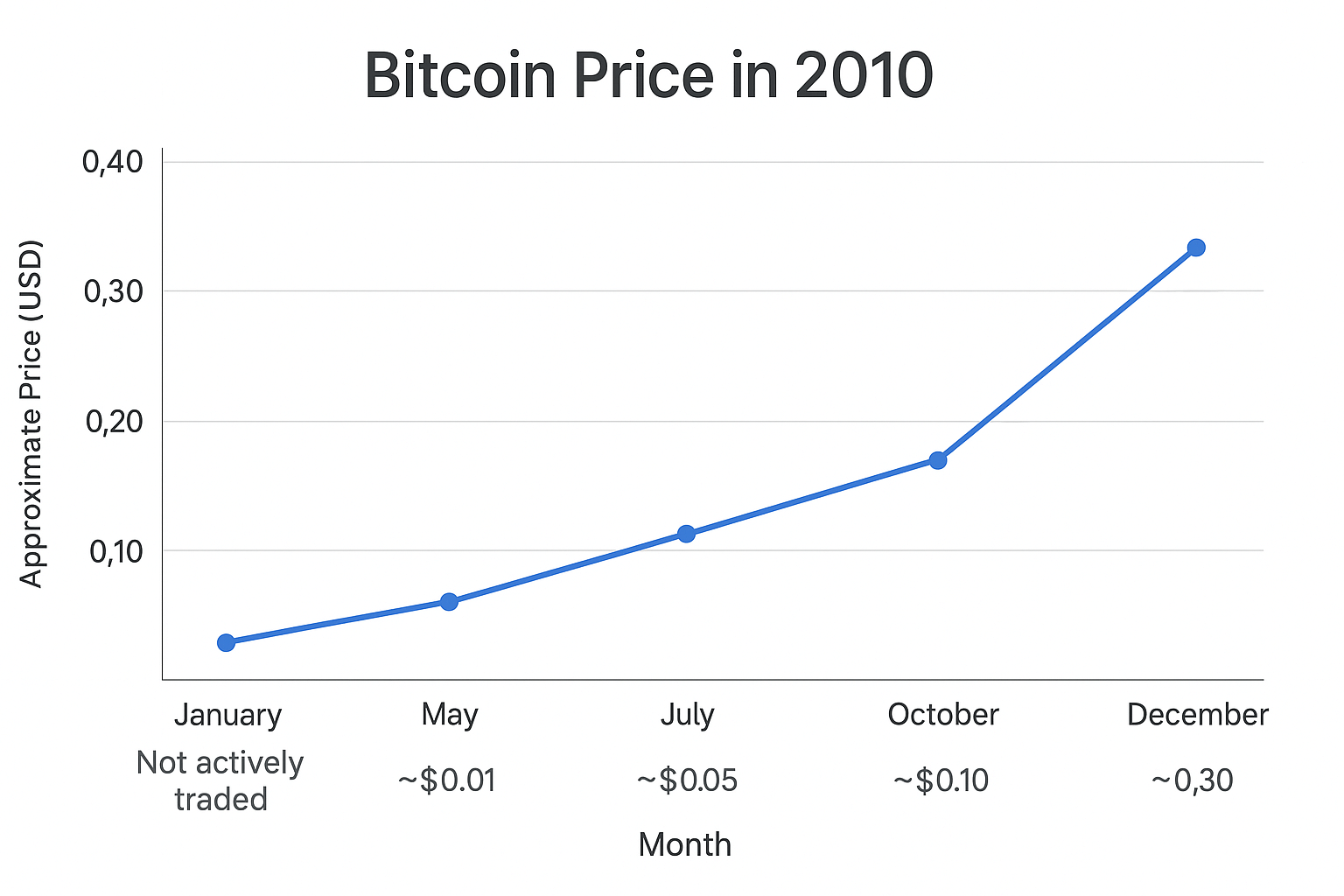
In 2010, the concept of Bitcoin was an obscure whisper in the nascent digital realm, far removed from the mainstream financial consciousness it commands today. For the few intrepid individuals who sought to acquire this nascent digital currency, the process was a far cry from the sophisticated, regulated exchanges and financial tools available to modern investors. It was an era defined by pioneering spirit, significant financial risk, and a profound leap of faith into an uncharted economic frontier. Buying Bitcoin in 2010 wasn’t about clicking an app or executing a trade on a major exchange; it was about navigating a fragmented, trust-based ecosystem that demanded a unique blend of technical aptitude, entrepreneurial courage, and a strong conviction in the promise of decentralized digital money. This deep dive explores the primitive financial landscape and the unconventional methods through which early adopters invested in what would become a generational asset.
The Dawn of a Digital Currency: Bitcoin’s Early Days
Bitcoin, born from the anonymous mind of Satoshi Nakamoto, was initially a curiosity for a niche group of technologists and cypherpunks. It was an academic experiment, a proof-of-concept for a peer-to-peer electronic cash system, rather than a recognized financial instrument. The financial infrastructure we associate with cryptocurrency today simply did not exist, making the act of acquiring Bitcoin a truly pioneering endeavor, primarily driven by intellectual interest and an anti-establishment financial philosophy.
A Niche for Early Adopters and Cypherpunks
The individuals drawn to Bitcoin in 2010 were not typical investors seeking quick returns. They were largely enthusiasts from the cryptography and open-source software communities, individuals who valued privacy, decentralization, and the potential for an alternative monetary system free from government control and traditional financial intermediaries. Their motivations were often ideological, viewing Bitcoin as a revolutionary financial technology rather than a speculative asset. For them, acquiring Bitcoin was an act of participating in an unfolding social and technological experiment, a tangible demonstration of their belief in the potential of digital independence. The financial commitment, while small by today’s standards, was nonetheless a significant investment in an unproven concept.
No Exchanges, No Fiat Gateways
Perhaps the most significant hurdle for anyone wishing to “buy” Bitcoin in 2010 was the complete absence of dedicated cryptocurrency exchanges or fiat-to-crypto gateways. There were no Coinbase, Binance, or Kraken equivalents. The idea of linking a bank account or credit card to purchase digital assets was years away. This meant that the conventional financial routes for converting traditional currencies (fiat) into Bitcoin were non-existent, forcing early adopters to devise ingenious and often risky alternative methods. The initial ecosystem was decentralized not just in its technology but also in its transactional processes, relying heavily on trust, direct interaction, and unconventional bartering systems.
The Puzzling Path to Early Bitcoin Acquisition
With no formal exchanges, early Bitcoin acquisition was a patchwork of direct interactions, technical efforts, and bartering. These methods reflect a nascent financial environment where trust was paramount, and transactions were often manual and fraught with uncertainty.
Direct Peer-to-Peer Transactions: The Human Element
The primary method for acquiring Bitcoin in 2010 was through direct peer-to-peer (P2P) transactions. These exchanges typically occurred on online forums, most notably Bitcointalk.org, which served as a nascent marketplace. Individuals would post their intent to buy or sell, specifying the amount of Bitcoin desired and the fiat currency (or other digital currency like PayPal USD) they offered in return. The human element was central; transactions relied on building rapport and trust with an anonymous counterparty. Prices were not determined by a global order book but through negotiation and the limited supply/demand dynamics within these forums. This method carried significant financial risks, including the possibility of scams, as there was no escrow service or regulatory oversight to protect buyers or sellers. A common practice involved one party (often the seller, to avoid chargebacks) taking a higher risk by sending their asset first.
Mining: The Original Form of Earning Bitcoin
For many early adopters, “buying” Bitcoin wasn’t about direct financial exchange but rather about earning it through the mining process. In 2010, Bitcoin mining was vastly different from today’s industrial-scale operations. It was possible for individuals to mine Bitcoin using standard CPUs (Central Processing Units) on their home computers. This meant that the “cost” of acquiring Bitcoin was primarily an investment in electricity and, eventually, more powerful GPUs (Graphics Processing Units) as the network difficulty increased. Miners were essentially investing their hardware and utility costs to secure the network and, in return, received newly minted bitcoins as a block reward. This was a direct path to ownership without needing a counterparty, making it a popular and financially accessible option for the tech-savvy who could afford the minor hardware and electricity investments at the time.
The Infamous Pizza Transaction and Other Barters
Beyond direct P2P fiat exchanges, Bitcoin’s initial utility was often demonstrated through barter. The most famous example, of course, is the “Bitcoin Pizza” transaction on May 22, 2010, where Laszlo Hanyecz paid 10,000 Bitcoins for two pizzas. This event perfectly encapsulates Bitcoin’s early function: a medium of exchange for goods and services, rather than a pure investment vehicle. Other instances involved individuals trading Bitcoin for various digital goods, services, or even small physical items. These bartering scenarios, while seemingly trivial today, were crucial in establishing Bitcoin’s initial perceived value and proof-of-concept as a functional currency. For those acquiring Bitcoin through these means, the financial transaction wasn’t about converting fiat but exchanging existing value in another form.
The Primitive Financial Landscape for Bitcoin
The financial mechanisms supporting Bitcoin in 2010 were rudimentary, characterized by high risk, limited options, and a complete absence of the consumer protections taken for granted in traditional finance.
Payment Methods: PayPal and Bank Transfers (with caution)
When fiat currency was involved in P2P transactions, the payment methods were often limited and risky. PayPal was a common choice due to its ubiquity and speed, but it presented a significant financial hazard for sellers. PayPal’s buyer protection policies heavily favored the buyer, allowing for chargebacks on digital goods, meaning a buyer could receive Bitcoin and then reclaim their fiat payment, leaving the seller with a financial loss. This made PayPal a dangerous proposition for anyone selling Bitcoin. Bank transfers were another option, requiring a higher degree of trust and slower processing times. Both methods lacked any inherent integration with Bitcoin transactions, making them entirely separate financial actions that relied on the honesty of both parties to complete the exchange.
The Absence of Financial Regulation and Custody
In 2010, the concept of regulating a decentralized digital currency was entirely foreign. There were no financial regulators overseeing Bitcoin transactions, no Know Your Customer (KYC) or Anti-Money Laundering (AML) checks, and certainly no institutional custodians. This environment, while appealing to privacy advocates, placed the entire burden of financial security on the individual. Users were solely responsible for safeguarding their Bitcoin holdings, typically by securing their “private keys” in digital wallets on their computers. This DIY approach to custody meant that a lost password, a hard drive failure, or a computer hack could result in the permanent and irreversible loss of funds, with no recourse. It was a stark contrast to traditional banking, where institutions manage custody and offer various protections. This lack of external financial oversight meant that every transaction was a testament to personal responsibility and technological self-reliance.
Investment Thesis and Risk in 2010
Acquiring Bitcoin in 2010 was not a typical investment decision; it was an act of venturing into the unknown, a speculative gamble on a technology that many dismissed as worthless. The risk profile was exceptionally high, but for those with foresight and conviction, the rewards would be unparalleled.
A Leap of Faith into a Digital Unknown
For those who “bought” or mined Bitcoin in 2010, it was undeniably a leap of faith. The asset had no established market cap, no institutional adoption, and barely any public recognition. Its value was purely theoretical, based on its underlying technological properties (scarcity, decentralization, censorship resistance) and the potential for it to become a viable alternative currency. Investing in Bitcoin at this stage was akin to funding a nascent startup or experimental project, rather than allocating capital to a proven financial asset. The financial commitment was made on the premise of an idea, a belief in a future where digital scarcity and peer-to-peer value transfer would hold significant economic weight.
The Potential for Exponential Returns (Unforeseen at the Time)
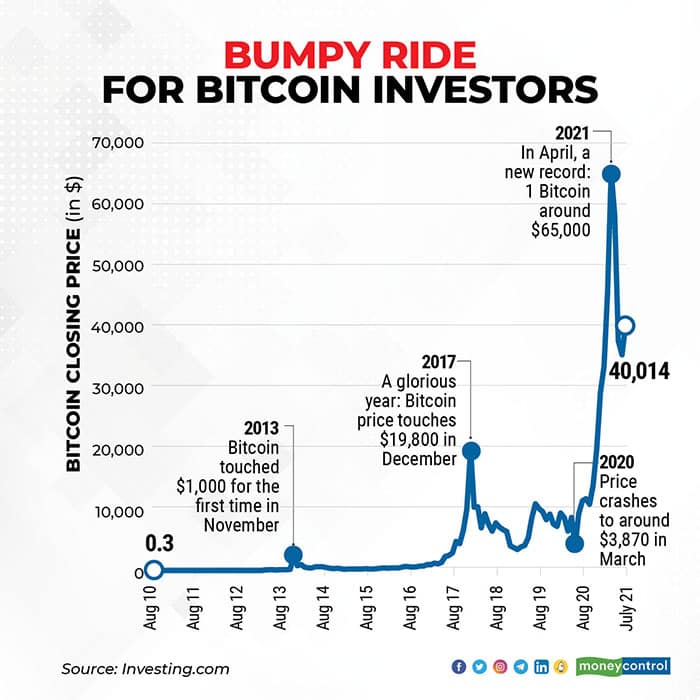
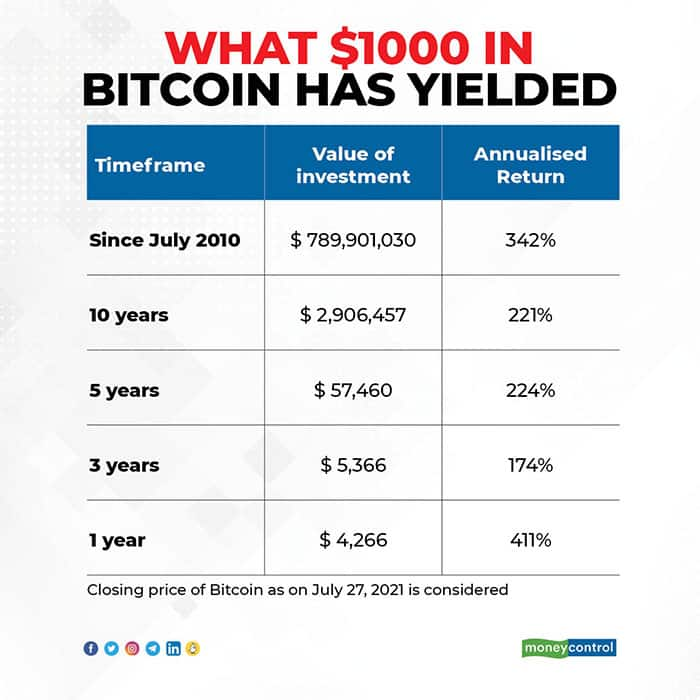
While the astronomical returns seen by early Bitcoin investors are legendary today, it is crucial to understand that these outcomes were largely unforeseen and unpredictable in 2010. Nobody could confidently predict that Bitcoin would eventually reach tens of thousands of dollars per coin. The financial motivation for early adopters was often more aligned with supporting an interesting technology or participating in a social experiment, rather than a calculated expectation of becoming a millionaire. The potential for exponential returns was purely speculative, driven by the belief that if Bitcoin ever did gain traction, its limited supply would make it incredibly valuable. This high-risk, high-reward scenario epitomizes the early financial landscape of cryptocurrency.
Understanding Bitcoin’s Intrinsic Value (or Lack Thereof)
In 2010, Bitcoin had no intrinsic value in the traditional sense – it was not backed by gold, government decree, or the assets of a corporation. Its perceived value among early adopters stemmed from its technical properties: its limited supply (21 million coins), its decentralized nature (no single point of control), its censorship resistance, and its utility as a medium for anonymous transactions. For these individuals, the financial value was tied to its potential to disrupt traditional finance and offer a truly independent form of money. This understanding of value was fundamental to the early investment thesis, differing significantly from how mainstream investors evaluate assets today, where market capitalization, liquidity, and regulatory clarity often take precedence.
Conclusion
Buying Bitcoin in 2010 was a starkly different financial undertaking than it is today. It was an act of pioneering, requiring deep conviction, a tolerance for immense risk, and an ability to navigate a financial wilderness devoid of established infrastructure or regulation. From direct peer-to-peer trades on forums to the foundational act of mining, and the infamous pizza transaction, every acquisition method underscored Bitcoin’s experimental status. Those who participated were not just investors; they were participants in a nascent economic experiment, laying the groundwork for an entirely new financial paradigm. Their willingness to invest their time, money, and trust in an unproven digital asset, despite the primitive tools and significant risks, profoundly shaped the financial future, demonstrating the transformative power of early adoption and a steadfast belief in innovation. Today’s robust crypto markets stand as a testament to the foresight and daring of those who dared to acquire Bitcoin when it was merely a whisper in the digital wind.
aViewFromTheCave is a participant in the Amazon Services LLC Associates Program, an affiliate advertising program designed to provide a means for sites to earn advertising fees by advertising and linking to Amazon.com. Amazon, the Amazon logo, AmazonSupply, and the AmazonSupply logo are trademarks of Amazon.com, Inc. or its affiliates. As an Amazon Associate we earn affiliate commissions from qualifying purchases.