
The 1920s, often referred to as the “Roaring Twenties,” was a decade defined by unprecedented economic expansion, technological innovation, and a cultural shift toward consumerism. However, beneath the surface of this prosperity lay a fragile financial structure built on a foundation of excessive debt and speculative fervor. At the heart of this instability was the practice of buying on margin. While it initially acted as a catalyst for growth and wealth creation, buying on margin ultimately became one of the primary drivers of the 1929 stock market crash and the subsequent Great Depression. To understand how this financial tool turned into a weapon of economic destruction, one must examine the mechanics of leverage, the psychology of the 1920s investor, and the systemic feedback loops that triggered a global collapse.
The Mechanics of 1920s Margin Trading
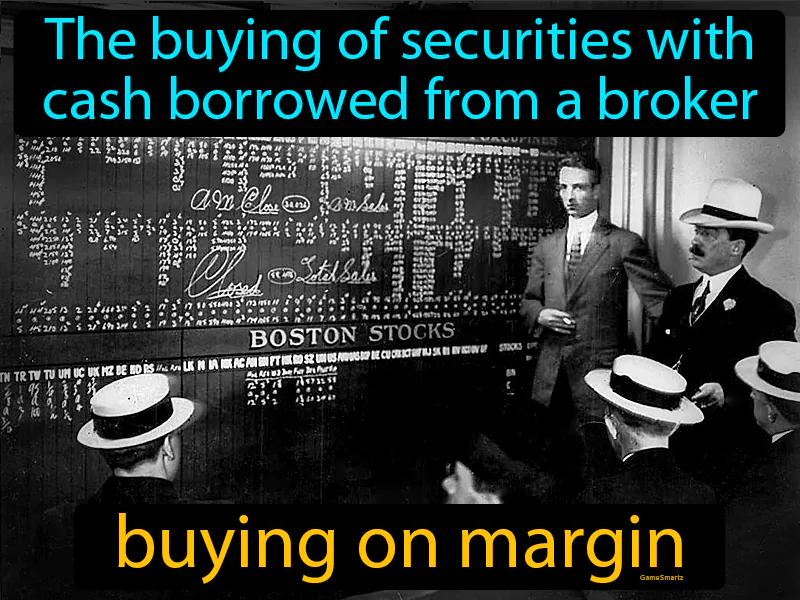
In its simplest form, buying on margin is the practice of purchasing assets using borrowed funds. In the context of the 1920s stock market, an investor would pay only a small percentage of a stock’s price—often as little as 10% or 20%—and borrow the remaining 80% to 90% from a stockbroker. The broker, in turn, often financed these loans by borrowing from commercial banks, using the purchased stocks as collateral.
Leverage: The Double-Edged Sword
Leverage is a powerful tool in finance because it amplifies returns. If an investor bought $1,000 worth of stock with $100 of their own money and $900 in borrowed funds, a 10% increase in the stock’s price would result in a $100 gain. This effectively doubled the investor’s initial $100 investment, representing a 100% return. During the bull market of the mid-to-late 1920s, this math seemed foolproof. As stock prices climbed steadily, margin trading allowed ordinary citizens—from barbers to schoolteachers—to participate in the market and see their paper wealth grow at astronomical rates.
However, leverage works with equal force in the opposite direction. If that same $1,000 stock dropped by 10%, the investor would lose their entire $100 stake. If the price dropped further, they would owe more than the initial value of their investment. In the 1920s, there were very few regulations governing how much margin a broker could offer. This lack of oversight encouraged extreme risk-taking, as the entry barrier to the “get-rich-quick” machine was incredibly low.
The Role of Commercial Banks and Call Money
The liquidity that fueled the margin trading craze didn’t just come from brokers’ pockets; it came from the banking system. Commercial banks, lured by the high interest rates they could charge on “call loans” (loans to brokers that could be called in at any time), began funneling massive amounts of capital into Wall Street. This created a dangerous interconnection between the stock market and the broader banking system. By 1929, the amount of outstanding “broker’s loans” had reached over $8.5 billion, a staggering figure for the era. This meant that the stability of the entire American financial system was increasingly dependent on the continued upward trajectory of stock prices.
The Creation of a Speculative Bubble
The widespread availability of margin credit fundamentally altered the supply and demand dynamics of the stock market. Because people could buy five or ten times more stock than they could afford with cash, the demand for shares skyrocketed. This artificial demand pushed prices far beyond the intrinsic value of the companies being traded.
Disconnect from Corporate Fundamentals
In a healthy market, stock prices are generally reflective of a company’s earnings, assets, and growth potential. During the late 1920s, however, the speculative mania fueled by margin buying caused prices to decouple from these fundamentals. Investors were no longer looking for dividends or long-term growth; they were looking for “capital gains” driven by the next person willing to pay a higher price. This “greater fool theory” was sustained only as long as new credit was available and new investors entered the market.
The Psychological Contagion
The social aspect of margin trading cannot be overlooked. The 1920s saw the birth of modern mass media, and success stories of “margin millionaires” were common in newspapers and radio broadcasts. This created a Fear Of Missing Out (FOMO) that compelled even conservative savers to move their money out of bank accounts and into the market. As more people bought on margin, the bubble grew larger, and the potential for a catastrophic “margin call” event became a systemic risk that few recognized at the time.
The Catalyst: The Crash of 1929 and the Margin Call
Every speculative bubble eventually reaches a tipping point where the number of sellers outweighs the number of buyers. In October 1929, that point was reached. A series of minor declines in stock prices triggered a chain reaction that the financial world was unprepared to handle.
The Domino Effect of Margin Calls

When stock prices began to slip, brokers became concerned about the value of the collateral (the stocks) backing their loans. To protect themselves, they issued “margin calls.” A margin call requires the investor to either deposit more cash into their account or sell their stocks immediately to pay back the loan.
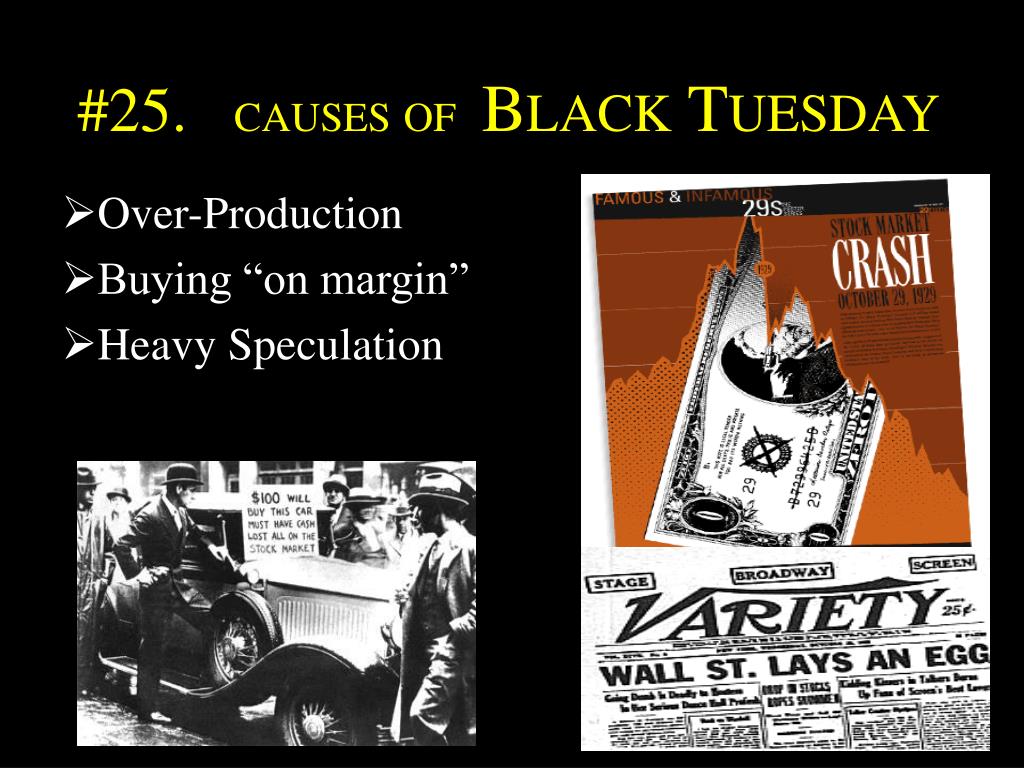
Because many investors had exhausted their savings to enter the market, they did not have the cash to meet these calls. This forced them to sell their shares at any price. This wave of forced selling put even more downward pressure on stock prices, which in turn triggered more margin calls for other investors. This created a “death spiral” or a negative feedback loop. On Black Thursday (October 24) and Black Tuesday (October 29), the market essentially collapsed under the weight of its own leverage.
Liquidity Traps and Market Evaporation
As prices plummeted, liquidity—the ability to sell an asset for cash—evaporated. In many cases, there were no buyers at any price. Investors who had “paper wealth” of hundreds of thousands of dollars on Monday found themselves with a net worth of zero, or even negative, by Wednesday. Because they were trading on margin, they didn’t just lose their investment; they remained legally obligated to repay the loans they had taken out to buy the now-worthless stock.
From Market Crash to Economic Depression
While a stock market crash is a financial disaster, it does not always lead to a decade-long economic depression. However, because buying on margin was so deeply integrated into the American economy, the 1929 crash acted as a detonator for a much wider explosion.
The Collapse of the Banking System
The most direct link between margin trading and the Great Depression was the banking crisis. When the market crashed, brokers could not repay the call loans they had taken from banks. Simultaneously, many individual borrowers defaulted on loans they had used for speculation. Banks, seeing their assets vanish and their loan portfolios turn “sour,” began to fail.
As news of bank failures spread, panicked depositors rushed to withdraw their money—a phenomenon known as a “bank run.” Since banks operate on a fractional reserve system (holding only a small portion of deposits in cash), they were unable to meet the demand. Between 1929 and 1933, thousands of American banks closed their doors, wiping out the life savings of millions of people who had never even invested in the stock market.
The Destruction of Consumer Demand
The loss of wealth caused by the crash and the subsequent bank failures had a devastating impact on consumer spending. People who had lost their savings or were burdened with margin debt stopped buying cars, appliances, and luxury goods. This drop in demand led to a decrease in industrial production. As factories slowed down, they laid off workers. Unemployment, which stood at around 3% in 1929, soared to 25% by 1933. This created a second, more painful feedback loop: lower spending led to more layoffs, which led to even lower spending.
Legacy and Modern Safeguards
The trauma of the Great Depression led to a fundamental restructuring of the American financial system. Policymakers recognized that the unregulated use of margin had been a primary driver of the instability.
The Securities Exchange Act of 1934
In response to the crash, Congress passed the Securities Exchange Act of 1934, which created the Securities and Exchange Commission (SEC). One of the most important powers granted by this act was the authority given to the Federal Reserve to regulate margin requirements. This was implemented through Regulation T.
Regulation T and Controlled Leverage
Under modern regulations, the Federal Reserve sets the initial margin requirement, which has remained at 50% for several decades. This means that an investor must provide at least half of the purchase price of a stock in cash, significantly reducing the amount of leverage available compared to the 10% levels of the 1920s. Furthermore, maintenance margin requirements ensure that if a stock’s value drops, the investor must rectify the balance long before the situation becomes a systemic threat.
The story of buying on margin and the Great Depression serves as a perennial lesson in the dangers of excessive leverage. While borrowing money to invest can accelerate wealth creation in a rising market, it also introduces a fragility that can turn a routine market correction into a national catastrophe. By understanding this history, modern investors and policymakers are better equipped to balance the benefits of credit with the necessity of financial stability, ensuring that the “Roaring” highs of a market cycle do not lead to the devastating lows of a systemic collapse.
aViewFromTheCave is a participant in the Amazon Services LLC Associates Program, an affiliate advertising program designed to provide a means for sites to earn advertising fees by advertising and linking to Amazon.com. Amazon, the Amazon logo, AmazonSupply, and the AmazonSupply logo are trademarks of Amazon.com, Inc. or its affiliates. As an Amazon Associate we earn affiliate commissions from qualifying purchases.