
The advent of Bitcoin represents a pivotal moment in the history of technology, marking the birth of decentralized digital currency and the blockchain paradigm. More than just a new form of money, Bitcoin emerged as a radical experiment in distributed systems, cryptography, and network theory, challenging established notions of finance and trust. Understanding its origins is not merely an exercise in historical curiosity; it’s an essential journey into the foundational technological principles that underpin the vast and rapidly expanding world of cryptocurrency and Web3. From the anonymity of its creator to the intricate dance of cryptographic proofs, Bitcoin’s beginning is a testament to the power of innovation driven by a desire for a more open, transparent, and censorship-resistant digital future.

The Pseudonymous Architect: Satoshi Nakamoto’s Vision
The story of Bitcoin begins, rather fittingly, with a mystery: the identity of its creator, or creators, known only by the pseudonym Satoshi Nakamoto. This enigmatic figure, or group, burst onto the scene not with a grand announcement but with a meticulously crafted academic paper and a compelling vision for a new kind of digital money. The choice of pseudonymity itself was a statement, embodying the decentralized and trustless ideals that would come to define Bitcoin. It allowed the focus to remain on the technology and its potential, rather than the personality behind it, paving the way for a community-driven development model.
The Cypherpunk Roots and Cryptographic Ideals
Satoshi Nakamoto did not emerge from a vacuum. The ideas that coalesced into Bitcoin had been percolating within niche communities for decades, particularly among a group known as “cypherpunks.” These were activists and technologists who advocated for strong cryptography as a means to achieve privacy and liberty in the digital age. They envisioned a future where individuals could conduct transactions and communicate freely without reliance on centralized intermediaries like banks or governments, which they viewed as potential points of control and censorship. Concepts like “digital cash,” “hashcash,” and “public-key cryptography” were discussed and prototyped long before Bitcoin. Satoshi effectively synthesized these disparate threads into a coherent, functional system, addressing the critical “double-spending problem” that had plagued previous attempts at digital currency. This deep understanding of cryptographic principles and their application to distributed ledger technology was the bedrock upon which Bitcoin was built.
The Whitepaper: A Blueprint for Decentralization
On October 31, 2008, a paper titled “Bitcoin: A Peer-to-Peer Electronic Cash System” was posted to a cryptography mailing list. This whitepaper, concise yet revolutionary, detailed the complete architectural design of what would become Bitcoin. It proposed a novel solution to the problem of creating a decentralized, trustless digital currency, outlining concepts such as the blockchain, proof-of-work, and unspent transaction outputs (UTXOs). The paper didn’t just describe a theoretical system; it provided a robust blueprint for a practical implementation. It articulated how a network of participants could collectively maintain a public ledger of transactions without any central authority, relying instead on cryptographic proofs and economic incentives. This document was the intellectual cornerstone, laying out the technical specifications and philosophical underpinnings that would guide Bitcoin’s development from a theoretical construct to a living, breathing network.
Laying the Foundational Code: From Concept to Creation
Following the whitepaper, Satoshi Nakamoto moved swiftly from theory to practice, translating the abstract concepts into executable code. This monumental task involved building the actual software that would implement the peer-to-peer network, cryptographic protocols, and transaction validation mechanisms described in the whitepaper. The process was iterative and demanding, requiring deep expertise in computer science, network engineering, and cryptography. The initial Bitcoin client, largely coded by Satoshi, was more than just a proof of concept; it was a fully functional implementation that launched the network and defined its core behaviors.
The Genesis Block: Birth of a Blockchain
On January 3, 2009, Satoshi Nakamoto mined the very first block of the Bitcoin blockchain, famously known as the “Genesis Block.” This act was not just a technical milestone; it was a symbolic declaration of independence from traditional financial systems. Embedded within the raw data of this block was a message: “The Times 03/Jan/2009 Chancellor on brink of second bailout for banks.” This message, referring to an article published in The Times newspaper, served as both a timestamp and a subtle political commentary, highlighting the perceived failures of centralized finance and underscoring Bitcoin’s alternative vision. The Genesis Block contained no previous block to reference and generated the initial 50 bitcoins, establishing the fundamental unit of the network and initiating the process of coin issuance. From this single block, the chain began to grow, block by block, transaction by transaction, forming an immutable ledger.
Early Development and the First Transactions

With the Genesis Block mined, the Bitcoin network became operational. Satoshi continued to refine the code, releasing successive versions of the Bitcoin client software. Early development involved fixing bugs, improving network stability, and implementing new features. The first real-world Bitcoin transaction occurred on January 12, 2009, when Satoshi sent 10 bitcoins to Hal Finney, a renowned cryptographer and early adopter who had been instrumental in testing the software. This transaction, and others that followed, demonstrated the practical viability of a peer-to-peer electronic cash system. These initial exchanges were critical in proving that bitcoins could be transferred securely and irreversibly between participants without the need for a trusted third party. The early community, comprised mostly of cryptographers, developers, and tech enthusiasts, actively participated in testing, discussing, and contributing to the network’s nascent stages.
Mining the Digital Gold: Securing the Network’s Early Days
At the heart of Bitcoin’s technological marvel lies its unique mechanism for securing the network and verifying transactions: mining. This process is not merely about creating new bitcoins but, more fundamentally, about maintaining the integrity and decentralization of the entire system. In its early days, mining was a relatively accessible endeavor, allowing many individuals to participate and contribute to the network’s security.
Proof-of-Work: The Engine of Decentralized Consensus
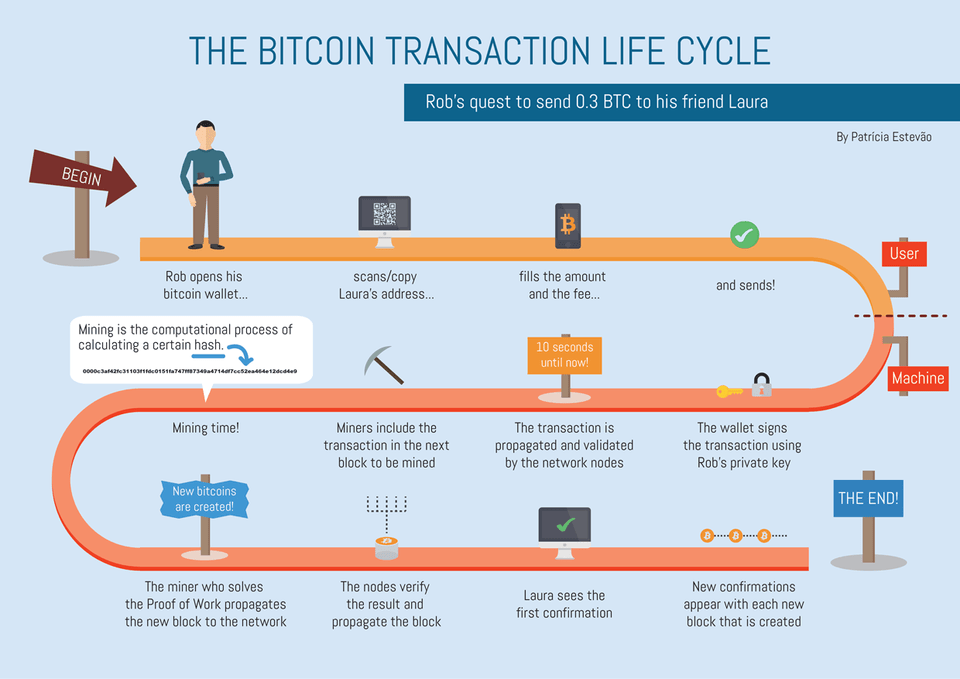
Satoshi Nakamoto’s genius lay in adapting Adam Back’s “Hashcash” proof-of-work system to secure the Bitcoin blockchain. Proof-of-work (PoW) is a mechanism that requires participants (miners) to expend computational effort to solve a difficult cryptographic puzzle. The first miner to solve the puzzle gets to add a new block of verified transactions to the blockchain and is rewarded with newly minted bitcoins (the block reward) and transaction fees. This computational expenditure serves multiple crucial purposes: it prevents double-spending by making it prohibitively expensive to alter past transactions, it ensures that all network participants agree on the correct order of transactions (decentralized consensus), and it regulates the issuance of new bitcoins. The difficulty of these puzzles automatically adjusts over time to maintain a consistent block creation rate, ensuring the network remains secure even as computational power fluctuates. In the early days, this work could be done with standard computer CPUs, making participation broad and relatively democratic.
The Role of Early Adopters and Miners
The initial growth and stability of the Bitcoin network were heavily reliant on a small but dedicated community of early adopters and miners. These individuals were not motivated by immediate financial gain (as Bitcoin’s value was negligible then) but by a shared belief in the technology’s potential and its underlying philosophical principles. They ran the Bitcoin client software on their computers, dedicating their processing power to mine blocks, validate transactions, and propagate the blockchain. Figures like Hal Finney, Martti Malmi (who operated one of the first Bitcoin exchanges), and Laszlo Hanyecz (famous for purchasing two pizzas for 10,000 bitcoins) were instrumental in these formative years. Their efforts ensured the network had sufficient computational power to remain secure and functional, preventing attacks and building momentum. Without these early pioneers, who devoted their resources and time, Bitcoin might have remained a mere academic curiosity rather than blossoming into a global phenomenon.
Overcoming Initial Hurdles: Scalability and Adoption Challenges
The initial phase of Bitcoin’s existence was characterized by its development as a nascent technology, navigating not just technical complexities but also the inherent challenges of introducing a revolutionary concept to a skeptical world. As the network grew, new obstacles emerged, testing the resilience and adaptability of its foundational design.
Technical Debates and Community Growth
As Bitcoin slowly gained traction beyond its initial circle of cryptographers, debates surrounding its technical future became more prominent. The fixed block size limit, set by Satoshi at 1MB, became a significant point of contention. While initially intended to prevent spam attacks, it raised concerns about Bitcoin’s ability to scale and process a large volume of transactions as adoption increased. These discussions, often passionate and complex, centered on how to balance decentralization, security, and scalability – the inherent “blockchain trilemma.” Various proposals, such as increasing the block size or implementing off-chain solutions like the Lightning Network, sparked intense community debate and led to forks in the blockchain, such as Bitcoin Cash. These technical disagreements, while sometimes divisive, underscored the decentralized nature of Bitcoin’s governance, where changes required broad consensus among developers, miners, and users.
The Path from Niche Experiment to Global Phenomenon
In its earliest years, Bitcoin was largely unknown outside of specialized tech circles. Its “value” was primarily theoretical, reflecting its utility as a novel payment system rather than a speculative asset. The first recorded commercial transaction, the famous Bitcoin pizza purchase in May 2010, exemplified this early phase. Slowly, however, its unique properties – decentralization, censorship resistance, and limited supply – began to attract wider attention. Online forums, small independent exchanges, and early media coverage gradually introduced Bitcoin to a broader audience. Developers built tools and services around it, making it more accessible. While still a niche experiment, the technological groundwork laid by Satoshi and the early community proved robust, allowing Bitcoin to endure early challenges and eventually capture the imagination of millions, laying the foundation for a digital revolution that continues to unfold today.
In conclusion, Bitcoin’s origin story is a captivating blend of cryptographic innovation, technological vision, and community-driven development. From Satoshi Nakamoto’s whitepaper and the Genesis Block to the early miners and their commitment to the network, every step in its initial journey was a testament to the power of a decentralized, peer-to-peer approach. It began not as a financial product, but as a groundbreaking technological solution to a long-standing computer science problem, offering a paradigm shift in how trust and value could be managed in a digital world. Its continued evolution remains a powerful narrative of how cutting-edge technology can reshape fundamental societal structures.
aViewFromTheCave is a participant in the Amazon Services LLC Associates Program, an affiliate advertising program designed to provide a means for sites to earn advertising fees by advertising and linking to Amazon.com. Amazon, the Amazon logo, AmazonSupply, and the AmazonSupply logo are trademarks of Amazon.com, Inc. or its affiliates. As an Amazon Associate we earn affiliate commissions from qualifying purchases.