
The financial world is undergoing a profound transformation, driven by an innovation that has captivated technologists, economists, and everyday enthusiasts alike: cryptocurrency. For many, the concept remains shrouded in jargon and complexity, often associated solely with volatile market speculation. Yet, at its heart, cryptocurrency is a technological marvel—a sophisticated application of cryptography, distributed systems, and network theory designed to create a new paradigm for digital value and information exchange. This guide aims to demystify the technical underpinnings of cryptocurrency, peeling back the layers to reveal the ingenious engineering that makes it all possible.
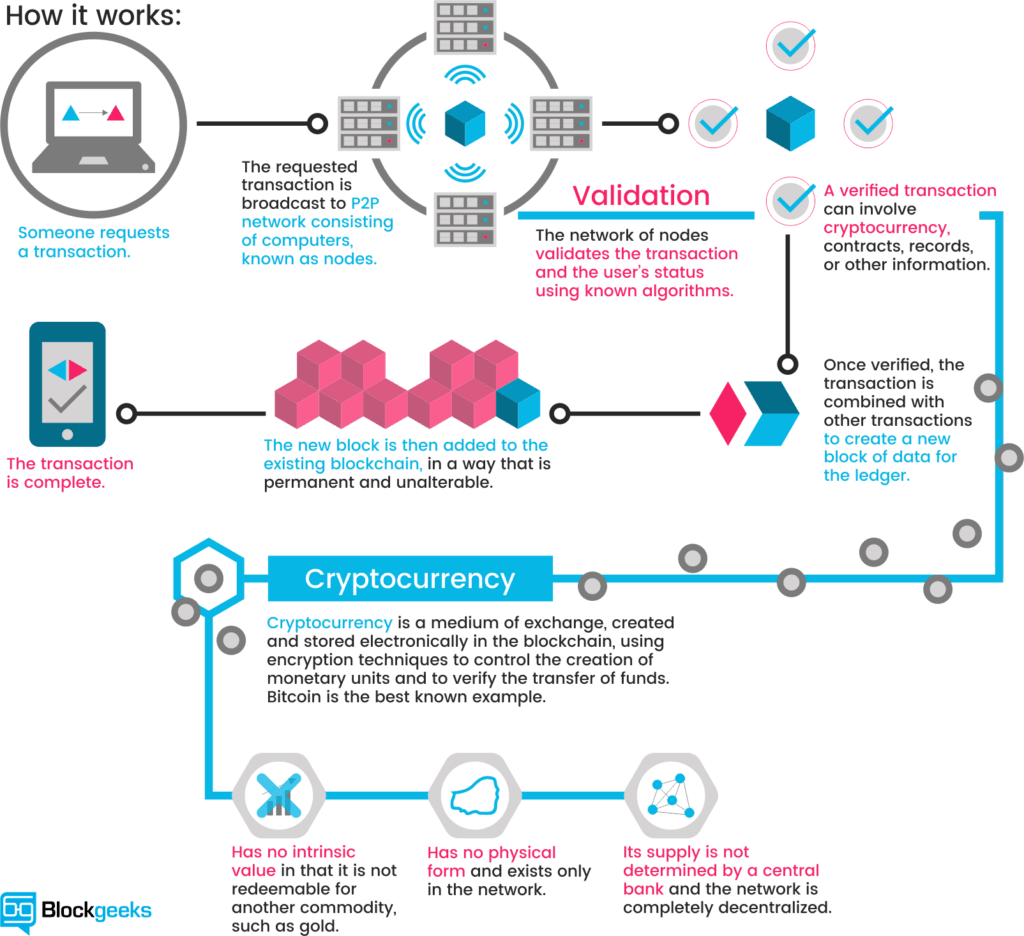
From the foundational blockchain to the intricate dance of cryptographic keys, we will explore the core components that enable cryptocurrencies like Bitcoin and Ethereum to function without central banks or intermediaries. Understanding “how it works” is not merely academic; it’s essential for grasping its implications for digital security, data integrity, and the future of decentralized applications. Prepare to delve into the very code and protocols that power this digital revolution, presented in an accessible manner for those taking their first steps into the intricate world of blockchain technology.
1. The Foundational Pillar: Blockchain Technology
At the core of virtually every cryptocurrency lies blockchain technology. More than just a buzzword, the blockchain is a revolutionary type of distributed ledger that forms the backbone of digital asset networks. It is the innovation that solves the “double-spending problem” for digital currency—the challenge of preventing the same digital unit from being spent more than once—without relying on a central authority.
What is a Blockchain? A Distributed, Immutable Ledger
Imagine a massive, global spreadsheet that isn’t stored in one place or controlled by one entity, but is instead distributed across thousands of computers worldwide. This spreadsheet is constantly updated, and every entry is publicly visible and verifiable. That’s essentially a blockchain: a distributed, decentralized, and publicly accessible ledger.
Each “block” on the chain contains a list of transactions (e.g., “Alice sent 1 BTC to Bob,” “Charlie sent 0.5 ETH to David”). Once a block is filled with transactions, it is cryptographically sealed and linked to the previous block, forming a continuous chain. This sequential linking, reinforced by cryptographic principles, ensures that once a transaction is recorded, it becomes exceedingly difficult, if not impossible, to alter or remove it without detectable changes to subsequent blocks—a property known as immutability. This immutability is crucial for trust in a system without central oversight, as it prevents fraudulent alterations of transaction history.
How Blocks are Created and Linked: Hashing and Cryptography
The linking of blocks is a critical technical achievement, primarily accomplished through cryptographic hashing. A cryptographic hash function is a one-way mathematical algorithm that takes an input (data from the block, including all its transactions and a timestamp) and produces a fixed-size string of characters, known as a hash or digital fingerprint. Even a tiny change to the input data results in a completely different hash, making it incredibly sensitive to alterations.
Each new block includes the hash of the previous block in its own data. This creates an unbreakable cryptographic link. If someone were to tamper with a transaction in an older block, its hash would change. Since the next block’s data includes the original hash, the discrepancy would invalidate all subsequent blocks in the chain, immediately alerting the network to the attempted fraud. This chaining mechanism, secured by cryptographic hashing, is what gives the blockchain its integrity and resistance to tampering.
Consensus Mechanisms: Securing the Network
For a distributed system without a central authority to function, there must be a way for all participants (nodes) to agree on the valid state of the ledger. This agreement process is known as a consensus mechanism. Without it, different parts of the network might have conflicting versions of the blockchain, leading to chaos and distrust.
The most famous consensus mechanism is Proof-of-Work (PoW), pioneered by Bitcoin. In PoW, “miners” compete to solve a complex computational puzzle. The first miner to find the solution gets to add the next block of transactions to the blockchain and is rewarded with newly minted cryptocurrency and transaction fees. The difficulty of this puzzle ensures that adding new blocks is costly in terms of computing power and energy, making it economically unfeasible to rewrite the chain. It provides a robust security layer because a malicious actor would need to control more than 50% of the network’s total computing power to consistently outpace legitimate miners and alter the blockchain—a scenario often referred to as a “51% attack.”
Another prevalent mechanism is Proof-of-Stake (PoS), used by cryptocurrencies like Ethereum 2.0. In PoS, instead of competing with computational power, validators are chosen to create new blocks based on the amount of cryptocurrency they “stake” (lock up as collateral) in the network. The more a validator stakes, the higher their chance of being selected. If a validator attempts to validate fraudulent transactions, they risk losing their staked coins, providing a strong economic incentive for honest behavior. PoS is often highlighted for its energy efficiency and potential for higher transaction throughput compared to PoW.
2. Cryptography: The Science of Secure Communication
Cryptography is not just an add-on; it is the “crypto” in cryptocurrency, serving as the fundamental technology that secures transactions, verifies ownership, and maintains privacy within the network. It’s the mathematical backbone enabling secure communication in a trustless environment.
Public-Key Cryptography: Wallets, Addresses, and Keys
The magic of secure digital ownership in cryptocurrency largely stems from public-key cryptography, also known as asymmetric encryption. This system relies on a pair of mathematically linked keys: a public key and a private key.
- Private Key: This is a secret, alphanumeric string that acts as your ultimate proof of ownership over your cryptocurrency. It’s like the master password to your funds. Anyone with your private key can access and spend your cryptocurrency. It must be kept absolutely confidential.
- Public Key: This key is derived from your private key through a one-way cryptographic function. While you can derive a public key from a private key, you cannot derive a private key from a public key. Your public key is used to generate your wallet address, which is what you share with others when you want to receive cryptocurrency. It’s like your bank account number.
When you send cryptocurrency, you use your private key to “sign” the transaction, proving that you authorize the transfer of funds from your address. The network can then verify this signature using your public key without ever needing to know your private key. This ingenious system allows for secure, verifiable transactions without revealing your secret key.
Digital Signatures: Transaction Verification and Ownership
Every cryptocurrency transaction is essentially a message digitally signed by the sender using their private key. This digital signature serves two critical purposes:
- Authenticity: It proves that the transaction truly originated from the owner of the private key associated with the sending address.
- Integrity: It ensures that the transaction data has not been tampered with since it was signed.
The network nodes can easily verify the digital signature using the sender’s public key. If the signature is valid, the transaction is considered legitimate. If the transaction data were altered even slightly after signing, the signature verification would fail, and the transaction would be rejected. This process is crucial for preventing unauthorized spending and maintaining the integrity of the ledger.
Hashing Functions: Data Integrity and Block Linking Revisited
Beyond linking blocks, cryptographic hashing functions are ubiquitous in securing cryptocurrency systems. As mentioned, they generate unique, fixed-size outputs (hashes) for any given input. Key properties of these functions, vital for cryptocurrency, include:
- Determinism: The same input always produces the same output hash.
- One-way function: It’s computationally infeasible to reverse the process and derive the input data from the hash.
- Collision resistance: It’s extremely difficult to find two different inputs that produce the same hash.
- Avalanche effect: A tiny change in the input dramatically changes the output hash.
These properties are used not only for chaining blocks but also for creating wallet addresses (often a hash of a public key), creating transaction IDs (a hash of the transaction data), and in Proof-of-Work mining, where miners search for a hash that meets specific criteria. The cryptographic strength of these hashing functions is paramount to the overall security and integrity of cryptocurrency networks.
3. Decentralization: Power to the Network
Perhaps the most radical technological departure of cryptocurrency from traditional finance is its embrace of decentralization. This isn’t just a philosophical preference; it’s a core architectural design choice that underpins the system’s resilience, transparency, and resistance to censorship.
Peer-to-Peer Networks: No Central Authority
Unlike traditional banking systems where a central bank or financial institution acts as an intermediary, validating transactions and maintaining the ledger, cryptocurrency networks operate on a peer-to-peer (P2P) model. This means that individual computers (nodes) directly communicate with each other, sharing information and validating transactions without needing a central server or authority.
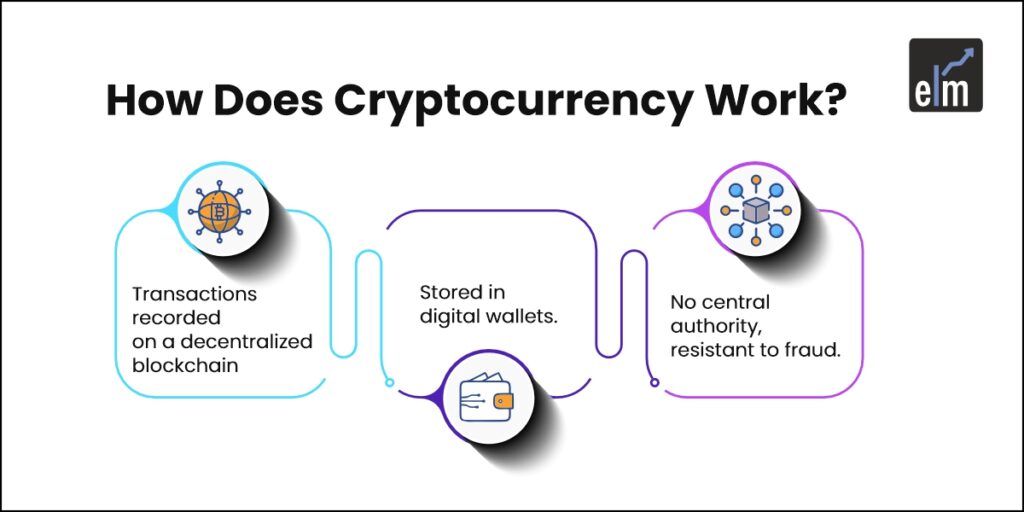
In a P2P network, there’s no single point of failure that can be targeted for attack, censorship, or shutdown. If one node goes offline, the network continues to function seamlessly through the remaining nodes. This distributed architecture is what gives cryptocurrencies their robust resistance to government intervention or corporate control, ensuring that transactions can proceed as long as the network itself is operational.
Nodes and Their Role: Validating, Storing, Broadcasting
Nodes are the unsung heroes of any cryptocurrency network. Each node is a computer running the cryptocurrency’s software, and collectively, they form the distributed network. Different types of nodes perform various functions:
- Full Nodes: These nodes download and store a complete copy of the entire blockchain ledger. They independently verify every transaction and block against the network’s rules. By running a full node, you contribute to the network’s security and decentralization by enforcing the rules and ensuring the integrity of the ledger.
- Mining/Staking Nodes: These are specialized nodes involved in creating new blocks and validating transactions through Proof-of-Work or Proof-of-Stake, as discussed earlier. They broadcast new blocks to the network for others to verify and add to their local copies of the blockchain.
- Light Nodes: These nodes do not store the entire blockchain but instead rely on full nodes to provide them with the necessary information to verify specific transactions. They are often found in mobile wallets or browser extensions, offering convenience at the expense of full independent verification.
The collective action of these diverse nodes ensures that the network remains synchronized, secure, and adheres to the protocol’s rules, without any single entity holding undue power.
Eliminating Intermediaries: Banks and Payment Processors
The P2P, decentralized nature of cryptocurrency technology fundamentally challenges traditional financial intermediaries. In a typical online transaction, banks and payment processors (like Visa or PayPal) play crucial roles: they verify identities, authorize transactions, maintain records, and resolve disputes. These services come with fees, processing times, and often, the ability to censor or reverse transactions.
Cryptocurrency eliminates the need for these intermediaries. Transactions are validated by the network’s distributed nodes, recorded on the immutable blockchain, and secured by cryptography. This direct, digital transfer of value means lower fees (or no fees, depending on the network and congestion), faster settlement times (from minutes to seconds, depending on the chain), and a censorship-resistant nature where no single entity can block or reverse a legitimate transaction. This technological shift empowers individuals with greater autonomy over their financial assets and transactions.
4. Understanding Cryptocurrency Transactions and Wallets
Having explored the foundational blockchain, cryptography, and decentralization, let’s bring it together by examining the practical mechanics of how cryptocurrency moves from one person to another and where it is stored.
From Private Key to Transaction: Signing and Broadcasting
The process of sending cryptocurrency begins with the owner of the funds initiating a transaction through a wallet application. The wallet typically performs several key steps:
- Transaction Assembly: The wallet gathers information such as the recipient’s public address, the amount to be sent, and a small transaction fee (to compensate miners/validators).
- Digital Signing: Using the sender’s private key, the wallet creates a unique digital signature for this specific transaction. This signature proves the sender’s authorization and ensures the transaction’s integrity.
- Broadcasting: The signed transaction is then broadcast to the cryptocurrency network. It doesn’t go to a central server; instead, it’s sent to several nearby nodes, which then relay it to other nodes across the globe.
Once broadcast, the transaction enters a “mempool” (memory pool), which is a waiting area for unconfirmed transactions.
Types of Wallets: Hot vs. Cold, Security Implications
A common misconception is that cryptocurrency “lives” inside a wallet. In reality, your cryptocurrency never leaves the blockchain. A wallet is simply a software or hardware tool that stores your private keys and allows you to interact with the blockchain—to view your balance, send funds, and receive funds. Wallets come in various forms, each with different security profiles:
- Hot Wallets: These wallets are connected to the internet. Examples include mobile apps, desktop software wallets, and web-based exchange wallets. They offer convenience for frequent transactions but are generally considered less secure than cold wallets because their internet connection makes them more susceptible to online hacks, malware, or phishing attacks.
- Cold Wallets: These wallets are not connected to the internet, providing superior security for storing significant amounts of cryptocurrency.
- Hardware Wallets: Physical devices (like USB drives) specifically designed to securely store private keys offline. They require physical interaction to sign transactions, making them highly resistant to online threats.
- Paper Wallets: Private and public keys printed on paper. While completely offline, they are vulnerable to physical damage, loss, or being seen by others.
The choice of wallet depends on your needs, but for beginners, understanding the critical role of private key security is paramount. Losing your private key means losing access to your funds, and if someone else gains access to it, they can steal your cryptocurrency.
The Journey of a Transaction: Mempool, Mining/Validation, Confirmation
After a transaction is broadcast and enters the mempool, it awaits inclusion in a block. Here’s how it progresses:
- Selection by Miner/Validator: Miners (in PoW systems) or validators (in PoS systems) select transactions from the mempool to include in the next block they are trying to create. They typically prioritize transactions with higher transaction fees, as this increases their reward.
- Block Creation: The miner/validator then assembles these selected transactions into a new block, along with other necessary data (timestamp, hash of the previous block, etc.).
- Consensus and Broadcast: Once the miner/validator successfully solves the computational puzzle (PoW) or is selected (PoS), they broadcast the newly validated block to the rest of the network.
- Verification and Confirmation: Other full nodes on the network receive the new block, verify all its transactions and its adherence to the network’s rules. If valid, they add it to their local copy of the blockchain. A transaction is considered “confirmed” once it is included in a block and that block is added to the blockchain. For added security, many services wait for several subsequent blocks to be added on top of the block containing your transaction (e.g., 6 confirmations for Bitcoin) to ensure its finality and extreme difficulty of reversal.
This entire process, from broadcast to multiple confirmations, typically takes minutes for Bitcoin and even less for faster chains like Ethereum (now in seconds with PoS).
5. Beyond Bitcoin: Exploring Different Blockchain Implementations
While Bitcoin introduced the world to the concept of cryptocurrency and blockchain, it also paved the way for a vast ecosystem of alternative cryptocurrencies and blockchain platforms, each with unique technological features and applications. Understanding these variations helps illustrate the broader potential of the underlying tech.
Altcoins and Their Unique Technologies
“Altcoin” is a blanket term for any cryptocurrency other than Bitcoin. Many altcoins build upon Bitcoin’s foundational concepts but introduce distinct technological innovations to address specific challenges or enable new functionalities.
- Ethereum and Smart Contracts: Ethereum, the second-largest cryptocurrency by market capitalization, introduced the concept of smart contracts. These are self-executing contracts with the terms of the agreement directly written into lines of code. They run on the Ethereum blockchain, automatically executing when predefined conditions are met without the need for intermediaries. This technological leap enabled decentralized applications (dApps), decentralized finance (DeFi), and non-fungible tokens (NFTs), vastly expanding the utility of blockchain beyond simple digital currency.
- Other DLTs (Distributed Ledger Technologies): Beyond public blockchains like Bitcoin and Ethereum, there are various other DLTs designed for different purposes. Some focus on privacy (e.g., Monero, Zcash using zero-knowledge proofs), others on high transaction throughput for enterprise use (e.g., Hyperledger Fabric), and some on interoperability between different blockchains. Each of these introduces unique cryptographic schemes, consensus mechanisms, or network architectures tailored to their specific goals.
The Future of Blockchain Technology: Scalability and Interoperability
As blockchain technology matures, two significant technical challenges dominate the discourse:
- Scalability: Early blockchains like Bitcoin can process a limited number of transactions per second (TPS) compared to traditional payment systems. This limitation, often called the “scalability trilemma” (difficulty in simultaneously achieving decentralization, security, and scalability), is a major area of research and development. Solutions include:
- Layer 2 Solutions: Protocols built on top of existing blockchains (e.g., Lightning Network for Bitcoin, Arbitrum/Optimism for Ethereum) to handle transactions off-chain, then settling the final state on the main chain.
- Sharding: Dividing the blockchain into smaller, more manageable segments (shards), each processing its own transactions in parallel.
- New Consensus Mechanisms: Further innovations in PoS and other mechanisms aiming for faster block times and higher TPS.
- Interoperability: The ability for different blockchains to communicate and exchange data or assets with each other. Currently, many blockchains operate as isolated silos. Interoperability solutions (e.g., cross-chain bridges, Polkadot, Cosmos) are crucial for creating a more connected and efficient blockchain ecosystem, allowing assets and information to flow freely between various networks.
These ongoing technological advancements highlight that the “how” of cryptocurrency is not static; it’s a dynamic field of computer science and cryptography continually pushing the boundaries of what’s possible in decentralized systems.
Conclusion
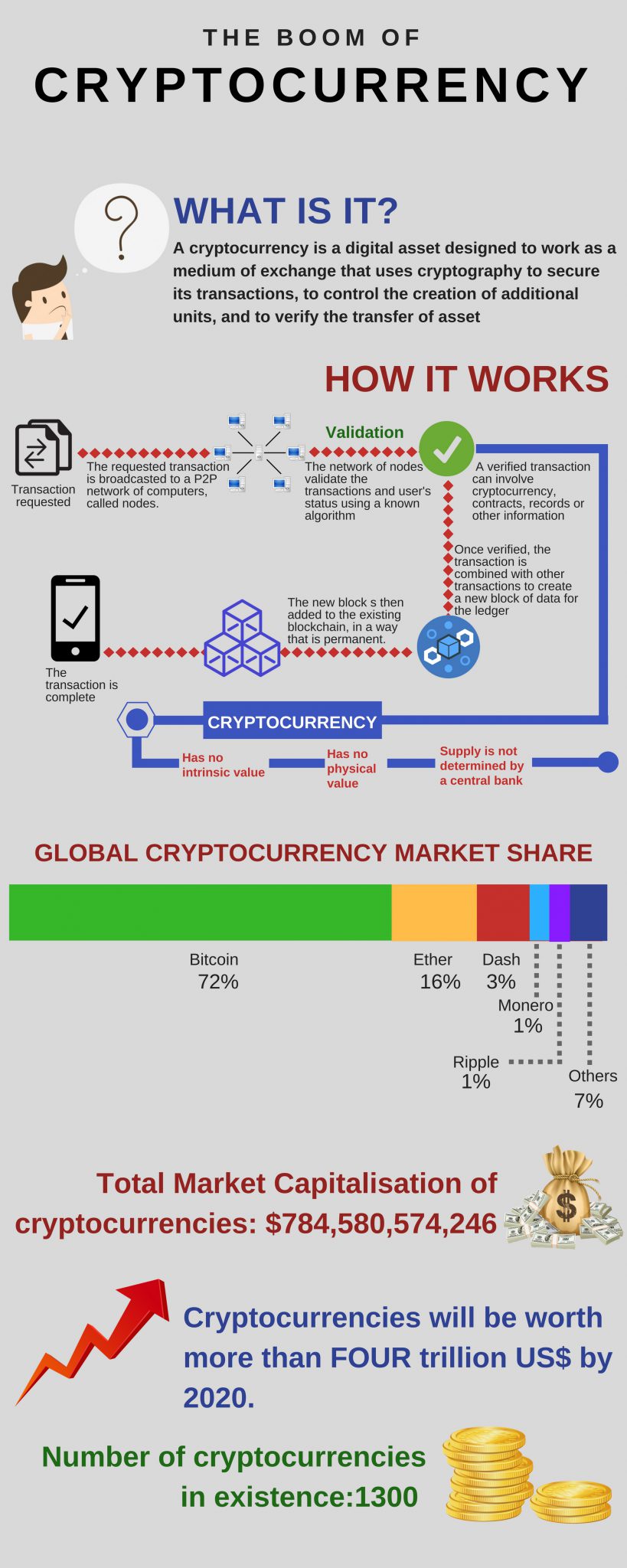
Understanding “how cryptocurrency works” from a technological perspective reveals not just a new form of money, but a profound paradigm shift in how we conceive of trust, security, and value in the digital realm. We’ve journeyed through the immutable architecture of the blockchain, explored the robust security provided by cryptography and private-key systems, and witnessed the power of decentralization through peer-to-peer networks and diverse nodes.
For beginners, grasping these core technical principles—the cryptographic linking of blocks, the role of consensus mechanisms, the security of digital signatures, and the distributed nature of the ledger—is far more valuable than simply knowing about market prices. It provides a foundation for appreciating the innovation, recognizing the strengths, and understanding the potential vulnerabilities of these systems. As cryptocurrency and blockchain technology continue to evolve, pushing the boundaries of scalability, interoperability, and application, this fundamental technological knowledge will serve as your compass in navigating an ever-expanding digital frontier. The future of decentralized technology is not just about transactions; it’s about a new architecture for information itself, built on mathematical proof and collective agreement.
aViewFromTheCave is a participant in the Amazon Services LLC Associates Program, an affiliate advertising program designed to provide a means for sites to earn advertising fees by advertising and linking to Amazon.com. Amazon, the Amazon logo, AmazonSupply, and the AmazonSupply logo are trademarks of Amazon.com, Inc. or its affiliates. As an Amazon Associate we earn affiliate commissions from qualifying purchases.