
In the realm of personal finance and investing, few concepts are as profoundly impactful yet often underestimated as compound interest. Frequently dubbed the “eighth wonder of the world” by Albert Einstein, its power lies in its ability to generate returns not only on your initial principal but also on the accumulated interest from previous periods. Understanding how compound interest works is not just an academic exercise; it’s a fundamental pillar for building wealth, achieving financial independence, and making informed decisions about savings, investments, and even debt. This article will demystify compound interest, breaking down its mechanics, illustrating its profound effects, and offering practical strategies to harness its potential for your financial future.
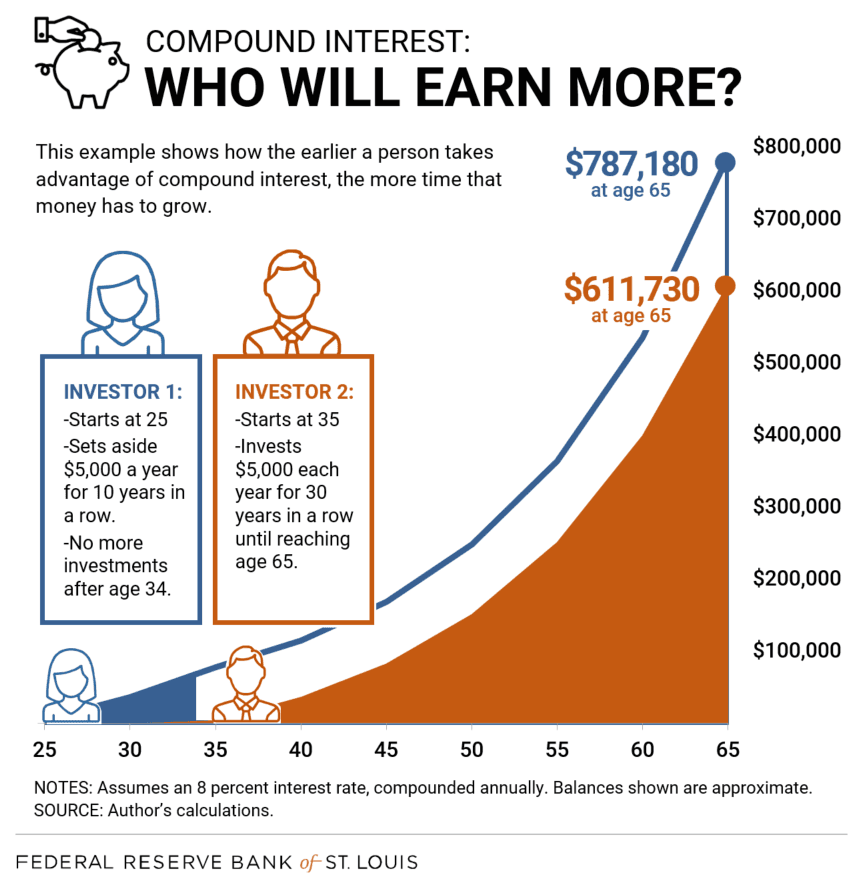
Understanding the Fundamentals: Simple vs. Compound Interest
To truly appreciate the marvel of compound interest, it’s essential to first understand its simpler counterpart and the crucial distinction between the two. The difference lies in what your interest is calculated upon.
What is Simple Interest?
Simple interest is the most basic form of interest calculation. It is calculated solely on the original principal amount of a loan or deposit. This means that each interest payment is the same, assuming the interest rate and principal remain constant. For instance, if you invest $1,000 at a 5% simple annual interest rate, you would earn $50 each year ($1,000 * 0.05). After ten years, you would have earned $500 in interest, bringing your total to $1,500. While straightforward, simple interest offers linear growth, which pales in comparison to the exponential potential of compounding. It’s typically used for short-term loans or specific types of bonds where interest is paid out periodically rather than reinvested.
What is Compound Interest? The Snowball Effect
Compound interest, by contrast, is interest calculated on the initial principal and also on all the accumulated interest from previous periods. This is often referred to as “interest on interest.” Imagine a snowball rolling down a hill; it starts small, but as it collects more snow, it grows larger, picking up even more snow at an accelerated rate. Your money behaves similarly with compound interest. The interest earned in the first period is added to your principal, and then in the second period, you earn interest on this new, larger sum. This process repeats, leading to exponential growth over time.
The Key Distinction: Earning Interest on Interest
The core difference, and the source of compounding’s immense power, is this reinvestment of earnings. With simple interest, your earnings are isolated from your principal. With compound interest, your earnings become part of your principal, creating a larger base for future interest calculations. This subtle shift transforms linear growth into exponential growth, allowing your wealth to accelerate its accumulation over time. The longer the money remains invested and the more frequently it compounds, the more pronounced this effect becomes.
The Mechanics of Compounding: How it Grows Your Wealth
While the concept might seem abstract, the mechanics of compound interest are fairly straightforward once you grasp the key variables at play. It’s not magic, but rather a powerful mathematical principle that drives wealth accumulation.
The Formula Demystified
The compound interest formula is typically represented as:
A = P (1 + r/n)^(nt)
Where:
- A = the future value of the investment/loan, including interest
- P = the principal investment amount (the initial deposit or loan amount)
- r = the annual interest rate (as a decimal)
- n = the number of times that interest is compounded per year
- t = the number of years the money is invested or borrowed for
While the formula might look intimidating, its essence is simple: your principal grows by a certain percentage (r/n) for a certain number of periods (nt). The critical part is that the interest is added to the principal before the next calculation. For practical purposes, many financial calculators or online tools can do the math for you, allowing you to focus on the input variables.
Key Variables: Principal, Rate, Time, and Frequency
Understanding how each variable impacts the outcome is crucial for maximizing compound growth:
- Principal (P): The initial amount of money you start with. A larger initial investment provides a larger base for interest to compound, leading to greater absolute returns. Consistent, regular contributions to this principal over time can dramatically enhance its growth.
- Interest Rate (r): The percentage return you earn on your money. A higher interest rate means your money grows faster. Even small differences in rates can lead to significant variations in total wealth over long periods. This highlights the importance of seeking out competitive interest rates for savings and investments.
- Time (t): Perhaps the most critical variable, especially for compound interest. The longer your money is invested, the more periods it has to compound, and the more powerful the “interest on interest” effect becomes. This is why financial advisors consistently stress the importance of starting early.
- Compounding Frequency (n): How often the interest is calculated and added to the principal within a year. Interest can be compounded annually, semi-annually, quarterly, monthly, daily, or even continuously. The more frequently interest is compounded, the faster your money grows, albeit the difference between daily and monthly compounding might be less dramatic than between annual and quarterly.
Practical Examples of Compound Growth
Let’s illustrate with an example. Suppose you invest $10,000 at a 7% annual interest rate.
- Year 1: $10,000 * (1 + 0.07) = $10,700 (You earned $700)
- Year 2: $10,700 * (1 + 0.07) = $11,449 (You earned $749 – $49 more than year 1 because you earned interest on the previous year’s interest)
- Year 3: $11,449 * (1 + 0.07) = $12,250.43 (You earned $801.43)
Notice how the amount of interest earned each year steadily increases, even though the interest rate remains constant. If this were simple interest, you would only earn $700 each year. Over 30 years, that $10,000 at 7% would grow to:
- Simple Interest: $10,000 + (30 * $700) = $31,000
- Compound Interest: $10,000 * (1 + 0.07)^30 = $76,122.55
The difference is staggering: over $45,000 more due to the power of compounding.
The Power of Time: The Greatest Ally in Compounding
While all variables play a role, time is arguably the most influential factor in harnessing the full potential of compound interest. Its effect on accumulated wealth is truly remarkable, often surprising those who underestimate long-term growth.
Starting Early: The Advantage of Youth
The adage “time in the market beats timing the market” holds especially true for compound interest. The earlier you begin investing, even with modest amounts, the more time your money has to grow exponentially. Consider two individuals:
- Sarah starts investing $200 per month at age 25, earning an average 8% annual return, and stops at age 35 (investing for 10 years).
- David starts investing $200 per month at age 35, earning the same 8% annual return, and continues until age 65 (investing for 30 years).
Despite David investing for three times longer, Sarah’s earlier start allows her initial contributions to compound for a much longer period. By age 65, Sarah’s total investment of $24,000 could be worth well over $300,000, while David’s total investment of $72,000 might only reach around $280,000. This illustrates the immense advantage of letting time work its magic on even small initial sums.
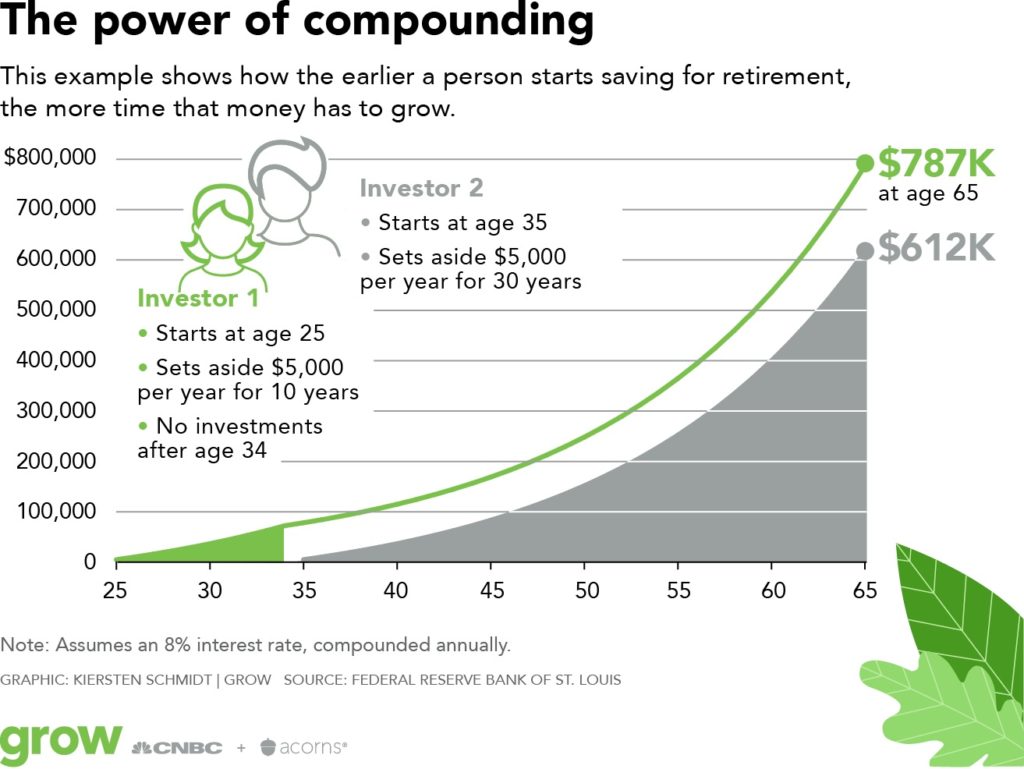
The Exponential Curve: Why Patience Pays Off
The growth generated by compound interest isn’t linear; it follows an exponential curve. In the early years, the growth might seem slow, even incremental. However, as the principal (including accumulated interest) grows, each subsequent period’s interest calculation is based on a larger sum, leading to increasingly larger absolute gains. The curve steepens dramatically over time. This phenomenon underscores why patience is a virtue in investing. Those who are tempted to withdraw funds prematurely miss out on the most powerful phase of compounding, where the “interest on interest” effect truly kicks into high gear.
The Rule of 72: A Quick Estimation Tool
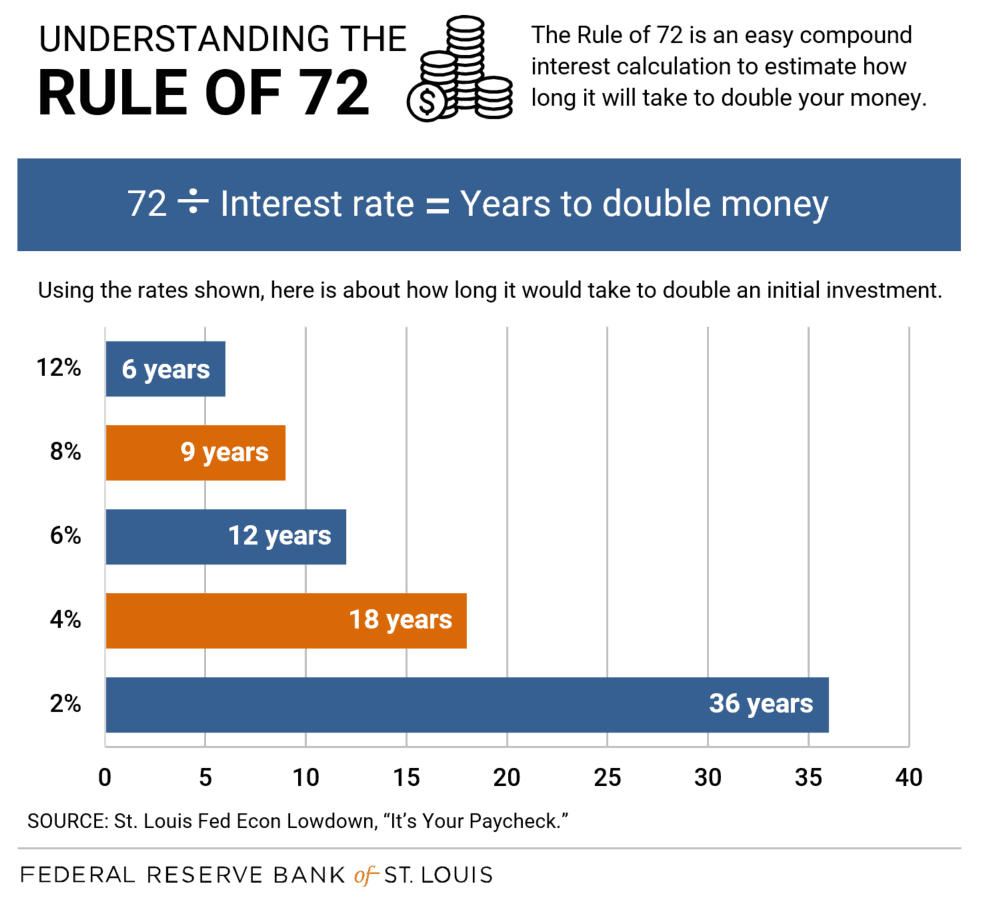
For a quick mental calculation of how long it takes for an investment to double in value, investors often use the “Rule of 72.” By dividing 72 by the annual interest rate, you get an approximate number of years it will take for your money to double. For example:
- At an 8% annual return, your money will roughly double in 9 years (72 / 8 = 9).
- At a 6% annual return, it will take approximately 12 years (72 / 6 = 12).
This rule provides a powerful illustration of how even seemingly modest interest rates can lead to significant wealth accumulation over time, reinforcing the importance of long-term thinking and sustained investment.
Leveraging Compound Interest for Financial Success
Understanding the mechanics and power of compound interest is only the first step. The true benefit comes from actively applying this knowledge to your financial strategy. It’s a tool that can either build your wealth or, if misused, erode it.
Strategic Applications in Investing and Savings
Compound interest is the engine behind many successful financial strategies:
- Retirement Accounts (401(k)s, IRAs): These accounts are designed for long-term growth, making them ideal vehicles for compound interest. Contributions grow tax-deferred or tax-free, allowing earnings to compound unhindered for decades.
- Index Funds and ETFs: Investing in broad market index funds offers diversified exposure and typically provides market-average returns, which, when compounded over decades, can lead to substantial wealth.
- High-Yield Savings Accounts (HYSAs): While offering lower returns than equities, HYSAs provide a safe way for your emergency fund or short-term savings to grow through compounding, often with monthly or daily compounding frequency.
- Dividend Reinvestment Programs (DRIPs): Many companies allow shareholders to automatically reinvest their dividends back into buying more shares. This is a direct application of compounding, where earnings (dividends) are used to increase the principal (number of shares), leading to more future dividends and capital appreciation.
Retirement Planning and Long-Term Goals
Compound interest is the cornerstone of effective retirement planning. The earlier you start contributing to retirement accounts, the less you generally need to save overall to reach your goals, thanks to the extended compounding period. It also applies to other long-term goals like saving for a child’s education, a down payment on a house, or even starting a business. The principle remains the same: consistent saving and investing, combined with time, will allow your money to grow significantly beyond your initial contributions.
The Dark Side: Compound Interest and Debt
While a powerful ally for investors, compound interest can be a formidable foe when it comes to debt, particularly high-interest consumer debt like credit cards. Just as your investments grow exponentially, so too can your debt. If you carry a balance on a credit card with an 18% annual interest rate, the interest compounds, adding to your principal balance each month. This can quickly lead to a situation where a significant portion of your minimum payment goes towards interest, making it incredibly difficult to pay down the principal. Understanding this “dark side” of compounding underscores the importance of paying off high-interest debt aggressively to stop the cycle of accumulating interest on interest.
Maximizing the Benefits of Compounding
Harnessing the full potential of compound interest requires more than just understanding the theory; it demands action, discipline, and strategic choices. By focusing on a few key areas, you can significantly amplify your wealth accumulation.
Consistent Contributions and Reinvesting Earnings
The most effective way to supercharge compound interest is through consistent contributions. Regularly adding to your principal, whether weekly, bi-weekly, or monthly, means there’s a larger base for interest to be calculated on in each subsequent period. This also means actively reinvesting any earnings—dividends, interest payments, or capital gains—back into your investments. Every dollar earned that is reinvested immediately begins to earn its own interest, creating a virtuous cycle of growth. Avoid the temptation to withdraw earnings prematurely, as this disrupts the compounding process and slows down your wealth accumulation.
Choosing the Right Accounts and Investments
Not all financial products are created equal when it comes to compounding. To maximize its benefits, carefully consider:
- Investment Vehicles: Opt for investments that offer strong potential for growth or consistent returns, such as diversified stock market index funds, well-managed mutual funds, or real estate. These typically offer higher potential returns than traditional savings accounts over the long term.
- Compounding Frequency: Where possible, choose accounts that compound more frequently (e.g., daily or monthly over annually). While the difference might seem minor, it adds up over decades.
- Tax Efficiency: Utilize tax-advantaged accounts like 401(k)s, IRAs, and HSAs. The ability for your money to grow and compound without being taxed annually allows for a greater portion of your returns to remain invested, accelerating growth.
Overcoming Common Obstacles and Staying Disciplined
The biggest challenge to maximizing compound interest is often behavioral. Instant gratification can be a powerful deterrent to long-term wealth building. To stay on track:
- Automate Savings: Set up automatic transfers from your checking account to your investment accounts. This “set it and forget it” approach ensures consistency and reduces the temptation to spend money before it’s saved.
- Avoid High-Interest Debt: As discussed, high-interest debt is the antithesis of compound interest. Prioritize paying off credit card balances and other costly loans to free up capital for investing and prevent your money from working against you.
- Educate Yourself Continuously: Stay informed about personal finance and investing. The more you understand, the more confident and disciplined you’ll become in your long-term strategy.
- Practice Patience: Remember the exponential curve. There will be periods when growth seems slow, or markets experience downturns. Staying invested through these periods is crucial for capturing the long-term benefits of compounding.
In conclusion, compound interest is more than just a financial concept; it’s a powerful principle that underpins long-term financial success. By understanding its mechanics, recognizing the critical role of time, and applying strategic discipline to your savings and investments, you can unlock its potential and set yourself on a clear path towards achieving your financial goals. It truly is one of the most remarkable forces in the financial universe, waiting to be harnessed by those who grasp its profound power.
aViewFromTheCave is a participant in the Amazon Services LLC Associates Program, an affiliate advertising program designed to provide a means for sites to earn advertising fees by advertising and linking to Amazon.com. Amazon, the Amazon logo, AmazonSupply, and the AmazonSupply logo are trademarks of Amazon.com, Inc. or its affiliates. As an Amazon Associate we earn affiliate commissions from qualifying purchases.