
Taxation is one of the few certainties in life, but the amount one pays is often more flexible than it appears. Saving on taxes is not about circumventing the law; rather, it is about understanding the complex framework of tax codes to ensure you are not paying more than your fair share. Strategic tax planning is a year-round process that involves analyzing your financial situation from the perspective of tax efficiency. By leveraging deductions, credits, and specialized investment vehicles, individuals and business owners can significantly reduce their tax liability, allowing more capital to remain invested and growing.

Effective tax planning requires a shift in mindset—from viewing taxes as a once-a-year administrative burden to seeing them as a critical component of a long-term wealth management strategy. Whether you are an employee, a freelancer, or a high-net-worth investor, the following strategies provide a roadmap for optimizing your tax profile.
Maximizing Deductions and Credits
The most immediate way to reduce taxable income is through the diligent application of deductions and credits. While these terms are often used interchangeably, they function very differently within the tax ecosystem. A deduction reduces the amount of income that is subject to tax, whereas a credit provides a dollar-for-dollar reduction in the actual tax bill.
Understanding the Standard Deduction vs. Itemization
For most taxpayers, the first major decision is whether to take the standard deduction or to itemize. The standard deduction is a fixed dollar amount that reduces the income on which you’re taxed. It is adjusted annually for inflation and varies based on filing status.
Itemizing, on the other hand, allows you to list specific expenses such as mortgage interest, state and local taxes (SALT), medical expenses exceeding a certain percentage of adjusted gross income, and charitable contributions. To save tax through itemization, the total of these individual expenses must exceed the standard deduction. Strategic “bunching”—the practice of timing expenses so they fall into a single tax year—can help push itemized deductions above the threshold, maximizing the tax benefit in that specific year.
Leveraging Tax Credits for Maximum Impact
Tax credits are arguably more powerful than deductions because they directly lower your tax liability. Common credits include the Child Tax Credit, the Earned Income Tax Credit (EITC), and various education credits like the American Opportunity Tax Credit (AOTC).
For those looking to save tax while investing in the future, energy-efficient home improvement credits have become increasingly relevant. Installing solar panels, energy-efficient windows, or heat pumps can result in substantial federal tax credits. Understanding the eligibility requirements for these credits is essential, as they often have specific income limits or documentation requirements.
Above-the-Line Deductions
Certain deductions are available even if you choose the standard deduction. These are known as “above-the-line” deductions because they are subtracted from your gross income to determine your Adjusted Gross Income (AGI). Common examples include student loan interest, educator expenses, and contributions to certain retirement accounts. Lowering your AGI is particularly beneficial because many tax credits and phase-outs are based on this specific number.
Leveraging Tax-Advantaged Investment Accounts
One of the most effective long-term strategies for saving tax is the use of specialized accounts designed to encourage saving and investment. By utilizing these accounts, you can either defer taxes until a later date or, in some cases, eliminate them entirely on the growth of your assets.
Retirement Accounts: Traditional vs. Roth
The choice between Traditional and Roth accounts is a cornerstone of tax planning. Contributions to a Traditional 401(k) or IRA are typically tax-deductible in the year they are made, which reduces your current taxable income. However, withdrawals during retirement are taxed as ordinary income.
Conversely, Roth 401(k)s and IRAs are funded with after-tax dollars. While there is no immediate tax break, the investments grow tax-free, and qualified withdrawals in retirement are completely exempt from federal taxes. Choosing between the two often comes down to a projection of your future tax bracket versus your current one. If you expect to be in a higher bracket later in life, the Roth option is generally superior for long-term tax savings.
The Power of the Health Savings Account (HSA)
Often overlooked as an investment vehicle, the Health Savings Account (HSA) offers a unique “triple tax advantage” that is unmatched by almost any other account type. Contributions are tax-deductible (or made pre-tax through payroll), the funds within the account grow tax-deferred, and withdrawals for qualified medical expenses are entirely tax-free.
Unlike a Flexible Spending Account (FSA), HSA funds roll over from year to year. For those who can afford to pay for current medical expenses out of pocket, the HSA can be treated as a de facto retirement account, allowing the balance to be invested in the stock market for decades of tax-free growth.
Education Savings and 529 Plans
For those planning for future education costs, 529 plans offer significant tax advantages. While contributions are not deductible at the federal level, many states offer a tax deduction or credit for contributions. More importantly, the earnings in a 529 plan grow tax-deferred and are tax-free when used for qualified education expenses. Recent changes in tax law also allow for a limited amount of unused 529 funds to be rolled over into a Roth IRA, adding a layer of flexibility to this tax-saving tool.
Strategic Income Management and Asset Location
Saving tax is not just about what you invest in, but where you hold those investments and how you manage the timing of your income and losses.
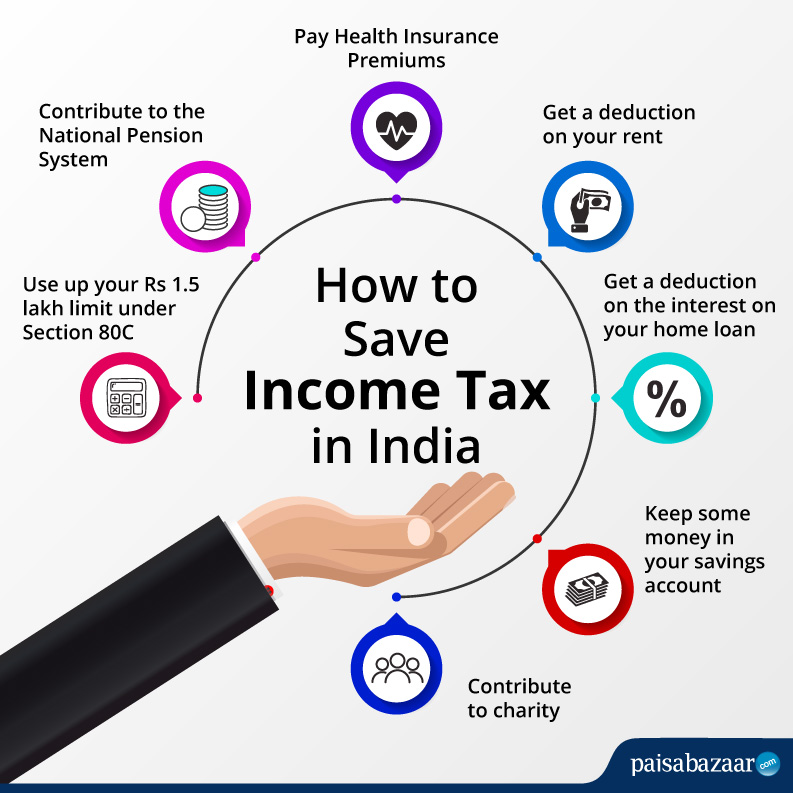
Tax-Loss Harvesting
In a taxable brokerage account, you can use investment losses to your advantage through a process called tax-loss harvesting. This involves selling an underperforming security that is currently at a loss to offset capital gains realized elsewhere in your portfolio.
If your losses exceed your gains, you can use up to $3,000 of the excess loss to offset your ordinary income. Any remaining loss can be carried forward to future tax years. This strategy requires careful navigation of the “wash-sale rule,” which prevents you from claiming a loss if you buy a “substantially identical” security within 30 days before or after the sale.
The Importance of Asset Location
Different types of investments are taxed at different rates. For instance, interest from bonds is typically taxed as ordinary income, while long-term capital gains and qualified dividends are taxed at lower preferential rates.
Asset location involves placing tax-inefficient assets (like high-yield bonds or actively managed funds) inside tax-advantaged accounts (like an IRA) and keeping tax-efficient assets (like index funds or municipal bonds) in taxable accounts. This optimization ensures that the most heavily taxed income is shielded from the IRS for as long as possible.
Long-Term vs. Short-Term Capital Gains
The duration for which you hold an asset significantly impacts the tax rate applied to its sale. Assets held for more than one year qualify for long-term capital gains treatment, which features rates of 0%, 15%, or 20% depending on your income. Assets sold within a year are taxed at ordinary income rates, which can be as high as 37%. Simply holding an investment for 366 days instead of 365 can result in massive tax savings, particularly for high earners.
Tax Strategies for Business Owners and Freelancers
Self-employed individuals and small business owners have access to a wider array of tax-saving opportunities, but they also face a more complex tax landscape, including the self-employment tax.
Maximizing Business Deductions
The core principle for business tax savings is to ensure every legitimate business expense is captured. This includes obvious costs like office rent and equipment, but also more nuanced deductions like the home office deduction, professional development, and business travel.
The “Section 179” deduction is a powerful tool that allows businesses to deduct the full purchase price of qualifying equipment and software purchased or financed during the tax year, rather than depreciating those costs over several years. This can provide a substantial immediate reduction in taxable profit.
The Qualified Business Income (QBI) Deduction
Established by the Tax Cuts and Jobs Act, the QBI deduction allows eligible self-employed individuals and small business owners to deduct up to 20% of their qualified business income from their taxes. There are income thresholds and “specified service trade or business” (SSTB) rules that can complicate this deduction for high-earning professionals like doctors or lawyers, but for many entrepreneurs, it represents one of the most significant tax-saving opportunities available.
Retirement Plans for the Self-Employed
Freelancers and small business owners are not limited to standard IRAs. Options like the Simplified Employee Pension (SEP) IRA or the Solo 401(k) allow for much higher contribution limits than traditional employer-sponsored plans. A Solo 401(k), in particular, allows a business owner to contribute both as an employee and as an employer, potentially shielding a large portion of their income from taxes while aggressively building a retirement nest egg.
Charitable Giving and Estate Planning
For those with philanthropic goals or significant assets to pass on to the next generation, tax planning intersects with legacy building.
Donor-Advised Funds (DAFs)
A Donor-Advised Fund allows you to make a charitable contribution and receive an immediate tax deduction, even if the funds are not distributed to a specific charity until years later. This is an excellent tool for “bunching” deductions. By contributing several years’ worth of planned giving into a DAF in a high-income year, you can maximize your itemized deductions when they are most valuable.
Gifting and Estate Tax Mitigation
Strategic gifting can reduce the size of an estate, potentially lowering future estate tax liability. Individuals can take advantage of the annual gift tax exclusion, which allows them to give a certain amount to as many individuals as they like each year without incurring gift tax or reducing their lifetime exemption. Furthermore, paying for someone’s medical or educational expenses directly to the institution does not count toward the gift limit, providing a secondary way to move wealth tax-efficiently.

Qualified Charitable Distributions (QCDs)
Taxpayers who are 70½ or older can instruct their IRA custodian to make a distribution directly to a qualified charity. This is known as a Qualified Charitable Distribution (QCD). The beauty of a QCD is that the distribution counts toward the individual’s Required Minimum Distribution (RMD) but is not included in their taxable income. This effectively provides a tax break even for those who take the standard deduction and do not itemize their charitable giving.
In conclusion, saving tax is a multifaceted endeavor that requires proactive management and a deep understanding of how various financial decisions interact with the tax code. By combining deduction maximization, the strategic use of tax-advantaged accounts, and sophisticated investment techniques like tax-loss harvesting and asset location, it is possible to significantly reduce your lifetime tax burden. The key is to view tax planning not as a seasonal chore, but as a continuous process of financial optimization.
aViewFromTheCave is a participant in the Amazon Services LLC Associates Program, an affiliate advertising program designed to provide a means for sites to earn advertising fees by advertising and linking to Amazon.com. Amazon, the Amazon logo, AmazonSupply, and the AmazonSupply logo are trademarks of Amazon.com, Inc. or its affiliates. As an Amazon Associate we earn affiliate commissions from qualifying purchases.